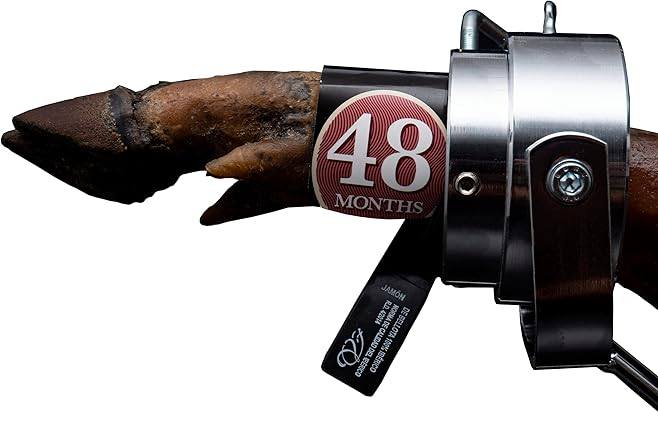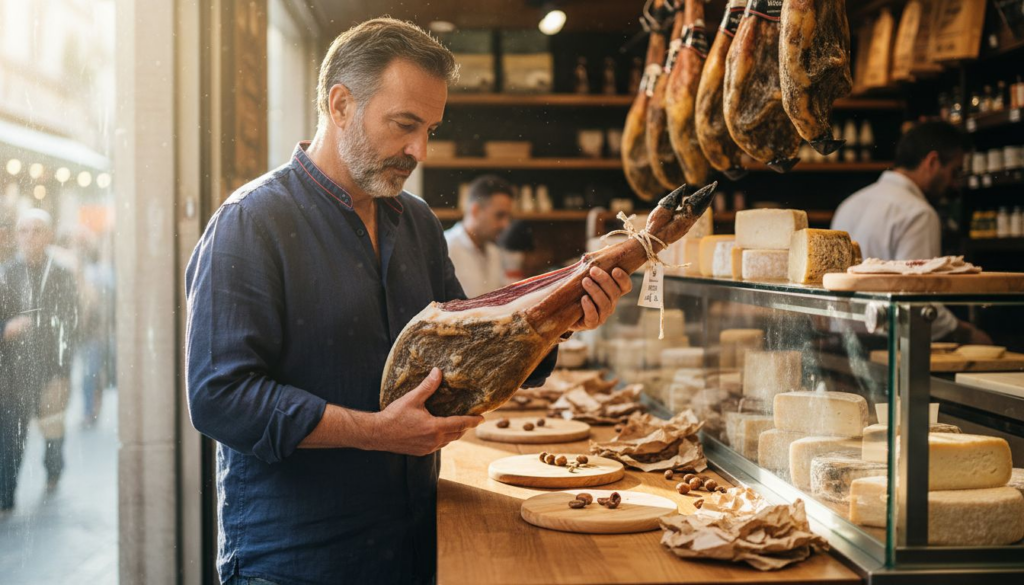
Choosing truly exceptional Iberico ham starts long before the first taste. For those who insist on only the finest, every detail—from breed purity and acorn-rich feeding to patient, natural ageing—plays a vital role in shaping that legend on your plate. With regulations enforcing breeding standards and colour-coded certifications in Spain, knowing what to look for guarantees you savour authentic artisanal quality instead of mere imitation, transforming your selection process into a rewarding journey for all senses.
Table of Contents
- Step 1: Assess Breed And Feeding Background
- Step 2: Compare Curing Times And Ageing Methods
- Step 3: Examine Visual And Aromatic Qualities
- Step 4: Verify Artisanal Production And Certifications
- Step 5: Select Your Preferred Cut And Packaging
Quick Summary
| Key Point | Explanation |
|---|---|
| 1. Evaluate breed authenticity | Look for indications of pure Black Iberian pigs for superior flavour and quality. |
| 2. Understand feeding methods | Choose montanera-fed options for richer taste and marbling compared to grain-fed varieties. |
| 3. Pay attention to ageing times | Extended ageing enhances flavour complexity; select based on your taste preferences and occasion. |
| 4. Examine visual and aromatic cues | Darker colour and nutty aroma indicate higher quality; assess for freshness and proper handling. |
| 5. Check for certifications | Ensure the product has colour-coded seals for authenticity and adherence to Spanish quality standards. |
Step 1: Assess breed and feeding background
Understanding what went into raising the pig before it became ham is your gateway to knowing exactly what flavour and quality you are bringing home. The breed and feeding regimen fundamentally shape the ham’s character, from its marbling to its richness, so this is where your investigation begins.
Start by checking whether the ham comes from pure Black Iberian pigs or cross-bred animals. Pure breed Black Iberian pigs produce the most coveted jamón ibérico, though regulations allow for crosses with Duroc breeds at a minimum of 50 percent Iberian genetics. This distinction matters because the Iberian pig’s distinctive dark coat and heritage genetics deliver a unique metabolic profile that influences fat composition and taste in ways cross-breeds simply cannot replicate. When you examine the label or product description, look for language like “100 percent Iberian” or “pure breed” as your strongest indicator of authenticity and superior quality.
Next, investigate the feeding background, which truly separates exceptional ham from the merely good. The three primary feeding categories tell you everything about what the pig consumed before slaughter. The finest hams come from pigs raised on the montanera system, where animals roam freely through dehesa (oak groves) and feed exclusively on acorns during the fattening period. These acorns impart a distinctive fatty acid composition that creates that melt-in-your-mouth elegance and nutty aroma connoisseurs seek. Recebo ham represents a middle ground where pigs consume both acorns and supplementary feed, whilst cebo ham comes from pigs fed entirely on grain without access to natural forage. The difference in your mouth is undeniable. Montanera hams display remarkable depth and complexity, whilst cebo hams tend toward a leaner, more straightforward flavour profile. When examining product information, look for explicit mention of how the pig was fed during its final fattening stage. This transparency indicates a producer confident in their methods and respectful of their craft.
The montanera feeding period occurs seasonally when oak trees produce their acorn crop, typically from October through January in Spain. Producers often highlight how many months the pig spent on this natural diet, as longer acorn feeding intensifies those prized characteristics. Pay attention to any information about the pig’s complete lifecycle too. Many traditional producers raise their animals initially on barley and maize before allowing them to roam freely, so understand the full journey rather than focusing only on the final months. This holistic view helps you appreciate why certain hams command premium prices and why your palate will notice the difference the moment you taste that first slice.
Here is a comparison of Ibérico ham feeding categories, highlighting their unique characteristics:
| Feeding Type | Diet During Fattening | Flavour & Texture Impact | Typical Price Point |
|---|---|---|---|
| Montanera | Acorns only | Rich, deeply marbled, complex taste | Highest, luxury range |
| Recebo | Acorns + supplementary feed | Balanced, moderate marbling, nuanced | Mid-premium |
| Cebo | Grains only | Leaner, straightforward flavour | More affordable |
Tip for connoisseurs Compare multiple product descriptions side by side when shopping, noting the specific feeding method and breed percentages for each option, then taste them sequentially to train your palate to recognise how acorn feeding creates that distinctive sweetness and complexity compared to grain-fed alternatives.
Step 2: Compare curing times and ageing methods
Curing time and ageing duration are where patience transforms raw pork into liquid gold. These timescales reveal the depth of flavour you can expect, and understanding them helps you match the right ham to your palate and occasion.
The journey from leg to finished ham begins with salt curing, which draws out moisture and begins the flavour concentration process. The curing process typically lasts two to three weeks at carefully controlled cool, dry temperatures, after which the ham moves into the drying phase. This drying period extends from three to six months depending on ambient conditions and the producer’s technique. During these months, the ham loses significant moisture whilst developing the firm, dense texture you slice thin. What happens next determines the final character of your ham. The extended ageing phase follows, lasting anywhere from six months to two years or beyond, allowing complex flavours to develop layer upon layer. This is where the magic really happens. The combination of salt curing, drying, and ageing works together to concentrate flavours and create that savoury, almost sweet complexity.
Now here is where your selection becomes truly personal. The minimum you will encounter is around eighteen months from start to finish, though many quality producers push to twenty-four months or longer. Some exceptional hams age for as many as five years, and these extended aged versions develop an almost crystalline texture with intensely concentrated flavours that feel luxurious on your tongue. When you examine product information, pay close attention to the total ageing duration rather than fixating on just one phase. A ham aged for thirty-six months will taste markedly different from one aged for twenty-four months, with greater depth and a denser texture that demands thinner slicing. The preparation of Ibérico ham involves meticulous monitoring to ensure even drying and quality development throughout this extended timeline. This attention to detail separates amateur producers from masters of the craft.
Consider your intended use when weighing different ageing periods. Shorter aged hams around eighteen to twenty-four months deliver vibrant, more approachable flavours perfect for everyday enjoyment or introduction to the category. Medium aged hams at thirty to thirty-six months offer greater complexity without becoming austere or overpowering, ideal for entertaining or special meals. Longer aged specimens above forty-eight months become more subtle and refined, with a nuttier character and textural complexity that truly rewards slow, mindful tasting. The ambient conditions during ageing also matter tremendously. Hams aged in mountain regions with distinct seasonal temperature variations often develop differently from those in coastal areas with more stable climates. This environmental element adds another layer of variation between producers, even within Spain. When shopping, note whether the producer mentions their ageing location or climate, as this transparency indicates confidence in their methods and respect for tradition.
The following table summarises ageing durations and how they influence the final ham experience:
| Ageing Duration | Tasting Notes | Best For |
|---|---|---|
| 18–24 months | Vibrant, approachable, fresh pork | Everyday enjoyment |
| 30–36 months | Greater depth, balanced complexity | Special occasions, sharing |
| 48+ months | Subtle, nutty, crystalline texture | Slow tasting, collectors |
Tip for collectors Purchase a shorter aged ham for immediate enjoyment and a longer aged version to store and compare side by side in a few months, training your palate to recognise how extended ageing transforms flavour intensity and textural refinement over time.
Step 3: Examine visual and aromatic qualities
Your eyes and nose are remarkably honest judges of quality. Before you ever taste Ibérico ham, the visual and aromatic signals will tell you whether you are holding something genuinely special or merely adequate. Learning to read these clues transforms you from a casual buyer into a discerning selector.
Begin with colour, which reveals much about the ham’s age and feeding background. Look for deep mahogany and burgundy tones rather than pale pink or bright red. The darker, almost wine coloured slices indicate longer ageing and proper curing, where the natural pigments have concentrated through time and moisture loss. Hams fed exclusively on acorns during the montanera period often display a slightly deeper, richer tone than their grain-fed counterparts. You will also notice marbling, the fine white streaks of fat running through the meat. This intramuscular fat is the Ibérico pig’s gift. These white lines should appear delicate and evenly distributed, not clumped or sparse. Finer, more abundant marbling suggests a pig that was well-nourished and properly raised. The surface should show a glossy sheen when freshly sliced, catching the light like silk. If the ham looks dull or dry, it has either been cut long ago or stored poorly. The colour should be consistent throughout each slice, without dark edges or strange discoloration, which might indicate oxidation or improper handling.
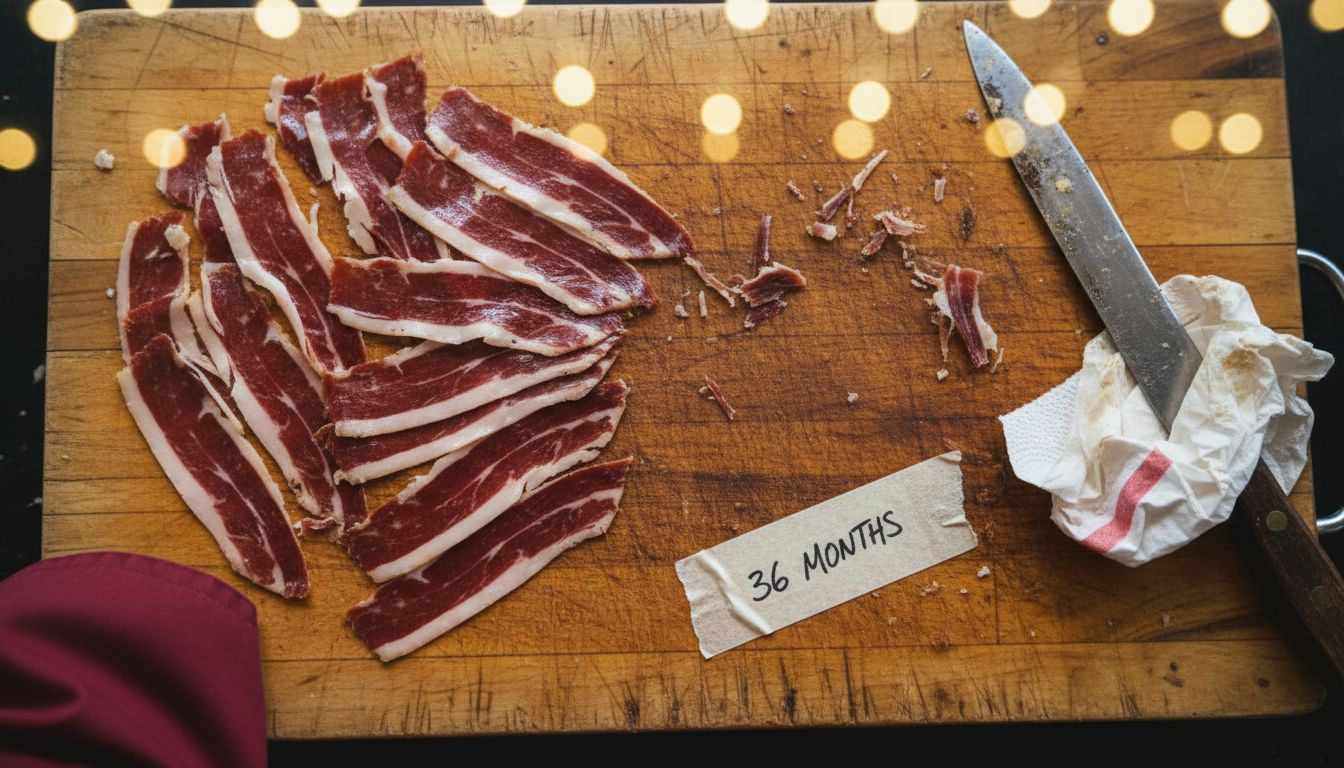
Now lean in and breathe deeply. The aroma tells you everything about depth and authenticity. The acorns that pigs consume during montanera feeding create distinctive fatty acid compositions that manifest as a characteristic nutty, almost sweet aroma. You should detect notes reminiscent of toasted hazelnuts, caramel, and dried fruits, particularly if the ham has aged beyond two years. This bouquet is complex rather than simple, layered rather than one dimensional. A good acorn-fed ham should smell inviting and appetizing, never off-putting or sour. Shorter aged hams may carry a fresher, more straightforward pork aroma, whilst extended aged examples develop those deeper, more sophisticated notes. If you detect anything unpleasant—ammonia, sourness, or rancidity—the ham has been compromised. Trust your instinct here. Your nose knows when something is wrong.
When examining a whole ham or larger section, observe the surface carefully. Quality hams develop a natural patina over time, sometimes showing slight mould growth on the exterior, which is completely normal and actually desirable in traditionally aged hams. This mould is brushed away before slicing and indicates proper ageing conditions. The bone itself should be yellowed or darkened from age, not bright white. If you are purchasing sliced ham, examine how it is packaged. Vacuum-sealed slices should release their aroma immediately when opened, not smell of plastic. The meat should remain moist and lustrous in the package, never dried out at the edges.
Advice for buyers Request a small tasting sample before committing to a purchase of larger quantities, allowing your senses to confirm that the visual qualities and aroma align with the price and claims, ensuring you truly prefer this producer’s style before investing in quantity.
Step 4: Verify artisanal production and certifications
Certifications and production standards are your assurance that what you are purchasing is genuinely authentic Ibérico ham made according to time-honoured traditions. Understanding these official marks separates legitimate artisanal producers from those cutting corners or making false claims.
Start by familiarising yourself with the colour-coded seals that Spain’s Official Quality Standard uses to classify hams. Colour-coded seals indicate quality categories like Bellota for acorn-fed and Cebo for grain-fed hams, making it immediately obvious what you are purchasing. The black seal represents pure breed (100 percent) Black Iberian pigs fed on acorns. This is the pinnacle, the gold standard that commands premium prices because the requirements are genuinely demanding. The red seal indicates crossbred Iberian pigs (minimum 50 percent Black Iberian mixed with Duroc) that were also acorn-fed. This category still represents high quality but acknowledges the use of crossbreeding. The green seal applies to Iberian pigs, whether pure or cross-bred, that consumed both acorns and supplementary feed during their fattening period. The white seal represents grain-fed Iberian pigs without access to natural forage. Each seal comes with legal backing, meaning producers cannot misrepresent what they are selling without facing serious consequences. When you examine a product listing or package, look for these official seals prominently displayed. Their presence indicates the producer respects Spanish regulations and has undergone official inspection.
Beyond the colour codes, investigate the producer’s commitment to traceability and artisanal methods. The Official Quality Standard requires comprehensive labelling that allows you to trace a ham back to its source, understanding exactly which farm raised the pig and how it was treated. This transparency is not accidental. It reflects a producer’s confidence in their methods and their willingness to be held accountable. Small-scale, artisanal producers often exceed these minimum requirements, proudly sharing details about their specific dehesa (oak grove) locations, family heritage spanning generations, and their natural curing techniques using only pork, sea salt, fresh mountain air, and time. When you read product descriptions, look for these personal touches and specific details. They tell you the producer views their work as a craft rather than a commodity. Many traditional producers have been making ham in exactly the same way for decades, sometimes centuries, passing knowledge through family lineages. This consistency matters tremendously. A producer making ham the same way their great-grandfather did is far more likely to deliver consistent quality than one changing methods annually chasing trends.
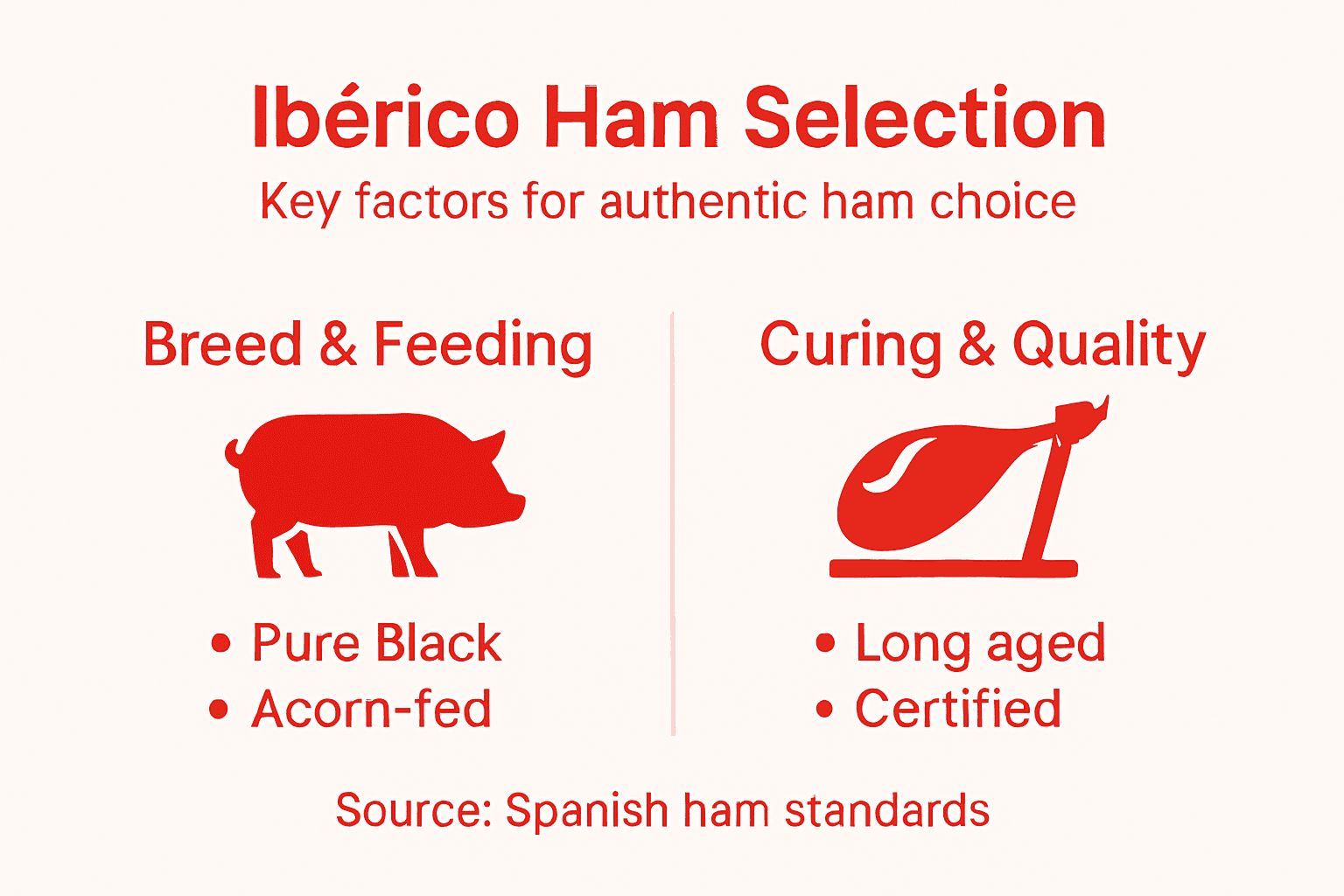
Verify that the producer actually sources from Spain and has physical operations there rather than simply importing and repackaging. Genuine Ibérico ham carries a Designation of Origin (DO) mark when it comes from Spain’s protected regions, particularly Huelva, Córdoba, Badajoz, and Cáceres in the southwest. This geographical protection means you are getting ham made by producers who have proven expertise in their regions and access to the specific environmental conditions that create authentic Ibérico character. When examining producer websites or product pages, look for transparency about their location, their facilities, and their commitment to traditional methods. Legitimate producers will happily explain their process, their sourcing, and their quality standards. They have nothing to hide because their methods are designed to be discovered and celebrated. If a producer remains vague about origins or methods, treat that as a red flag. Authentic artisanal producers take pride in transparency and craftsmanship.
Recommendation for connoisseurs Cross reference any producer you are considering against Spanish industry registries and certification databases, ensuring their claimed credentials match official records and that they maintain current certifications rather than simply trading on historical claims.
Step 5: Select your preferred cut and packaging
Choosing the right cut and packaging format transforms your Ibérico ham experience from a casual purchase into a thoughtfully curated selection matched to your needs and consumption timeline. This decision shapes both practicality and pleasure, so understanding your options matters considerably.
Begin by considering whether you want a whole bone-in ham, a larger muscle section, or pre-sliced portions. A whole ham becomes the showpiece of serious connoisseurs and those hosting gatherings where the ham itself becomes part of the theatre and tradition. Holding a whole Ibérico ham in your hands connects you viscerally to the animal and its heritage. You will need a proper jamón stand and a sharp, flexible ham knife to slice it correctly, creating paper-thin slices that showcase the marbling and colour. The bone becomes your flavour resource too. Many cooks simmer ham bones to create stock infused with that distinctive Ibérico character. However, whole hams require significant space, proper storage conditions, and commitment. They are not for casual shoppers or those with limited pantry room.
Large muscle sections offer compromise. You purchase a substantial piece, perhaps half the ham or a specific muscle group, which provides plenty of sliced portions without requiring a full ham’s infrastructure. These sections still display the beautiful marbling and allow you to slice progressively as you consume, ensuring freshness. You slice them by hand or ask your butcher to provide a few slices whilst leaving the remainder uncut. This flexibility appeals to those who want authentic experience without full commitment. Pre-sliced portions, whether vacuum-sealed packages or freshly sliced from a counter, represent the most convenient option. These suit apartment dwellers, smaller households, or those discovering Ibérico ham for the first time. Natural curing processes create jamón ibérico’s signature texture and savory taste that remains exceptional even in sliced form, though freshly cut slices always possess subtle advantages in aroma and pristine appearance.
Now consider packaging format based on your storage capacity and consumption timeline. Vacuum-sealed slices protect quality for extended periods, typically several weeks when properly stored in a cool, dark place or refrigerator. These packages travel well, making them ideal for gifts or when ordering online internationally. The vacuum seal prevents oxidation and moisture loss. However, vacuum-sealed ham never tastes quite as vibrant as freshly exposed ham because the slicing occurred days or weeks prior. Counter-fresh slicing by a skilled professional represents the goldstandard. If your supplier offers this service, request it. Fresh slices should be consumed within hours for absolute optimal experience, though they remain splendid for several days wrapped in paper in a cool location. Some producers offer freshly sliced ham that arrives via rapid shipping, providing a middle ground between vacuum-sealed convenience and the compromise of previous exposure to air. Whole hams require cool, dry storage around fifteen degrees Celsius with consistent humidity. They actually improve slightly over months if stored correctly, developing deeper flavours. Once you begin slicing a whole ham, consume it progressively, wrapping the cut surface in paper between servings to prevent oxidation.
Consider also whether you prefer boneless or bone-in cuts. Bone-in portions retain more character and allow you to experience the ham more completely, but they weigh more for the actual meat yield and require more careful slicing technique. Boneless cuts maximise usable ham, slicing more easily, and store more compactly. Neither choice is wrong. Your decision reflects personal preference and practical circumstances. When ordering, communicate your consumption timeline to your supplier. Someone planning a single dinner party needs different guidance than someone building a ham collection for extended enjoyment. Quality suppliers will recommend cuts and packaging that align with your situation.
Guidance for first-time buyers Start with a vacuum-sealed package of pre-sliced ham from a reputable producer, allowing you to experience the quality and flavour profile before investing in larger quantities or whole hams, then graduate to fresh slicing or whole hams once you understand your preferences.
Discover True Iberico Ham Excellence with 7 Bellotas
Selecting authentic Iberico ham can be challenging without clear insight into breed purity, feeding methods, curing times and artisanal provenance. If you want to avoid guesswork and elevate your gastronomic experience with genuine acorn-fed Pata Negra ham aged to perfection, 7 Bellotas offers a trusted solution crafted for connoisseurs who demand both tradition and superior flavour. Our carefully curated selection emphasises pure breed Black Iberian pigs nourished exclusively on acorns during the montanera, paired with natural, slow curing processes extending well beyond 36 months.
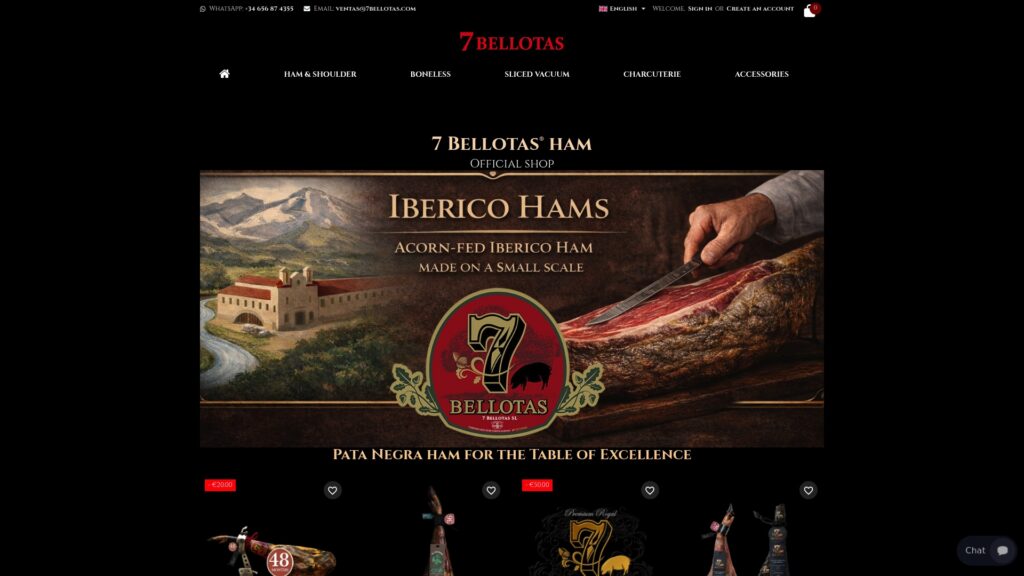
Start your journey towards authentic Iberico taste today by exploring our range of whole bone-in hams, hand-sliced portions and vacuum packed selections tailored to suit your lifestyle and appreciation level. At 7 Bellotas you will find detailed product descriptions that honour transparency and craftsmanship so you can confidently choose the perfect ham based on breed, ageing period and feeding background. Don’t wait to enjoy the sublime richness that only traditional Spanish methods can deliver visit 7 Bellotas now and bring premium Iberico ham to your table.
The Gift of Acorns | Why Iberico Ham Is the Ultimate Holiday Present
A Celebration of Heritage and Luxury When the holiday season arrives, we search for gifts that embody warmth, tradition, and […]
Frequently Asked Questions
How do I assess the breed of Iberico ham for authentic flavour?
To ensure you select high-quality Iberico ham, look for hams labelled as coming from 100 percent pure Black Iberian pigs. This breed produces the most sought-after flavour profiles, so check product descriptions for specifications on the breed and its crossbreeding with Duroc pigs.
What feeding background should I look for when selecting Iberico ham?
The feeding regimen significantly impacts the flavour and quality of Iberico ham. Focus on hams from the montanera system, where pigs roam freely and feed mainly on acorns, as this diet creates a richer taste compared to grain-fed options.
How does curing time affect the flavour of Iberico ham?
Curing time plays a crucial role in developing the ham’s flavour and texture. Choose hams aged for at least 18 months to benefit from vibrant, complex flavours, with longer ageing periods offering even more depth and a luxurious mouthfeel.
What visual qualities should I examine when choosing Iberico ham?
When selecting Iberico ham, seek deep mahogany and burgundy tones in the slices, which indicate proper ageing. Additionally, look for fine marbling and a glossy sheen to ensure you’re choosing high-quality, well-cured meat.
Why are certifications important when buying Iberico ham?
Certifications guarantee that the Iberico ham has been produced according to established quality standards. Check for colour-coded seals to confirm the feeding category and ensure you’re getting authentic, artisanal ham.
What cut of Iberico ham is best for first-time buyers?
For first-time buyers, pre-sliced vacuum-sealed Iberico ham is an excellent choice for experiencing authentic flavour without commitment. This format allows you to enjoy the ham’s quality and decide on future purchases based on your preferences.