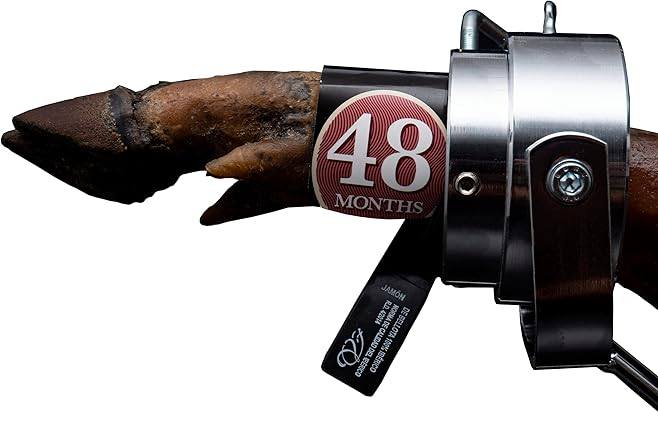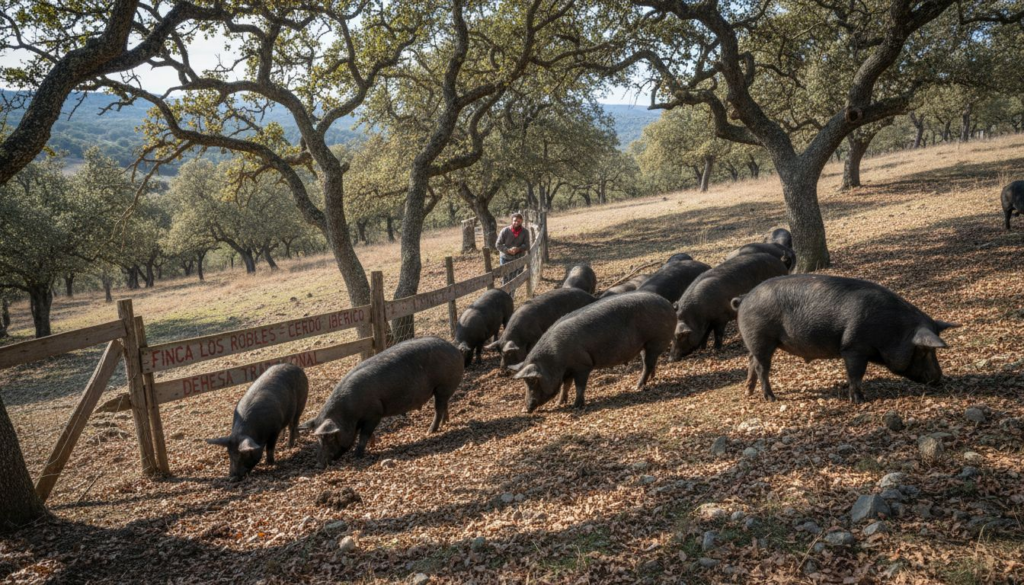
Facing row upon row of unfamiliar labels at your trusted gourmet shop can leave even seasoned food lovers questioning what truly makes Iberico pork special. Unlike standard pork, Iberico pork refers specifically to meat from the Black Iberian pig, native to the Iberian Peninsula and famously reared across Spain and Portugal. The allure is more than heritage—it is the unique combination of genetics, traditional free-range rearing and an acorn-rich diet that delivers the extraordinary marbling and flavour profile sought by true connoisseurs.
Table of Contents
- Defining Iberico Pork and Common Misconceptions
- Iberico Pig Breeds and Classifications
- The Role of Acorn-Feeding and Free-Range Rearing
- Grading, Labelling, and Spanish Quality Standards
- Comparing Iberico Pork to Other Premium Pork
Key Takeaways
| Point | Details |
|---|---|
| Iberico Pork Origin | Iberico pork comes exclusively from the Black Iberian pig, a breed native to the Iberian Peninsula with specific breeding and feeding practices that enhance meat quality. |
| Classification System | Understanding the different grades of Iberico pork, such as Bellota and Recebo, is crucial as they indicate breed purity and diet, directly impacting flavour and texture. |
| Diet and Rearing Impact | The acorn-rich diet and free-range lifestyle of Iberico pigs contribute to their unique marbling and flavour, distinguishing them from standard pork. |
| Recognising Authentic Products | Always check labels for breed percentage and dietary classifications to ensure authenticity and quality when purchasing Iberico products. |
Defining Iberico Pork and Common Misconceptions
When you first encounter Iberico pork, the terminology alone can feel confusing. Is it the same as regular pork? Does it matter where it comes from? The truth is that Iberico pork refers specifically to meat from the Black Iberian pig, a native breed of the Iberian Peninsula that has been selectively raised in Spain and Portugal for centuries. This isn’t marketing speak or a fancy label applied to ordinary pork. The breed itself, combined with how these animals are raised and what they eat, fundamentally changes the meat at a cellular level.
The most prevalent misconception is that all Iberico pork is created equal. In reality, different grades of Iberico pork exist based on pig lineage and acorn consumption, affecting both quality and price significantly. You’ll encounter products ranging from standard Iberico (which comes from pigs with at least 50% Iberian genetics) all the way to Iberico Pata Negra (the highest classification, reserved for purebred Black Iberian pigs raised on free-range pastures). The pigs’ diet, particularly whether they’ve been acorn-fed or grain-fed, dramatically influences the meat’s texture, flavour profile, and fat composition. A grain-fed Iberico pork product simply cannot deliver the rich, buttery characteristics that acorn-fed versions provide.
Another common misunderstanding involves comparing Iberico pork to standard commercial pork breeds. The marbling you see in quality Iberico cuts resembles the distinctive rich marbling characteristic of Wagyu beef, which speaks volumes about the breed’s unique genetic profile. The fat distributes throughout the muscle tissue rather than sitting in thick layers at the edges, resulting in that melt-in-your-mouth texture that makes Iberico ham so sought after by connoisseurs. This marbling isn’t accidental; it’s the result of the Black Iberian pig’s natural predisposition to develop intramuscular fat when raised properly on pasture and acorns.
Understanding what sets Iberico pork apart requires recognising that you’re not simply paying for a name. The curing process itself, which typically extends from 12 to 48 months depending on the product and grade, plays an equally crucial role in developing the complex, nuanced flavour that distinguishes authentic Iberico products. When you purchase genuine Iberico ham or pork products, you’re acquiring something shaped by breed characteristics, traditional rearing methods, natural diet, and patience in production.
Pro tip: When shopping for Iberico products, always check the label for “Pata Negra” (black hoof) designation or percentage of Iberian genetics; this transparent classification system ensures you’re getting what you’re paying for and helps you understand exactly what quality level you’re selecting.
Iberico Pig Breeds and Classifications
At the heart of Iberico pork’s reputation lies a single breed: the Black Iberian pig. This animal isn’t just any pig with a fancy name. It’s a genetically distinct breed native to the Iberian Peninsula, carefully managed and regulated for centuries to maintain its remarkable qualities. When you’re evaluating Iberico products, understanding the breed classifications is essential because they directly determine what you’re actually purchasing and what flavour and texture you can expect.
The classification system revolves around two key factors: breed purity and diet. Spanish and Portuguese regulations establish strict requirements for what can be labelled and sold as Iberico pork. Meat must originate from purebred Black Iberian pigs or pigs crossbred at no less than 50% Iberian lineage, typically crossed with Duroc pigs to improve certain characteristics. This percentage matters tremendously because it affects the intramuscular fat distribution, marbling intensity, and ultimately the flavour profile of the finished product. A 100% purebred Black Iberian pig will produce meat with superior marbling compared to a 50% cross, though both remain authentic Iberico products.
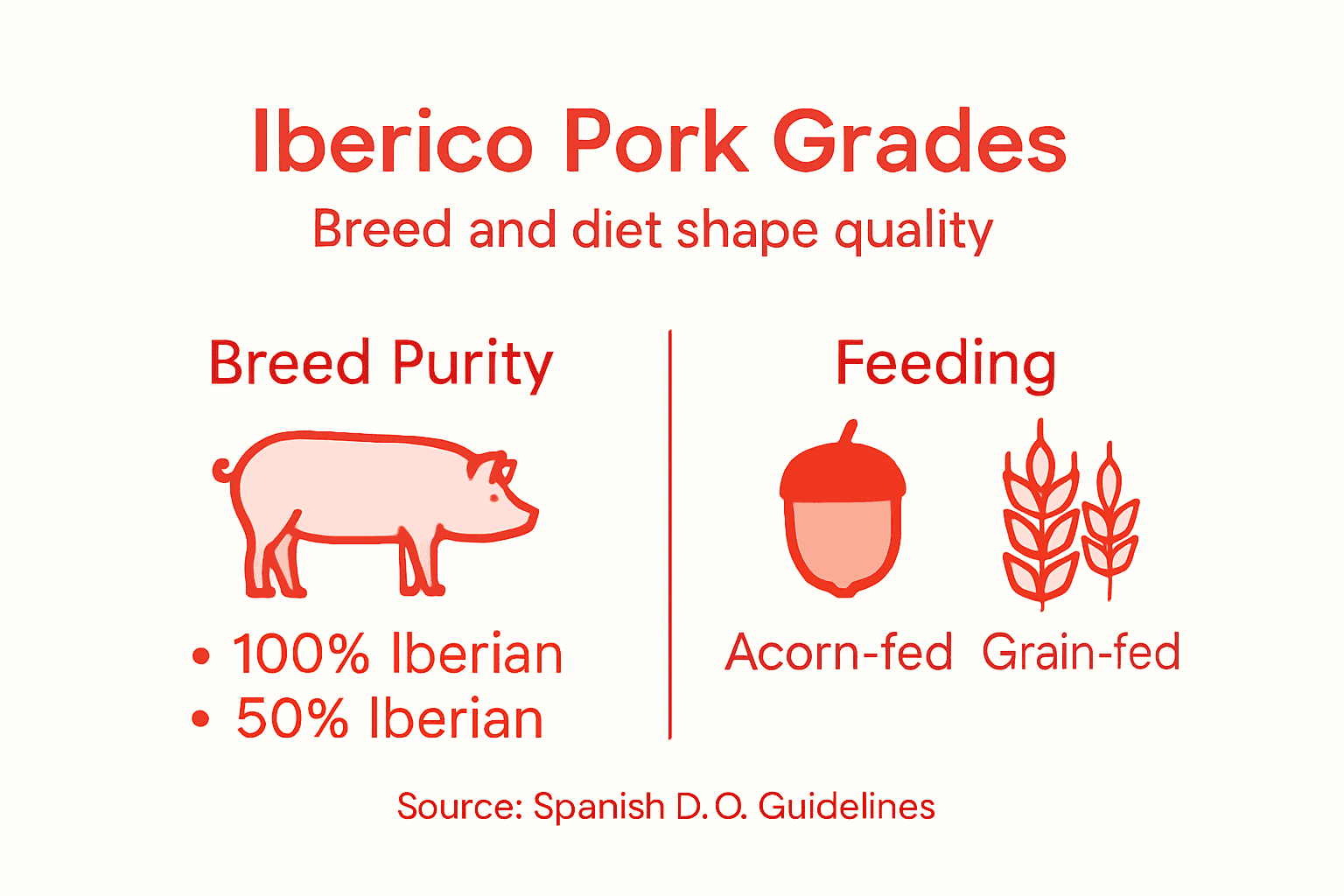
Beyond breed purity, diet creates distinct tiers within the Iberico classification system. The highest grade, bellota (acorn), comes from pigs fed exclusively on acorns during their final months, resulting in the most intense marbling and complex nutty flavours that connoisseurs prize. Recebo pigs receive a combination of acorns and supplementary grain feed, offering a middle ground between quality and cost. At the foundational level, pienso (feed-only) pigs are raised on grain throughout their lives, producing meat that is still authentically Iberico but lacking the sophisticated flavour development of acorn-fed varieties. Iberico pig classifications depend on breed purity and feeding regimen, governing labelling and quality control, ensuring transparency throughout Spain’s and Portugal’s pork industries.
When purchasing Iberico products, you’ll notice labels indicating these classifications. The highest designation you can find is Iberico Pata Negra (literally “black hoof”), which requires 100% purebred Black Iberian pigs raised on acorn pasture. Moving down the scale, you encounter Iberico Pata Roja (red hoof) for purebred acorn-fed pigs, then Iberico Cebo for purebred grain-fed pigs. Crossbreeds with the percentage clearly marked represent the entry point into authentic Iberico territory. This tiered system protects consumers whilst allowing producers to market products honestly according to their specific characteristics.
Here’s a quick reference comparing the main categories of Iberico pork:
| Classification | Breed Purity | Diet | Typical Flavour Profile |
|---|---|---|---|
| Bellota (Acorn-fed) | 100% or 75% Iberian | Free-range, acorn diet | Rich, nutty, exceptionally marbled |
| Recebo | 100% or 75% Iberian | Mixed acorn and grain | Balanced, nutty with savoury depth |
| Cebo | 100%, 75%, or 50% Iberian | Grain-based feed | Mild, less marbled, more subtle taste |
Pro tip: Look for the official Spanish or Portuguese denomination of origin (D.O.) label and the percentage of Iberian genetics listed on the packaging; this combination tells you exactly what grade you’re getting and helps you match quality levels to your intended use, whether for special occasions or everyday gourmet enjoyment.
The Role of Acorn-Feeding and Free-Range Rearing
If you want to understand what truly separates exceptional Iberico pork from ordinary meat, you need to look beyond the breed itself and examine how these animals live. The magic happens in the dehesas, expansive oak forests scattered across Spain and Portugal where Iberico pigs roam freely, foraging for natural foods. This free-range lifestyle isn’t simply better for animal welfare, though it certainly is. It fundamentally transforms the meat’s nutritional profile, flavour, and texture in ways that grain-fed alternatives simply cannot replicate.
During the montanera season, typically from September through February, Iberico pigs feast on fallen acorns in these oak forests. This diet is transformative. The acorn-rich diet infuses the meat with a sweet, nutty flavour and produces a soft, buttery fat texture, something you’ll immediately notice when tasting authentic bellota Iberico ham. The acorns aren’t merely food; they’re essentially nature’s fat modifier. Acorn feeding leads to higher oleic acid levels in the fat, the same healthy monounsaturated fat found in olive oil. This biochemical shift creates meat that feels luxurious on your palate whilst being more heart-healthy than conventional pork fat.
The intramuscular marbling you see in quality Iberico products develops directly from this combination of breed genetics and acorn diet. When pigs roam freely across the dehesas, they exercise naturally, building lean muscle whilst simultaneously accumulating fat in precisely the right way. The fat doesn’t congregate in thick deposits but instead infiltrates the muscle tissue, creating that distinctive marbling pattern. You’ll notice this the moment you slice into genuine bellota ham; the fat appears as fine, delicate veins throughout the meat rather than as chunky layers. This distribution is why the meat melts on your tongue instead of feeling fatty or heavy.
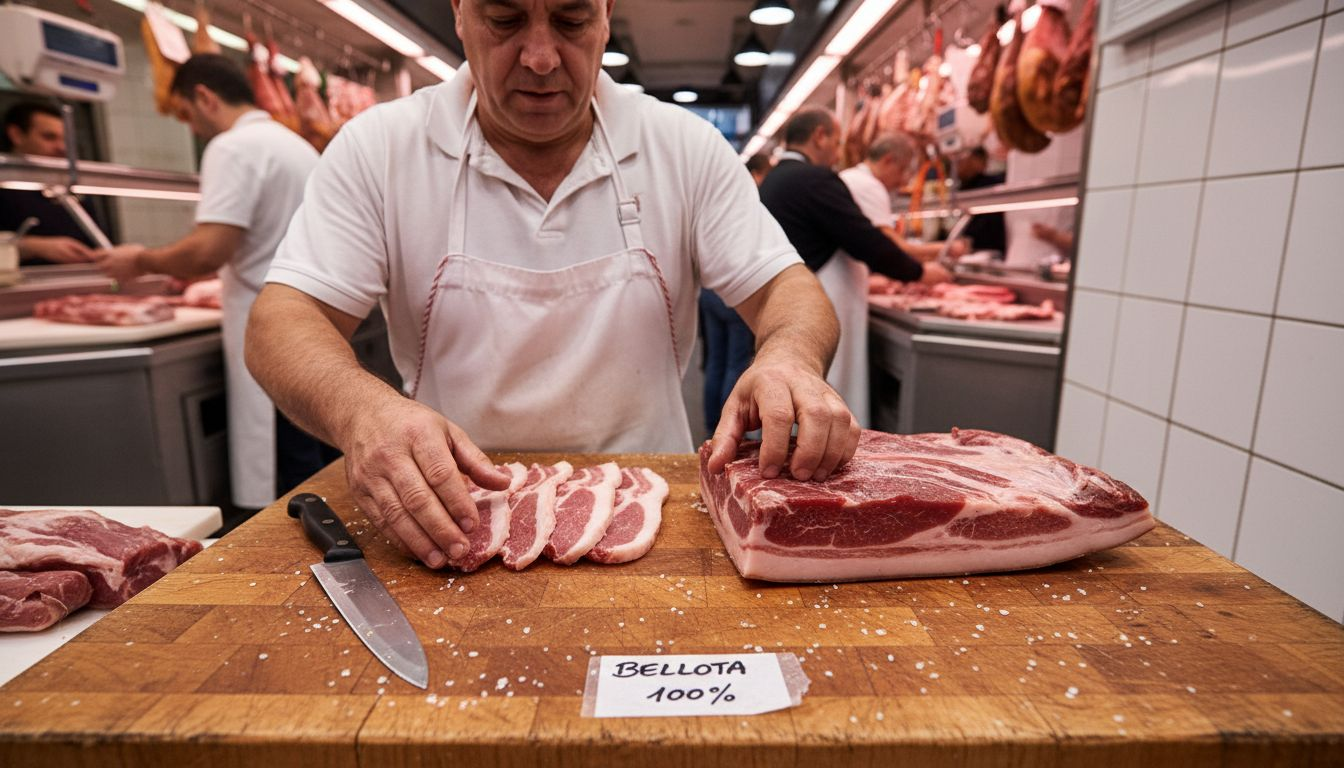
Grain-fed Iberico pigs, by contrast, live in more controlled environments and develop fat differently. Their meat remains authentically Iberico, meeting regulatory standards, but lacks the complexity and silky texture that acorn-fed varieties deliver. The difference in your mouth is unmistakable. When you’re purchasing Iberico products for special occasions or premium entertaining, the bellota designation signals that you’ve chosen pork raised in the traditional Spanish manner, with animals living as nature intended whilst developing meat of uncompromising quality.
Pro tip: When purchasing acorn-fed Iberico ham, look for the bellota label and check that it’s been aged for at least 36 months; this combination guarantees you’re getting meat from traditionally reared pigs with the complexity that develops only through proper montanera feeding and patient curing.
Grading, Labelling, and Spanish Quality Standards
When you’re standing in front of Iberico ham options, the labels and classifications can feel like a puzzle. What does bellota actually mean? Why do some products show percentages? The answers matter because Spain’s regulatory framework exists specifically to protect you from fraud whilst ensuring every product meets consistent quality benchmarks. These aren’t arbitrary marketing terms; they’re legally defined classifications with real consequences for producers who misrepresent their goods.
The Spanish grading system centres on two fundamental criteria: breed purity and feeding method. Labelling includes terms like bellota for acorn-fed pigs and percentage breed markings to denote pedigree, creating a transparent hierarchy that runs from entry-level crossbreeds through to elite purebred acorn-fed products. Bellota represents the summit of this hierarchy, reserved exclusively for 100% purebred Black Iberian pigs that have been raised free-range and fed on acorns during the montanera season. Below that sits Recebo, indicating purebred pigs fed on acorns supplemented with grain, and at the foundation you’ll find Cebo, for purebred pigs raised on grain alone. When you see percentage markings like 50%, 75%, or 100%, these indicate the proportion of Black Iberian genetics, with higher percentages commanding premium prices.
Iberico pork grades are strictly defined based on breed purity and feeding regimen, with standards enforced by Spanish agencies regulating production from rearing to curing. This regulatory oversight extends far beyond simple labelling. Spanish authorities monitor everything from the conditions where pigs are raised through to the temperature and humidity of curing facilities, ensuring consistency batch after batch. Protected designations of origin also apply, particularly to products from specific regions like Jabugo or Extremadura, creating geographical authentication that prevents cheaper imitations from being sold under Iberico labels. When you purchase products bearing these regional designations, you’re acquiring meat from specific, verified locations with centuries of established tradition.
Understanding these labels transforms your shopping experience. A bellota product commands premium pricing because it represents the full traditional experience: purebred genetics, free-range rearing, natural acorn diet, and extended ageing. Recebo offers exceptional quality at a lower price point, perfect for everyday gourmet enjoyment. Cebo products remain authentically Iberico whilst being more accessible. The percentage markings help you navigate crossbreeds intelligently, allowing you to balance budget with quality expectations. This transparency means you can make informed decisions rather than relying on assumptions or marketing hype.
Pro tip: Always photograph or note the complete label information including breed percentage, feeding method, region of origin, and ageing duration before purchasing; this documentation helps you compare products across suppliers and ensures you’re getting consistent quality when reordering your favourite items.
Comparing Iberico Pork to Other Premium Pork
You’ve probably heard Iberico pork described as “the Wagyu of pork,” and there’s legitimate reasoning behind that comparison. When you taste truly exceptional Iberico ham alongside other premium pork products, the differences become immediately apparent. However, understanding precisely what sets Iberico apart requires examining the specifics rather than accepting marketing comparisons at face value. The reality is more nuanced and, frankly, more interesting than simple analogies suggest.
The defining characteristic that distinguishes Iberico from conventional premium pork breeds lies in its genetic predisposition to develop exceptional intramuscular marbling. Iberico pork is often compared to Wagyu beef because of its intense marbling and rich flavour, with the fat distributing throughout the muscle tissue rather than concentrating in discrete layers. Most premium pork breeds like Berkshire or Kurobuta develop excellent flavour and texture, but they don’t achieve the same degree of marbling that makes Iberico remarkable. When you slice into authentic Iberico ham, the fat appears as fine veins throughout the meat, creating that distinctive silky mouthfeel that vanishes on your tongue. This isn’t simply breed superiority; it’s the combined effect of genetics working alongside acorn-feeding and free-range rearing practices.
The fat composition itself represents another crucial distinction. Iberico pork’s higher oleic acid fat content results in a softer, more flavourful fat and a unique nutty taste absent in regular pork, the same heart-healthy monounsaturated fat predominant in olive oil. Berkshire pork, whilst excellent, contains more saturated fat that can feel heavier on the palate. Kurobuta from Japan approaches Iberico’s quality but lacks the specific terroir imparted by Spanish acorn diets and Mediterranean genetics. When you taste these products side by side, the Iberico delivers a clean, elegant finish that lingers pleasantly, whilst other premium breeds feel richer and more savoury.
What truly matters for your purchasing decisions is recognising that Iberico occupies a distinct category rather than simply being “the best” pork. Some culinary applications actually suit other premium breeds better. Berkshire pork excels in charcuterie applications where you want assertive, defined flavour. Kurobuta works wonderfully in dishes where you’re seeking rich, concentrated pork taste. Iberico shines in applications where you want subtlety, nuance, and that buttery elegance. When purchasing directly from Spanish producers, you’re accessing a product that has been refined over centuries specifically for its unique characteristics rather than for general superiority over all other pork products.
Below is a concise comparison of Iberico pork with other premium pork breeds:
| Attribute | Iberico (Spain/Portugal) | Berkshire/Kurobuta (UK/Japan) |
|---|---|---|
| Marbling | Very high, fine veins | Moderate to high, coarser |
| Fat Type | High oleic acid, buttery | More saturated, firmer |
| Distinctive Flavour | Subtle, nutty, complex | Rich, savoury, pronounced |
| Typical Use | Slicing, ham, grilling | Sausages, roasting, charcuterie |
Pro tip: When comparing premium pork products, taste them at room temperature on neutral crackers or bread; this approach allows the fat’s flavour characteristics and mouthfeel to express themselves fully, helping you genuinely appreciate why Iberico commands its premium pricing compared to other exceptional pork varieties.
Discover the True Essence of Iberico Pork with 7 Bellotas
Understanding the rich heritage and specific classifications of Iberico pork can be overwhelming. You want to ensure every purchase reflects the breed purity, traditional acorn-fed diet, and expert curing detailed in the article. At 7 Bellotas, we solve this challenge by offering only premium, authentic Iberico ham from purebred Black Iberian pigs raised free-range on acorns, aged carefully up to 64 months for extraordinary flavour and texture.
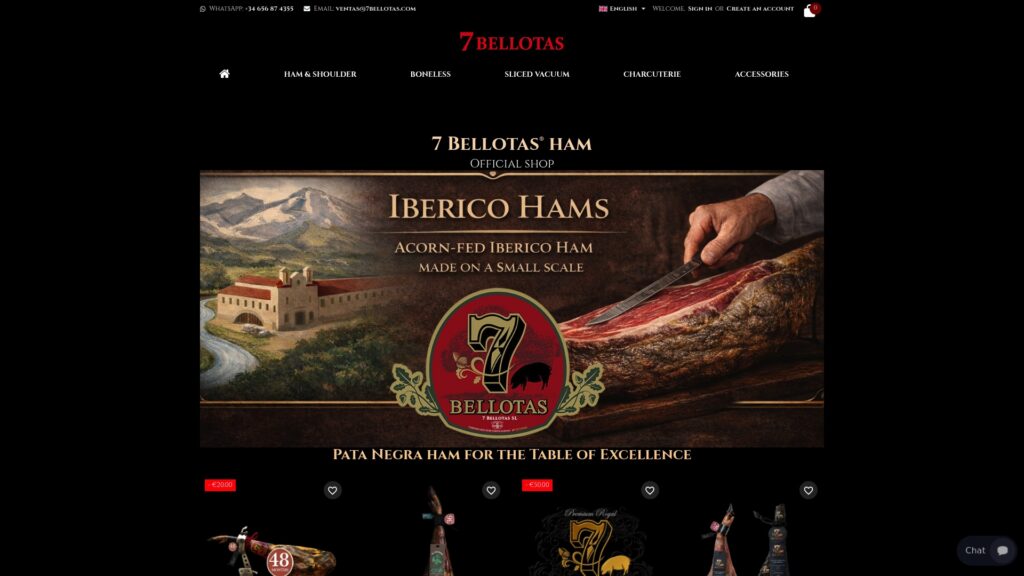
Indulge in the craftsmanship of genuine Iberico Pata Negra products through our exclusive range that highlights detailed information on breed lineage and curing times. Don’t settle for less than bellota quality when hosting or gifting. Visit 7 Bellotas today to savour the distinct nutty, buttery finish you learned about and experience why true Iberico pork deserves a place at your table now.
Frequently Asked Questions
What is Iberico pork?
Iberico pork is meat derived from the Black Iberian pig, a unique breed native to the Iberian Peninsula, known for its rich flavour and exceptional marbling.
What makes Iberico pork different from regular pork?
Iberico pork stands out due to its higher fat content and unique marbling patterns, which result in a buttery texture and nutty flavour, particularly from pigs raised on an acorn diet.
How is Iberico pork graded?
Iberico pork is graded based on breed purity and diet. The highest classification, bellota, comes from pigs that are either 100% or 75% Iberian and fed exclusively on acorns, providing superior marbling and taste.
Why does the feeding method of Iberico pigs matter?
The diet of Iberico pigs, especially the acorn-rich feeding during the montanera season, significantly influences the meat’s flavour, texture, and nutritional profile, making acorn-fed varieties the most prized.