Finding authentic Iberico ham in North America can be daunting, especially when every slice promises centuries of Spanish heritage. The allure lies not just in exquisite flavour, but in the complex artisanal curing methods and unique regional traditions that distinguish each ham. This guide helps you decode breed, diet, and production differences, ensuring you savour genuine Spanish craftsmanship while avoiding common misconceptions and costly mistakes.
Table of Contents
- Spanish Ham Defined And Misconceptions
- Types Of Spanish Ham And Key Differences
- Breed, Diet, And Environmental Influences
- Artisanal Curing And Ageing Methods
- Flavour, Texture, And Culinary Appeal
- Risks, Cost, And Authenticity For Buyers
Key Takeaways
| Point | Details |
|---|---|
| Understanding Spanish Ham | Spanish ham, including Jamón Serrano and Jamón Ibérico, showcases a rich artisanal tradition influenced by breed, diet, and curing methods. |
| Quality Tiers | The classification includes various tiers, with Jamón Ibérico de Bellota being the highest quality, influenced by pig diet and environment. |
| Authenticity Matters | Buyers should verify ham authenticity through official certification labels that indicate breed, feeding details, and region. |
| Sensory Experience | Premium Spanish ham delivers a complex flavour and texture due to its unique fat composition and extended maturation process. |
Spanish ham defined and misconceptions
Spanish ham, or jamón, represents a culinary tradition far more complex than many international consumers understand. Spanish ham encompasses a rich artisanal heritage that goes beyond simple meat preservation, reflecting generations of meticulous craftsmanship and regional expertise.
Understanding Spanish ham requires distinguishing between two primary categories: Jamón Serrano and Jamón Ibérico. These varieties differ significantly in breed, diet, and production methods:
- Jamón Serrano: Produced from white pig breeds
- Jamón Ibérico: Derived from black Iberian pig breeds
- Curing times range from 12 to 48 months
- Quality determined by pig diet and genetic lineage
Common misconceptions about Spanish ham often stem from a lack of understanding about its intricate production process. Many international consumers mistakenly believe all cured hams are identical, overlooking the nuanced differences in breed, feeding practices, and regional curing techniques that define authentic Spanish ham.
Authentic Spanish ham is not just a product, but a profound cultural expression of culinary tradition and regional expertise.
The classification of Spanish ham involves multiple quality tiers, with Jamón Ibérico de Bellota representing the pinnacle of quality. These premium hams come from free-range black Iberian pigs fed exclusively on acorns during their final months, resulting in a uniquely rich, nutty flavour profile.
Pro tip: When selecting Spanish ham, always look for official certification labels indicating the ham’s specific classification and origin.
Types of Spanish ham and key differences
Spanish ham presents a rich tapestry of varieties, each distinguished by unique characteristics that reflect centuries of culinary tradition. Spanish ham varieties represent complex regional distinctions rooted in specific breeding practices, geographical origins, and meticulous production methods.
Two primary categories dominate the Spanish ham landscape:
- Jamón Serrano: White pig breed, controlled farming conditions
- Jamón Ibérico: Black Iberian pig breed, more complex flavour profile
- Curing periods ranging from 12 to 48 months
- Varying fat content and marbling characteristics
The Jamón Ibérico category further subdivides into quality tiers based on the pig’s diet and breeding conditions. The most prestigious designation, Jamón Ibérico de Bellota, comes from black Iberian pigs that roam oak forests and feed exclusively on acorns during their final months, creating an exceptionally rich and nuanced flavour profile.
The quality of Spanish ham is determined not just by breed, but by the intricate relationship between pig, environment, and traditional curing techniques.
Regional variations play a crucial role in defining ham characteristics. Different Spanish regions like Extremadura, Salamanca, and Guijuelo have unique curing traditions that impart distinct flavour notes and textures to their hams. These regional differences emerge from specific microclimates, altitude, humidity levels, and generational knowledge passed down through family businesses.
Pro tip: When purchasing Spanish ham, examine the official classification label to understand its precise origin, pig breed, and quality tier.
The following table highlights the main distinctions between premium Spanish ham quality tiers to help understand what sets each apart:
| Quality Tier | Pig Diet Focus | Curing Region Examples | Flavour Complexity |
|---|---|---|---|
| Jamón Serrano | Grain-based | Teruel, Alpujarra | Mild and savoury |
| Jamón Ibérico de Cebo | Mixed grains | Salamanca, Huelva | Deeper, slightly nutty |
| Jamón Ibérico de Bellota | Acorns (free-range) | Extremadura, Guijuelo | Exceptionally rich, complex |
| Jamón Ibérico de Recebo | Acorns + grains | Granada, Córdoba | Nutty with sweet undertones |
Breed, diet, and environmental influences
The extraordinary quality of Spanish ham emerges from a delicate interplay between genetic heritage, dietary conditions, and specific environmental factors. Breeding practices profoundly influence ham characteristics through carefully selected pig genetics and nuanced agricultural approaches.
Key genetic and environmental determinants include:
- Pig Breed: Black Iberian vs White pig varieties
- Genetic Lineage: Pure breed vs crossbred animals
- Grazing Environment: Oak forests, mountain regions, pasture types
- Diet Composition: Acorn-fed, grain-supplemented, free-range conditions
The Iberian pig represents the pinnacle of Spanish ham genetics, distinguished by its unique ability to metabolise fat differently from other pig breeds. These animals possess an extraordinary capacity to develop intramuscular fat, creating the signature marbling that defines premium Spanish ham. Their genetic predisposition allows fat to distribute evenly throughout muscle tissue, resulting in an incomparably rich and complex flavour profile.
The magical transformation from pig to premium ham occurs through a complex dialogue between genetics, nutrition, and traditional curing techniques.
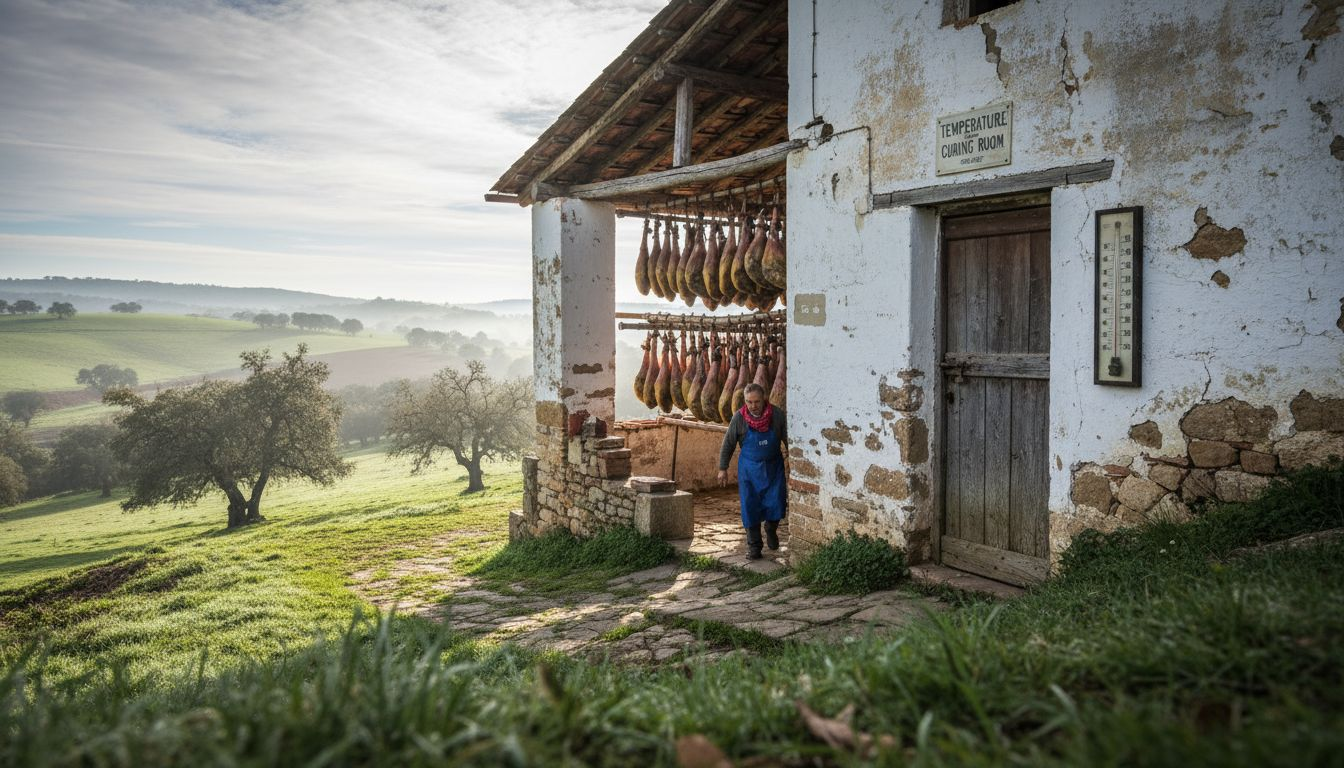
Environmental influences extend beyond mere geographical location. Microclimate factors such as altitude, humidity, and ambient temperature play crucial roles in ham development. Regions like Extremadura and Guijuelo offer unique atmospheric conditions that subtly influence fat rendering, moisture content, and flavour concentration during the extended curing process.
Pro tip: Examine ham labels carefully, as the genetic lineage and environmental conditions are often encoded in their official classification.
Artisanal curing and ageing methods
The transformation of Spanish ham from raw meat to culinary masterpiece represents an intricate art form steeped in generational expertise. Spanish dry-cured ham undergoes meticulous traditional processes that elevate it from mere protein to a gastronomic delicacy.
The traditional curing process involves multiple critical stages:
- Salting Phase: Initial salt preservation
- Post-Salting Rest: Moisture and salt distribution
- Drying Stage: Controlled environment conditioning
- Aging Period: Extended maturation from 12 to 48 months
Each stage demands precision and understanding. The salting process begins with carefully measuring salt quantities, which varies depending on the ham’s weight and desired characteristics. During this phase, salt penetrates the meat, drawing out moisture and creating an environment inhospitable to harmful bacteria while preserving the ham’s inherent flavours.
Artisanal curing is less a technical process and more a dialogue between craftsman, meat, and time itself.
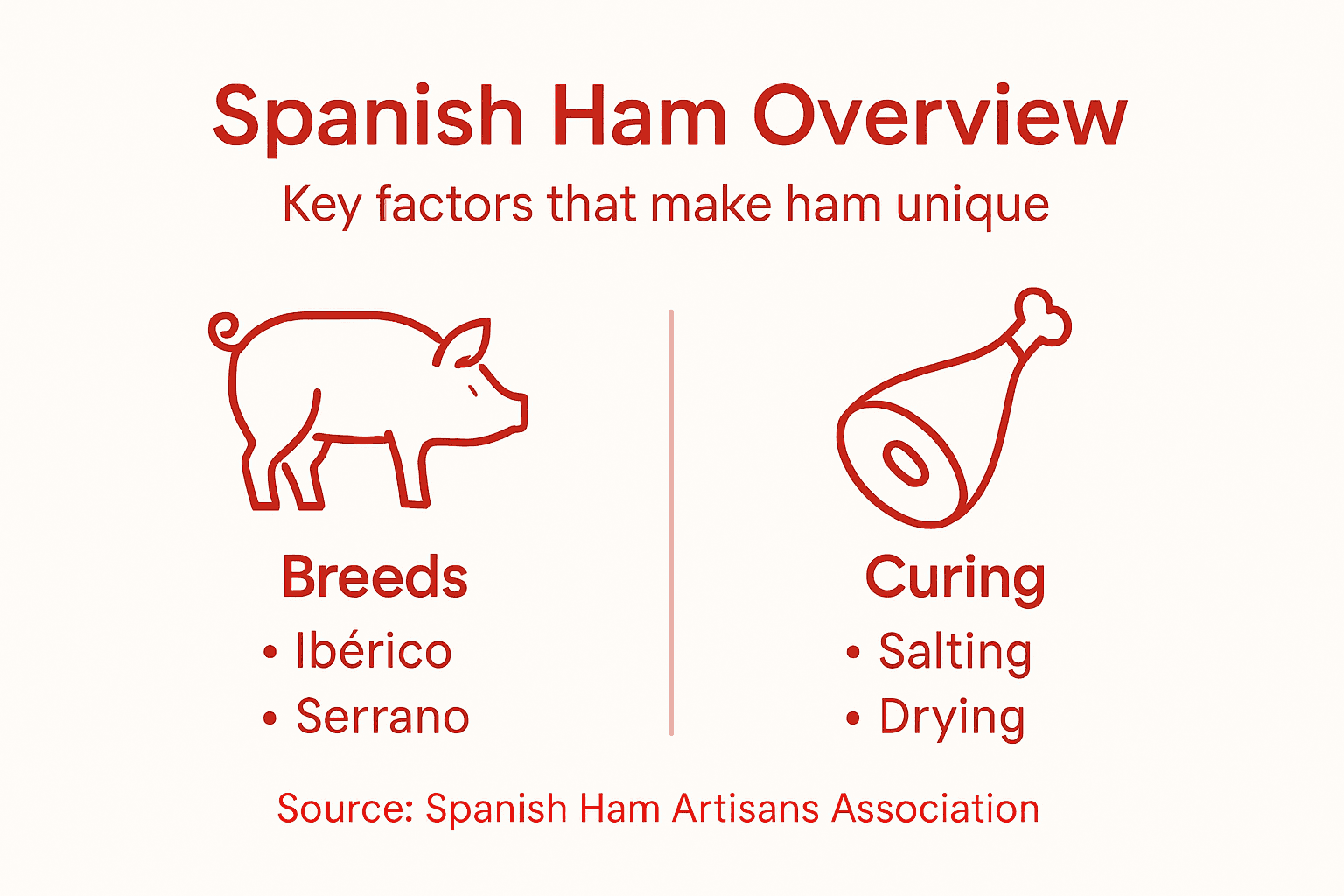
The aging environment plays a crucial role in developing the ham’s complex flavour profile. Specialized drying rooms with carefully controlled temperature and humidity create microclimatic conditions that encourage slow, deliberate moisture reduction and flavour concentration. Some traditional curing houses in regions like Guijuelo and Extremadura utilise centuries-old stone buildings with natural ventilation, allowing subtle environmental nuances to influence the ham’s character.
Pro tip: Observe the curing rooms and environmental conditions when purchasing premium Spanish ham, as these details significantly impact the final product’s quality.
Flavour, texture, and culinary appeal
Spanish ham represents a pinnacle of gastronomic excellence, where sensory complexity transcends ordinary cured meats. Extended maturation enhances flavour profiles through intricate biochemical transformations that develop extraordinary taste characteristics.
Key sensory attributes include:
- Fat Marbling: Delicate, melt-in-mouth texture
- Amino Acid Complexity: Rich, nuanced flavour notes
- Aroma Intensity: Deeply layered fragrance profiles
- Texture Gradation: Smooth, tender muscle fibres
The Iberian ham’s flavour journey begins with its distinctive fat composition. Unlike conventional hams, Iberian pigs develop intramuscular fat that distributes exceptionally evenly, creating a luxurious mouthfeel and enabling complex flavour transmission. Each slice presents a symphony of taste – nutty, slightly sweet undertones intermingling with subtle savoury notes that reflect the animal’s acorn-rich diet.
Truly exceptional Spanish ham tells a story of landscape, tradition, and meticulous craftsmanship in every single bite.
Texture represents another dimension of Spanish ham’s culinary magic. Prolonged aging breaks down muscle proteins, resulting in an almost silken consistency that allows the ham to practically dissolve on the tongue. The protein degradation process creates microscopic flavour pockets, ensuring each morsel delivers a concentrated sensory experience that evolves from initial contact to lingering aftertaste.
Pro tip: Allow premium Spanish ham to rest at room temperature for 15-20 minutes before serving to unlock its full aromatic and textural potential.
Risks, cost, and authenticity for buyers
Navigating the world of premium Spanish ham requires careful consideration of multiple factors beyond mere price. Authenticity verification remains crucial for buyers to ensure they receive genuine, high-quality Iberian products.
Key risks and considerations for potential buyers include:
- Breed Purity: Verification of genuine Iberian pig lineage
- Feeding Regime: Confirming acorn-fed or free-range status
- Price Range: €50-€1,000 depending on quality tier
- Certification Complexity: Multiple official sealing systems
The price spectrum of Spanish ham reflects extraordinary variability. Entry-level Serrano hams might cost €50-€100, while premium Jamón Ibérico de Bellota can reach €500-€1,000 for a whole ham. These significant price differences stem from intricate production processes, pig genetics, and curing duration.
The true value of Spanish ham lies not in its price, but in its profound cultural and gastronomic authenticity.
Consumers face substantial risks of purchasing counterfeit products. Advanced scientific methods, including genetic and chemical testing, are now employed to verify ham’s provenance. Buyers should scrutinise official certification labels, which encode critical information about breed, origin, and production methodology. These labels represent the primary defence against fraudulent marketing practices in the global ham market.
Pro tip: Always request and verify the official certification document when purchasing premium Spanish ham, ensuring you understand exactly what you’re buying.
To quickly identify authentic Spanish ham, refer to these key label elements and their meanings:
| Label Feature | What It Ensures | Why It Matters |
|---|---|---|
| Breed Statement | Iberian or white breed listed | Verifies animal origin |
| Feeding Details | Grain or acorn diet shown | Indicates quality and flavour |
| Region Indication | Named Spanish location | Reveals unique regional traits |
| Official Seal | Certifying body’s hologram | Confirms authenticity and grade |
Discover the True Taste of Authentic Spanish Ham
The intricate tradition and artisanal heritage of Spanish ham demand more than curiosity they evoke a passion for genuine quality and craftsmanship. If you are seeking to experience the full richness of Jamón Ibérico de Bellota with its unparalleled flavour and unique curing process, it is essential to trust a source that honours these traditions. At 7 Bellotas, we specialise in offering premium acorn-fed Pata Negra hams aged meticulously from 36 to over 64 months to ensure the deep, complex taste profiles described in the article.
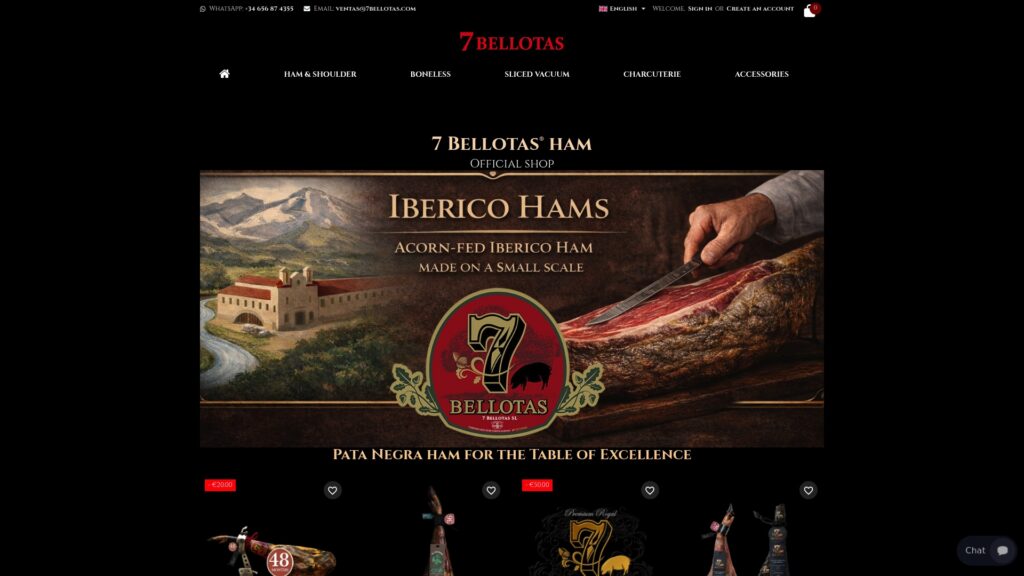
Do not settle for less when authenticity matters. Explore our collection of artisanal Spanish hams and related cured products built on generations of expertise and natural curing methods. Visit 7 Bellotas today and bring home an exquisite piece of Spanish culinary heritage. Experience why true connoisseurs choose us for their gourmet ham cravings and start your journey into luxury Spanish flavours now.
Frequently Asked Questions
What makes Spanish ham different from other cured hams?
Spanish ham, known as jamón, is distinguished by its specific breeding practices, curing methods, and the unique diets of the pigs. The two main types, Jamón Serrano (from white pigs) and Jamón Ibérico (from black Iberian pigs), have marked differences in flavour, texture, and quality, primarily influenced by genetics and environment.
How is Spanish ham cured and aged?
The curing and ageing process of Spanish ham involves several stages, including salting, resting, drying, and ageing for 12 to 48 months. Each step is meticulously controlled to enhance the ham’s flavour and texture, allowing it to develop unique characteristics that set it apart from mere meat preservation.
What are the different quality tiers of Spanish ham?
Spanish ham is classified into quality tiers based on the breed of pig and their diet. Key classifications include Jamón Serrano, Jamón Ibérico de Cebo (mixed-grain fed), Jamón Ibérico de Bellota (acorn-fed), and Jamón Ibérico de Recebo (acorns and grains). The most prestigious is Jamón Ibérico de Bellota, known for its exceptional flavour complexity.
Why is acorn-fed Iberian ham considered the best?
Acorn-fed Iberian ham, or Jamón Ibérico de Bellota, is regarded as the highest quality due to the pigs’ diet, which consists exclusively of acorns during their final months. This diet enables a higher degree of fat marbling, leading to a richer, nuttier flavour and an unparalleled culinary experience.