Choosing authentic acorn-fed Iberico ham can be more challenging than it seems. For gourmet food lovers seeking the true taste of Spain, navigating colour labels and breed claims demands careful attention. Bellota quality sets the highest benchmark in cured meats, reserved only for hams made from purebred Iberian pigs raised free-range and fed on acorns, as verified by the black certification label. This article uncovers exactly what bellota means and exposes common myths, helping you identify genuine Spanish excellence every time.
Table of Contents
- Bellota Quality Defined And Common Misconceptions
- Bellota Classification: Types And Official Labels
- Production Methods: Key Artisanal Practices
- Flavour, Texture, And Health Benefits Explained
- Comparing Bellota With Other Iberico Hams
- What To Look For When Buying Bellota Ham
Key Takeaways
| Point | Details |
|---|---|
| Bellota Quality Definition | Bellota ham is the highest grade of Iberian ham, made from purebred Iberian pigs raised on specific diets of acorns during montanera season. |
| Label Certification | Always verify the official black label to ensure authenticity, as only hams meeting strict criteria can be classified as bellota. |
| Production Process | The production of bellota ham involves meticulous artisanal practices, including careful genetic selection, traditional curing, and natural aging over 24 to 48 months. |
| Flavour Profile | Bellota ham is characterised by its complex, nutty flavour, melt-in-mouth texture, and exceptional nutritional benefits, including high levels of heart-friendly monounsaturated fats. |
Bellota Quality Defined And Common Misconceptions
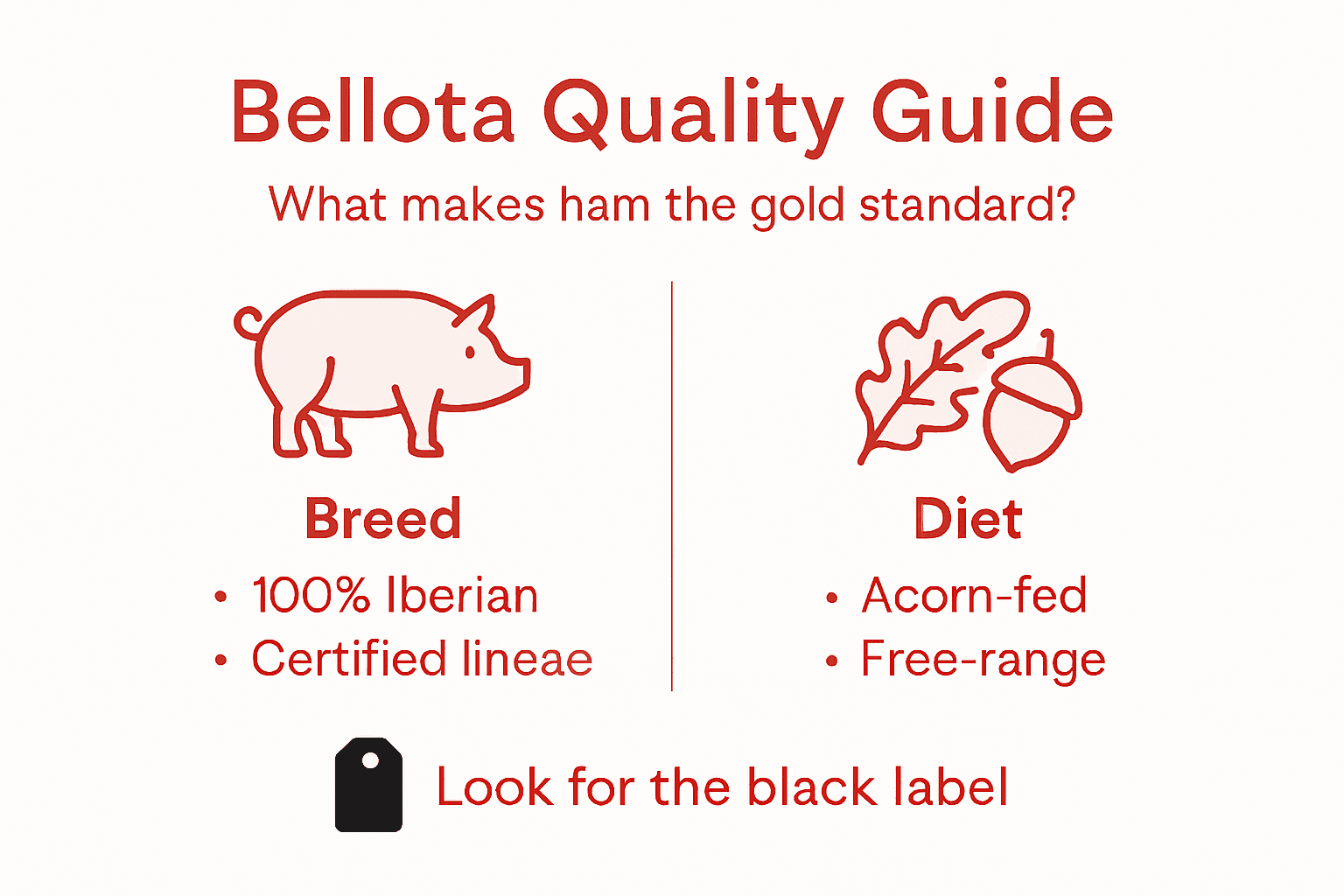
Bellota quality represents the pinnacle of Iberian ham production, a designation reserved for the most exceptional cured meats derived from purebred Iberian pigs. Strict breed and dietary standards distinguish these premium hams from ordinary varieties, creating a culinary experience that transcends standard charcuterie.
The term “bellota” specifically refers to hams produced from pigs raised in traditional Spanish dehesas (open pasturelands), where they roam freely and feed primarily on acorns during the montanera season. These unique conditions create remarkable characteristics:
- Pure 100% Iberian breed genetics
- Free-range lifestyle in natural landscapes
- Predominantly acorn-based diet
- Extensive intramuscular fat marbling
- Naturally developed flavour profiles
Contrary to popular misconceptions, not all Iberian hams qualify as bellota. The black label signifies the highest grade, requiring absolute purity of breed and an exclusive acorn diet. Consumers often mistakenly assume that hoof colour or packaging claims guarantee bellota status, when in reality, only hams meeting rigorous certification standards can claim this prestigious designation.
Pro tip: When selecting bellota ham, always verify the official black label certification to ensure you’re experiencing authentic, premium Iberian quality.
Bellota Classification: Types And Official Labels
The Iberian ham classification system represents a sophisticated approach to categorising premium meat products, with official regulations defining precise quality standards. These standards ensure consumers receive an authentic and traceable culinary experience, distinguishing between various grades of Iberian ham based on breed purity and dietary conditions.
The official classification system utilises a colour-coded labelling mechanism that provides immediate insight into the ham’s provenance and quality:
- Black Label: 100% Purebred Iberian pigs, fed exclusively on acorns
- Red Label: Crossbred Iberian pigs with minimum 50% racial purity, acorn-fed
- Green Label: Free-range pigs with mixed diet of pasture and supplemental feed
- White Label: Commercially raised pigs with standard feeding practices
Each label corresponds to specific genetic and nutritional criteria, with bellota-classified hams representing the pinnacle of quality. The labelling system goes beyond mere marketing, serving as a rigorous certification that guarantees the product’s authenticity, genetic lineage, and adherence to traditional production methods.
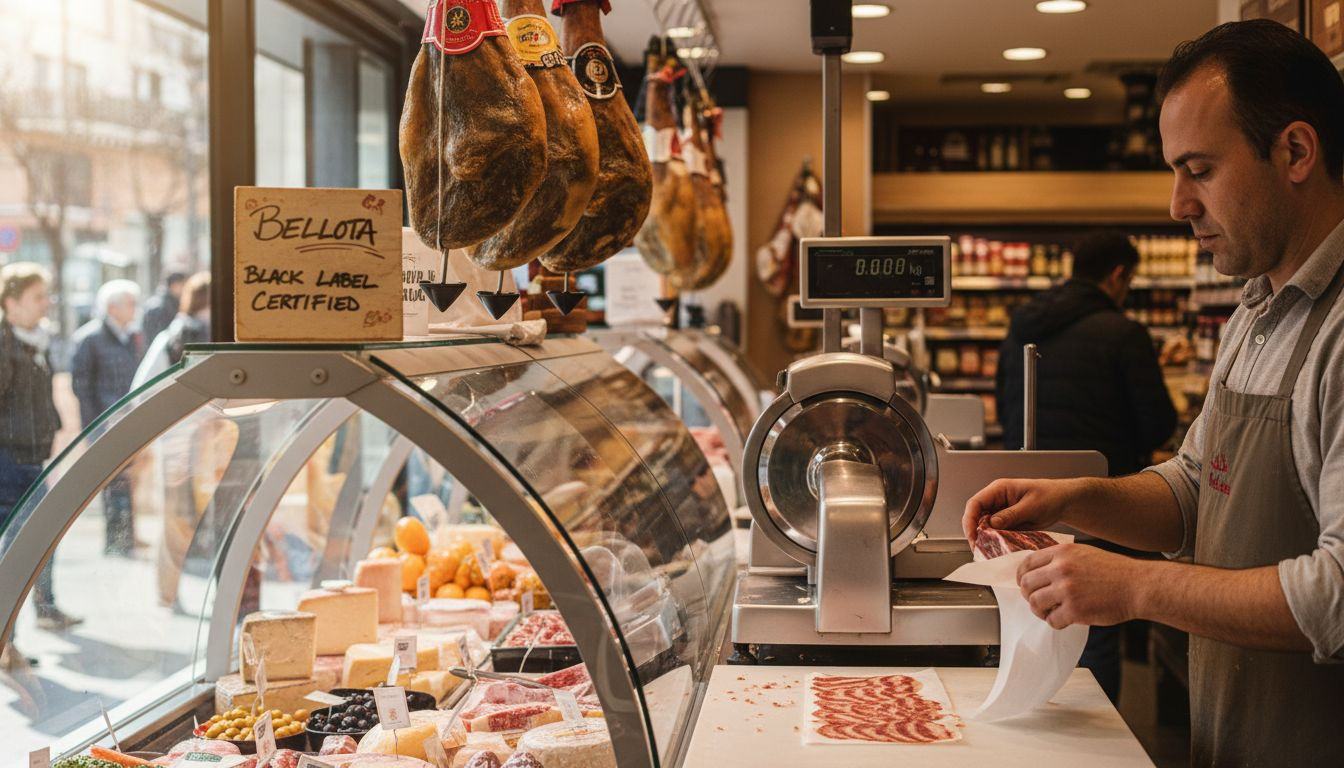
The following table highlights the main differences between the four official Iberian ham labels for quick reference:
| Label Colour | Breed Purity | Primary Diet | Typical Price Range |
|---|---|---|---|
| Black | 100% Iberian | Acorns only | Highest premium |
| Red | 50-75% Iberian | Acorns only | High premium |
| Green | 50–100% Iberian | Pasture & feed | Intermediate |
| White | 50–100% Iberian | Grain feed | Most affordable |
The certification process involves meticulous verification by independent control entities who track each animal’s genetic background, diet, and rearing conditions. These stringent protocols ensure that only hams meeting the most exacting standards can claim the prestigious bellota designation, protecting both the producer’s reputation and the consumer’s expectations.
Pro tip: When purchasing Iberian ham, always examine the official coloured label to understand the precise quality and origin of your selected product.
Production Methods: Key Artisanal Practices
The production of bellota ham represents an intricate art form deeply rooted in Spanish agricultural traditions, carefully orchestrating multiple complex stages of animal husbandry and meat preparation. This meticulous process begins with the careful selection of Iberian pigs and extends through a remarkably sophisticated curing journey that transforms raw meat into a culinary masterpiece.
The critical stages of bellota ham production involve several key artisanal practices:
- Genetic Selection: Choosing pure or high-percentage Iberian breed pigs
- Dehesa Raising: Allowing free-range movement in traditional oak forest pastures
- Montanera Feeding: Exclusively foraging acorns and natural grasses during fattening period
- Slaughter Techniques: Employing traditional, stress-minimising methods
- Salt Curing: Applying precise salting techniques to preserve and develop flavour
- Natural Aging: Maturing hams in controlled, well-ventilated cellars
The curing process represents the most transformative phase, where scientific precision meets traditional craftsmanship. Hams are carefully salted, then left to rest and slowly dry in natural environments that promote complex enzymatic reactions. This prolonged aging—typically spanning 24 to 48 months—allows for extraordinary flavour development, creating the distinctive characteristics that distinguish bellota ham from other cured meats.
The true magic of bellota ham lies not just in its ingredients, but in the patience and expertise of artisan curers who transform simple pork into a gastronomic treasure.
Pro tip: When appreciating bellota ham, understand that each slice represents years of carefully managed traditional production techniques.
Flavour, Texture, And Health Benefits Explained
Bellota ham represents an extraordinary culinary experience that transcends ordinary cured meats, offering a symphony of sensory attributes that delight even the most discerning palates. The unique combination of genetic heritage, diet, and artisanal curing processes creates a gastronomic profile unmatched in the world of charcuterie.
The distinctive flavour and textural characteristics of bellota ham include:
- Intramuscular Fat: Delicate, melt-in-mouth marbling with exceptional smoothness
- Aroma: Complex, nutty undertones derived from acorn-based diet
- Colour: Deep ruby-red with elegant white fat streaks
- Texture: Silky, tender consistency with subtle granular crystalline notes
- Flavour Profile: Balanced combination of sweet, savoury, and umami sensations
- Finish: Lingering, sophisticated taste with minimal saltiness
Nutritionally, bellota ham offers remarkable health benefits that distinguish it from conventional meat products. The acorn-rich diet of Iberian pigs contributes to a unique fat composition that is surprisingly heart-friendly, containing high levels of monounsaturated oleic acids similar to those found in olive oil. These nutritional properties make bellota ham not just a delicacy, but a potentially beneficial component of a balanced diet.
Below is a summary of sensory attributes that define exceptional bellota ham quality:
| Attribute | Description | Impact on Experience |
|---|---|---|
| Aroma | Nutty, complex, aromatic | Enhances anticipation |
| Flavour Depth | Sweet, savoury, umami balance | Unique, lingering taste |
| Texture | Silky, melt-in-mouth, tender | Superior mouthfeel |
| Colour | Deep ruby with white marbling | Visual signal of quality |
The extraordinary quality of bellota ham lies in its ability to transform simple ingredients into a complex sensory experience that celebrates centuries of Spanish culinary tradition.
Pro tip: Appreciate bellota ham at room temperature to fully unlock its intricate flavour profile and textural nuances.
Comparing Bellota With Other Iberico Hams
Iberian ham represents a complex spectrum of quality, with bellota standing as the unrivalled pinnacle of culinary excellence. Different classifications reveal subtle yet significant variations in production methods, diet, and resulting flavour profiles that discerning connoisseurs meticulously evaluate.
The key distinctions between bellota and other Iberico ham categories include:
Bellota (Black Label)
- Exclusively acorn and pasture-fed
- Highest fat marbling
- Most complex flavour profile
- Longest curing times (36-48 months)
- Premium pricing
Cebo de Campo (Green Label)
- Partially free-range
- Mixed grain and pasture diet
- Moderate fat infiltration
- Milder flavour complexity
- Intermediate pricing
Cebo (White Label)
- Intensive farming
- Grain-feed only
- Minimal fat marbling
- Standard flavour intensity
- Most affordable option
The fundamental differentiator remains the pig’s diet and lifestyle. Bellota hams emerge from Iberian pigs that roam freely in dehesas, consuming acorns and natural grasses, which dramatically transforms the meat’s intrinsic characteristics. This natural diet creates an unparalleled fat composition characterised by high monounsaturated oleic acid content, contributing to the ham’s distinctive melt-in-mouth texture and nuanced flavour profile.
Bellota ham isn’t merely a product; it’s a sensory journey that captures the essence of Spanish agricultural heritage.
Pro tip: When comparing Iberico hams, always examine the official colour label to understand the precise quality and production standards.
What To Look For When Buying Bellota Ham
Purchasing authentic bellota ham requires a discerning eye and understanding of official quality regulations. Connoisseurs must navigate a complex landscape of certification, labelling, and production standards to ensure they are acquiring a genuine, premium product.
Critical factors to evaluate when purchasing bellota ham include:
Certification Labels
- Black label: 100% Iberian breed, acorn-fed
- Red label: Crossbred Iberian pigs, acorn-fed
- Authentic traceability documentation
- Denominación de Origen seal
Visual Inspection Criteria
- Deep ruby-red meat colour
- Consistent white fat marbling
- Uniform, elongated ham shape
- Natural, unbroken exterior fat layer
Sensory Assessment Indicators
- Rich, nutty aroma
- Smooth, melt-in-mouth texture
- Complex flavour profile
- Minimal saltiness
- Delicate fat that dissolves at room temperature
Authentic bellota ham requires verification beyond visual appearance. Consumers should request detailed information about the ham’s origin, including specific dehesa location, montanera season duration, and precise curing period. Reputable vendors will provide comprehensive documentation demonstrating the product’s genuine provenance and adherence to traditional production methods.
The true value of bellota ham lies not just in its taste, but in the intricate journey from pasture to plate.
Pro tip: Always request a detailed product history and verify the official certification label before purchasing bellota ham.
Discover The True Essence Of Bellota With 7 Bellotas
Understanding what defines bellota quality is essential for anyone seeking the finest Iberian ham. If you are looking to enjoy 100% purebred Iberian pigs raised on acorn diets and cured to perfection, your journey should begin with trusted sources that uphold these rigorous standards. At 7 Bellotas, we share your passion for authentic Spanish heritage and offer carefully selected, artisanal hams aged for 36 months and beyond to deliver that melt-in-the-mouth texture and complex flavour you deserve.
Explore our exclusive collection of premium Iberico hams and related delicacies at 7 Bellotas. Don’t settle for anything less than the official black label quality detailed in the article. Secure your genuine bellota ham now and indulge in a gourmet experience that reflects centuries of craftsmanship. Your taste buds will thank you—shop today and savour the gold standard in cured meats.
Frequently Asked Questions
What defines bellota quality in Iberian ham?
Bellota quality is defined by the use of 100% purebred Iberian pigs that are free-range and fed exclusively on acorns during the montanera season, resulting in exceptional flavour, texture, and marbling.
How can I differentiate between bellota and other types of Iberian ham?
Bellota ham is distinguished by its black label, indicating it is made from purebred Iberian pigs that have a diet exclusively of acorns. Other types include the red label (crossbred with acorn-fed), green label (mixed diet), and white label (standard grain-fed).
What are the health benefits of consuming bellota ham?
Bellota ham is known for its high levels of monounsaturated oleic acids, similar to those found in olive oil, which can be beneficial for heart health and contribute to a balanced diet.
What factors should I consider when purchasing bellota ham?
When buying bellota ham, it’s important to check for certification labels, inspect the visual characteristics such as colour and marbling, and assess sensory attributes like aroma and texture to ensure authenticity.
Recommended
- What Is Iberico Pork And Why It Matters
- Why Connoisseurs Prefer Ibérico: Artisanal Craft Meets Excellence
- 7 Proven Iberico Ham Tasting Tips For Gourmet Enthusiasts
- How To Select Iberico Ham For Authentic Flavour And Quality
- Organic Walnut Halves – Granavitalis
- Specialty Grade Beans: Impact on Eco-Conscious Coffee Lovers – EcoVibe Roast