Seeking the perfect balance of heritage and flavour, gourmet connoisseurs often find themselves drawn to the allure of authentic Spanish Ibérico ham. The unmatched depth of taste and luxurious texture stem from centuries-old artisan methods in Spain and Portugal, spotlighting the Black Iberian pig’s unique genetics and free-range acorn diet. Artisan producers meticulously oversee every stage, from specialised rearing to lengthy maturation periods, ensuring each slice offers a true investment in culinary tradition and excellence.
Table of Contents
- Iberico Ham Origins And Key Definition
- Breed, Diet, And Production Methods
- Grades And Distinctions Of Iberico Ham
- Artisan Curing Process And Ageing Impact
- Scarcity, Demand, And Legal Protection
- Comparisons With Alternatives And Pricing
Key Takeaways
| Point | Details |
|---|---|
| Origin of Ibérico Ham | Ibérico ham is a cherished delicacy from the Iberian Peninsula, exclusively produced from the Black Iberian pig, contributing to its unique flavour. |
| Grades and Quality | The quality of Ibérico ham is classified into four main grades, with prices varying significantly based on genetic purity and feeding methods. |
| Artisan Production | The meticulous artisan curing process can take up to 48 months, creating complex flavours that define authentic Ibérico ham. |
| Authenticity Verification | To ensure quality, look for official certifications and ask about the pig’s lineage and diet when purchasing Ibérico ham. |
Iberico ham origins and key definition
The Ibérico ham represents a culinary treasure deeply rooted in the Iberian Peninsula’s gastronomic heritage. Native to Spain and Portugal, this extraordinary delicacy originates from the unique Black Iberian pig breed, renowned for producing some of the world’s most prized cured meats.
The extraordinary quality of Ibérico ham stems from several distinctive characteristics:
- Exclusive production in specific regions of the Iberian Peninsula
- Derived from pure or crossbred Black Iberian pigs
- Traditional curing methods passed through generations
- Strict geographical and breeding requirements
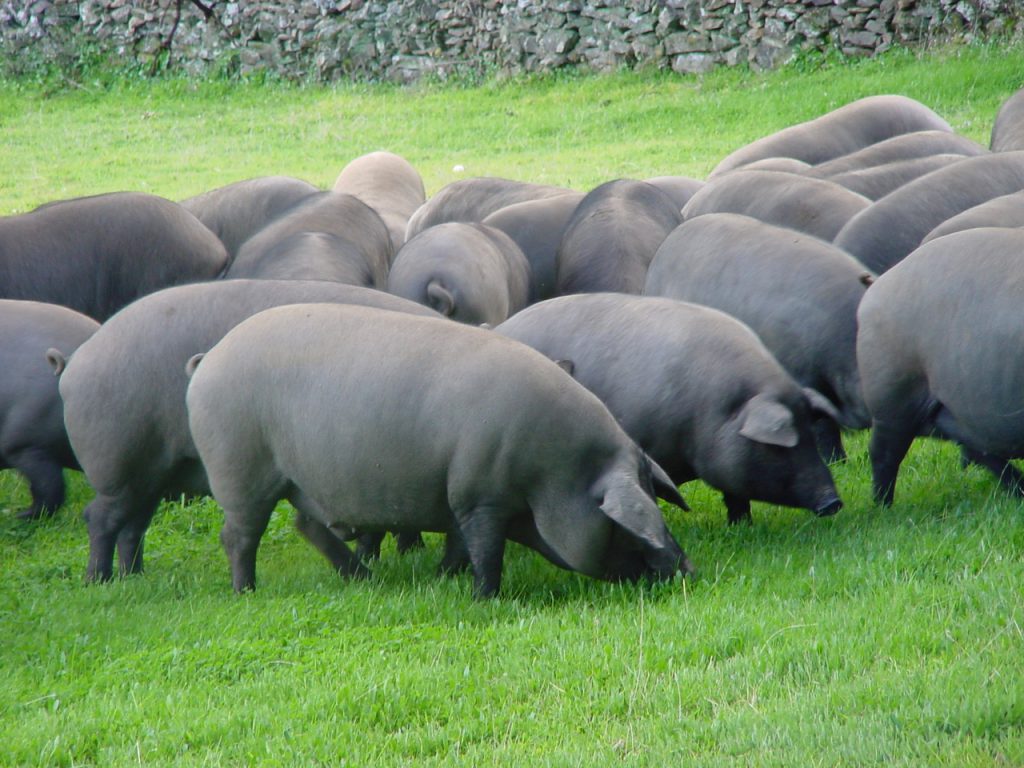
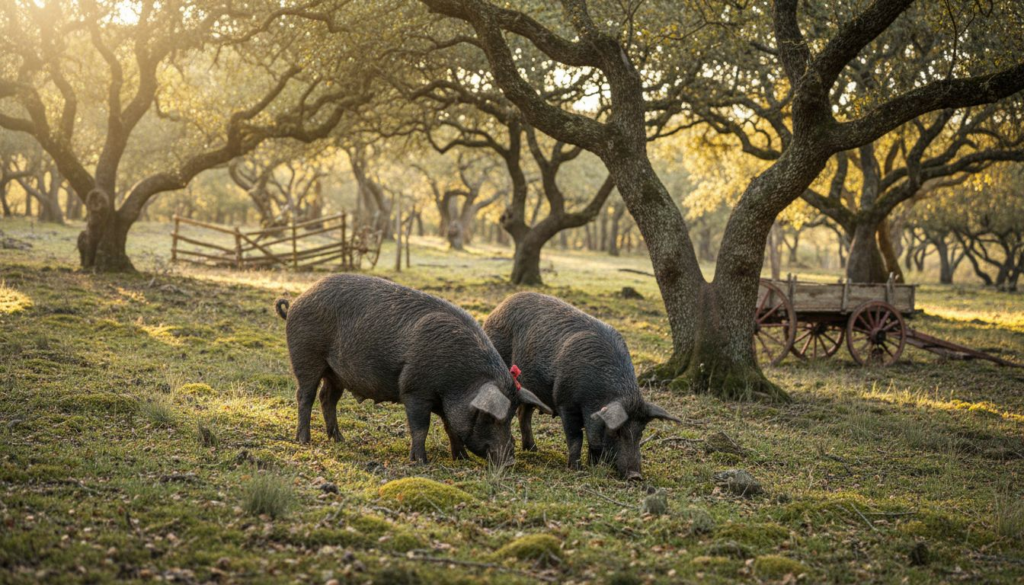
Traditionally, these pigs roam semi-wild landscapes, particularly oak forests in regions like Extremadura and Andalusia. Their diet, which significantly influences the ham’s flavour, consists predominantly of acorns during the montanera (autumn/winter fattening period). This unique feeding process contributes to the ham’s rich, complex flavour profile and exceptional marbling.
The production of Jamón Ibérico represents more than a culinary technique—it’s a cultural practice steeped in centuries of tradition. Artisan producers carefully select pigs, monitor their diet, and employ meticulous curing processes that can extend 36 to 48 months, transforming simple meat into a gastronomic masterpiece.
Pro tip: When selecting Ibérico ham, look for official quality designations that confirm its authentic production methods and regional origins.
Breed, diet, and production methods
The Black Iberian pig represents the cornerstone of authentic Ibérico ham production, with its unique genetic characteristics defining the premium quality of this extraordinary delicacy. Genetic purity and production systems play a critical role in determining the final sensory attributes of the ham.
Key characteristics of the Iberian pig breed include:
- Distinctive black or dark grey colouration
- Longer, leaner body structure compared to other pig breeds
- Exceptional ability to metabolise acorn-based diets
- Genetic predisposition for high-quality fat marbling
- Natural adaptation to semi-wild landscape environments
The pig’s diet is perhaps the most crucial factor in creating exceptional Ibérico ham. During the montanera season, these remarkable animals roam freely through oak forests, consuming a diet rich in acorns. This natural feeding process, known as bellota diet, dramatically influences the ham’s flavour profile, resulting in meat with extraordinary marbling and a distinctive nutty, rich taste.
Production methods for Ibérico ham are meticulously controlled, involving several critical stages:
- Selective breeding of pure or crossbred Iberian pigs
- Free-range rearing in traditional dehesa landscapes
- Acorn-focused diet during autumn and winter months
- Careful monitoring of pig health and genetic lineage
- Precision curing and aging processes
Pro tip: When purchasing Ibérico ham, ask about the pig’s lineage and diet to ensure you’re experiencing the most authentic flavour profile.
Grades and distinctions of Iberico ham
Ibérico ham is not simply a product, but a complex culinary classification system that reflects the pig’s genetic heritage, diet, and production methods. Types of Iberico ham reveal the nuanced world of Spanish charcuterie, with each grade representing a different level of quality and authenticity.
The primary classification system for Ibérico ham is based on four key criteria:
- Genetic Purity: Percentage of Iberian pig breed lineage
- Feeding Regime: Diet during the animal’s lifetime
- Rearing Environment: Free-range vs. farm-raised conditions
- Curing Process: Duration and traditional methods of preparation
Traditionally, Ibérico ham is categorised into four primary grades:
To better understand the distinctions among Ibérico ham grades, see the table below:
| Grade Name | Pig Breed Purity | Feeding Method | Typical Price Range (per kg) |
|---|---|---|---|
| Bellota 100% Ibérico | Pure Iberian | Acorn-exclusive | £400–£800 |
| Bellota Ibérico | Crossbred Iberian | Mainly acorns | £150–£400 |
| Cebo de Campo | Mixed breeds | Mixed acorns & grain | £50–£100 |
| Cebo | Crossbred or non-Iberian | Grain only | £10–£25 |
Bellota 100% Ibérico: The pinnacle of quality
- Pure Iberian breed
- Free-range in oak forests
- Exclusively acorn-fed
- Most expensive and rare
Bellota Ibérico: High-quality variation
- Crossbred Iberian pigs
- Partially acorn-fed
- Significant marbling and flavour
Cebo de Campo: Intermediate grade
- Mixed diet
- Partially free-range
- Less intense flavour profile
Cebo: Standard commercial grade
- Primarily grain-fed
- Minimal free-range experience
- Most affordable option
The grade of Ibérico ham directly correlates with its price, with Bellota 100% Ibérico representing the absolute pinnacle of Spanish cured meat craftsmanship.
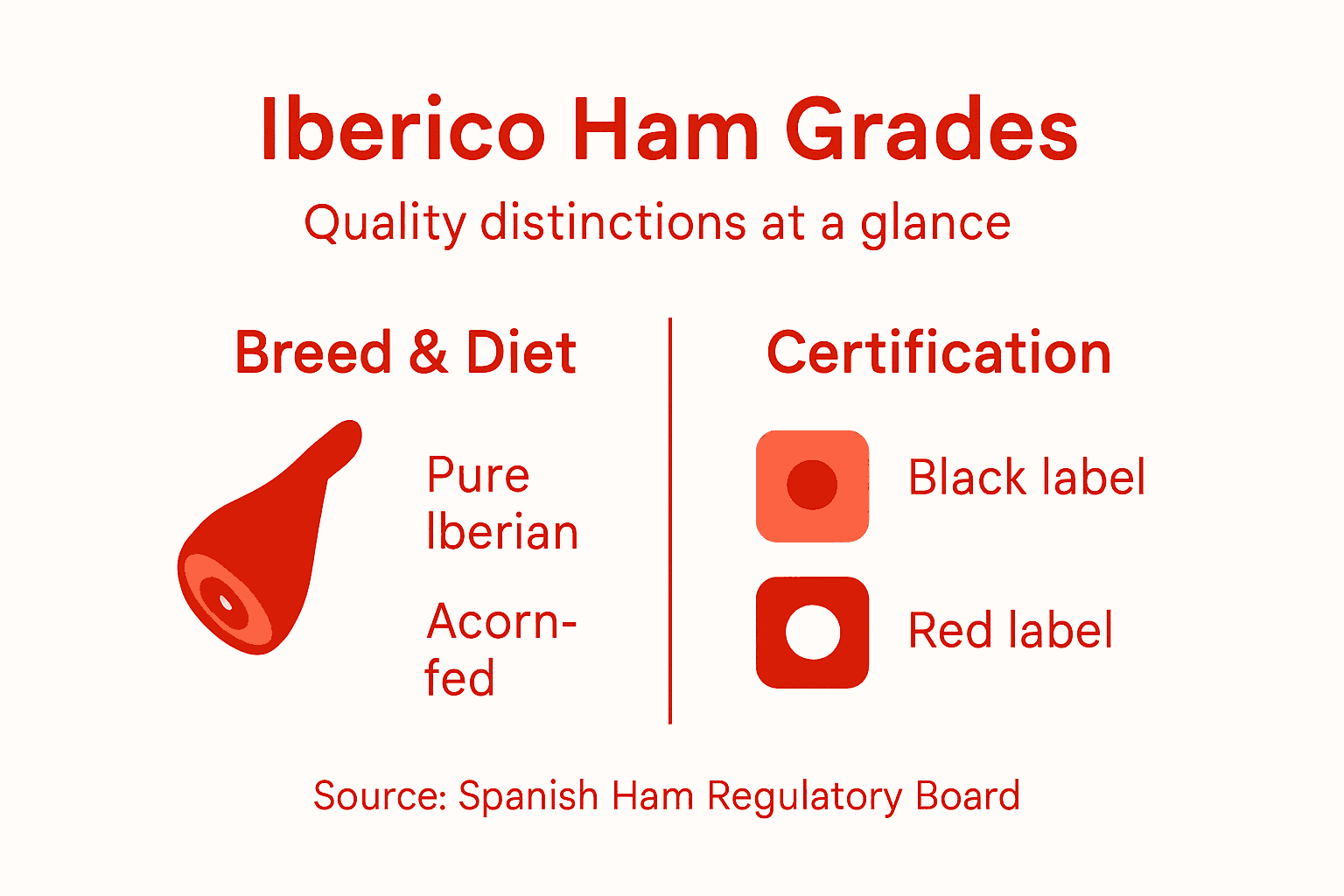
Pro tip: Look for the black label certification when purchasing, which guarantees the highest quality and most authentic Ibérico ham experience.
Artisan curing process and ageing impact
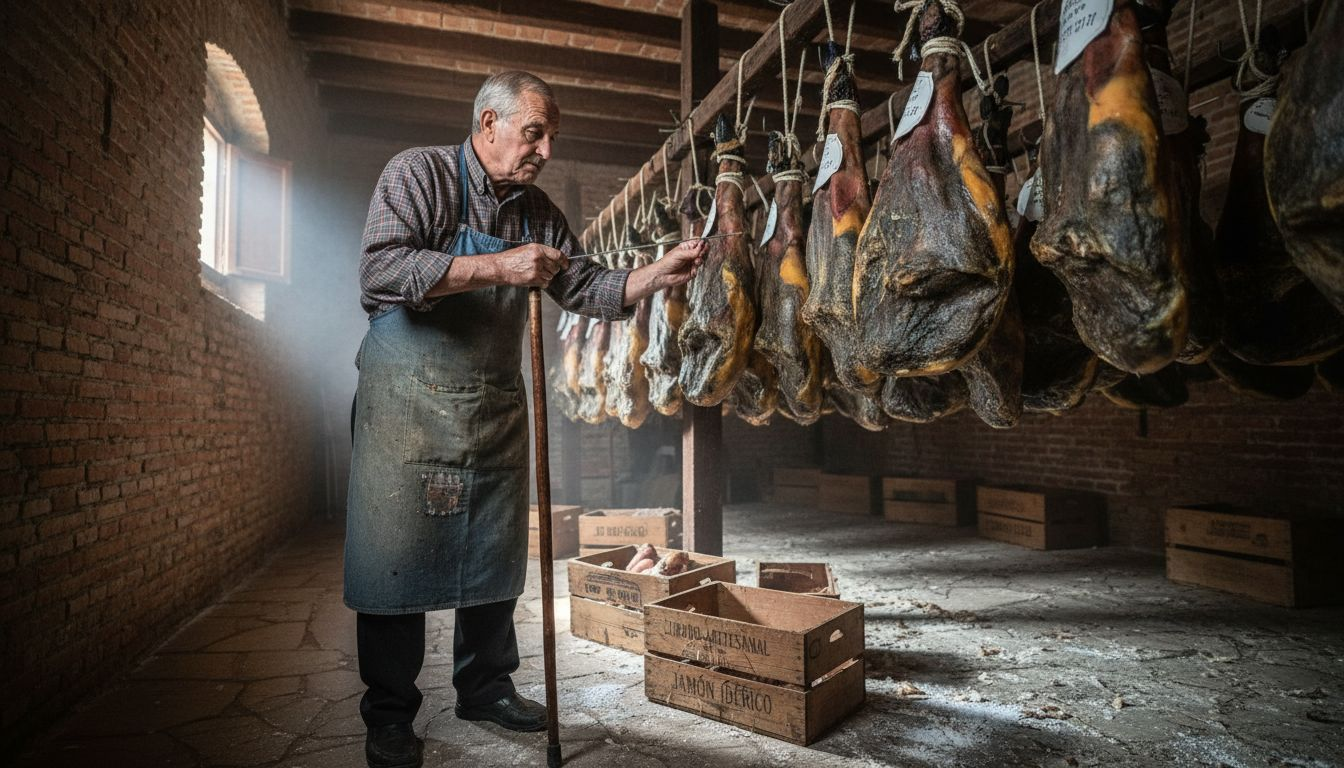
The artisan curing process represents the soul of Ibérico ham production, transforming an ordinary cut of meat into a gastronomic masterpiece. Dry-curing techniques involve a meticulously controlled sequence of stages that can extend up to 48 months, during which time the ham develops its extraordinary depth of flavour and complex sensory profile.
The traditional curing process encompasses several critical stages:
- Salting: Initial preservation and flavour development
- Post-salting: Initial moisture reduction and salt distribution
- Drying: Controlled environmental exposure
- Maturation: Long-term aging in carefully monitored conditions
Each stage requires extraordinary precision and environmental control. Artisan producers monitor temperature, humidity, and air circulation with near-scientific accuracy, allowing natural microbial processes to work their magic. The ham is typically hung in well-ventilated, temperature-controlled rooms where subtle environmental shifts contribute to its unique characteristics.
The aging process profoundly transforms the ham through several complex mechanisms:
- Protein breakdown creates rich, intense flavour compounds
- Fat redistribution produces exceptional marbling
- Moisture reduction concentrates flavour intensity
- Enzymatic reactions develop nuanced taste profiles
- Controlled oxidation enhances aromatic complexity
The patience of Spanish artisans transforms a simple piece of meat into a culinary treasure, where each month of aging adds layers of complexity and depth.
Pro tip: When selecting aged Ibérico ham, look for hams aged between 36-48 months for the most balanced and sophisticated flavour profile.
Scarcity, demand, and legal protection
The extraordinary world of Ibérico ham is intrinsically linked to its remarkable scarcity, which stems from complex ecological and regulatory constraints. Legal frameworks protect these unique products, ensuring their authenticity and preserving traditional production methods that have existed for generations.
Key factors contributing to Ibérico ham’s limited availability include:
- Restricted breeding of pure Iberian pig breeds
- Limited geographical regions supporting traditional dehesa ecosystems
- Extensive land requirements for free-range pig rearing
- Lengthy curing processes lasting up to 48 months
- Strict regulatory standards for production
The Protected Designation of Origin (PDO) regulations play a crucial role in maintaining the ham’s exclusivity. These legal mechanisms ensure that only hams produced in specific Spanish regions, following traditional methods, can bear the prestigious Ibérico label. This protective framework prevents mass production and maintains the product’s extraordinary quality standards.
Global demand continues to challenge the limited production capacity:
- Growing international gourmet markets increase pressure
- Limited annual production creates natural scarcity
- High production costs restrict large-scale manufacturing
- Strict breeding and rearing requirements limit expansion
- Consumer preference for authentic, traditional products
The delicate balance between tradition and demand makes Ibérico ham not just a food product, but a cultural treasure with intrinsic economic value.
Pro tip: Verify the authenticity of Ibérico ham by checking its official black label certification, which guarantees genuine origin and premium quality.
Comparisons with alternatives and pricing
Ibérico ham represents the pinnacle of cured meat craftsmanship, standing distinctly apart from other ham varieties through its extraordinary production methods and unparalleled sensory experience. Authentic Spanish ham commands premium pricing due to its complex production process and exceptional quality characteristics.
Key differences between Ibérico ham and alternative cured meats include:
- Genetic specificity of Iberian pig breed
- Extensive free-range rearing methods
- Acorn-based diet during finishing period
- Significantly longer curing times
- More intricate flavour development process
Pricing for Ibérico ham varies dramatically based on several critical factors:
- Genetic purity (100% Iberian vs. crossbred)
- Feeding regime (bellota vs. standard grain-fed)
- Aging duration (36-48 months)
- Production grade (top-tier black label vs. standard)
- Regional origin and specific production techniques
Comparative price ranges typically reflect these distinctions:
The following table provides a comparison of Ibérico ham and alternative cured meats:
| Aspect | Ibérico Ham | Parma/Prosciutto |
|---|---|---|
| Main Pig Breed | Black Iberian | Large White/Landrace |
| Rearing Method | Free-range, semi-wild | Mostly confined |
| Diet (Finishing) | Acorns (bellota) | Grain |
| Typical Curing Time | 36–48 months | 12–24 months |
| Flavour Profile | Intense, nutty, complex | Mild, subtle |
| Price Range (per kg) | £50–£800 | £15–£60 |
- Commercial ham: £10-25 per kilogram
- Standard Ibérico: £50-100 per kilogram
- Bellota Ibérico: £150-400 per kilogram
- Bellota 100% Ibérico: £400-800 per kilogram
The price of authentic Ibérico ham is not merely a cost, but an investment in centuries of culinary tradition and unparalleled gastronomic excellence.
Pro tip: When budgeting for Ibérico ham, consider purchasing smaller quantities of higher-grade ham for a more intense and authentic tasting experience.
Discover the True Value of Authentic Iberico Ham
Understanding why Iberico ham is expensive reveals the unique heritage, meticulous craftsmanship and natural scarcity behind every slice. If you seek an unforgettable gourmet experience grounded in tradition and the acorn-fed excellence of the Black Iberian pig, 7 Bellotas offers direct access to premium Iberico ham aged gracefully from 36 to over 64 months. Our artisan small-scale producers focus on natural curing processes that bring out the intense, nutty flavours celebrated in the Iberian Peninsula.
Explore our carefully curated selection and immerse yourself in the world of authentic Spanish cured meats. Dont miss the chance to experience the exquisite depth and rarity of genuine Ib�e9rico ham today. Visit 7 Bellotas now to browse exclusive whole hams, sliced portions and vacuum-packed options that meet your highest standards for quality and tradition.
Frequently Asked Questions
Why is Ibérico ham so expensive?
Ibérico ham is expensive due to several factors, including the unique genetics of the Black Iberian pig, extensive free-range rearing methods, an acorn-based diet, and meticulous artisan curing processes which can last from 36 to 48 months.
What makes the flavor of Ibérico ham unique?
The flavor of Ibérico ham is unique due to the diet of the pigs, which primarily consists of acorns during the montanera season, resulting in a rich, nutty taste and exceptional marbling that distinguishes it from other hams.
How does the curing process affect Ibérico ham?
The curing process significantly impacts Ibérico ham by allowing natural microbial processes to occur, which enhance flavour, texture, and the overall sensory experience. The ham undergoes various stages, including salting, drying, and ageing, to develop its complex characteristics.
What are the different grades of Ibérico ham and how do they differ?
Ibérico ham is classified into four main grades based on genetic purity and diet: Bellota 100% Ibérico (exclusively acorn-fed), Bellota Ibérico (mainly acorns), Cebo de Campo (mixed diet), and Cebo (grain-fed). Each grade represents varying levels of quality, flavour, and price.