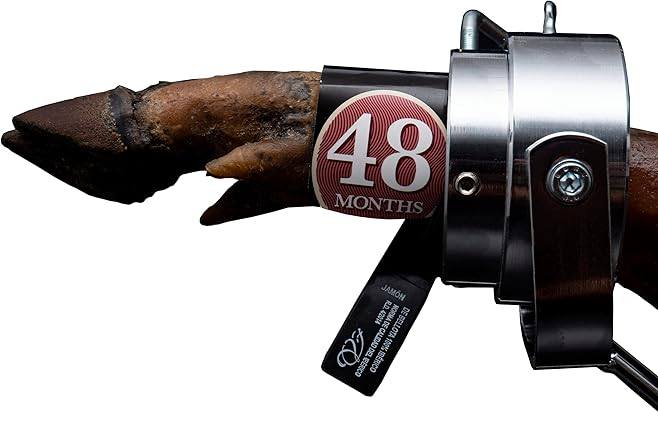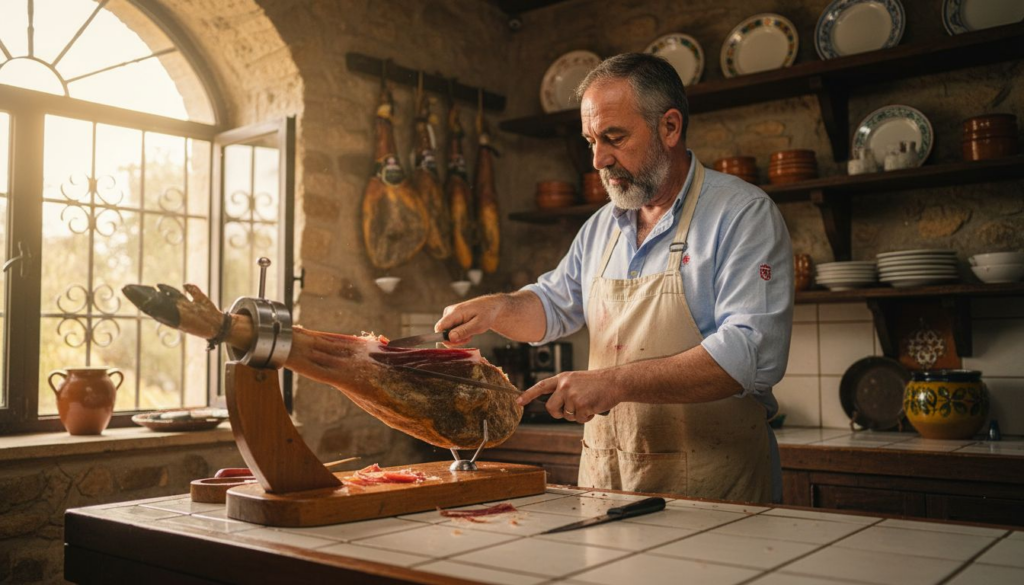
Discovering genuine acorn-fed Ibérico ham can feel like chasing a culinary legend, especially for those who crave more than just a beautiful charcuterie board. For gourmet enthusiasts in the United States and United Kingdom, the search for real Spanish craftsmanship means navigating breed authenticity, diet, and quality seals that elevate each slice into an exquisite dining moment. Unpack the secrets behind Spanish ham excellence and learn how to identify a true delicacy worthy of your next luxury experience at home.
Table of Contents
- Defining Authentic Spanish Ham Excellence
- Spanish Ham Types And Key Differences
- Curing Methods And What Makes It Unique
- Quality Seals, Origins, And Protected Status
- Common Pitfalls When Choosing Spanish Ham
- Buying, Storing, And Serving Like A Connoisseur
Key Takeaways
| Point | Details |
|---|---|
| Authentic Quality Standards | Genuine Spanish ham must meet strict criteria, including breed purity, dietary specifics, and traditional curing methods. Always check for PDO certification. |
| Understanding Ham Varieties | Familiarise yourself with different types of Spanish ham, such as Jamón Ibérico and Jamón Serrano, to fully appreciate their unique qualities and flavour profiles. |
| Curing Techniques | The curing process is vital, involving specific environmental factors like temperature and humidity that influence the final taste. Proper storage is equally important to maintain quality. |
| Informed Purchasing Decisions | Ensure you ask for provenance documentation and certification details before buying to avoid inferior products and enhance your culinary experience. |
Defining Authentic Spanish Ham Excellence
Authentic Spanish ham represents far more than a mere culinary ingredient; it embodies a profound cultural heritage and generations of meticulous craftsmanship. At its core, true Spanish ham excellence demands rigorous standards that transform an ordinary meat product into an extraordinary gastronomic experience.
The hallmarks of authentic Spanish ham are rooted in several critical factors:
- Breed Purity: Using exclusively Ibérico pig breeds with specific genetic lineages
- Diet Specificity: Acorn-fed pigs roaming freely in oak forests
- Traditional Curing Methods: Natural air-drying and carefully monitored aging processes
- Geographic Designation: Specific regional production zones with protected status
Professional ham producers follow strict quality protocols that guarantee an unparalleled sensory journey. These protocols ensure that every slice represents generations of Spanish culinary tradition, transforming simple pork into a delicacy that captures the essence of its terroir.
The certification process for authentic Spanish ham involves multiple stringent assessments. Producers must demonstrate compliance with protected designation of origin (PDO) standards, which meticulously track each ham’s provenance from pig breeding through final curing. This comprehensive approach prevents mass production techniques and preserves the artisanal integrity that defines true Spanish ham excellence.
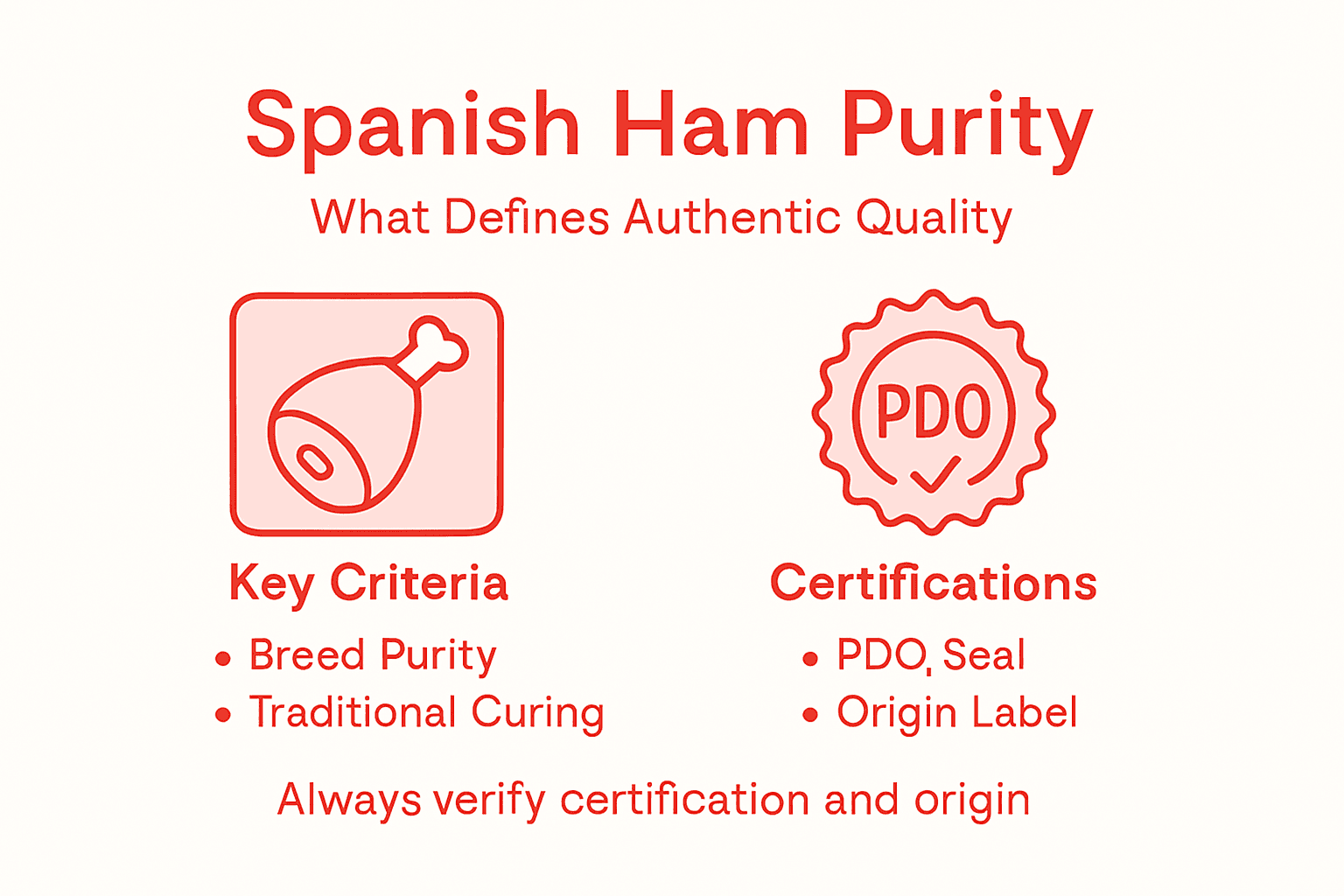
Pro tip: When selecting authentic Spanish ham, always request documentation verifying its PDO certification and ask about the specific pig breed and curing duration.
Spanish Ham Types and Key Differences
The world of Spanish ham is rich and nuanced, with several distinct varieties that offer unique flavour profiles and culinary experiences. Understanding these different ham types requires exploring their fundamental characteristics and regional variations.
Primary Spanish ham varieties include:
- Jamón Ibérico: The pinnacle of Spanish ham, made from black Ibérico pigs
- Jamón Serrano: A more common ham produced from white pig breeds
- Bellota Ham: The most premium Ibérico ham from acorn-fed pigs
- Cebo Ham: Made from grain-fed Ibérico pigs with less intense flavour
The key differentiating factors among these ham types revolve around pig breed, diet, and curing process. Jamón Ibérico represents the most prized category, with its intense marbling and complex flavour profile resulting from specific breeding and feeding practices. These pigs are typically raised in specific regions of Spain, particularly in western provinces like Extremadura and Salamanca.
Curing time and method also significantly impact ham quality. Traditional producers utilise natural drying rooms and carefully monitor temperature and humidity, allowing hams to develop their distinctive characteristics over extended periods. Some premium Ibérico hams are aged for 36 to 48 months, creating extraordinary depth of flavour that distinguishes them from mass-produced alternatives.
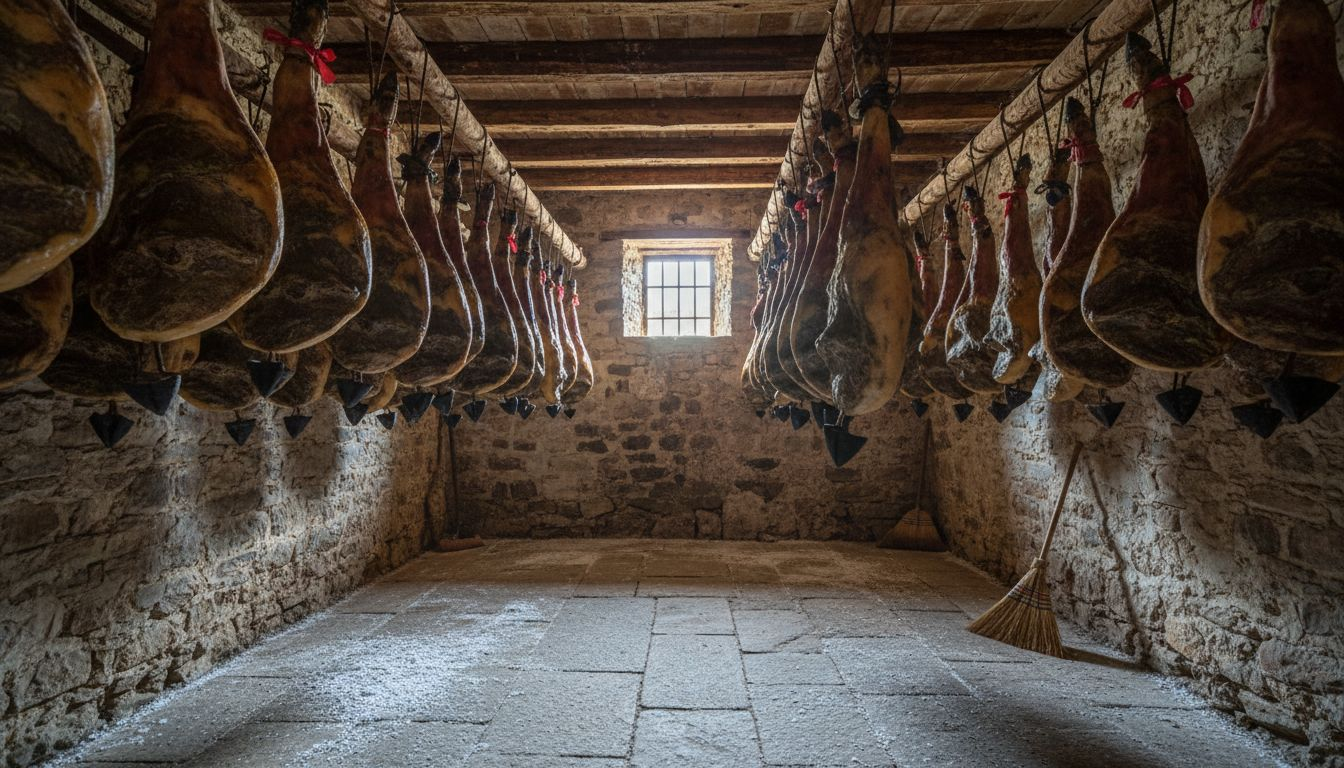
Here is a concise comparison of major Spanish ham types and their key attributes:
| Ham Variety | Pig Breed | Diet | Typical Curing Time |
|---|---|---|---|
| Jamón Ibérico | Pure Ibérico | Acorn or grain | 24-48 months |
| Jamón Serrano | White breed | Mixed grains | 7-16 months |
| Bellota Ham | Ibérico | 100% acorn-fed | 36-48 months |
| Cebo Ham | Ibérico | Grain-fed | 24-36 months |
Pro tip: When purchasing Spanish ham, always inspect the label for specific classification details like breed, diet, and curing duration to ensure you’re selecting an authentic, high-quality product.
Curing Methods and What Makes It Unique
Traditional Spanish ham curing represents an extraordinary blend of ancient craft and scientific precision. Modern scientific research is now revolutionising understanding of this centuries-old artisanal process, bridging generational knowledge with cutting-edge biochemical analysis.
The curing process involves several critical stages:
- Initial Salting: Carefully controlling salt penetration and moisture removal
- Natural Drying: Hanging hams in specially designed chambers
- Controlled Maturation: Monitoring temperature and humidity meticulously
- Aging: Developing complex flavour profiles over extended periods
Biochemical transformation is the heart of Spanish ham’s unique character. Traditional producers rely on intricate environmental conditions and generational expertise, allowing hams to develop their distinctive flavour through complex enzymatic reactions. Temperature, humidity, and air circulation play pivotal roles in creating the ham’s exceptional taste profile.
Curing rooms, often located in specific regional microclimates, create unique environments that contribute to each ham’s distinctive characteristics. Some producers use natural mountain breezes, while others carefully engineer drying conditions to replicate traditional techniques with scientific precision. The entire process can take between 24 to 48 months, with master curers making subtle adjustments throughout to ensure optimal flavour development.
The following table outlines essential environmental factors affecting ham curing quality:
| Factor | Recommended Range | Impact on Flavour |
|---|---|---|
| Temperature | 10-15°C | Controls enzymatic action |
| Humidity | 65-75% | Preserves texture |
| Air Circulation | Moderate, regulated | Promotes even drying |
Pro tip: Learn to read the colour, texture, and aroma of cured ham, as these sensory indicators reveal the quality and maturation level of your Spanish delicacy.
Quality Seals, Origins, and Protected Status
The world of Spanish ham is meticulously regulated through sophisticated quality certification systems that protect its extraordinary culinary heritage. Consorcio Serrano Ham’s quality seal represents the gold standard in guaranteeing authentic production methods and exceptional taste.
Key quality classifications for Spanish ham include:
- Denominación de Origen Protegida (DOP): Highest level of geographical and production protection
- Indication Geográfica Protegida (IGP): Certifies regional production standards
- Ibérico Quality Grades: Categorising ham based on pig breed and diet
- Consorcio Serrano Certification: Ensuring traditional production techniques
Protected designation systems ensure that each ham meets stringent criteria, preventing mass production from diluting traditional craftsmanship. These certifications track every stage of production, from pig breeding to final curing, creating a transparent journey that gourmet consumers can trust. The most prestigious classifications require specific regional origins, precise pig breeds, and traditional curing methods.
Geographical indications play a crucial role in maintaining Spanish ham’s exceptional reputation. Regions like Extremadura, Guijuelo, and Salamanca have unique microclimates and centuries-old traditions that contribute to their hams’ distinctive characteristics. Each protected region brings its own subtle nuances to the curing process, creating a rich tapestry of flavours that reflect Spain’s diverse culinary landscape.
Pro tip: When purchasing Spanish ham, always examine the quality seal carefully, looking for specific regional certifications and detailed production information to ensure you’re experiencing an authentic delicacy.
Common Pitfalls When Choosing Spanish Ham
Choosing authentic Spanish ham requires more than a casual approach. Expert ham selection strategies reveal numerous potential mistakes that can compromise your culinary experience.
Common purchasing errors include:
- Misinterpreting Hoof Colour: Incorrectly assuming hoof colour indicates ham quality
- Ignoring Certification Labels: Overlooking crucial protected designation markers
- Price-Based Decision Making: Selecting ham solely on cost rather than quality
- Disregarding Curing Time: Failing to understand the significance of aging periods
Breed authenticity represents a critical factor in selecting genuine Spanish ham. Many consumers unknowingly purchase inferior products by not understanding the nuanced differences between Ibérico and Serrano ham varieties. Authentic Ibérico ham requires specific breeding conditions, with black Ibérico pigs raised in particular regions and fed specific diets.
The most sophisticated ham consumers understand that visual and sensory evaluation goes far beyond superficial characteristics. Texture, marbling, aroma, and provenance documentation are essential indicators of true quality. Reputable vendors will provide detailed information about the ham’s origin, including specific regional certifications, pig breed, diet, and precise curing duration. Consumers should remain vigilant and request comprehensive documentation to ensure they are purchasing a genuine, high-quality Spanish delicacy.
Pro tip: Always request a detailed breakdown of the ham’s provenance, including breed, diet, and certification details before making your purchase.
Buying, Storing, and Serving Like a Connoisseur
Mastering Spanish ham requires far more than casual knowledge—it demands precision and understanding. Comprehensive ham selection techniques reveal the intricate art of choosing, preserving, and presenting this exquisite delicacy.
Critical considerations for ham enthusiasts include:
- Purchasing: Select hams with clear certification and provenance documentation
- Storage: Maintain consistent temperature and humidity
- Slicing: Use specialised ham knives and precise cutting techniques
- Serving: Present at correct room temperature for optimal flavour
Ham storage represents a delicate science that separates amateurs from true connoisseurs. Professional storage requires specific environmental conditions: consistent temperatures between 10-15°C, moderate humidity levels around 65-75%, and protection from direct sunlight or extreme temperature fluctuations. Whole legs should be stored on specialised ham stands, allowing air circulation while preventing moisture accumulation.
Serving Spanish ham is an art form demanding meticulous attention. Professional slicers use razor-sharp knives to create paper-thin, translucent slices that showcase the ham’s intricate marbling and complex flavour profile. Temperature is crucial—ham should be served slightly above room temperature to release its full aromatic potential, allowing the intricate fat to soften and spread its rich flavours across the palate.
Pro tip: Invest in a professional ham stand and specialised slicing knife to elevate your Spanish ham experience from ordinary to extraordinary.
Discover True Spanish Ham Purity with 7 Bellotas
The challenge of finding authentic Spanish ham lies in navigating breed purity, traditional curing, and protected certifications to avoid disappointment and embrace genuine flavour. If you seek premium Ibérico ham that honours the acorn-fed Iberian heritage and expert curing detailed in this article, 7 Bellotas offers a trusted gateway to these artisanal treasures. Our selection features carefully aged, small-batch hams that meet rigorous standards for purity, diet, and provenance ensuring a remarkable gourmet experience.
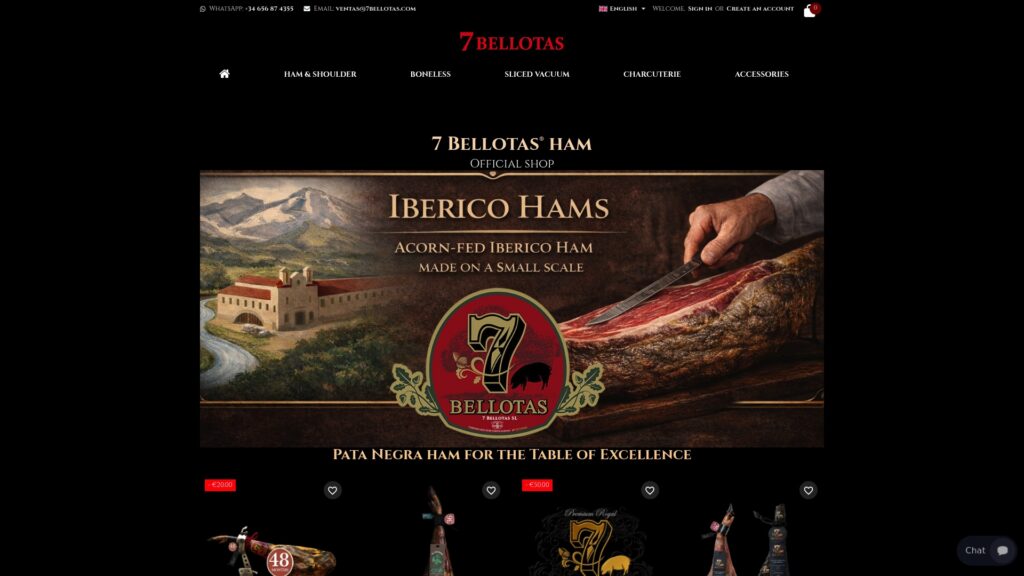
Elevate your palate by exploring our exclusive collection at 7 Bellotas where every product tells a story of tradition and excellence. Learn more about the significance of breed and curing in our Authentic Iberico Ham offerings and let your next purchase reflect true Spanish ham mastery. Act now to secure your share of timeless flavour crafted by artisan hands.
Frequently Asked Questions
What is authentic Spanish ham?
Authentic Spanish ham is a premium delicacy that showcases cultural heritage through meticulous craftsmanship. It is characterized by specific breed purity, diet, traditional curing methods, and geographic designation, ensuring a unique gastronomic experience.
Why is breed purity important in Spanish ham?
Breed purity is crucial because it dictates the quality and flavour profile of the ham. Authentic Spanish ham is typically made from Ibérico pig breeds, which are known for their exceptional marbling and rich taste, setting them apart from other pork hams.
How does the curing process affect the quality of Spanish ham?
The curing process greatly influences the quality of Spanish ham. Factors such as initial salting, natural drying, controlled maturation, and aging contribute to the development of complex flavours and textures, with premium hams often aged for 24 to 48 months for optimal richness.
What should I look for when choosing Spanish ham?
When selecting Spanish ham, look for certification labels that indicate protected designation of origin (PDO) status, information about the pig breed and diet, as well as details about the curing duration. These elements help ensure you are choosing a high-quality, authentic product.