Choosing truly exceptional Jamón Serrano often means separating tradition from misconception. Connoisseurs across North America know that authentic mountain-cured Spanish ham delivers an unmatched depth of flavour and delicate texture that shortcuts simply cannot replicate. If you crave the refined taste of hand-crafted Serrano, this guide will reveal essential distinctions, challenge common myths, and help you select the perfect cut for a genuinely elevated dining experience.
Table of Contents
- Defining Jamón Serrano and Common Myths
- Distinct Types and Regional Variations
- Traditional Production and Ageing Processes
- Key Factors Distinguishing Quality Jamón
- Jamón Serrano Versus Iberico Compared
Key Takeaways
| Point | Details |
|---|---|
| Serrano Ham Characteristics | Jamón Serrano is dry-cured from white pig breeds, aged for 9 to over 15 months, developing a unique flavour profile through natural curing. |
| Myth Clarification | Serrano is distinct from Jamón Ibérico, with differences in pig breed, flavour, and price; longer aging significantly affects taste. |
| Aging Classifications | Serrano hams are classified as Bodega, Reserva, or Gran Reserva, each offering varying flavour intensities and ideal uses. |
| Quality Indicators | When selecting Serrano ham, look for colour, aroma, texture, marbling, and clear ageing classification to ensure quality. |
Defining Jamón Serrano and Common Myths
Jamón Serrano is dry-cured Spanish ham made from white pig breeds and aged in mountain air for 9 to over 15 months. The name “serrano” comes from the Spanish word for mountainous regions where it traditionally matures. Unlike some competitors, this ham develops its character through natural curing processes rather than modern shortcuts.
What sets Serrano apart is its lean meat and distinctive flavour profile. The extended aging period concentrates the pork’s natural taste whilst creating that characteristic dryness you won’t find in fresher cured meats. Each month of curing transforms the ham’s texture and deepens its complexity.
What Serrano Actually Is
Serrano ham production follows these key characteristics:
- Made exclusively from white pig breeds (typically Large White or Landrace pigs)
- Cured with salt in climate-controlled mountain air
- Aged for minimum 9 months, with premium versions exceeding 15 months
- Contains no additives or artificial preservatives
- Develops naturally through dehydration and enzymatic breakdown
The traditional manufacturing process remains largely unchanged for centuries. Producers salt the hams, hang them in bodegas (aging cellars), and allow time to work its magic. Quality producers never rush this process.
The longer the curing time, the more complex and refined the flavours become—this is why age matters for Serrano quality.
Myths That Need Busting
Most confusion stems from mixing up Serrano with premium alternatives. Here are the biggest misconceptions:
Myth 1: Serrano and Jamón Ibérico are the same thing. They’re not. Serrano comes from white pigs; Jamón Ibérico comes from black Iberian pigs and costs significantly more. The pig breed fundamentally changes flavour, texture, and price.
Myth 2: All Serrano tastes identical. Curing duration creates massive flavour differences. A bodega ham (9 months) tastes completely different from a gran reserva (18+ months). Longer aged versions taste more intense and refined.
Myth 3: Serrano is just Spanish prosciutto. Serrano’s longer curing creates a drier, more concentrated flavour than Italian prosciutto. The texture differs noticeably—Serrano crumbles slightly where prosciutto stays tender.
Myth 4: Cheaper Serrano is just younger, not lower quality. Actually, cheaper versions often come from less premium pig breeds or rushed curing methods. True quality requires patience and proper genetics.
Pro tip: When purchasing Serrano, check the aging designation—bodega, reserva, or gran reserva—to understand what flavour intensity you’re getting. Gran reserva offers maximum complexity for gourmet applications.
Distinct Types and Regional Variations
Serrano ham isn’t one-size-fits-all. Curing duration creates three distinct classifications that dramatically affect flavour, texture, and price. Understanding these categories helps you select the right ham for your needs.
Each classification represents a different maturation journey. The longer the aging, the more intense and refined the taste becomes. This is why seasoned connoisseurs choose specific types for different applications.
The Three Aging Classifications
Serrano hams are graded by their time in the bodega (aging cellar):
- Bodega (10-12 months): Mild, tender, slightly sweet. Perfect for those new to cured ham.
- Reserva (12-15 months): Balanced flavour, more complexity than bodega. Ideal for everyday enjoyment.
- Gran Reserva (over 15 months): Deep, concentrated flavours with subtle nuttiness. Best for serious enthusiasts.
The progression isn’t just about waiting longer. Each month transforms the ham’s chemistry through dehydration and enzymatic breakdown, creating entirely different sensory experiences.
Use this table to quickly interpret ageing classifications and what they mean for your tasting experience:
| Classification | Minimum Ageing | Flavour Intensity | Typical Use |
|---|---|---|---|
| Bodega | 10 months | Mild, subtly sweet | Beginners, light snacks |
| Reserva | 12 months | Fuller, balanced | Tapas, daily enjoyment |
| Gran Reserva | 15+ months | Intense, complex, nutty | Tasting, gourmet dishes |
The aging classification tells you exactly what flavour profile to expect—and it’s the single most important factor determining your Serrano experience.
Regional Distinctions and Protected Names
Spain’s mountainous regions produce distinctly different hams based on local climate and tradition. Protected denominations highlight geographic quality distinctions tied to specific villages and curing practices.
Key regional varieties include:
- Jamón de Teruel: From Aragón’s high altitude. Cooler temperatures create delicate flavours and tender texture.
- Jamón de Trevélez: From Andalusia’s mountains. Known for complexity and deep flavour development.
- Jamón de Serón: A smaller-scale production with distinctive intensity.
These protected designations mean the ham must come from that specific region and follow traditional methods. You’re not just buying ham—you’re buying terroir, climate conditions, and centuries of local expertise.
Different Cuts for Different Uses
Serrano comes from different parts of the pig, each with unique characteristics:
- Jamón (hind leg): Larger, leaner, more meat. Better for slicing and serving at the table.
- Paleta (front leg): Smaller, slightly fattier, more flavourful. Excellent for cooking or intensive flavour applications.
The cut you choose depends on your intended use. For a luxury appetiser platter, jamón shines. For incorporating into dishes, paleta’s fattier composition adds richness.
Pro tip: Start with a Reserva from an established region like Teruel or Trevélez to experience authentic regional character without the premium price of Gran Reserva.
Traditional Production and Ageing Processes
Serrano ham’s quality stems from a methodical process that hasn’t changed fundamentally for centuries. Traditional production involves salting, drying, and curing in controlled mountain air conditions. Every step matters, and shortcuts ruin the final product.
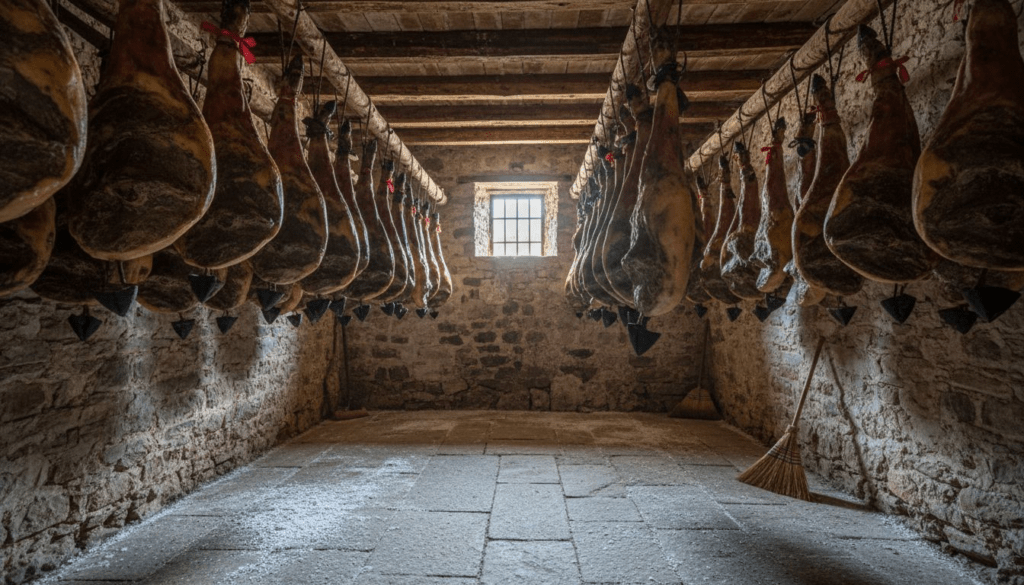
The journey from pig to plate takes dedication and patience. This isn’t industrial efficiency—it’s craftsmanship that respects time and tradition. Quality producers refuse to rush what nature demands.
The Production Journey
Serrano production follows a precise sequence:
- Selection and slaughter: Only healthy pigs meeting strict standards produce quality ham
- Trimming: Expert hands remove excess fat and shape the leg properly
- Salting: Curing salt is applied by hand, drawing out moisture and beginning flavour development
- Initial drying: The ham rests in cool conditions for several weeks
- Aging in secadores: Natural ventilated rooms where the magic happens over months
Each stage requires constant monitoring. Temperature and humidity fluctuate with seasons, and producers adjust conditions accordingly. This responsiveness to environment is what separates authentic Serrano from industrial imitations.
The Critical Ageing Phase
Ageing is where ordinary ham becomes exceptional. Temperature and humidity are carefully managed to facilitate two crucial chemical transformations: lipolysis (fat breakdown) and proteolysis (protein breakdown).
These processes create the complex flavours you taste. Fats become aromatic compounds. Proteins transform into amino acids that deliver umami richness. This chemistry cannot be rushed.
Ageing duration ranges from 9 months for bodega classification to over 15 months for gran reserva. Ham size affects timing—larger hams need longer to cure evenly throughout.
The ageing process is irreplaceable. No shortcut, no additives, no technique can replicate what months of mountain air naturally accomplish.
Regional Production Variations
Whilst core principles remain constant, regional producers use distinctive techniques. Some regions employ brief exposure to fire to seal flavour, adding a subtle smokiness. Others rely purely on mountain air circulation.
These regional differences reflect local climate and tradition. High-altitude regions produce delicate, complex flavours. Lower regions develop bolder profiles. Neither is superior—they’re simply different expressions of terroir.
Pro tip: Purchase whole hams or large portions from established producers rather than pre-sliced options—they retain moisture and flavour complexity far superior to vacuum-packed alternatives that sit months before reaching your table.
Key Factors Distinguishing Quality Jamón
Not all Serrano ham tastes the same. Quality hinges on specific, measurable factors that separate exceptional ham from mediocre alternatives. Understanding these distinctions transforms you from casual buyer to informed connoisseur.
Curing time fundamentally shapes quality, with longer aging producing drier texture, deeper colour, and stronger flavour. This is why gran reserva commands premium prices—the extra months genuinely deliver superior results.
The Core Quality Markers
Several factors work together to determine Serrano excellence:
- Curing duration: Bodega (9-12 months) versus reserva (12-15 months) versus gran reserva (15+ months). Longer = more developed flavour.
- Pig genetics: Premium white breeds like Duroc produce superior meat quality compared to standard Large White pigs.
- Fat coverage: Adequate intramuscular fat prevents the ham from drying too much, maintaining tenderness.
- Aging environment: Consistent temperature and humidity in mountain bodegas create ideal conditions for chemical transformation.
- Slicing technique: Poor slicing damages delicate flavour compounds; expert cuts preserve sensory experience.
These factors don’t exist independently—they work synergistically. A gran reserva from premium genetics aged in optimal conditions tastes entirely different from a bodega ham from standard breeding.
Regulatory Standards and Authenticity
Authentic quality carries official recognition. The Traditional Speciality Guaranteed label mandates strict standards covering everything from raw material selection through production completion.
Producers complying with these regulations must meet rigorous requirements:
- Certified pork with specific weight and fat thickness specifications
- Precise curing methods following traditional protocols
- Strict hygiene standards throughout production
- Careful environment control during ageing
- Consistent texture and aroma verification
When you see this certification, you’re buying ham produced under legitimate oversight. It’s your assurance that quality standards weren’t compromised.
The best Serrano combines three elements: superior genetics, proper ageing time, and environmental control. Miss any one, and quality suffers noticeably.
Practical Quality Indicators
When selecting ham, look for these signs of quality:
- Colour: Deeper red indicates longer curing
- Aroma: Complex, slightly fruity scent beats bland or off-putting smells
- Texture: Should crumble slightly when sliced, not remain rubbery
- Marbling: Visible fat lines throughout indicate proper genetics and diet
- Labelling: Clear aging classification (bodega, reserva, gran reserva) shows producer transparency
When choosing Jamón carefully, these visual and olfactory cues matter more than price alone. Expensive doesn’t always mean quality—authentic does.
Pro tip: Purchase from producers displaying Traditional Speciality Guaranteed certification and clear aging classification, as this transparency indicates commitment to rigorous quality standards rather than cutting corners.
Jamón Serrano Versus Iberico Compared
Serrano and Ibérico are not interchangeable. These are fundamentally different products with distinct origins, production methods, and price points. Understanding the differences prevents costly mistakes when selecting premium ham.
The core distinction starts with the pig. Serrano comes from white pig breeds, whilst Ibérico comes exclusively from the black Iberian pig native to Spain and Portugal. This single difference cascades into everything that follows.
The Fundamental Differences
These two hams differ across multiple critical dimensions:
- Pig breed: Serrano uses white breeds (Duroc, Large White); Ibérico uses only black Iberian pigs
- Raising method: Serrano pigs are typically farm-raised; Ibérico pigs often roam free-range in dehesas (oak forests)
- Diet: Serrano pigs eat cereal feed; Ibérico pigs consume acorns during montanera season
- Fat composition: Serrano has less intramuscular fat; Ibérico has distinctive marbling throughout
- Curing duration: Serrano ages 9-18 months; Ibérico ages 24-48 months minimum
- Flavour profile: Serrano tastes cleaner and milder; Ibérico tastes richer and more complex
- Price: Serrano costs substantially less; Ibérico commands premium prices reflecting its exclusivity
Serrano represents excellent value for quality cured ham. Ibérico represents the pinnacle of luxury—and that distinction matters when budgeting.
Here is a concise comparison of Jamón Serrano and Jamón Ibérico, highlighting core distinctions at a glance:
| Attribute | Jamón Serrano | Jamón Ibérico |
|---|---|---|
| Pig Breed | White pig breeds | Black Iberian pigs |
| Typical Diet | Grain and cereals | Acorn-rich during montanera |
| Ageing Time | 9–18 months | 24–48 months |
| Flavour | Delicate, mild, slightly dry | Rich, nutty, intensely savoury |
| Texture | Lean, crumbly | Juicy, finely marbled |
| Price Range | Accessible luxury | Significantly higher, exclusive |
| Best For | Everyday eating, sharing | Celebrations, gourmet experiences |
Why Ibérico Commands Higher Prices
Ibérico’s premium pricing isn’t arbitrary. The acorn-fed Iberian pig produces distinctly superior meat with unmatched flavour complexity. The fat itself tastes different—almost buttery, with subtle sweetness that never appears in Serrano.
The extended curing time amplifies these differences. Twenty-four to forty-eight months of ageing creates depth impossible to achieve in shorter periods. Flavours develop layers that reward slow, intentional tasting.
Production is also more restricted. Ibérico hams require specific breed purity and highly controlled methods. Fewer producers can legally make authentic Ibérico, limiting supply and justifying premium cost.
Ibérico isn’t better than Serrano—it’s different. Serrano delivers exceptional quality at accessible prices; Ibérico offers indulgent complexity for special occasions.
When to Choose Each
Your selection depends on context and budget:
Choose Serrano when:
- You want daily enjoyment without premium pricing
- You’re introducing someone to quality cured ham
- You’re serving larger groups where cost matters
- You prefer cleaner, more delicate flavours
Choose Ibérico when:
- You’re celebrating something special
- You want maximum flavour complexity
- Budget allows for luxury purchases
- You appreciate rich, deeply savoury tastes
Think of it like wine—excellent Rioja offers tremendous value, but burgundy delivers different magic. Both are brilliant when chosen intentionally.
Consejo profesional: Start with a premium Serrano reserva to build your palate, then graduate to entry-level Ibérico to appreciate what extended aging and acorn diet genuinely deliver.
Discover Authentic Spanish Cured Meats That Honour Tradition and Quality
Understanding the true essence of Jamón Serrano reveals the importance of curing times, pig genetics, and natural ageing for rich flavour and texture. If you value genuine craftsmanship and want to elevate your gourmet experience with premium Spanish hams, knowing exactly what defines quality is just the beginning. Whether you are exploring the nuances between Bodega, Reserva, and Gran Reserva or seeking a taste beyond Serrano, embracing authentic cured meat is essential.
Unlock the full flavour journey with 7 Bellotas, where artisanal practices meet centuries-old tradition. Explore our selection of exquisite Iberico hams, aged from 36 to over 64 months, alongside carefully curated cured meats that bring the true spirit of Spain to your table. Act now to savour luxury cured meats trusted by connoisseurs worldwide. Begin your gourmet adventure today by visiting 7 Bellotas and make every meal an extraordinary experience.
Frequently Asked Questions
What is Jamón Serrano?
Jamón Serrano is a dry-cured Spanish ham made from white pig breeds, aged in mountain air for 9 months to over 15 months. It is known for its lean meat and distinctive flavour profile, created through natural curing processes.
How is the quality of Jamón Serrano determined?
The quality of Jamón Serrano depends on factors like curing duration, pig genetics, fat coverage, and the conditions under which it is aged. A longer curing time typically results in more complex and refined flavours.
What are the different classifications of Jamón Serrano based on aging?
Jamón Serrano is classified into three main categories based on aging: Bodega (10-12 months), Reserva (12-15 months), and Gran Reserva (over 15 months). Each classification offers a different flavour intensity and texture.
How does Jamón Serrano differ from Jamón Ibérico?
Jamón Serrano and Jamón Ibérico come from different pig breeds; Serrano is made from white pigs, while Ibérico is produced from black Iberian pigs. This fundamental difference results in varying taste profiles, textures, and price points, with Ibérico typically being richer and more complex due to its acorn-rich diet and longer curing time.
Recommended
- What Is Jamón Serrano And Why It Matters
- Jamon Iberico Vs Serrano – Why Provenance Matters
- What Is Jamón De Bellota And Why Quality Matters
- Jamón Ibérico: Why Spain’s Finest Matters Globally
- What Is Specialty Coffee and Why Quality Matters – House Coffee
- How to Identify Single Origin Beans for Premium Coffee – House Coffee