Introduction: The 7Bellotas Philosophy
The industry standard says a jamón is ready at 24 months. We disagree.
When we walk through the curing cellars, we aren’t looking at calendars; we are looking at the meat. We wait for the exact moment the fat turns translucent and the air fills with the deep, sweet aroma of roasted acorns. Sometimes that takes 36 months. Sometimes it takes 64. We don’t select a single piece for 7Bellotas until it tells us it’s ready. That is the difference between a mass-produced ham, and a masterpiece.
Most people simply eat Ibérico ham. Connoisseurs taste it. The difference lies entirely in the approach. Acorn-fed Pata Negra carries extraordinary complexity: a sweet onset, salty umami depth, nutty persistence, and a finish that lingers long after the slice has melted away. Yet without a systematic understanding of how it is crafted, and a deliberate sensory progression through sight, smell, texture, and taste, much of that craftsmanship goes unnoticed.
This guide walks you through every stage of a professional tasting workflow—from understanding the science of the cure, to selecting the right specimen and equipment, to storing the leftovers—so you can experience every nuance this prized cured meat has to offer.
Chapter 1: The Origin & The Elaboration
Before you move your attention to slicing and the first taste, you must understand what sits on your carving stand.
100% Iberian Pata Negra ham comes from purebred Iberian pigs—an ancient breed native to the Iberian Peninsula—renowned for their genetic ability to store fat within their muscle tissues. This biological marvel is what gives the meat its signature, vivid marbling and melt-in-your-mouth texture.
The traditional process of Iberian Pata Negra ham preparation is what turns this natural advantage into one of the most sought-after gourmet meats in the world. It is a process that cannot be rushed.
Free-Range Rearing in the Dehesa
The journey begins in the vast oak forests of southern Spain (the dehesa), where 100% Iberian pigs live in total freedom. This environment allows the animals to exercise constantly, which improves muscle tone and naturally infiltrates the fat deep into the meat.
The Montanera (Acorn Season)
The “acorn” (bellota) distinction refers to the pig’s exclusive diet during the montanera season, a critical stage lasting from October to March. During this period, pigs roam freely and double their body weight purely by eating acorns and wild plants, consuming up to 10 kg of acorns per day.
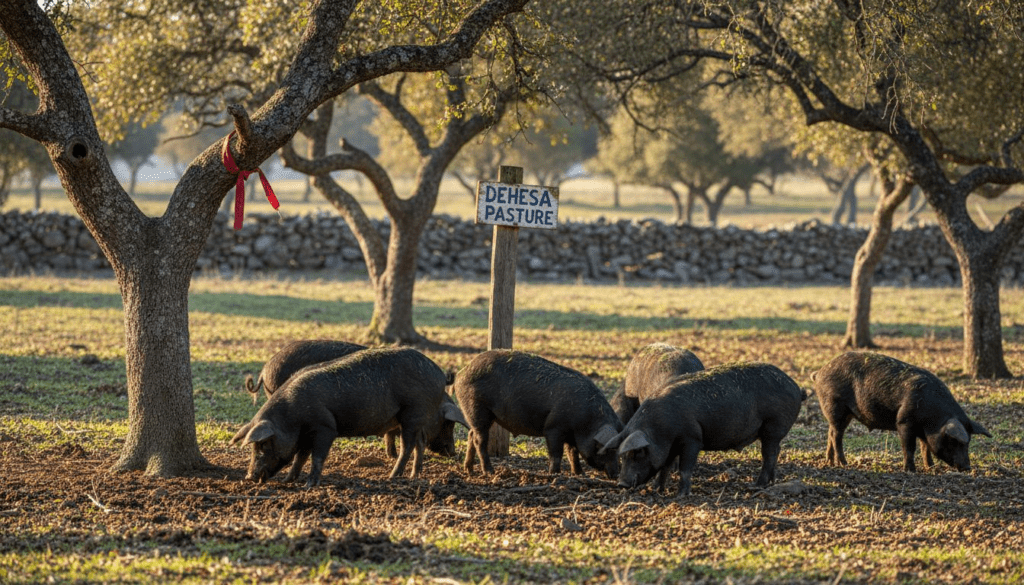
This acorn-based diet is the heart of what makes our ham so unique. The acorns are rich in oleic acid (the same healthy fat found in extra virgin olive oil). This acid alters the chemistry of the pig’s fat, resulting in a smooth texture, heart-healthy properties, and fat that literally melts at room temperature.
Salting, Resting, and Natural Drying
After the montanera, these 100% Ibérico Pata Negra hams are covered in sea salt for roughly one day per kilogram of weight. This traditional process gently draws out moisture and preserves the meat. The hams are then left to rest in cold storage rooms, allowing the salt to penetrate evenly before they are moved to natural drying cellars.
In these stone buildings, large open windows allow the mountain air to circulate. The hams dry slowly for several months, developing their baseline flavor complexity before moving into the darkness of the bodegas (curing cellars).
The Art of Aging: 36 Months vs. 64 Months
The aging duration profoundly shapes the experience. In the bodegas, the hams hang for a minimum of 36 months, and in our most exclusive selections, up to 64 months.
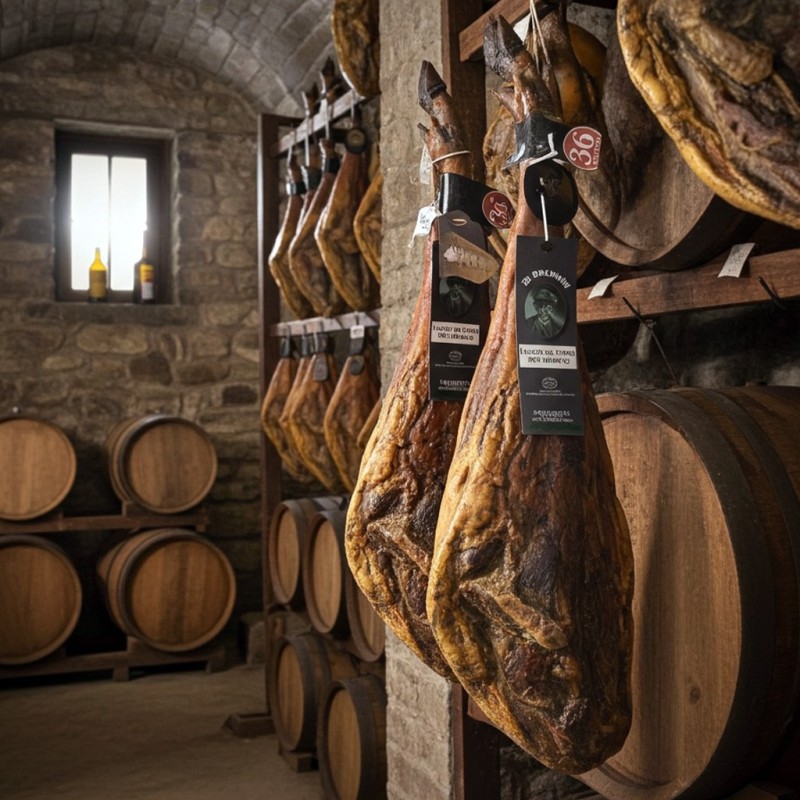
The 36-Month Cure: Yields a tender, supple texture with a balanced, sweet profile and mild nuttiness. It is an elegant, approachable masterpiece.
The 64-Month Royal Selection: Longer aging yields deeper complexity, a firmer, denser texture, and an intense umami finish with deep mineral and nutty notes. This is reserved for the advanced connoisseur.
Every slice of Jamón Ibérico de Bellota is a testament to nature and tradition. Whether you prefer the sweet balance of our 36-month Paletas or the absolute peak of complex umami in our 64-month Royal Selection, understanding this elaboration process is the first step to truly tasting it.
Chapter 2: The Setup & The Essential Tools
Selecting the perfect Iberico ham cut is an art form, but serving it requires the precision of a craftsman.
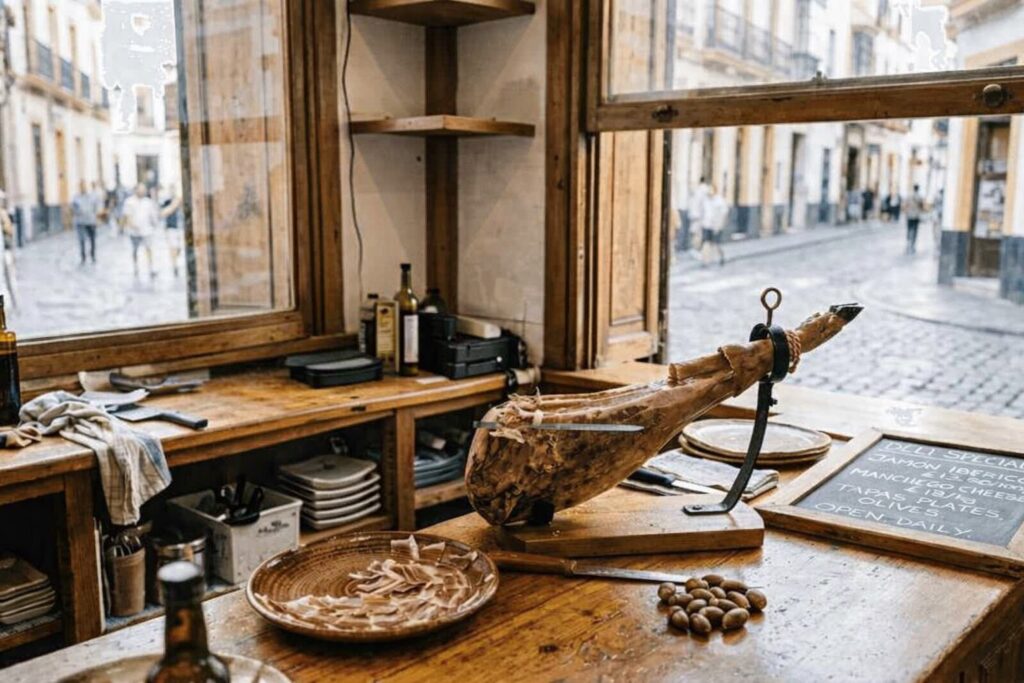
Before a single cut is made, you must establish an elegant, stable serving station.
Selecting Your Cut
Your setup begins with choosing the right piece for your occasion. At 7Bellotas, we specialize in the two most sought-after cuts of the 100% Iberian pig:
The Paleta (Shoulder Ham): A smaller, more robust cut. Because the meat is closer to the bone, the Paleta presents a firmer texture, coarser marbling, and an intensely savory, concentrated flavor. It is perfect for everyday gourmet enjoyment.
The Jamón (Leg Ham): The classic, premium hind leg. It offers broader, longer slices with fine, delicate marbling and a complex, elegant flavor profile that evolves slowly on the palate. This is the ultimate centerpiece for gourmet gatherings.
The Curator’s Toolkit
A well-organized station is not about aesthetics—it is about safety, precision, and respecting the years of curing that went into your ham. A wobbly ham produces uneven slices, forcing you to saw at the meat, which destroys the delicate fat structure.
You need two primary tools: a sturdy Jamonero (ham stand) to lock the leg securely at the optimal carving angle, and a Long, Flexible Carving Knife designed specifically to glide through the cured fat.
Whether you are a first-time carver or a seasoned maestro, we have curated the exact tools required for the perfect slice.
7 BELLOTAS® | Accessories
Zwilling Ham Knife
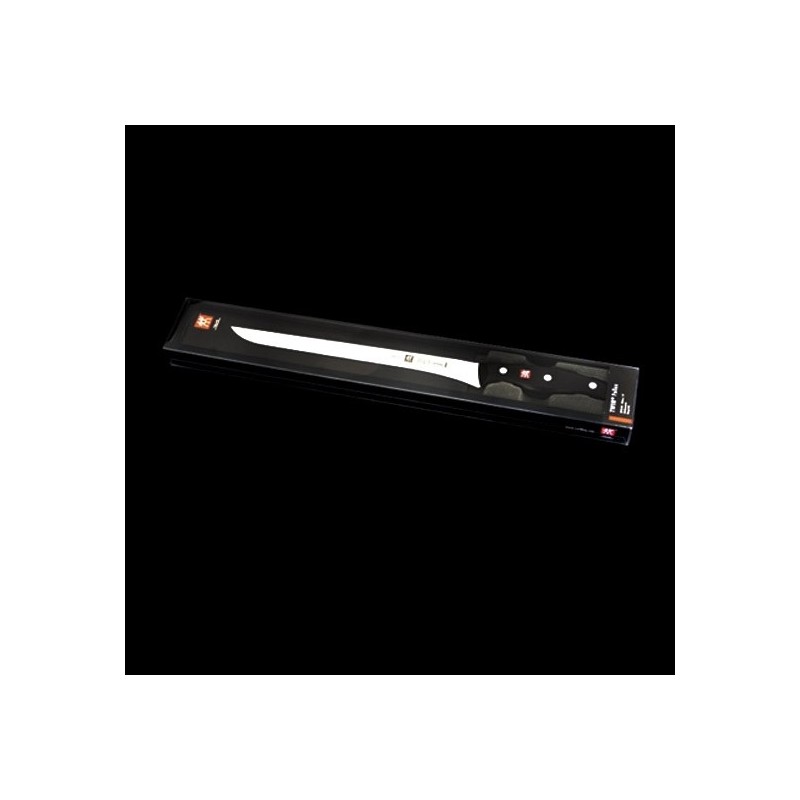
Twin Pollux
The non-negotiable foundation of your carving setup.
A razor-sharp, highly flexible blade designed specifically to yield
Paper-thin, uniform slices without tearing the aged meat.
Vertical Ham Holder Stand + Carving Knife
A secure, reliable starting point for the home carver.
This set provides the necessary stability to lock the hoof in place,
Packaged together with the essential flexible blade to begin your tasting journey.
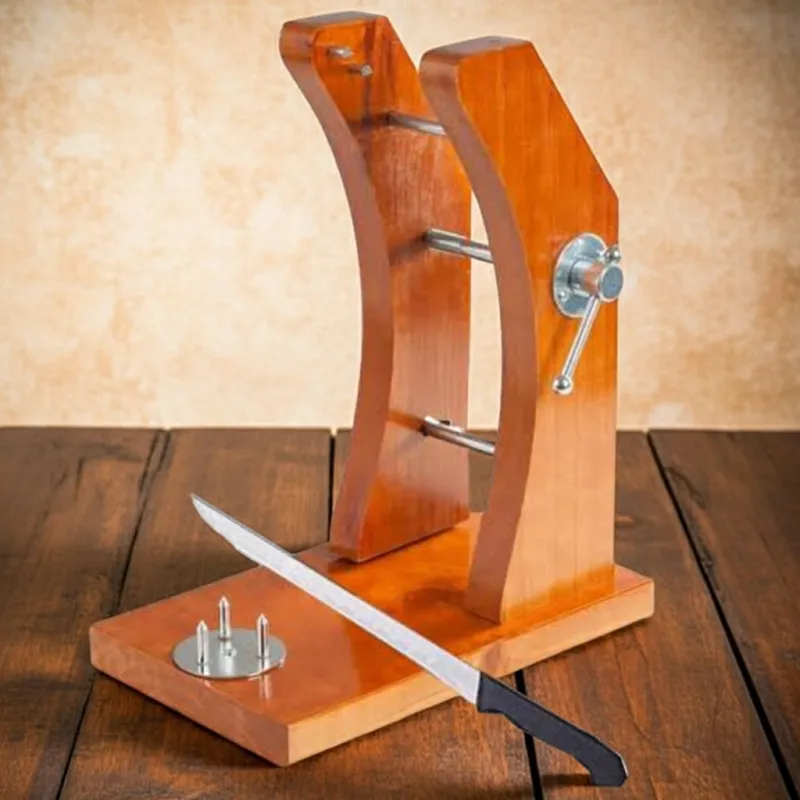
Folding Rotary Stand (Jamotec JP)
A massive upgrade for convenience and precision.
This stand features a rotary grip system, allowing you to turn the ham to access different sections of the meat
Without having to completely unmount the heavy leg.
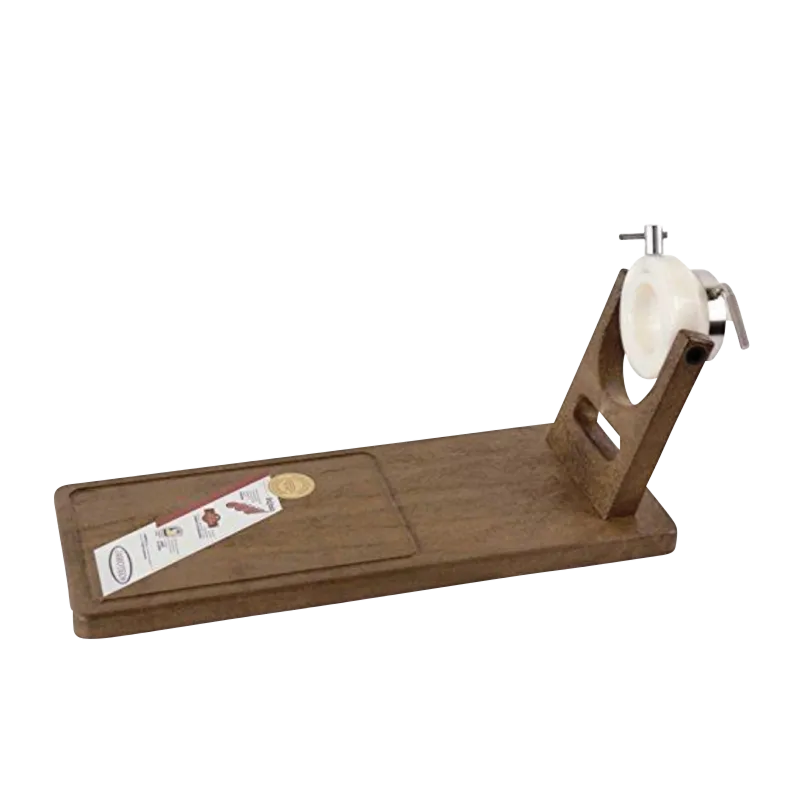
Ham Stand Jamotec J2 (Rotary)
Professional-grade stability and weight,
Designed for serious connoisseurs who carve regularly.
The solid base ensures zero movement, allowing for flawless, rhythmic slicing.
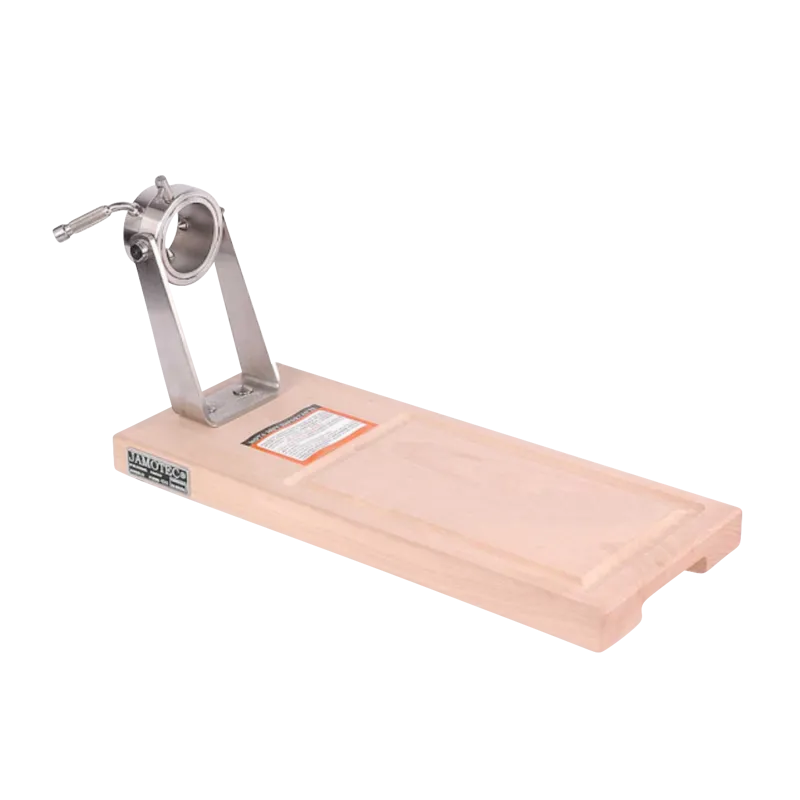
Ham Holder Stand Jamotec F1

The absolute pinnacle of carving equipment.
Flawless engineering, total security, and an elegant presentation
Worthy of holding a 64-month Royal Selection leg.
Explore even more in our Shop
Chapter 3: The Slicing Technique
Slicing Jamón Ibérico de Bellota is not merely about portioning food; it is the final, critical step in the elaboration process. A rushed hand or a dull blade will tear the aged muscle fibers and crush the delicate, oleic-rich fats we spent up to 64 months perfecting.
When you step up to the jamonero, you are no longer just a host—you are the master cortador. The goal is to maximize tenderness and release the full bouquet of aromas locked inside the meat.
The Mechanics of the Perfect Cut
1.Level the Canvas: Preparation.
With the ham locked securely in your stand (hoof facing up to start with the plump maza section), use your rigid boning knife to carefully peel away the oxidized, yellow outer fat. Only expose the area you intend to slice today. Your cutting surface must remain completely flat and horizontal throughout the life of the ham.
2.The Horizontal Glide: The Motion.
Take your long, flexible carving knife and lay it flat against the meat. Do not press down or saw aggressively. Let the razor-sharp edge do the work, using long, slow, deliberate strokes drawn toward you. You want to glide smoothly through the fat and muscle, never crushing it.
3.The Credit Card Rule: The Target.
Do not attempt to slice the entire length of the leg. Stop your cut when the piece is roughly the size of a credit card and about 1-2 millimeters thick. A perfect slice should be small enough to consume in a single bite, and thin enough to be completely translucent when held up to the light.
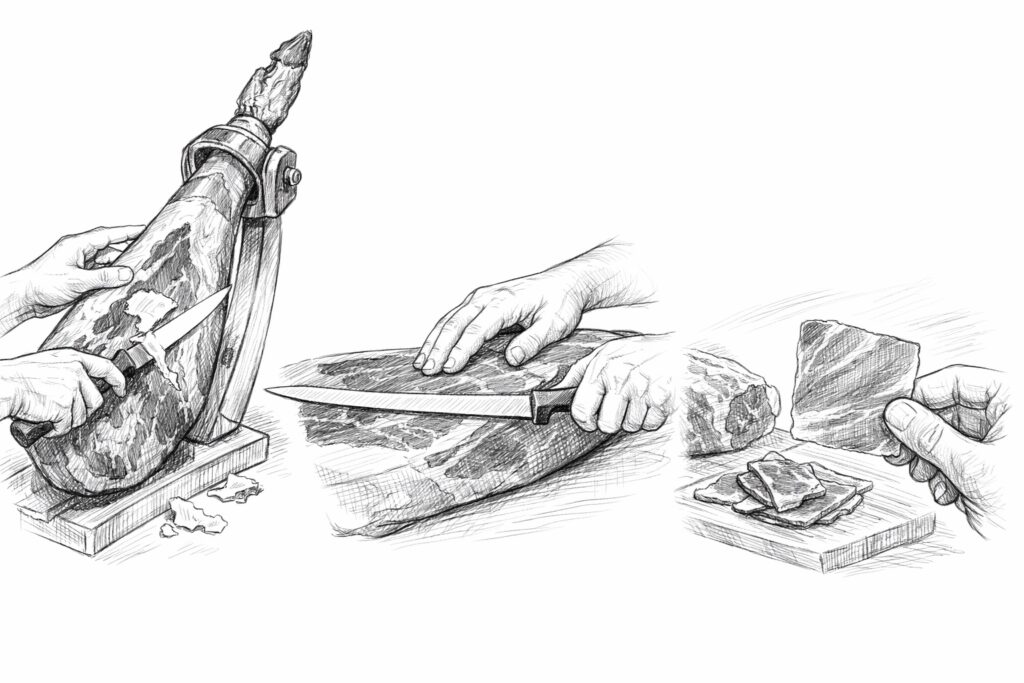
The Golden Rule of Safety: The flexibility of a professional ham knife makes it incredibly sharp and unpredictable if it catches on the bone. Always keep your free hand completely behind the blade. The safest place for your non-carving hand is resting firmly on the hoof or the top of the jamonero, far out of the cutting path. Respect the blade, and take your time.
Chapter 4: The Tasting Workflow
Most people simply eat Ibérico ham. Connoisseurs taste it. The difference lies not in the ham itself, but entirely in the approach.
Acorn-fed Pata Negra carries extraordinary complexity, but without a systematic sensory progression, much of that craftsmanship goes unnoticed. The most delicate notes—the faint sweetness of the acorn fat, the mineral whisper in a 64-month slice—reveal themselves only in quiet, unhurried moments.
The Warm Plate Rule
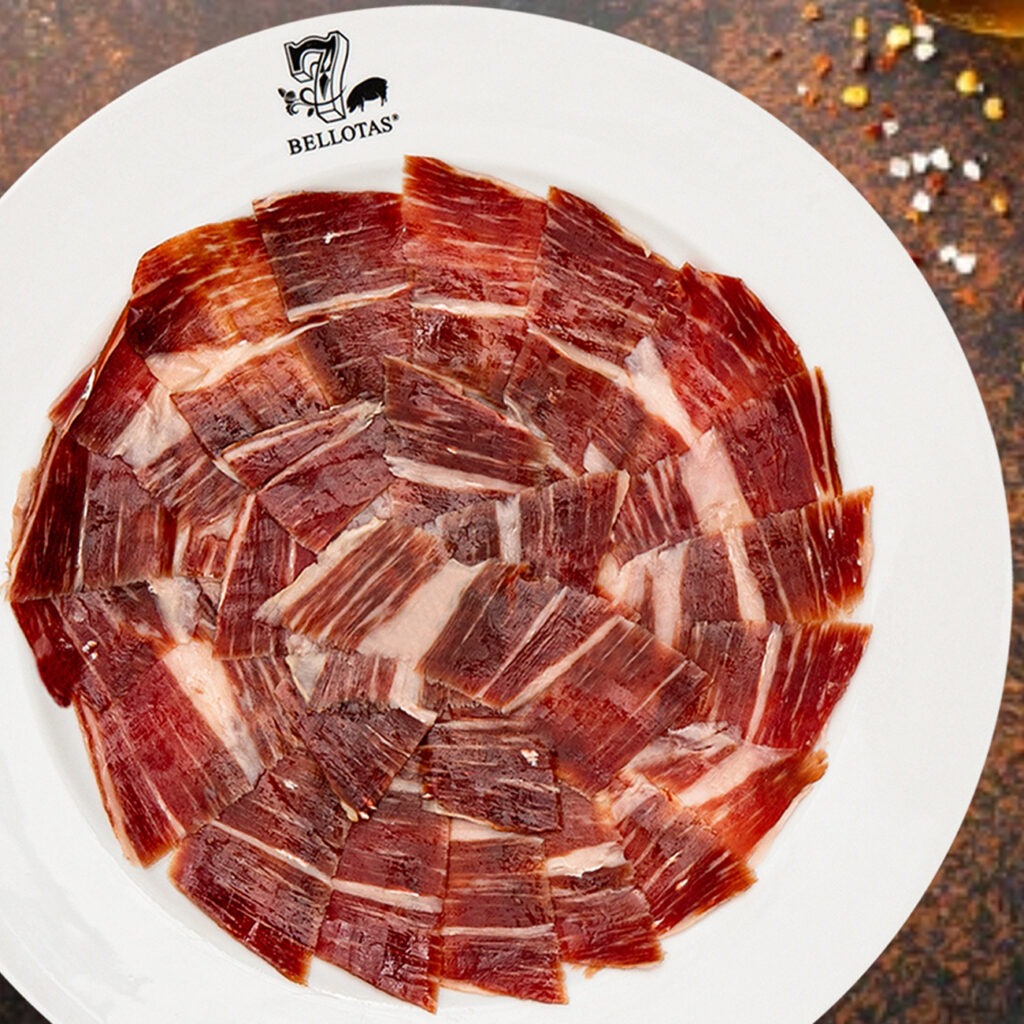
Before any tasting begins, the meat must be tempered. Never serve Jamón Ibérico cold. Chilled fat remains firm, waxy, and entirely muted, keeping the complex aromas locked inside the muscle fibers.
Allow your carved slices to rest at room temperature (around 20–24°C / 68–75°F) for at least 30 minutes before serving. When the temperature is right, the oleic acid in the acorn diet causes the fat to “sweat.” It will become glossy, fragrant, and soft enough to literally melt on your palate.
Pro Tip: To fully unlock the aroma, arrange your slices on a slightly warmed ceramic plate. The gentle heat keeps the natural oils active throughout your tasting session.
The Sensory Progression
When you are ready to begin, resist the urge to immediately introduce bread, garnishes, or wine. Let the ham speak entirely for itself through these four stages:
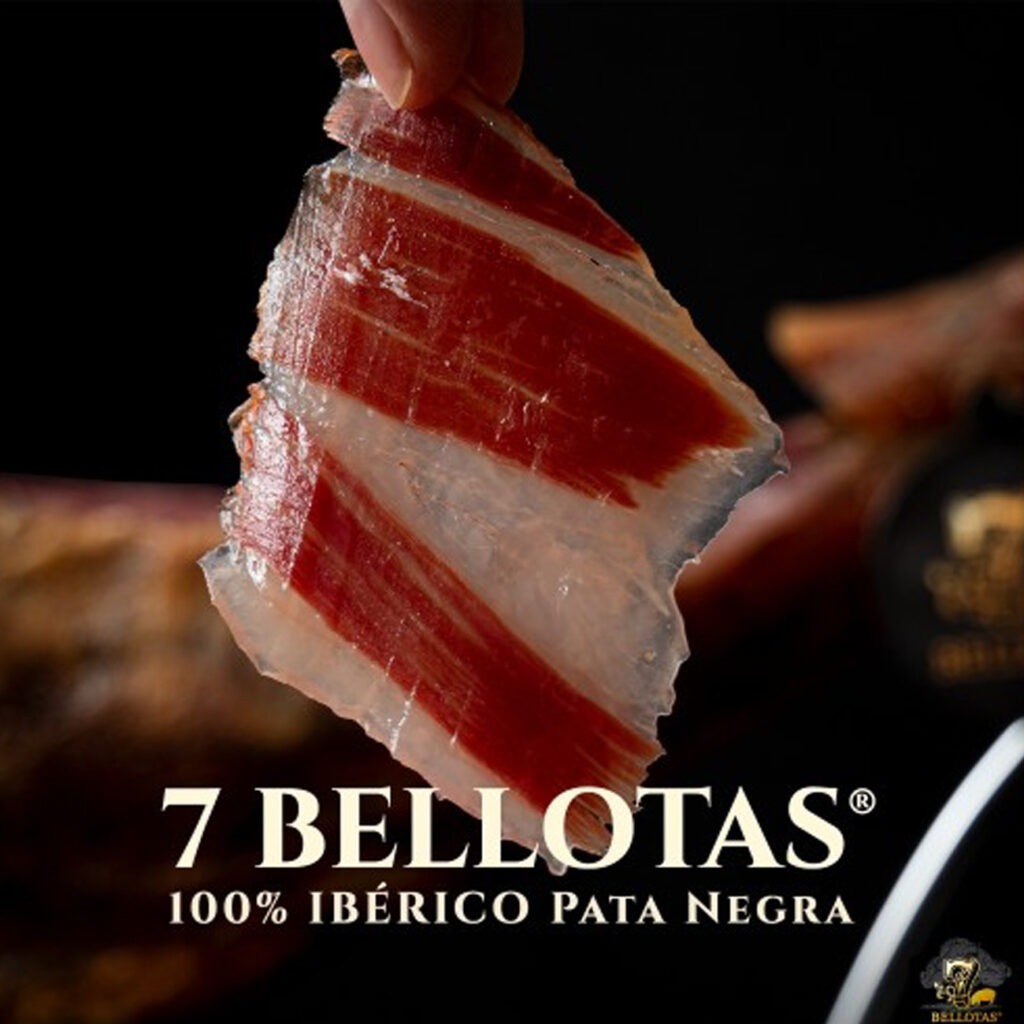
Sight: Hold a single, paper-thin slice up to the light. Premium black label ham displays vivid marbling, with ivory and golden fat threaded through deep ruby flesh. At its thinnest points, the slice should be completely translucent.
Aroma: Bring the slice close to your nose. Rich, nutty, and intensely savory scents with an unmistakable underlying sweetness are the absolute hallmarks of genuine bellota quality.
Texture: Gently touch the slice between your thumb and forefinger. It should feel silky, slightly oily from the acorns, and yield without any stiffness or resistance.
Flavor: Place the slice flat on the tongue. Do not chew immediately. Allow the warmth of your mouth to begin melting the fat. You will notice a sweet onset first, which smoothly transitions into a deep, salty umami core, leaving a nutty persistence that distinguishes true Pata Negra from all other cured meats.
Advanced Pairings
Over-complicating a tasting board is a common distraction. Strong cheeses or heavy, fruit-forward red wines will completely overpower the subtlety of the meat.
Once you have established the ham’s pure character through the initial tasting, you can introduce careful, complementary pairings. We recommend serving your Jamón with aged Manchego (12 months) to echo the nuttiness, Marcona almonds for textural variety, and a crisp, saline Spanish Fino sherry or Manzanilla to perfectly cleanse the palate between rich bites.
The Hand-Sliced Experience
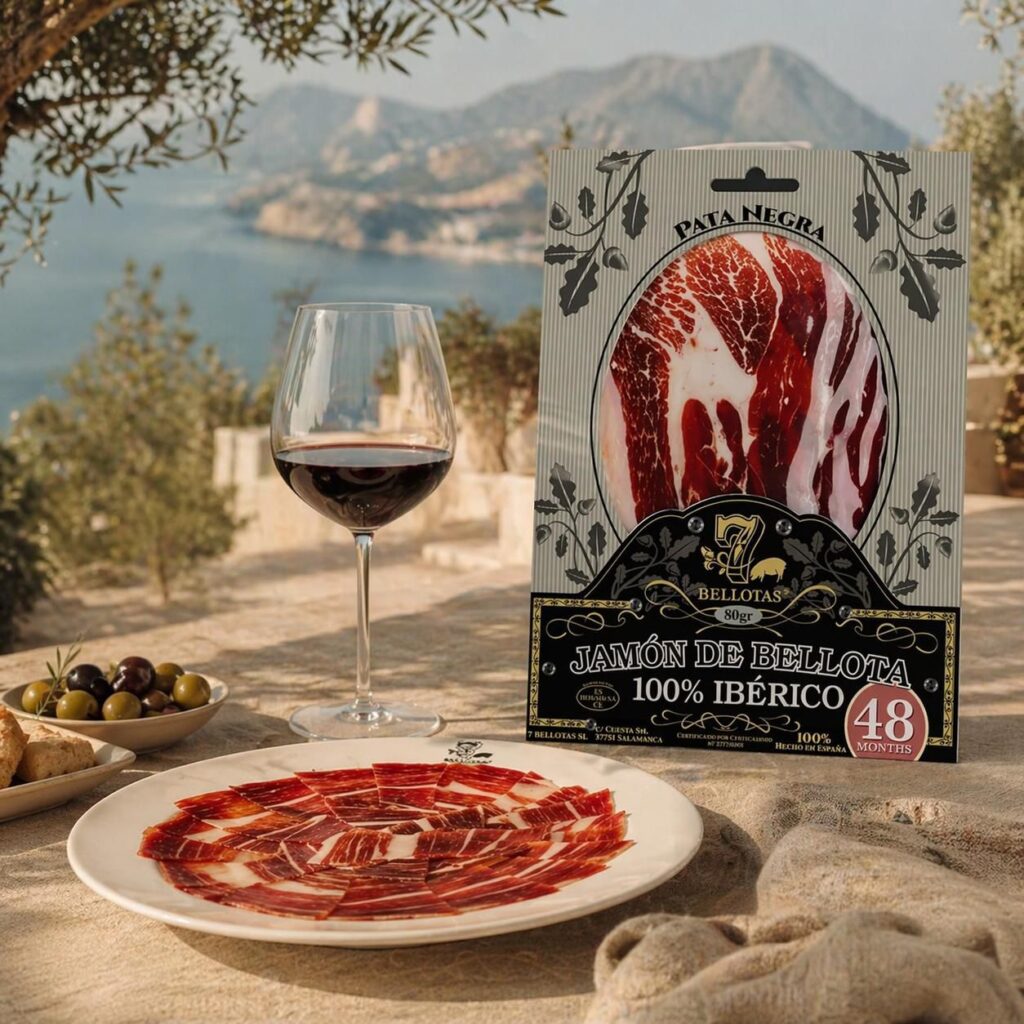
Want all the flavor and tradition without the carving workflow?
For those who prefer a ready-to-serve masterpiece, 7Bellotas offers hand-sliced Jamón Ibérico de Bellota. Carefully carved by our master cortadores directly from the leg, each translucent slice is immediately vacuum-sealed to preserve absolute freshness. Simply remove the pack from the refrigerator 30 minutes before serving, open the seal to let the meat breathe, and experience the exact same progression as if it were carved tableside.
Chapter 5: Proper Storage & Preservation
Proper storage is the secret to keeping your Jamón Ibérico tasting just as amazing on day thirty as it did on day one. This premium meat is a completely natural product, aged to perfection over years—and it demands the exact same care and respect once it arrives in your home.
Whether you are displaying a whole leg on your kitchen counter or keeping our artisan-sliced packs in your refrigerator, preserving the delicate flavor, aroma, and moisture of the meat requires a specific routine.
Protecting a Whole Leg
When you have a whole bone-in leg, your home environment becomes an extension of our curing cellars. You must keep the jamonero in a cool, dry place, ideally between 15–20°C (59–68°F) with low humidity. A pantry, a wine cellar, or a shaded corner of your kitchen is perfect. Never expose the meat to direct sunlight or position it near a heat source like an oven or radiator.
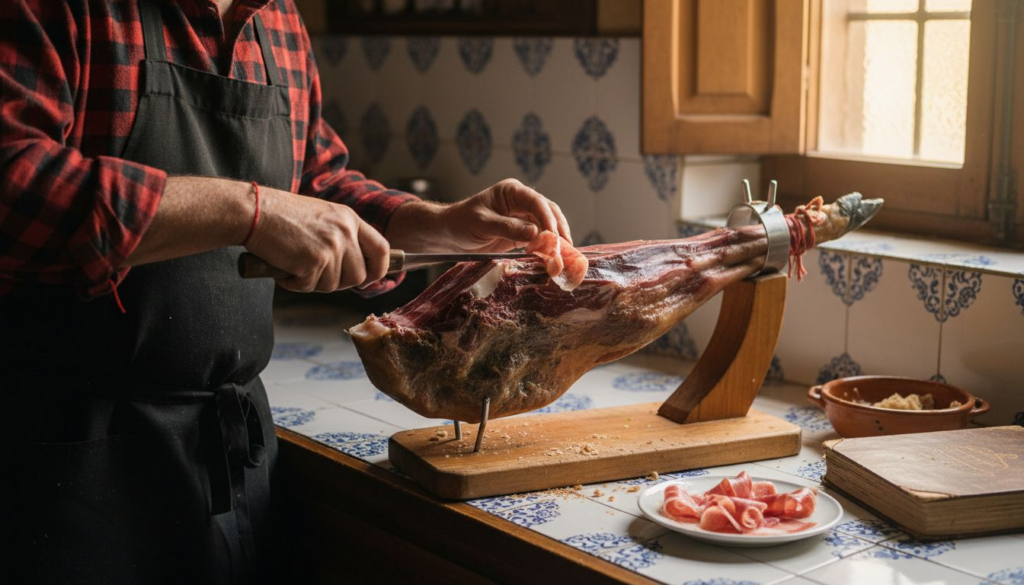
Once you have begun the carving process, oxygen becomes the enemy of the exposed red meat. This is why saving the white fat during your initial carving setup is so critical.
When you finish slicing for the day, take those reserved, flat pieces of pure white fat and lay them directly over the exposed red meat like puzzle pieces. This creates a natural, airtight seal that feeds moisture back into the cut surface. Next, wrap the entire leg loosely with a breathable cotton cloth or a professional ham cover. This allows natural airflow to prevent mold while keeping dust and light away from the meat. Never wrap a whole leg in plastic cling film, as this will trap moisture and cause the meat to spoil.
Preserving Vacuum-Sealed Slices
If you are enjoying our hand-sliced, vacuum-packed Jamón Ibérico, the preservation rules change slightly.
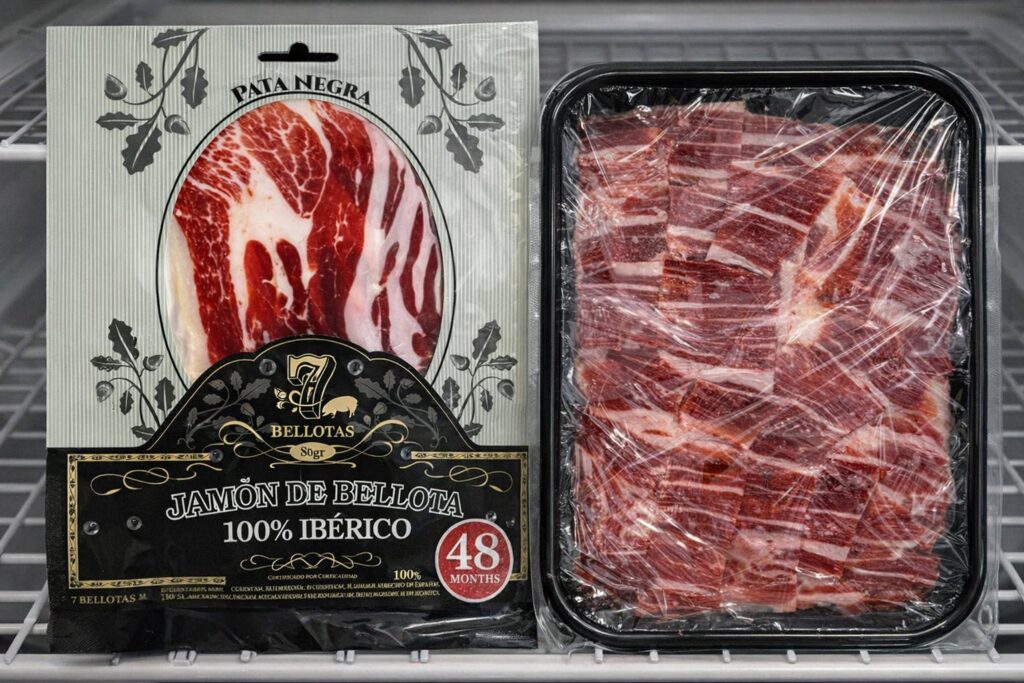
Keep all unopened vacuum-sealed packs in the refrigerator at a steady 4–7°C (39–45°F). In this state, they will hold their peak freshness for months.
Once you break the vacuum seal to serve the ham, any remaining slices must be consumed within three to four days for the best flavor and texture. Unlike the whole leg, an opened pack of slices should be tightly wrapped in cling film before returning it to the refrigerator. This prevents the cold, dry air of the fridge from dehydrating the paper-thin cuts.
Remember: always remove your refrigerated packs 30 minutes before serving so the fat can properly temper and release its complex aromas.
Chapter 6: Caring for Your Equipment
A premium jamonero and a perfectly balanced carving knife are not just kitchen utensils; they are precision instruments. They are the essential bridge between our curing cellars and your tasting plate. Because this equipment works intimately with the natural, oleic-rich fat of the acorn-fed pig, it requires a specific standard of care to ensure it lasts a lifetime.
Daily Maintenance
During the weeks or months that you are actively carving a leg of Jamón, natural fats will inevitably accumulate on your stand. While this fat is the mark of a true bellota ham, allowing it to sit and oxidize on your equipment over a long period can eventually affect both the wood and the metal.
After each carving session, take a moment to wipe down the wooden base and the metal arm fixtures. Use a soft, non-abrasive cloth dampened with warm water and a very small amount of mild dish soap. Never use harsh chemical cleaners or heavy degreasers. The hgh-quality wood of your stand is naturally porous; harsh chemicals can strip its finish, and artificial scents can linger, interfering with the pure aroma of your next carving session.
Deep Cleaning & Wood Conditioning
When you have finally reached the bone and the ham is completely consumed, it is time to reset your station.
If you are using one of our advanced rotary models like the Jamotec JP or J2, carefully disassemble the metal fixtures. Wash these stainless steel components thoroughly in hot, soapy water to remove any hidden oils trapped in the joints, then dry them completely.
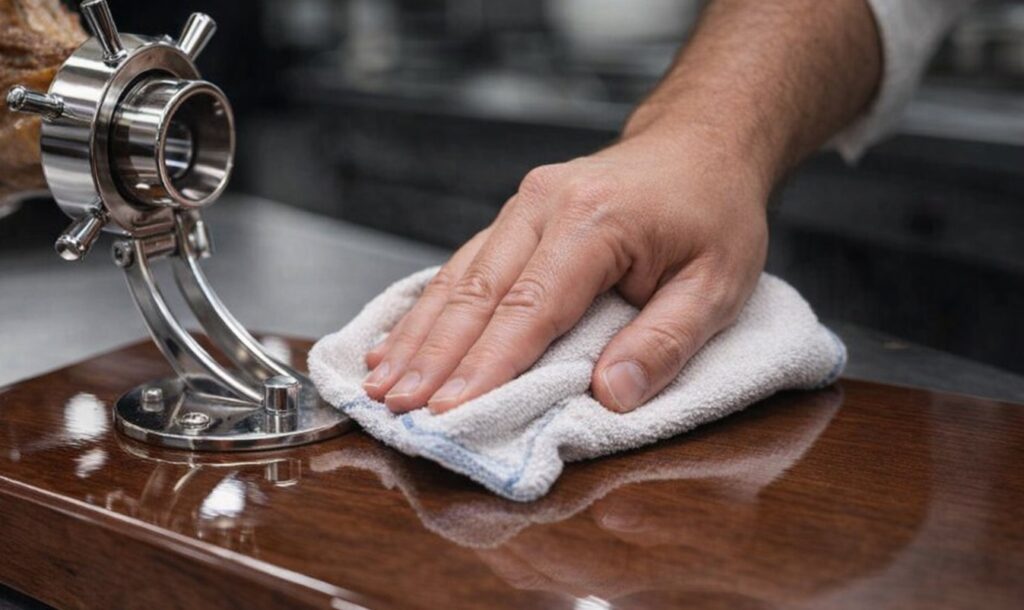
For the wooden base, perform a thorough wash and allow it to air-dry entirely. Once dry, treat the wood with a light, even coat of food-grade mineral oil. Gently rub the oil into the grain using a soft cloth. This simple ritual feeds the wood, prevents it from drying or cracking in changing home climates, and restores its deep, elegant luster so it is ready to present your next 7Bellotas masterpiece.
Preserving the Blade
Your flexible carving knife is the single most important tool in achieving a translucent slice. It must be treated with absolute care.
Never place your ham knife in a dishwasher. The extreme heat and harsh detergents will quickly destroy the microscopic edge of the blade and degrade the handle. Instead, hand wash the knife immediately after use with warm water and dry it instantly with a towel.
To maintain the effortless, horizontal glide required for the perfect slice, use a honing steel regularly to keep the edge aligned. The moment you feel the blade begin to saw or drag through the fat rather than gliding, it is time to have the knife professionally sharpened. A dull blade forces you to apply downward pressure, which tears the meat and ruins the texture of the Jamón.
Chapter 7: The Curator’s Desk (Common Questions)
Even with the perfect setup, working with a natural, living product like Jamón Ibérico de Bellota can raise questions. Here is the advice we most commonly give our clients:
Can I freeze Jamón Ibérico? Never. Freezing destroys the delicate cell structure of the meat and completely alters the oleic acids in the fat. If you cannot consume a whole leg, we highly recommend purchasing our vacuum-sealed sliced packs instead, which will keep perfectly in the refrigerator for months.
Why is there mold on the outside of my whole leg? Do not panic—this is a natural and necessary part of the artisanal curing process. The harmless surface mold develops in the curing cellars to help stabilize the meat and develop its complex flavor. Simply wipe it away with a clean cloth lightly dampened with olive oil before carving.
The fat on the outside looks yellow. Is it safe? Yes, but you should not eat it. The outer layer of fat naturally oxidizes and turns yellow as it protects the precious meat inside over the course of 36 to 64 months. Always carve away the yellow fat until you reach the pure, white or pink fat underneath, which is what you want to eat.
How long does a whole leg last once cut? If you follow our preservation techniques (covering the exposed meat with white fat and a cotton cloth, keeping it in a cool, dry place), a bone-in leg will retain its optimal flavor for about 30 to 40 days after the first cut.
Begin Your Tasting Journey
Mastering the art of slicing and serving is a deeply rewarding ritual, but the true magic lies in the meat itself. No amount of perfect carving can rescue an average ham, and a true masterpiece practically serves itself.
Whether you are ready to mount your first whole leg on a Jamotec stand, or you prefer the immediate luxury of our masterfully hand-sliced, vacuum-sealed portions, we have a piece waiting for you in our cellars.
Don’t just eat Spanish ham. Experience the peak of the Dehesa.