TL;DR:
- Authentic Pata Negra comes from 100% Iberian pigs fed on acorns, cured for at least 36 months.
- Verify label color, DO certification, and physical qualities like marbling and aroma before buying.
- Purchase from specialist retailers with transparent provenance to ensure genuine, high-quality ham.
Selecting the right Pata Negra ham for a special occasion feels deceptively simple until you’re standing before a wall of cured legs, each with its own label, price point, and origin claim. Even seasoned food lovers find the distinctions genuinely confusing. What separates a truly exceptional ham from a merely decent one isn’t always obvious from the outside. This guide cuts through the complexity, explaining exactly what to look for, the right questions to ask, and how to make a selection you’ll be proud to serve at any gourmet table.
Table of Contents
- Understanding Pata Negra: What makes it premium
- Essential criteria before you buy: provenance, certification, and appearance
- Step-by-step: How to select the best Pata Negra ham
- Final checks and tasting: Ensuring you’ve selected the best
- Why the perfect Pata Negra isn’t always the most expensive
- Discover authentic Pata Negra for your next occasion
- Frequently asked questions
Key Takeaways
| Point | Details |
|---|---|
| Know what’s genuine | Only select Pata Negra with clear breed, diet, and certification details. |
| Check for provenance | Origin, producer, and official seals are signs of true premium quality. |
| Use a step-by-step checklist | Follow a proven buying guide to ensure authenticity and excellence. |
| Trust your senses | Aroma, marbling, and texture are your best allies in confirming quality. |
| Explore beyond the price tag | Great Pata Negra can come from lesser-known producers and isn’t always the most expensive. |
Understanding Pata Negra: What makes it premium
The term ‘Pata Negra’ translates literally as ‘black hoof,’ but its meaning in the world of cured meats carries far greater weight. It refers to ham produced from the Iberian pig, a breed native to the Iberian Peninsula, prized for its unique ability to infiltrate fat deep into muscle tissue. This marbling is what gives Pata Negra its extraordinary flavour and silky texture.
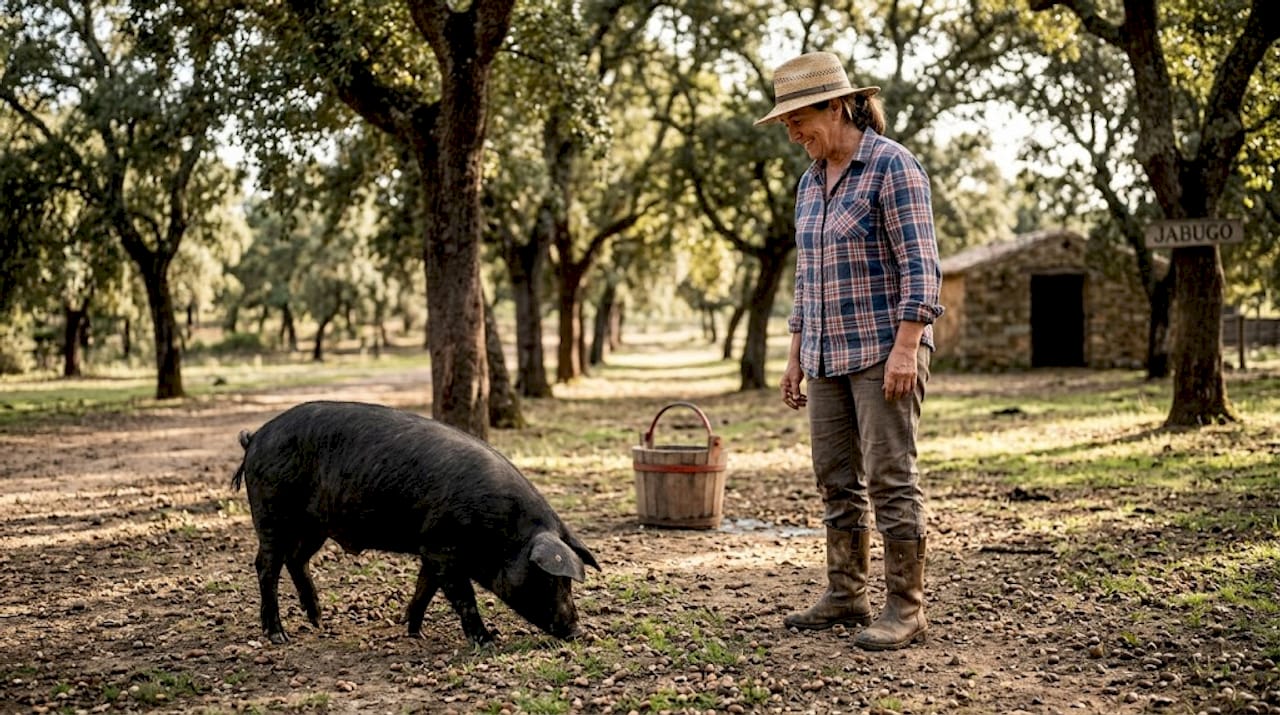
Not all Iberico ham qualifies as true Pata Negra. What makes Pata Negra authentic comes down to three non-negotiable factors: breed purity, diet, and curing method. The finest examples are sourced from 100% purebred Iberian pigs, fed exclusively on acorns during the montanera (the autumn and winter grazing season), and dry cured in natural mountain air for a minimum of 36 months, often considerably longer.
Spain’s regulatory framework assigns colour-coded labels to classify Iberico products:
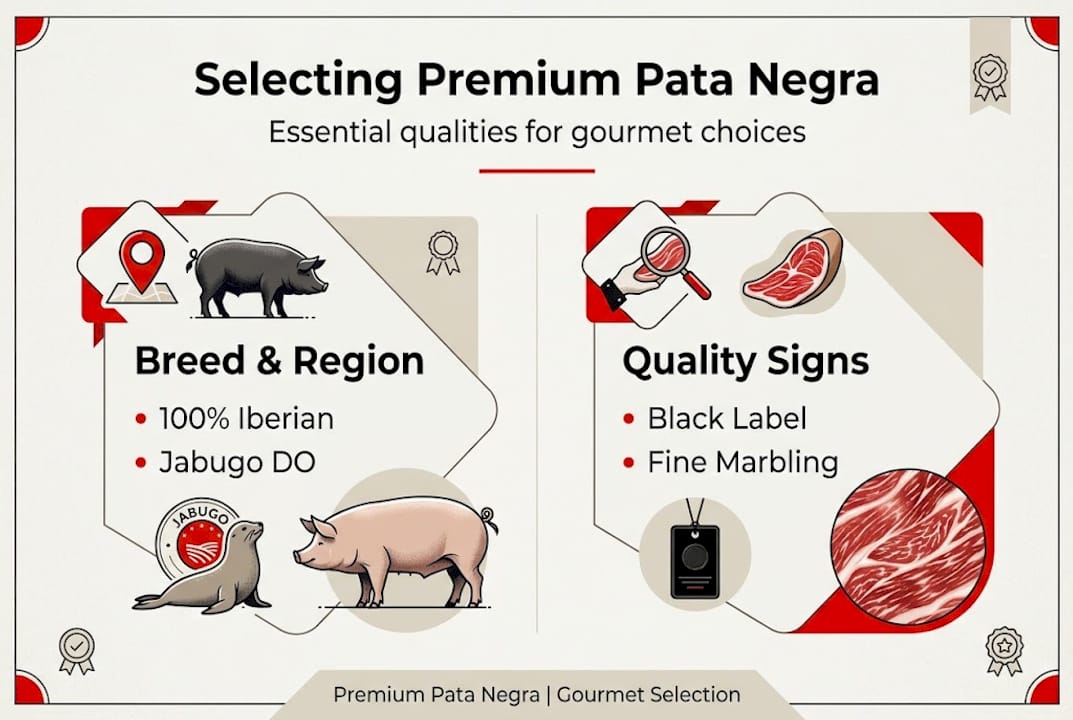
- Black label: 100% Iberian breed, acorn-fed (bellota), free-range
- Red label: Cross-bred Iberian (at least 50%), acorn-fed, free-range
- Green label: Cross-bred Iberian, free-range, cereal-fed
- White label: Cross-bred Iberian, intensively farmed, cereal-fed
Only the black label represents what connoisseurs truly mean when they say Pata Negra. As 100% Iberian pigs, acorn-fed reared in Spain produce the genuine article, anything less is a compromise, however attractive the packaging.
“The black label is not a marketing device. It is a guarantee backed by Spanish law, traceable from the pig’s birth to the curing cellar.”
The Denomination of Origin (DO) system adds another layer of assurance. Regions such as Jabugo, Guijuelo, Dehesa de Extremadura, and Los Pedroches each impart distinct characteristics to their hams, shaped by local climate, soil, and pasture. Knowing which DO a ham carries tells you a great deal about its likely flavour profile before you ever taste it.
Pro Tip: Always check the label colour first, before reading any marketing copy on the packaging. The colour-coded system is legally binding and cannot be falsified by a reputable producer.
Essential criteria before you buy: provenance, certification, and appearance
Knowing what premium means is only useful if you can recognise it at the point of purchase. Official seals and documentation, not just price or appearance, are your most reliable guides.
Provenance matters enormously. A ham from Jabugo, within the Sierra de Huelva, benefits from a specific microclimate that accelerates and deepens the curing process. Guijuelo hams, cured at altitude in Salamanca, tend toward a milder, sweeter profile. Neither is superior in absolute terms, but knowing the origin helps you match the ham to your occasion and personal taste.
Here is a quick reference for what to verify before purchase:
| Criterion | What to look for | Why it matters |
|---|---|---|
| Breed | 100% Iberian (black label) | Determines fat marbling and flavour depth |
| Diet | Bellota (acorn-fed) | Produces oleic acid-rich fat, silky texture |
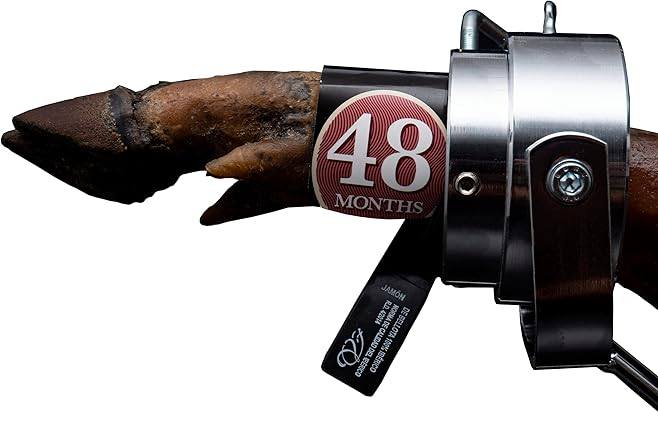
| Curing time | Minimum 36 months, ideally 48+ | Longer curing intensifies complexity |
| Denomination of Origin | DO seal on label or documentation | Confirms regional authenticity |
| Producer traceability | Lot number, farm reference | Ensures full supply chain transparency |
When inspecting a whole ham in person, trust your senses. The exterior should have a dry, slightly dusty surface with patches of natural mould, which indicates proper curing. Press the surface gently: it should yield slightly but feel firm overall. The aroma at the cut face should be nutty, faintly sweet, and deeply savoury. Any sour or sharp smell is a warning sign.
For top rated Pata Negra hams, the fat should appear creamy white to pale yellow, never grey or waxy. Bright white fat often indicates a younger, less complex ham.
- Confirm the label colour is black
- Locate the DO seal or producer certification
- Check the curing duration on the label
- Inspect the cut face for marbling and fat colour
- Assess the aroma before committing to purchase
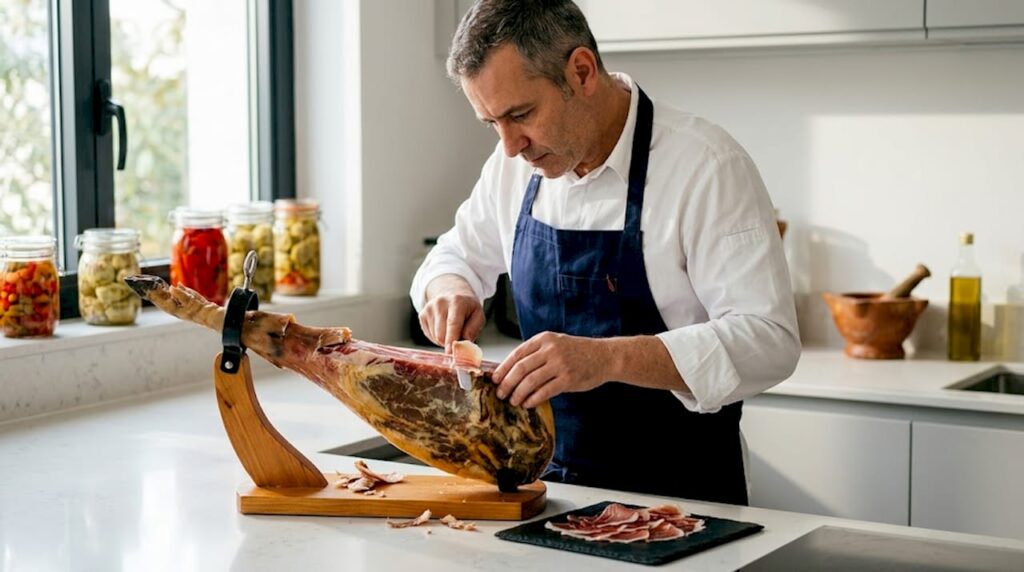
Pro Tip: When slicing at home, choosing the right slicing knife is as important as the ham itself. A long, flexible jamonero blade preserves the delicate fat structure and prevents tearing, which directly affects the flavour released on the palate.
Step-by-step: How to select the best Pata Negra ham
With your criteria clear, the buying process itself becomes far more straightforward. The key decision is where to buy.
Specialist retailers can offer product origin transparency and allow for detailed questions, which is something a general supermarket simply cannot match. Direct-from-producer purchases, whether in person or via a trusted online shop, offer the most reliable provenance and often the freshest stock.
| Source | Advantages | Disadvantages |
|---|---|---|
| Specialist Spanish deli | Expert advice, tasting possible | Limited stock, higher retail price |
| Certified online retailer | Wide selection, full documentation | Cannot inspect before purchase |
| Direct from producer | Maximum traceability, competitive pricing | Requires research to verify credentials |
| General supermarket | Convenient, accessible | Rarely stocks genuine black-label product |
Follow this process when making your selection:
- Research producers or retailers with verifiable DO credentials
- Confirm the breed is 100% Iberian and the diet is bellota
- Ask specifically about curing duration, ideally 48 months or more
- Request documentation: lot numbers, farm origin, certification seals
- Compare at least two or three options before committing
- Consider the occasion: a 64-month ham is extraordinary for a formal dinner; a 36-month ham suits everyday gourmet enjoyment
Once you’ve selected your ham, think ahead to serving premium Pata Negra correctly, because presentation is part of the experience. A chef presentation guide can help you plan the full sensory moment, from carving to plating.
Pro Tip: If buying in person, ask for a thin slice to taste before purchasing a whole leg. Any reputable specialist will accommodate this. The first taste tells you everything about fat integration, salt balance, and depth of flavour.
Final checks and tasting: Ensuring you’ve selected the best
The moment of slicing is when a premium ham reveals itself fully. Proper slicing and serving preserves the nuanced flavour and ensures the full gourmet experience, so this stage deserves as much care as the selection itself.
Begin by observing the first cut. The flesh should be a deep ruby red, threaded with fine white veins of fat that appear almost translucent under light. This intramuscular fat is the hallmark of genuine bellota Pata Negra. If the slices look uniformly dark with no visible marbling, the ham may be under-aged or from a lower-grade breed.
Signs you’ve selected a truly great ham:
- Uniform marbling: Fat is distributed evenly throughout the muscle, not concentrated at the edges
- Nutty, complex aroma: Notes of acorn, dried fruit, and aged cheese are characteristic
- Melt-in-the-mouth texture: Thin slices should dissolve on the tongue, releasing layers of flavour
- Glistening surface: A light sheen appears as the fat warms to room temperature
- Clean finish: No excessive saltiness or bitterness; the aftertaste is long and pleasant
“The ham speaks for itself when you respect it. Slice it thin, serve it at room temperature, and let it breathe for a few minutes. That is when you understand what the producer has given you.”
Common mistakes to avoid include slicing too thickly, which masks the fat integration, and serving directly from the refrigerator, which mutes the aroma and flavour. For further inspiration on enjoying Pata Negra and gourmet ham presentation, there are dedicated resources that go into considerable depth.
Pro Tip: Serve Pata Negra at 20 to 24 degrees Celsius. At this temperature, the oleic-acid-rich fat reaches its ideal consistency, and the full aromatic profile opens up. A cold ham is a wasted ham.
Why the perfect Pata Negra isn’t always the most expensive
Here is something the gourmet world rarely admits openly: price and quality do not always align in the world of Pata Negra. The most expensive ham on a menu or website is often priced that way because of brand prestige, import costs, or marketing investment, not because it is objectively the finest product available.
Smaller, family-owned producers in lesser-known regions sometimes craft hams of extraordinary quality that never reach the premium retail price bracket. Their pigs roam the same dehesa pastures, eat the same acorns, and are cured with the same patience. The difference is visibility, not virtue.
Choosing Iberico ham well means trusting your informed palate over a price tag. Once you understand the label system, the DO classifications, and the physical signs of quality, you have everything you need to find exceptional value. Explore different regions. Ask questions. The most memorable ham you ever taste may come from a producer you’ve never heard of.
Discover authentic Pata Negra for your next occasion
Ready to put this knowledge to use? Finding a supplier who meets every criterion outlined above is rare, but it makes all the difference.
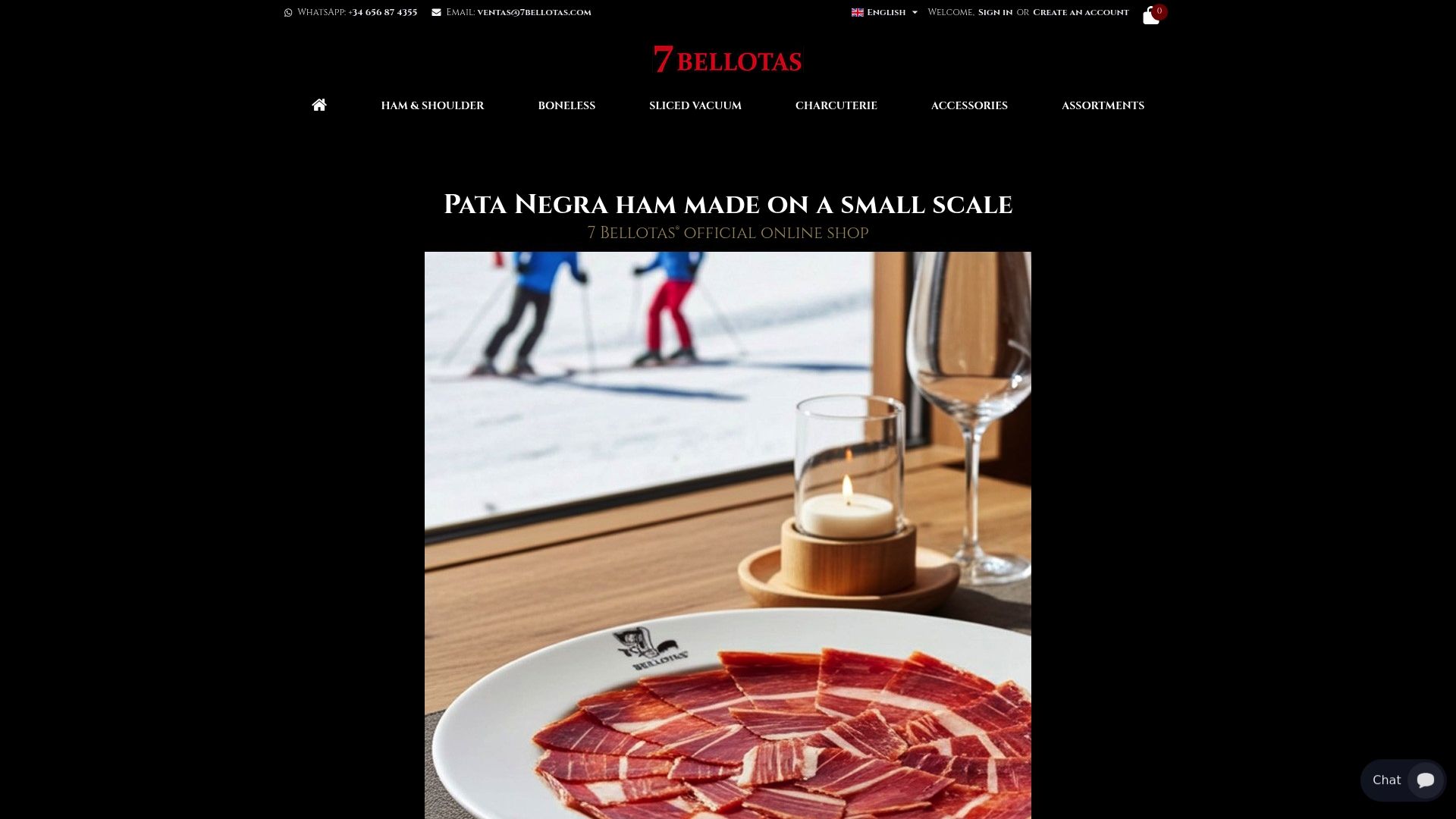
At 7 Bellotas, every ham is sourced from 100% Iberian, acorn-fed pigs, dry cured in natural mountain dryers and aged for a minimum of 36 months, with select pieces reaching beyond 64 months. The range is curated for connoisseurs who value traceability, artisanal production, and authentic Spanish heritage. Whether you’re selecting a whole leg for a formal dinner or vacuum-packed slices for a refined gift, the provenance is fully documented and the quality is uncompromised. This is Pata Negra as it should be.
Frequently asked questions
What makes Pata Negra ham different from other Iberico ham?
Pata Negra is exclusively from 100% Iberian pigs, acorn-fed and aged for extended periods, resulting in unmatched marbling, depth of flavour, and a silky texture that sets it apart from all other cured hams.
How can I check if my Pata Negra ham is genuinely premium?
Official seals and documentation are your most reliable indicators; verify the black label, confirm breed and diet, and inspect physical cues such as marbling, fat colour, and aroma before purchasing.
Where should I buy premium Pata Negra for the best selection?
Specialist retailers offering product origin transparency are the most reliable source, as they can provide full documentation and answer detailed questions about breed, diet, and curing duration.
What’s a quick sign I’ve selected a great Pata Negra ham?
A truly premium ham has uniform marbling, a nutty and complex aroma, and a melt-in-the-mouth texture when thinly sliced and served at room temperature.