Introduction: Finding Your Perfect Jamón
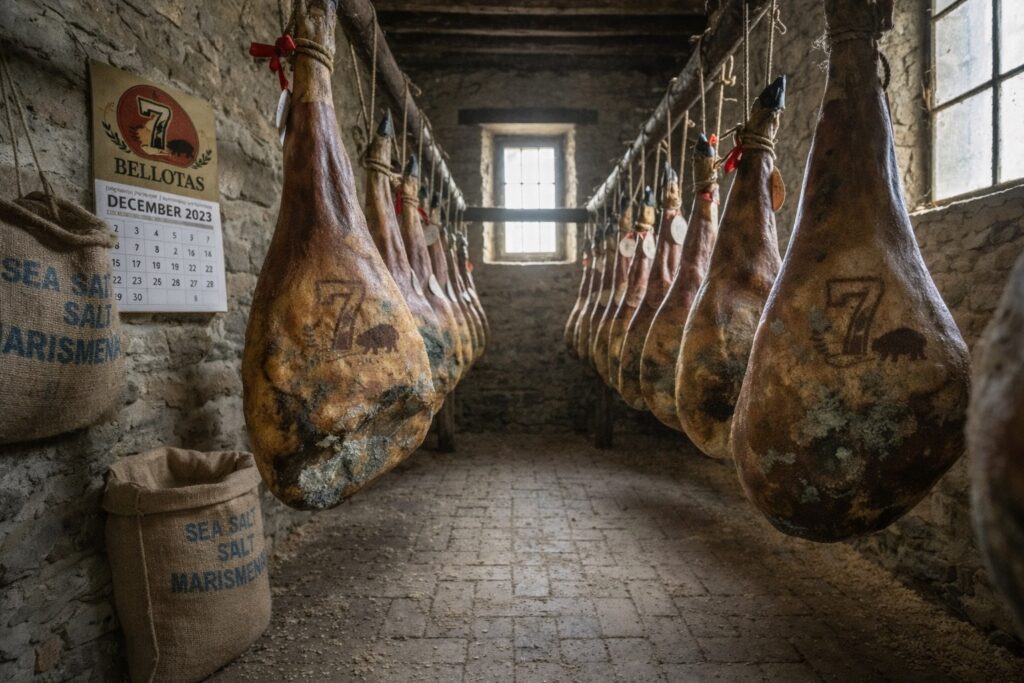
When we walk through the curing cellars, we aren’t looking at calendars; we are looking at the meat. We wait for the exact moment the fat turns translucent and the air fills with the deep, sweet aroma of roasted acorns. Sometimes that takes 36 months. Sometimes it takes 64. We don’t select a single piece for 7Bellotas until it tells us it’s ready.
That is the difference between a mass-produced ham, and a masterpiece.
When you are looking to invest in genuine Jamón Ibérico de Bellota, you are not just buying a gourmet product—you are participating in a centuries-old Spanish tradition. But the modern market is flooded with confusing labels, rushed curing times, and imitations that mimic the prestige of the pata negra without delivering the flavor.
As curators, our job is to sift through the noise. In this guide, we will pull back the curtain on our cellar selection process. We will teach you how to decode the labels, understand the difference between a leg and a shoulder, and ultimately, how to choose the perfect piece for your table.
The Anatomy of Quality: Why We Reject the Ordinary
When evaluating a ham for the 7Bellotas collection, we look for a perfect storm of genetics, diet, and extreme patience. If a piece fails in even one of these categories, it does not make the cut. Here is exactly what we look for before giving a leg our seal of approval.
1. The Purebred Difference (100% Iberian Genetics)
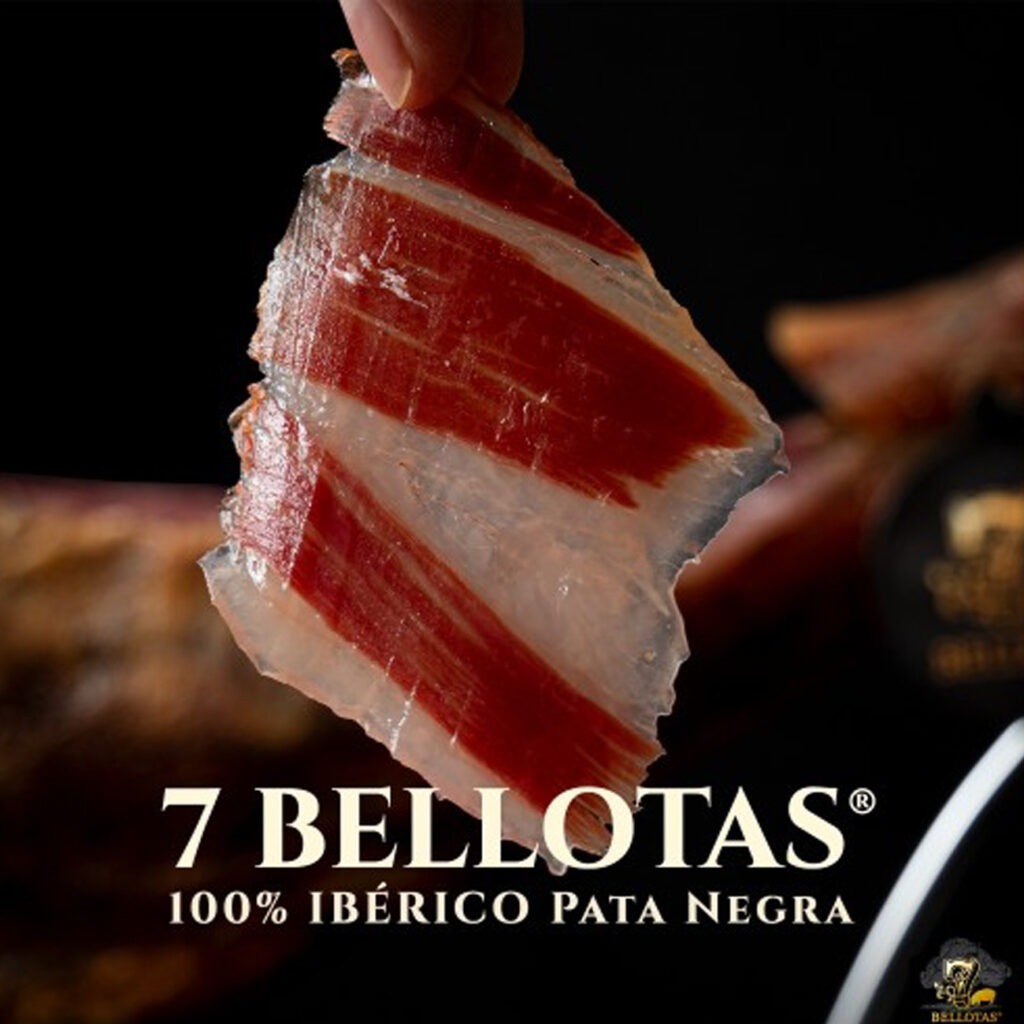
The foundation of a masterpiece is written in its DNA. We look for pigs of pure, 100% Iberian descent—a lineage traceable directly back to the Mediterranean wild boar. Unlike commercial breeds that store fat under their skin, the true Iberian pig possesses a rare genetic ability to infiltrate fat directly inside the muscle tissue. This creates the exquisite, ruby-red marbling that allows the meat to literally melt on your palate.
2. The Montanera Miracle (The Free-Range Acorn Diet)
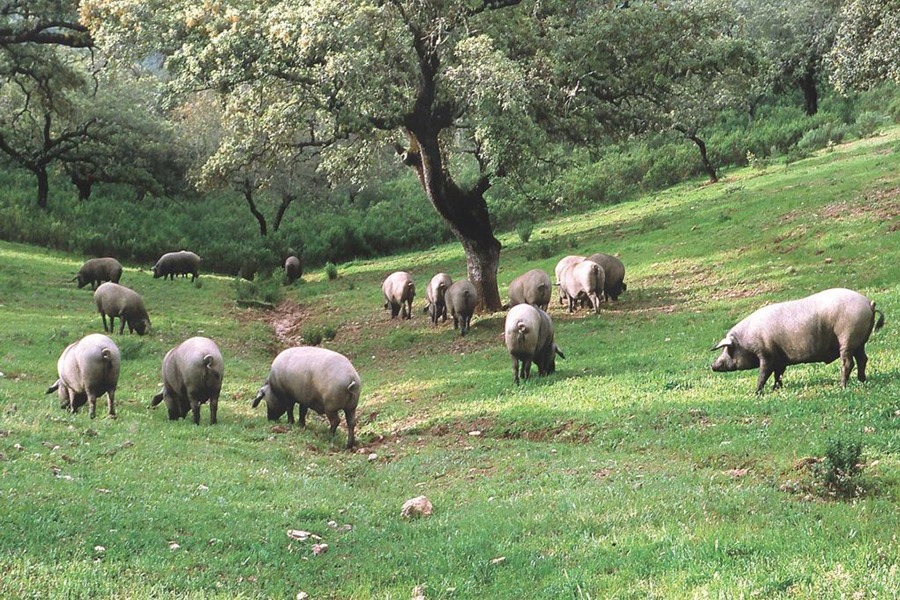
Genetics provide the canvas, but the Spanish dehesa (oak forest) provides the paint. We strictly select hams from pigs that have lived entirely free-range, roaming miles a day during the montanera season to feed exclusively on fallen acorns and wild pasture. The acorns are packed with oleic acid—the exact same heart-healthy fat found in extra virgin olive oil. This diet fundamentally alters the chemistry of the fat, making it soft, translucent, and incredibly aromatic.
3. The Art of Time (Unrushed Curing)
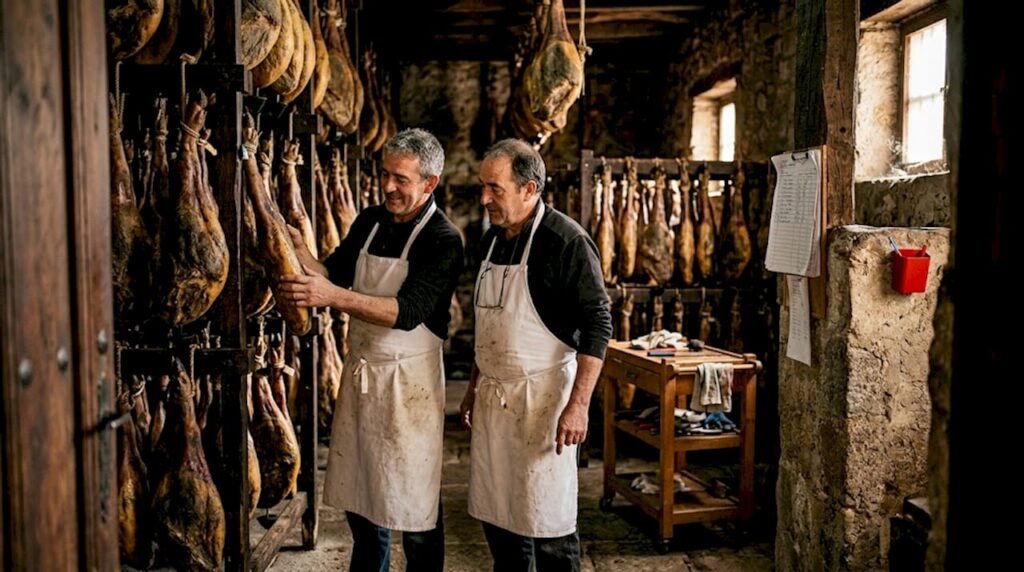
Time is the one ingredient you cannot fake. Proper curing allows natural enzymatic processes to slowly break down the meat, enhancing the deep umami flavors and complex aromas. While the market pushes hams out the door in 24 months, we prefer the slow magic of a natural cellar. Our premium cuts hang quietly for 36, 48, or even up to 64 months. We wait for the fat to settle, the flavors to concentrate, and the piece to reach its absolute peak.
Decoding the Labels: How to Avoid the Bargain Trap
Because true Jamón Ibérico de Bellota commands a premium price, the global market is unfortunately crowded with clever marketing and outright counterfeits.
Right now, the international market is being flooded with “bargain” hams. What many buyers don’t realize is that industrial producers often import cheap, commercially farmed white pork from other parts of Europe (like Poland or Hungary), run it through artificial, rapid-drying factories in Spain, and then slap a Spanish-sounding name and a picture of a flamenco dancer on the packaging. Other countries are even attempting to raise crossbred pigs to mimic the Spanish curing process, labeling their meat as “Iberico-style.”
To protect the heritage of this delicacy from cheap imitations, the Spanish government introduced a strict, legally mandated color-coded tagging system. These plastic tags (bridas) are affixed to the pig’s ankle at the slaughterhouse and must remain on the ham throughout the entire curing process.
For you, the buyer, this tag is your first line of defense.
The Official Spanish Grading System
When you are investing in a centerpiece for your table, you need to know exactly what you are paying for. Here is how to read the tags:
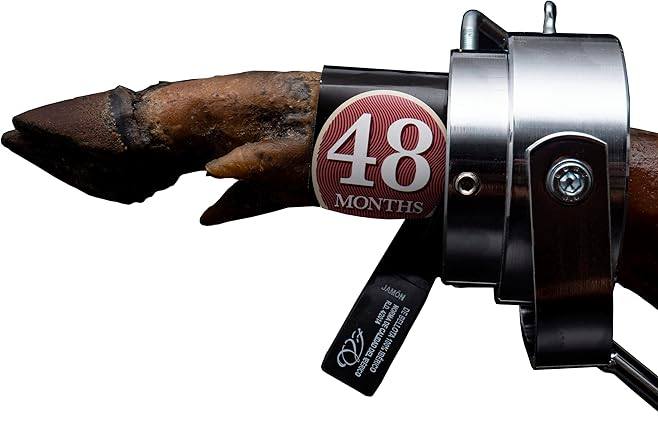
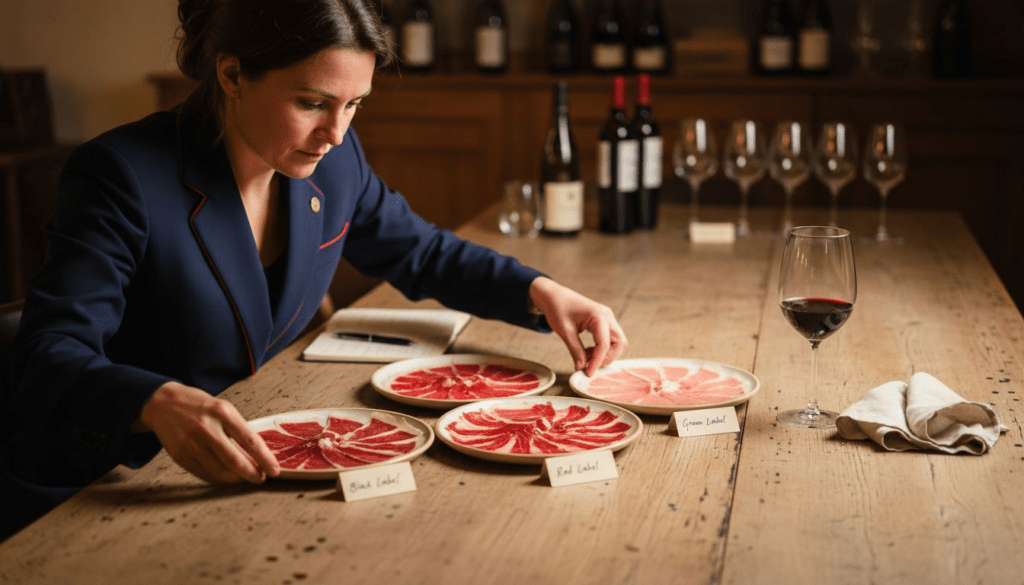
The Black Label (100% Ibérico de Bellota): This is the absolute pinnacle. A black tag guarantees by law that the pig is a 100% purebred Iberian, raised completely free-range, and fed exclusively on a wild acorn diet during the montanera season in Spain. This is the only standard we accept for the 7Bellotas premium selections. * The Red Label (Ibérico de Bellota): These pigs lived the exact same luxurious, free-range, acorn-fed lifestyle as the black label pigs, but their bloodline is crossbred (usually 50% or 75% Iberian). They produce phenomenal ham with a slightly different fat distribution, making them an excellent choice for a more accessible luxury experience.
The Green Label (Cebo de Campo): These pigs are free-range and eat natural pasture, but their diet is supplemented with grain, not acorns. The meat is good, but it completely lacks the sweet, nutty, melt-in-your-mouth magic of the oleic acid provided by the acorns.
The White Label (Cebo): The mass-market standard. These are crossbred pigs raised in confinement and fed entirely on commercial grain. They are pushed through industrial drying rooms in a fraction of the time. It is an acceptable sandwich meat, but it is not a gourmet experience.
Why You Should Beware the “Bargain”
We often hear from clients who found a “great deal” on Ibérico ham at a big-box supermarket, only to be disappointed by a tough texture and a flat, salty flavor.
The truth of the Spanish dehesa is simple: You cannot discount time, and you cannot fake wild acorns.
A cheap ham is cheap for a reason. It means the producer compromised on the breed, locked the animal inside, fed it cheap cereal, or used imported foreign pork to cut costs.
When you purchase a Black Label ham from 7Bellotas, you are not just paying for meat. You are paying for hectares of wild oak forest. You are paying for tons of fallen acorns. You are paying for the natural mountain air of our curing cellars, and the absolute patience required to let a leg hang untouched for 36 to 64 months.
As curators, we tell our clients: The label is your baseline guarantee of the law. But our rigorous, manual selection process—testing the aroma, the fat yield, and the curing time of every single piece—is your guarantee of a masterpiece.
The Master Cuts: Jamón vs. Paleta
One of the most common questions we receive at our tasting tables is simple: “Should I buy a Jamón or a Paleta?” Many buyers mistakenly believe that a Paleta (the front shoulder) is simply a miniature, budget-friendly version of a Jamón (the hind leg). This could not be further from the truth. While they both come from the same 100% purebred, acorn-fed Iberian pigs, the anatomy, the curing time, and the final flavor profiles are entirely distinct experiences.
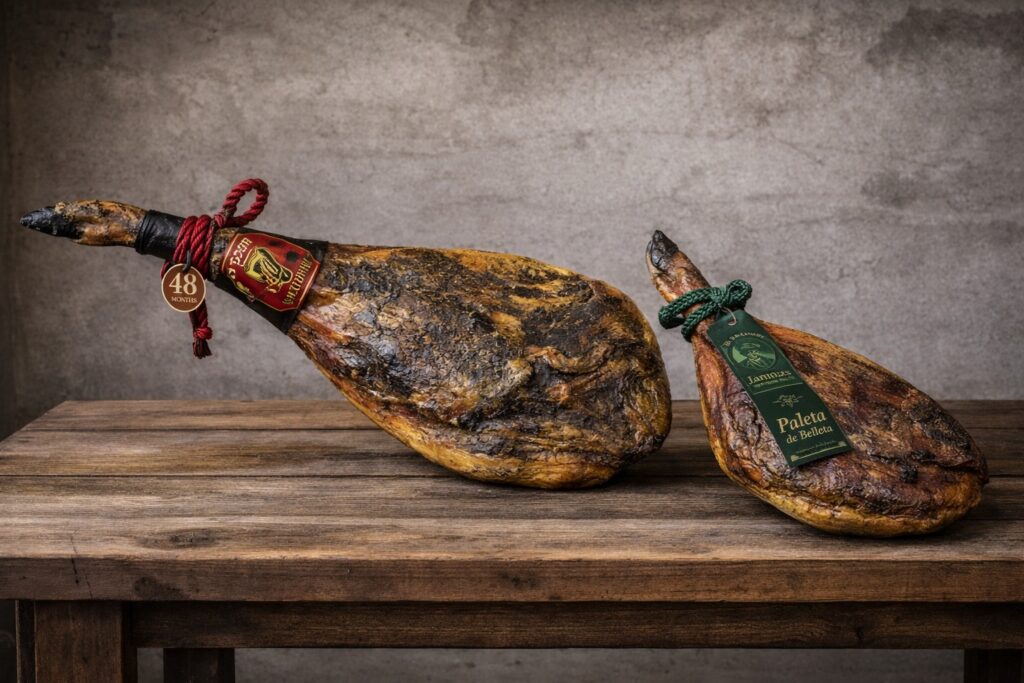
As your curators, we do not rank one above the other. We select the finest examples of both. Your choice depends entirely on what kind of experience you are looking to create.
The Jamón (The Hind Leg): The Grand Centerpiece
The Jamón is the undisputed king of the dehesa. Coming from the hind legs of the pig, these pieces are much larger, typically weighing between 7 and 9 kilograms.
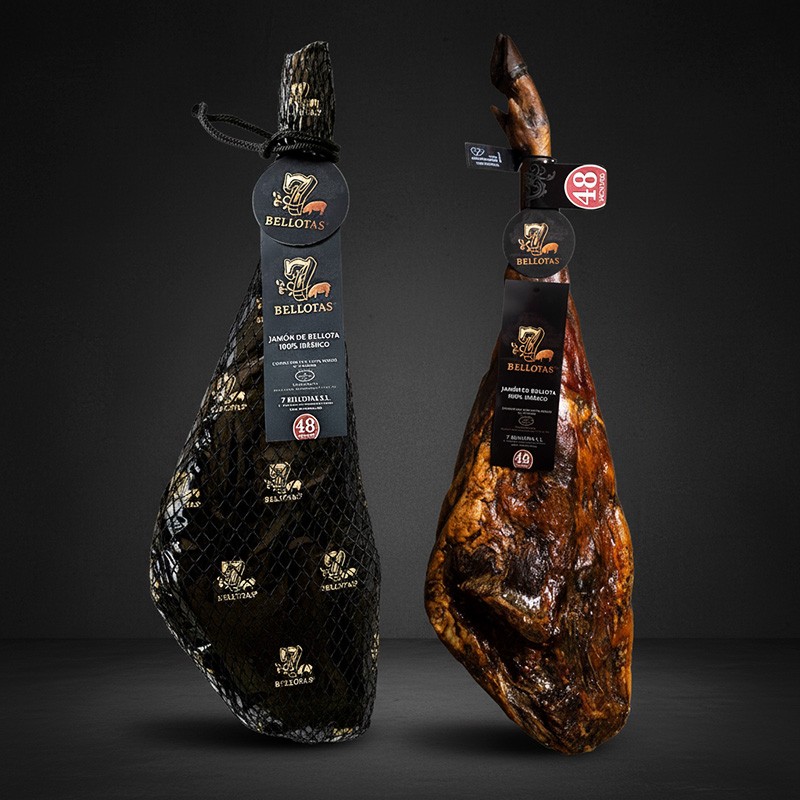
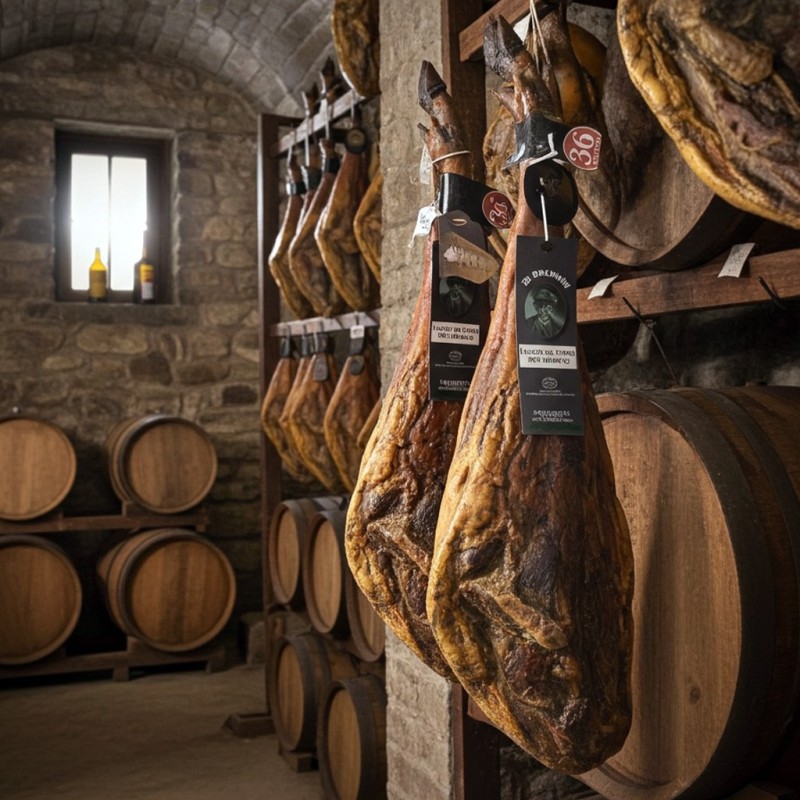
Because of its sheer size and thickness, a Jamón requires immense patience. While the industry rushes them out, a true 7Bellotas Jamón hangs in the quiet cool of our mountain cellars for anywhere from 36 to an astonishing 64 months.
- The Flavor Profile: Deep, complex, and profound. Because the leg is so large, it contains several distinct muscle groups (maza, babilla, punta), each offering a slightly different texture and gradient of umami. Eating through a Jamón is a journey of evolving flavors.
- The Yield & Carving: A Jamón has a higher meat-to-bone ratio than a Paleta. The bones are larger but more predictably shaped, making it much easier for a beginner to carve those perfect, translucent slices.
- The Curator’s Verdict: Choose a Jamón if you are hosting a large gathering, a wedding, or a holiday party. It is a show-stopping centerpiece that offers an elegant, complex tasting experience and is easier to serve to a crowd.
The Paleta (The Front Shoulder): The Intense Secret
The Paleta is the connoisseur’s secret. Coming from the front legs, these pieces are smaller, usually weighing between 4 and 6 kilograms.
Because the Paleta is thinner, it cures faster. But do not let the shorter curing time fool you. The magic of the Paleta lies in its anatomy: the meat is in much closer contact with the shoulder blade.
- The Flavor Profile: Intense, sweet, and incredibly nutty. The close proximity to the bone during the curing process infuses the meat with a highly concentrated, explosive flavor. It is a punchier, sweeter taste compared to the subtle depths of the Jamón.
- The Yield & Carving: We always warn our clients: a Paleta has a much higher fat-to-meat ratio. (Remember, this acorn-fed fat is liquid gold, so this is not a negative!). However, the shoulder blade bone is flat and curves through the meat, making a Paleta noticeably more challenging to carve than a Jamón.
- The Curator’s Verdict: Choose a Paleta for intimate gatherings, smaller households, or if you are a true flavor chaser who prefers the sweeter, more concentrated intensity of meat cured right against the bone.
Boneless Ham & Sliced Portions: The Accessible Luxury
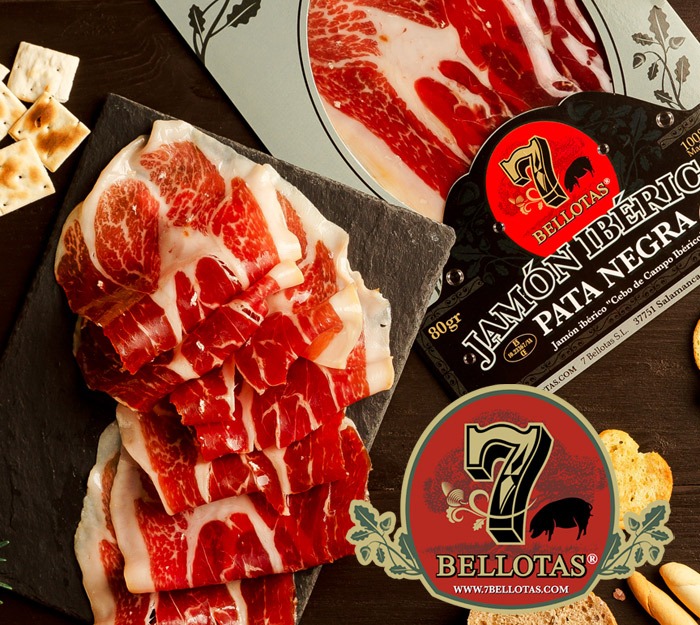
If the thought of navigating the bones and investing in carving stands seems daunting, our cellars offer the exact same 100% Acorn-Fed masterpieces in highly curated, ready-to-serve formats.
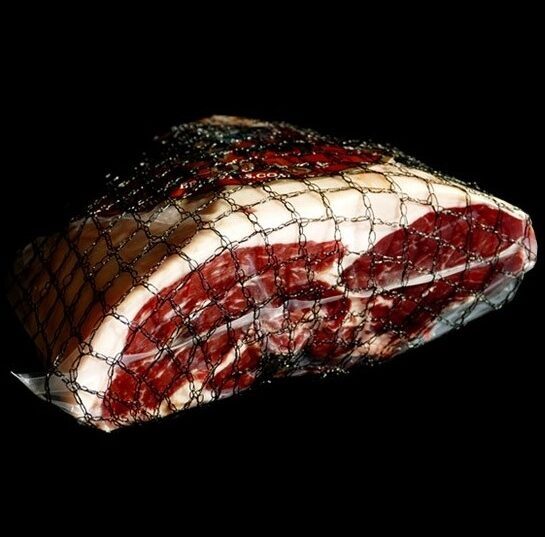
Whether you choose a masterfully hand-carved, vacuum-sealed envelope of slices that breathes life the moment you open it, or a pristine, perfectly trimmed Boneless Ham ready for your home slicer, you are receiving the exact same rigorous 7Bellotas selection—simply tailored to your convenience.
The 7Bellotas Curation: A Masterpiece in Three Formats
Once a leg has passed our rigorous cellar inspection and earned the 7Bellotas seal, we face one final question: How will you serve it?
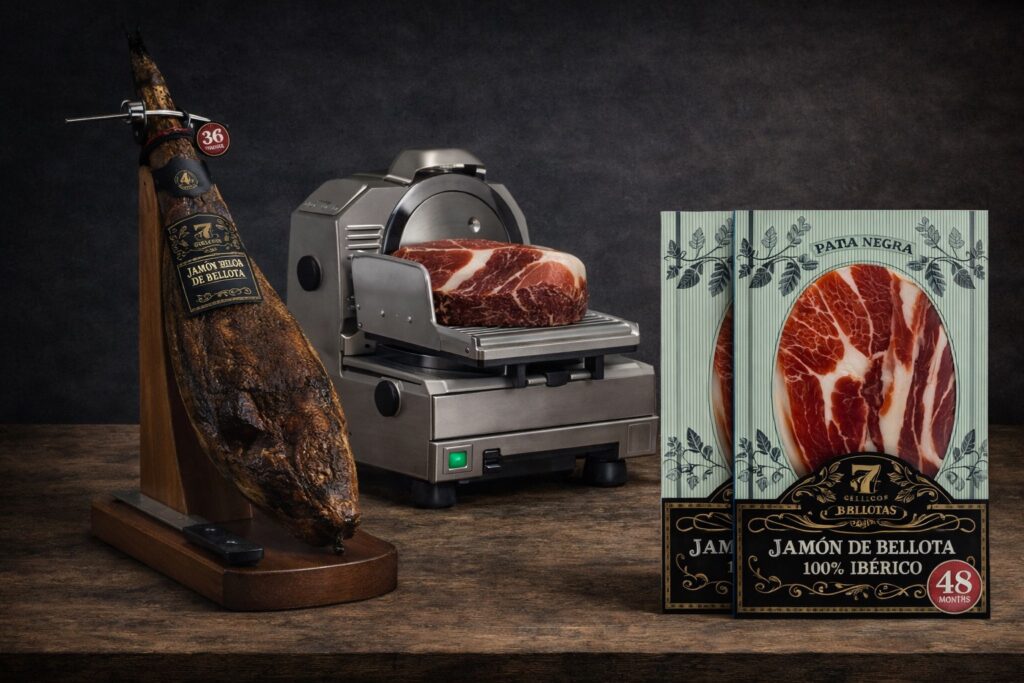
We believe that experiencing the world’s finest ham should not require you to be a master carver unless you want to be. That is why every single piece in our collection—whether it is our 36-month classic or our legendary 64-month Royal—is available in three distinct formats. The quality of the 100% acorn-fed meat remains exactly the same; we simply tailor the presentation to your lifestyle.
Choose Your Format
- The Whole Leg (Bone-In): For the traditionalist. There is a deep, primal satisfaction in mounting a whole leg on a stand and carving it paper-thin for your guests. This format preserves the meat perfectly over time and offers the full aesthetic experience of the Spanish dehesa.
- The Boneless Ham: For the modern connoisseur. We take our masterfully cured legs and carefully remove the bone, leaving you with a pristine, solid block of 100% Bellota meat. A Boneless Ham is the perfect choice if you own a high-quality home meat slicer and want perfect, effortless slices for daily indulgence without the challenge of navigating the bone.
- Hand-Carved Slices & Vacuum Sealed: For immediate luxury. Our master carvers slice the ham at the exact right angle and temperature, immediately vacuum-sealing the envelopes to lock in the volatile aromas. Simply run the sealed pack under warm water for a few seconds before opening to “wake up” the oleic acid, and the meat will glisten as if it were just carved in our cellars.
The 7Bellotas Collections
Now that you know your cut and your format, it is time to choose your masterpiece. As curators, we keep our collection intentionally small. We do not sell hundreds of commercial lines; we only sell what we consider to be the absolute peak of Spanish gastronomy.
The Jamón (The Hind Leg)
These are the crown jewels of Spanish charcuterie—crafted from 100% Iberico pigs, raised free-range and fed on acorns during the montanera season.
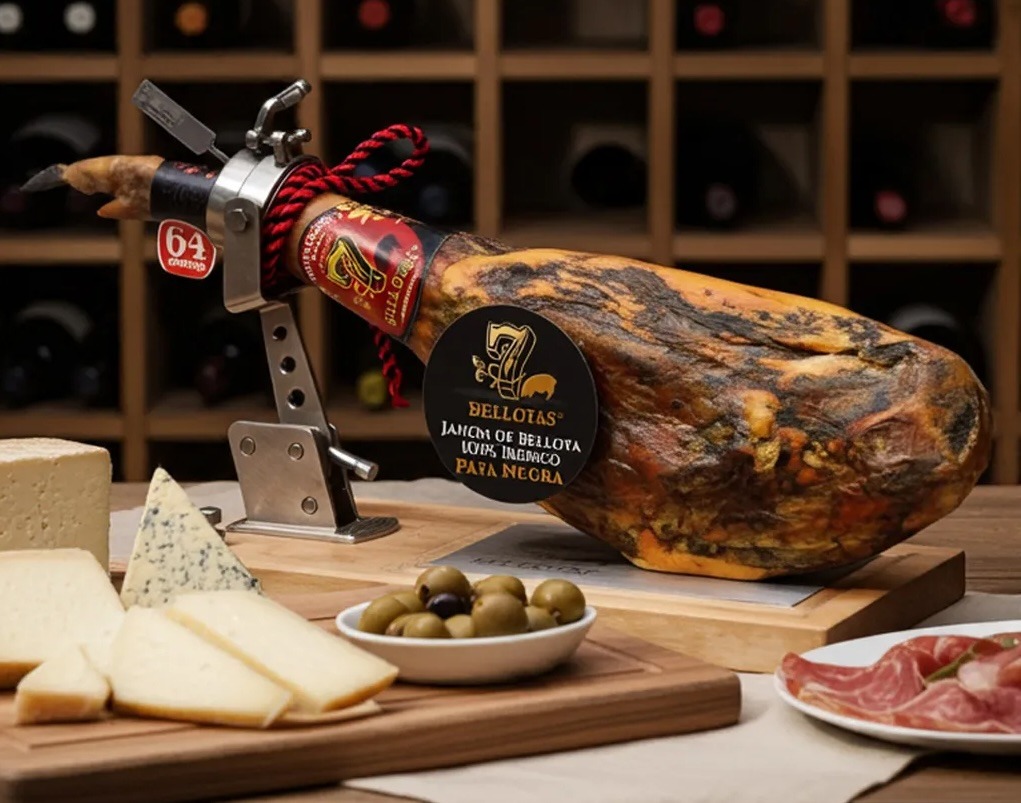
7 BELLOTAS® Royal Selection (64 Months)
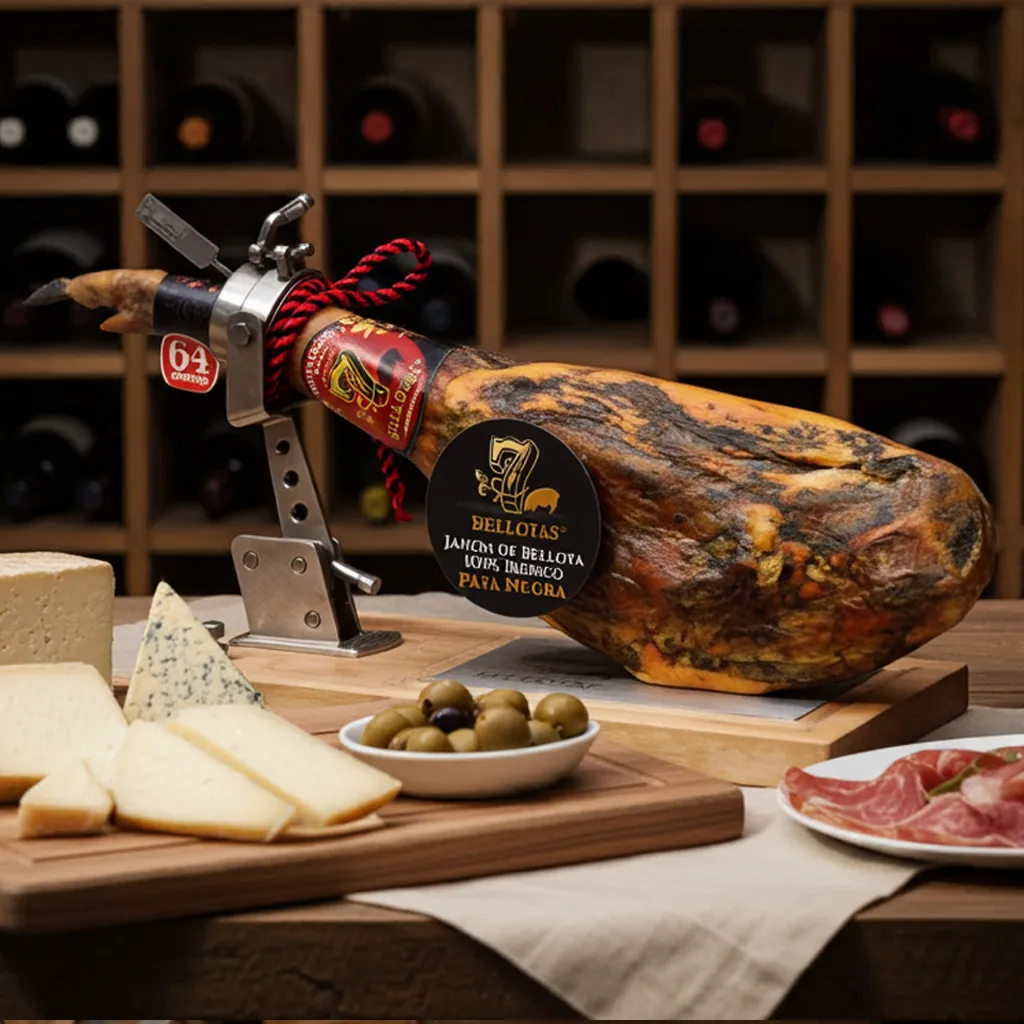
Type: Leg Ham
 Race: 100% Iberian
 Feeding: Acorn
 Curation: 64 months
Profile: Balanced flavor, long finish, ideal for connoisseurs.
The industry standard says a jamón is ready at 24 months. We leave the Royal Selection in the quiet cool of our mountain cellars for up to 64 months. This is an extreme act of patience that most producers cannot afford. The result is a profoundly complex, intensely savory flavor profile with tyrosine crystals (those beautiful white dots) scattered throughout the meat, guaranteeing a masterful proteolysis. This is our most exclusive offering.
The Paleta (The Front Shoulder)
7 BELLOTAS® The 100% Bellota Classic Pata Negra Shoulder Ham
Type: Shoulder Ham
Race: 100% Iberian
Feeding: Acorn
Curation: 48 months
Profile: Rich and earthy, excellent value for full-breed Bellota.
This is the standard-bearer of the 7Bellotas name. Bearing the official Black Label, these purebred Iberian hams represent the perfect balance of sweet, nutty acorn flavor and melt-in-your-mouth texture. Cured patiently until the fat is perfectly translucent, this collection is the ultimate introduction to true, uncompromised Spanish heritage.
Boneless Ham & Sliced Portions: The Accessible Luxury
7 BELLOTAS® 100% Iberico Ham (Boneless Ham)
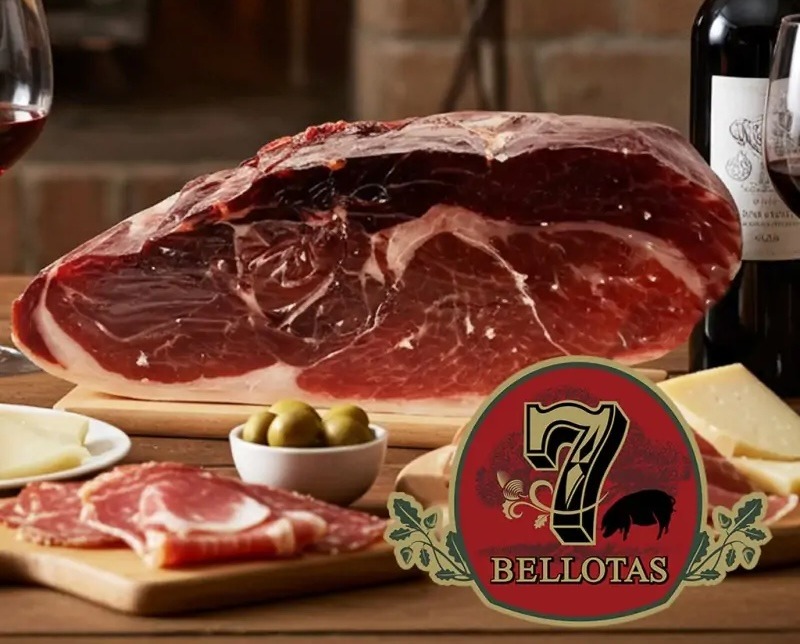
Type: Boneless Ham
Race: 100% Iberian
Feeding: Acorn
Curation: Over 48 months
Profile: Boneless Ham Pata Negra made on a small scale.
For the connoisseur who values both uncompromised quality and refined convenience, our Boneless Ham is the definitive choice. These are the same 100% acorn-fed masterpieces from our private reserve, meticulously hand-trimmed and deboned by our curators to ensure zero waste and a perfect yield. Retaining the signature marbling and complex, nutty profile of the Dehesa, this collection offers a seamless way to experience artisanal luxury on your own terms, ready for precise home slicing.
7 BELLOTAS® 100% Iberico Ham | Gourmet Packs
Type: Leg Ham
Race: 100% Iberian
Feeding: Acorn
Curation: 48 months
Sliced 7 BELLOTAS® ham vacuum packed in a gourmet blIsters.
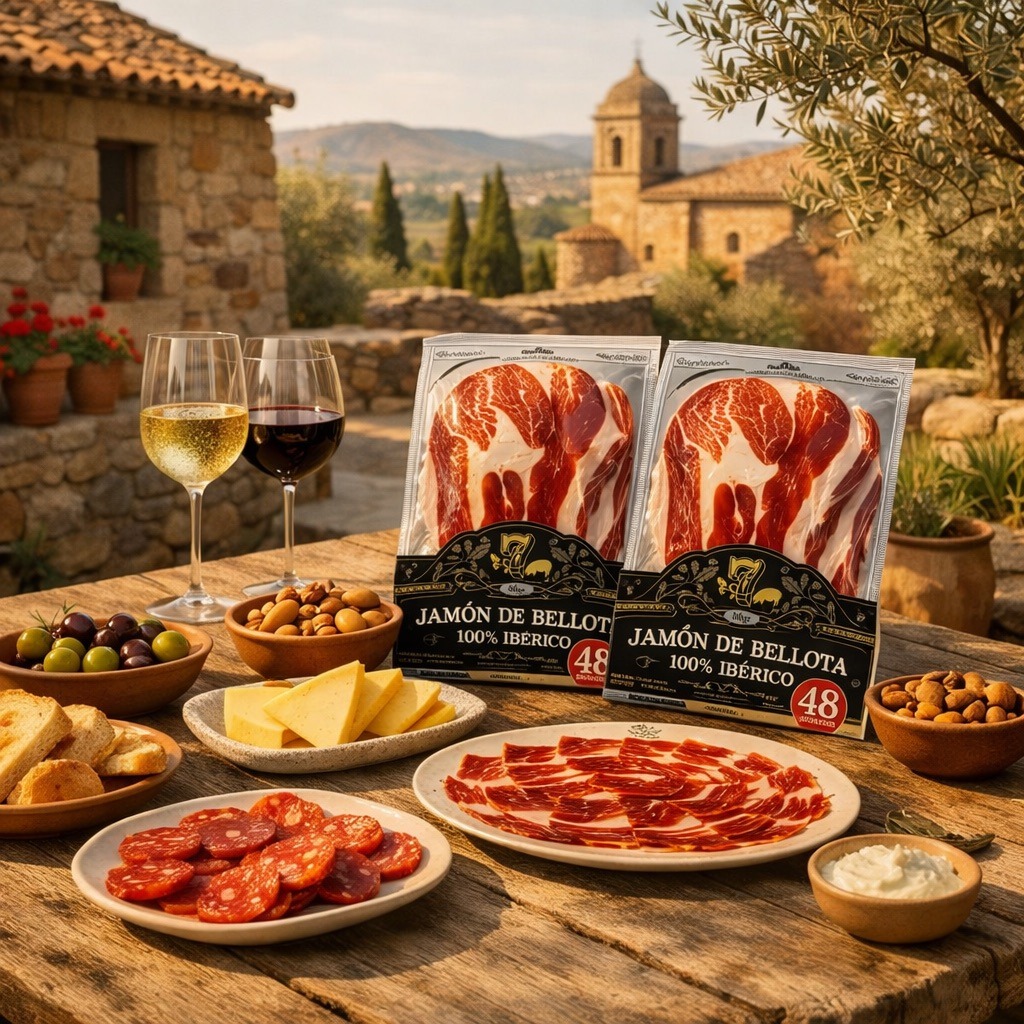
7 BELLOTAS® 100% Iberico Ham | Ultimate in Sliced Luxury
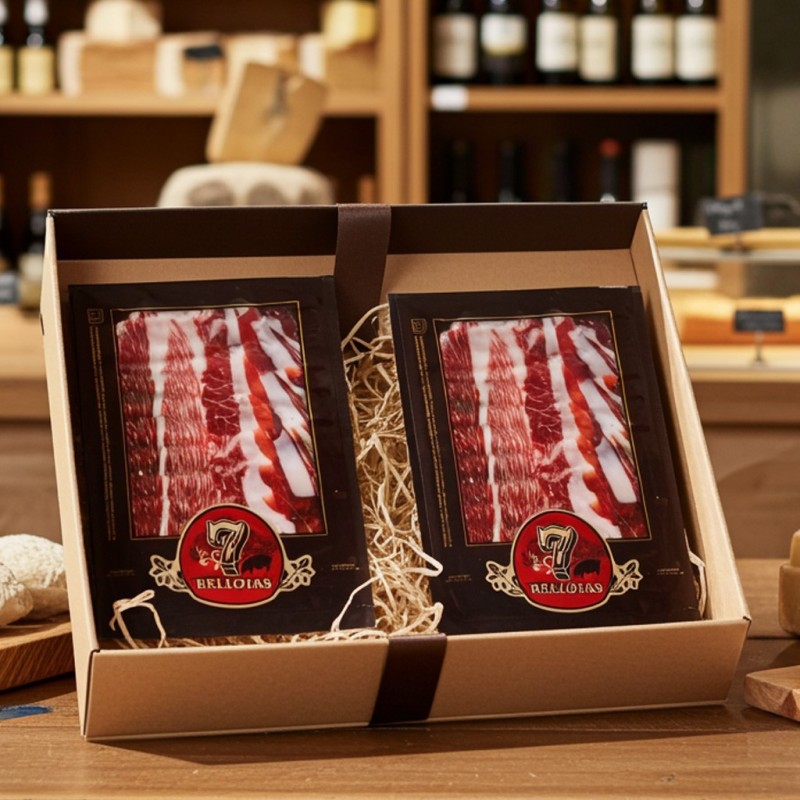
Type: Leg Ham
Race: 100% Iberian
Feeding: Acorn
Curation: 48 months
Sliced 7 BELLOTAS® ham vacuum packed in a gourmet blIsters.
Our Vacuum Sliced collection is the definitive answer for those seeking the pinnacle of Spanish gastronomy without the ritual of the knife. Each portion is masterfully hand-carved from our 100% acorn-fed reserves, capturing the nuanced marbling and intense, nutty sweetness in ready-to-serve envelopes. By vacuum-sealing these delicate slices at the precise moment of their peak maturity, we protect the essential oils and complex aromas that define the 7Bellotas standard. Simply allow the pack to reach room temperature before opening, and watch as the fat becomes translucent—offering an immediate, uncompromised tasting journey through the heart of the Dehesa.
The Artisan’s Pantry: Beyond the Leg
While the Jamón is the heart of the Spanish table, no tasting journey is complete without the intense, concentrated flavors of our artisanal charcuterie. These are not “standard” sausages; they are the result of the same 100% acorn-fed genetics and patient, natural curing that defines our hams.
1. The Noble Loins: Lomo and Lomito
For those who seek the purest expression of the Iberian pig without the bone, we offer the Lomo (Cured Loin) and the Lomito (Cured Underloin).
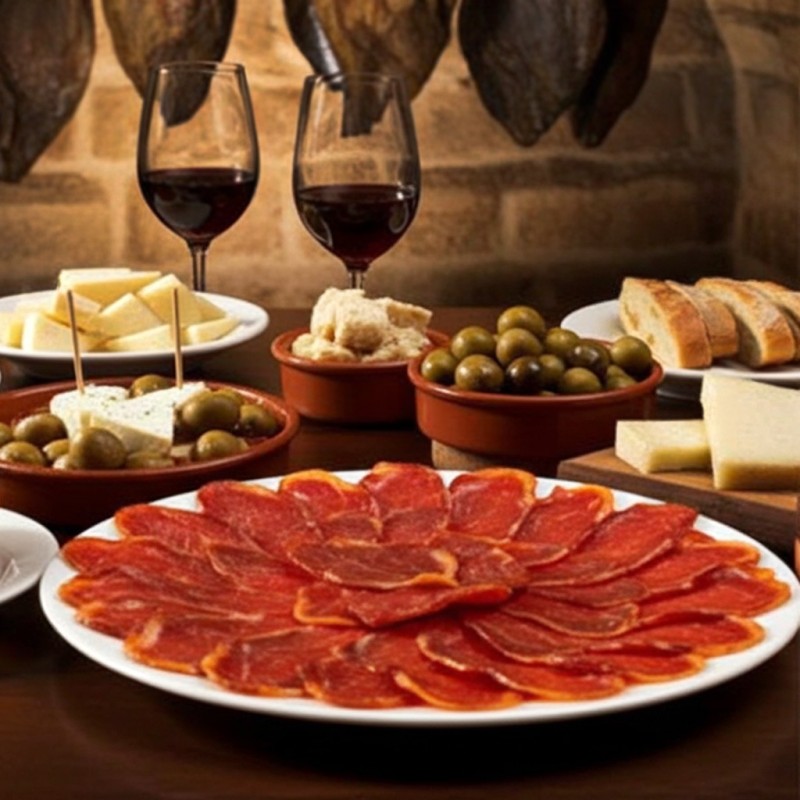
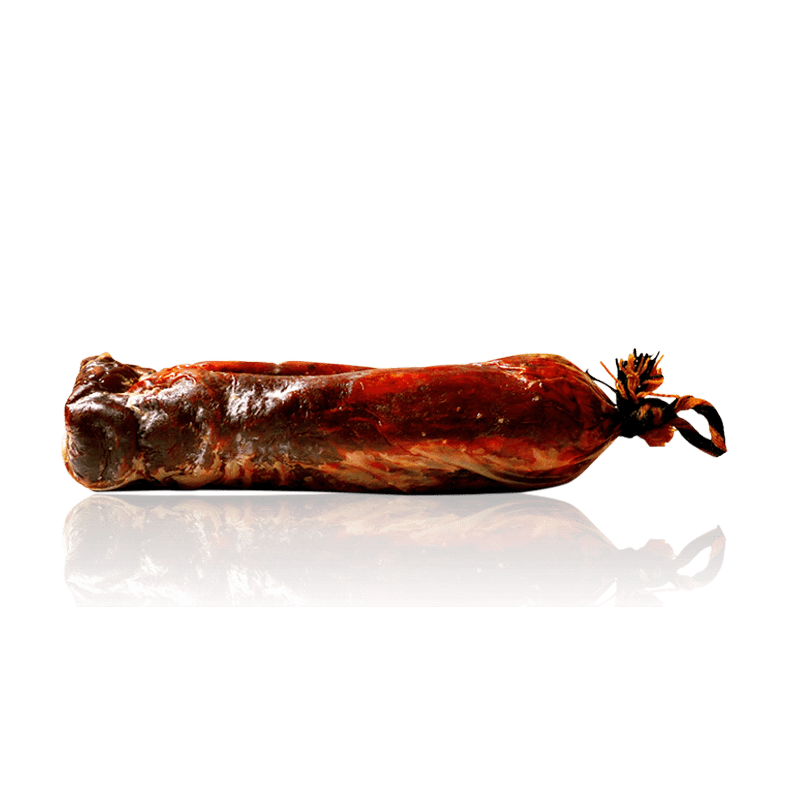
7 BELLOTAS® Cured Loin (Lomo)
Carved from the long muscle along the spine, it is lean, elegant, and lightly seasoned with pimentón and garlic to enhance—never mask—the nutty acorn base.
7 BELLOTAS® Lomito (Cured Underloin)
This is the curator’s secret. Smaller than the Lomo and more heavily marbled, it offers a richer, more buttery texture that rivals the finest ham.
2. The Traditional Classics: Chorizo and Salchichón
Our sausages are cured in natural casings, using old-world recipes that rely on the quality of the meat rather than chemical additives.
- 7 Bellotas® Chorizo (Acorn-Fed): Available in whole “Vela” format or masterfully sliced. We use the finest smoked pimentón de la Vera, giving it a deep red color and a complex, smoky warmth that dances on the palate.
- 7 Bellotas® Salami (Salchichón): For those who prefer the purity of the meat, our Salchichón focuses on black peppercorns and sea salt, allowing the sweetness of the acorn-fed fat to shine through.
3. The Curator’s Convenience: Hand-Sliced Selections
Just as with our hams, we offer our Loin and Sausages in vacuum-sealed, hand-sliced packs. These are perfect for:
- The Instant Platter: Creating a professional-grade charcuterie board in seconds.
- Comparison Tastings: Experiencing the different textures of Lomo vs. Chorizo side-by-side.
How to Buy: The “Complete Board” Strategy
When advising our clients, we suggest a balanced selection. If you are purchasing a whole Jamón, adding a 3-Pack of Cured Sausages (500gr each) ensures your guests experience the full spectrum of the Dehesa’s flavors.
The Curator’s Desk: Buyer’s Frequently Asked Questions
At 7Bellotas, we don’t just sell ham; we provide a bridge to the ancient traditions of the Spanish Dehesa. When you choose a masterpiece of this caliber, it is natural to have questions about its unique characteristics. Here is what we tell our clients from behind the curator’s desk.
What are the tiny white, chalky dots in the meat? Are they salt?
They are not salt, and they are certainly not a defect. Those small, white specks are tyrosine crystals. They are formed by amino acids clumping together during a very long, slow proteolysis (the natural breakdown of proteins). For a connoisseur, spotting these crystals is a moment of joy—they are the absolute guarantee of an unhurried, masterful, multi-year cure.
The outside fat on my whole leg looks yellow. Is it safe?
Yes, but you should not eat it. Because we do not use artificial waxes or synthetic preservatives, the outer layer of fat naturally oxidizes and turns yellow as it protects the precious meat inside over the course of 36 to 64 months. Always carve away this bitter yellow fat until you reach the pure, sweet, white or pink fat underneath, which is exactly what you want to eat.
How long does a whole leg last once I cut into it?
If you follow our traditional preservation techniques—covering the exposed meat with the white fat you trimmed away, followed by a breathable cotton cloth, and keeping it in a cool, dry place—a bone-in leg will retain its optimal flavor for about 30 to 40 days after the first cut.
Begin Your Tasting Journey
Mastering the art of selecting, slicing, and serving is a deeply rewarding ritual, but the true magic always lies in the meat itself. No amount of perfect carving can rescue an average ham, and a true masterpiece practically serves itself.
Whether you are ready to mount your first whole leg on a Jamotec stand to experience the full ritual of the cortador, or you prefer the immediate, curated luxury of our masterfully hand-sliced, vacuum-sealed portions, we have a piece waiting for you in our cellars.
Don’t just buy a calendar date. Experience a masterpiece.