Selecting authentic Spanish Iberico ham can feel daunting when every package seems the same and labels hardly explain what you are really buying. You risk paying a premium for meat that falls short on flavour or tradition—or missing out on true artisan quality because key details are hidden behind confusing descriptions. Knowing how to spot genuine Iberico ham makes the difference between a disappointing snack and a memorable gourmet experience.
This guide gives you clear, actionable ways to identify premium ham and avoid common mistakes. You will discover how the official colour-coded labelling system, curing durations, diet details, and packaging cues signal quality and authenticity. Each insight is chosen to make your buying decisions easier and help you enjoy Spanish ham the way it was meant to be tasted.
Get ready to unlock insider secrets that transform your next purchase into a confident choice. From label decoding to freshness checks, you will soon recognise exactly what makes each Iberico ham truly special.
Table of Contents
- 1. Learn The Different Iberico Grades And Labels
- 2. Understand The Importance Of Acorn-Fed Pata Negra
- 3. Check For Proper Ageing And Curing Times
- 4. Explore Whole Ham Vs Sliced Options
- 5. Assess Packaging For Freshness And Origin
- 6. Verify Artisan Production And Authenticity
Quick Summary
| Key Message | Explanation |
|---|---|
| 1. Understand Iberico Grade Labels | Familiarise yourself with the four colour-coded labels to make informed purchasing decisions and avoid overpaying or underbuying. |
| 2. Importance of Acorn Feeding | Recognise that acorn-fed pigs produce superior ham with distinct flavours and textures due to their unique diet. |
| 3. Verify Curing Times | Always check the curing duration on labels, as longer ageing leads to enhanced flavour and texture in Iberico ham. |
| 4. Whole Ham vs Sliced Options | Choose whole hams for superior flavour preservation and cost-efficiency, while sliced options offer convenience for immediate use. |
| 5. Check Packaging for Quality | Inspect vacuum seals and origin labels to ensure freshness and authenticity before purchasing Iberico ham. |
1. Learn the Different Iberico Grades and Labels
The Spanish labelling system for Iberico products removes the guesswork from your purchase. Introduced in 2014, this colour-coded system tells you exactly what you’re buying based on breed purity, diet, and rearing conditions.
Understanding these labels transforms you from a casual buyer into a confident connoisseur. Each colour represents a distinct quality tier, and knowing the difference means you’ll never overpay or underbuy.
The Four Colour-Coded Labels
The official labelling system uses four distinct colours to classify all Iberico products:
-
Black Label: 100% Iberico Bellota, acorn-fed and free-range. This is the pinnacle—pure-bred pigs raised on their natural diet in open pastures. Nothing surpasses this grade.
-
Red Label: Part-Iberico Bellota, acorn-fed and free-range. These crossbreeds still enjoy premium acorn feeding and outdoor conditions, delivering excellent quality at a more accessible price point.
-
Green Label: Cebo de Campo, at least 50% Iberico, free-range fed on natural grazing and fodder. These pigs roam freely but consume varied vegetation rather than exclusively acorns.
-
White Label: Cebo, at least 50% Iberico, farm-raised and fodder-fed. These are conventionally raised pigs with less outdoor access and controlled feeding regimens.
Each label moves down in intensity and complexity of flavour. Your budget and occasion determine which grade suits your needs.
The colour-coded system ensures complete transparency—you know precisely what you’re getting before purchase.
When you spot a black label at your retailer, you’re holding the gold standard. The investment reflects the pig’s superior genetics, lifestyle, and the resulting ham’s depth of flavour. Red labels offer remarkable value for those seeking Bellota quality without the premium price.
Green and white labels work brilliantly for everyday enjoyment or cooking applications where the subtler notes of Bellota aren’t the primary focus. They’re still premium products, just positioned differently on the quality spectrum.
Pro tip: Match the label to your purpose—black for special tastings and charcuterie boards, red for regular indulgence, and green or white for cooking with Iberico ham or entertaining larger groups without breaking budget.
2. Understand the Importance of Acorn-Fed Pata Negra
Acorn-fed Pata Negra represents the pinnacle of ham craftsmanship and flavour. The pig’s diet transforms everything—from the meat’s composition to the final ham’s taste, aroma, and texture.
When you understand why acorn feeding matters, you’ll appreciate why these hams command premium prices. It’s not marketing hype; it’s science and tradition working together.
What Makes Acorn-Fed Different
The Iberian pig thrives on acorns found in the Mediterranean oak forests. These nuts contain natural oils and compounds that fundamentally alter the animal’s physiology.
Acorn-fed pigs develop intramuscular fat with a unique composition:
- Higher unsaturated fat content creates a more delicate, buttery texture that melts on your tongue
- Distinctive flavour profile develops only when pigs consume acorns for months, delivering complexity impossible to replicate with standard feed
- Natural marbling throughout the meat ensures moistness that persists through the curing process
- Aroma enhancement emerges from the acorns’ natural oils, creating those sought-after nutty notes
Feed the same pig on grain or standard fodder, and you lose these qualities entirely. The difference is tangible and immediate.
Acorn-fed Pata Negra’s superiority stems directly from what the pig consumes during its final grazing months.
The Cost of Excellence
Pata Negra ham raised on acorns demands extended free-range time and access to premium natural resources. The farmer cannot rush this process or cut corners.
This investment translates into your experience:
- Deeper, more complex flavour development during the 36 to 48+ month curing period
- Superior moisture retention that keeps each slice tender and succulent
- A finish that lingers pleasantly rather than fading abruptly
- Consistency that justifies the premium price across every slice
When you taste acorn-fed ham beside grain-fed alternatives, the contrast becomes obvious. Your palate recognises the difference immediately.
The black label designation confirms acorn-feeding, but understanding why it matters elevates your appreciation beyond the label.
Pro tip: Taste acorn-fed Pata Negra slowly at room temperature—never cold from the refrigerator—to fully experience the buttery texture and complex flavours that the pig’s natural diet created.
3. Check for Proper Ageing and Curing Times
Time is the secret ingredient in exceptional Iberico ham. The curing process transforms raw pork into something extraordinary, but only if the ham spends sufficient months hanging in ideal conditions.
Skipping this step or rushing the process destroys everything that makes premium ham special. Your job as a buyer is to verify that proper curing has actually occurred.
Why Curing Time Matters
During the curing process, moisture gradually leaves the meat whilst flavour compounds develop and concentrate. Temperature and humidity control this delicate transformation.
Proper curing conditions facilitate flavour development and texture refinement that cannot be accelerated. Short-cut curing produces bland, tough meat that disappoints immediately.
Longer ageing periods yield:
- Deeper, more complex flavours as amino acids and fatty acids break down naturally
- Improved texture that becomes progressively more tender and silky
- Better moisture control that keeps each slice succulent rather than dry
- Enhanced aroma with increasingly pronounced nutty and savoury notes
- Greater digestibility from natural enzymatic breakdown during months of hanging
These qualities cannot be faked or rushed, no matter how clever the marketing claims.
Authentic Iberico ham requires minimum ageing times—acorn-fed Bellota demands at least 24 months, whilst lower grades have shorter curing periods.
Reading the Labels
Always check product labels for specific curing duration. This information reveals the producer’s commitment to quality.
Common curing designations include:
- 24 months: entry-level for Bellota, acceptable but not extraordinary
- 36 months: superior quality with noticeable complexity
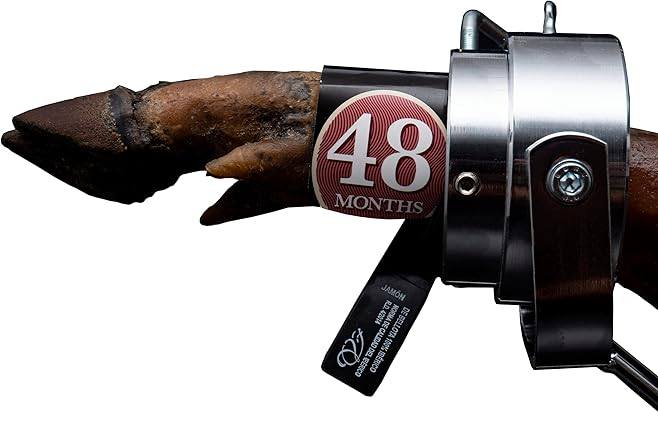
- 48 months or longer: premium expression showing remarkable depth and refinement
Premium producers often exceed minimum requirements deliberately. They understand that extra months yield demonstrable improvements in flavour and texture.
When you purchase from 7 Bellotas, each product’s curing duration appears clearly on the description. Never settle for vague language like “aged” or “traditional.” Demand specific timeframes.
The price difference between 36 and 48 months reflects this extra investment in time and storage. Your palate will recognise the improvement immediately.
Pro tip: Compare curing times at similar price points—if one producer claims 48 months at a significantly lower price, the ham may be lower grade despite the extended ageing period.
4. Explore Whole Ham vs Sliced Options
Choosing between whole ham and pre-sliced options fundamentally changes your experience and value proposition. Each format serves different purposes, and understanding the trade-offs ensures you make the right choice for your situation.
This decision affects flavour freshness, cost per serving, presentation impact, and storage requirements. Get it wrong, and you might waste money or compromise your gourmet experience.
Whole Ham Advantages
Purchasing an entire ham gives you complete control over the carving process and slice thickness. You dictate exactly how thin or thick each piece becomes, optimising texture and flavour delivery.
Whole hams offer substantial benefits:
- Superior flavour preservation since you slice only what you consume immediately, preventing oxidation
- Cost efficiency when purchasing premium grades, as you pay less per kilogramme than sliced alternatives
- Presentation impact that impresses guests with a whole ham on display before carving
- Flexibility to adjust slice thickness based on your intended use (very thin for charcuterie, thicker for cooking)
- Extended freshness since unsliced portions remain protected and maintain quality longer
Whole hams demand commitment, though. You need proper serving techniques and carving knowledge to maximise quality and minimise waste.
Whole ham represents the connoisseur’s choice, rewarding knowledge and skill with superior flavour and value.
Pre-Sliced Convenience
Vacuum-packed sliced ham offers immediate gratification without preparation or special equipment. Open the package and serve within minutes.
Sliced options excel in specific scenarios:
- Entertaining large groups where carving becomes impractical or time-consuming
- First-time buyers exploring premium ham without committing to whole purchase
- Limited storage space in smaller homes or apartments
- Minimal waste since you consume exactly what you purchase
- Consistent thickness guaranteed across every slice from professional slicing
The trade-off involves paying premium per-kilogramme prices and accepting slight flavour degradation from exposure to air during packaging.
Making Your Decision
Choose whole ham if you’re serving a formal tasting, have guests specifically interested in watching the carving ritual, or plan multiple occasions within weeks. Choose sliced if you’re entertaining casually, sampling before committing to larger purchases, or prefer zero preparation.
Your budget and storage capacity matter equally. Calculate cost per serving honestly, factoring in potential waste from whole hams.
Pro tip: Start with smaller vacuum-packed sliced portions to understand your preferences, then invest in a whole ham once you’ve confirmed your taste for a specific grade and curing time.
5. Assess Packaging for Freshness and Origin
Packaging tells a complete story about your ham’s journey, quality, and current condition. Before you even taste it, the package communicates whether you’re holding something genuine or something compromised.
Savvy buyers inspect packaging meticulously. This single step prevents costly mistakes and guarantees freshness.
The Vacuum Seal Test
Intact vacuum seals are your first line of defence against oxidation and contamination. Any compromise allows air to reach the ham, degrading flavour and safety.
Inspect the seal carefully for these indicators:
- Completely intact edges with no visible gaps, punctures, or separations
- Tight, drum-like resistance when you gently press the package (it shouldn’t feel puffy or loose)
- No visible discolouration on the ham itself, suggesting age or exposure
- Clear protective layers without cracks, tears, or stress marks
- Proper storage conditions noted on the label (temperature and humidity guidelines)
A compromised seal means the ham has likely oxidised, losing flavour and potentially developing off-tastes. Never purchase packages with questionable seals, regardless of price.
Vacuum-packed slicing technology preserves ham quality by protecting it from air exposure until you open the package.
Origin Labelling Matters
Clear origin labelling distinguishes authentic Spanish Iberico ham from inferior imitations or mislabelled products. Spanish law requires transparent information about production location and pig origin.
Look for these labelling elements:
- “Made in Spain” or specific region designation (Andalucía, Extremadura)
- Producer name and location allowing traceability back to the source
- Grade specification (Black, Red, Green, or White label designation)
- Curing duration in months, confirming authenticity
- Batch or production numbers enabling quality verification
- English language information if purchasing from international retailers
Missing or vague labelling raises red flags. Legitimate producers proudly display their origin and credentials.
At 7 Bellotas, every product includes complete traceability information. You know exactly where your ham originated, who produced it, and how long it aged.
Storage and Freshness Indicators
Freshness depends on proper cold chain maintenance. Check the packaging date relative to your purchase date, and verify the package has remained refrigerated.
Pro tip: Immediately upon arrival, transfer your ham to the coldest part of your refrigerator and consume within the timeframe specified on the packaging for optimal flavour preservation.
6. Verify Artisan Production and Authenticity
Artisan production separates authentic Iberico ham from industrial imitations. Small-scale producers apply time-honoured techniques, respecting traditions that industrial facilities abandon for efficiency.
Authenticity matters because it directly determines flavour, texture, and the entire experience you’re paying for. Learning to verify it protects your investment.
What Defines Artisan Production
Small-scale producers focus on quality over volume. They cure hams in limited numbers, allowing meticulous attention to each stage of the process.
True artisan producers demonstrate these characteristics:
- Generations of family expertise passed down through decades or centuries
- Limited annual production measured in hundreds rather than thousands of hams
- Natural curing conditions using climate and gravity rather than industrial machinery
- Personal involvement from owners who oversee production directly
- Transparent sourcing of pigs from specific herds with documented genetics
- Resistance to shortcuts even when industrial methods could increase profits
Industrial producers, by contrast, prioritise consistency and cost reduction. They use mechanical slicers, temperature-controlled chambers, and standardised protocols that sacrifice nuance for predictability.
Artisan Iberico ham production reflects passion and tradition, not merely commercial calculation.
Recognising Authenticity Markers
Authentic producers gladly share their story because their reputation depends on it. Look for these indicators when researching before purchase.
Verify authenticity through:
- Producer websites detailing family history, location, and production philosophy
- Detailed product descriptions explaining specific curing methods and duration
- Third-party certifications from Spanish regulatory bodies confirming production standards
- Direct communication with retailers who can answer detailed questions about sourcing
- Consistency in messaging across all materials, suggesting genuine commitment rather than marketing fiction
- Limited availability suggesting real production constraints rather than unlimited supply
At 7 Bellotas, we partner exclusively with producers who embody these values. Our commitment to small-scale, artisan producers means every ham reflects genuine craftsmanship.
Building Confidence Through Research
Before purchasing premium ham, invest time learning about your chosen producer. Read about their approach, their location, their aging facilities, and their philosophy.
Connect directly with retailers offering complete transparency. Ask specific questions about production, sourcing, and curing. Legitimate producers answer eagerly; industrial operations provide generic responses.
Your investment deserves this diligence. Authentic artisan Iberico ham rewards the effort with incomparable flavour and satisfaction.
Pro tip: Request producer references or reviews from other customers, and ask your retailer about their direct relationships with Spanish producers—these details reveal genuine authenticity versus marketing claims.
Below is a comprehensive table summarising the key aspects and classifications of Iberico ham, providing insights into grading labels, feeding practices, curing details, and purchasing options as discussed in the article.
| Aspect | Details | Significance |
|---|---|---|
| Iberico Ham Grades | Black, Red, Green, White labels based on breed, diet, and rearing conditions. | Helps buyers identify quality and suitability for their needs. |
| Acorn Feeding | Enhances texture, flavour, moisture, and aroma; creates superior product characteristics. | Justifies the premium for Bellota ham. |
| Curing Duration | 36-48+ months for premium grade; influences flavour depth. | Guarantees optimal taste and texture development. |
| Whole vs Sliced | Whole ham offers flexibility and freshness; pre-sliced ensures convenience. | Buyers choose based on occasion and storage. |
| Packaging and Origin | Vacuum-sealed freshness, traceability, Spanish origin labelling. | Confirms authenticity and prevents loss of quality. |
Discover the Finest Iberico Ham with Expert Guidance
Choosing authentic Iberico ham can be overwhelming with so many grades, curing times and packaging options to consider. This article reveals critical insider tips to avoid costly mistakes and select the perfect ham that matches your palate and occasion. If you value transparency, artisan craftsmanship and truly premium flavour from acorn-fed Pata Negra, you deserve a source that guarantees quality and authenticity.
At 7 Bellotas, we specialise in delivering exquisite Iberico ham aged from 36 to over 64 months, along with other cured delicacies. Our dedication to small-scale traditional producers ensures you experience the unmatched richness of acorn-fed ham sealed in airtight packaging for maximum freshness. Benefit from detailed product descriptions explaining grade labels, curing times and origin so you can shop confidently.
Browse our premium Iberico hams to start your gourmet journey today and savour the full depth of flavours that only true artisan ham can offer.
Take control of your Iberico ham experience now by visiting 7 Bellotas. Choose your ideal label, discover authentic acorn-fed Pata Negra, and enjoy impeccable curing and freshness guaranteed. Don’t wait to elevate your gourmet moments with Spain’s finest flavours.
Frequently Asked Questions
What do the different Iberico ham colour-coded labels indicate?
The colour-coded labels indicate the breed purity, diet, and rearing conditions of the pigs. Familiarise yourself with these labels to make informed purchasing decisions, ensuring you choose the right quality for your needs.
Why is acorn feeding important for Iberico ham?
Acorn feeding is crucial as it enhances the ham’s flavour profile, texture, and overall quality. Always check if the ham you are considering is acorn-fed for an exceptional tasting experience.
How can I verify the curing time for Iberico ham?
Look for specific curing durations on the product labels, as proper curing is vital for flavour development. Aim for a minimum of 24 months for acorn-fed Bellota to ensure high quality and taste.
What are the advantages of buying whole Iberico ham instead of sliced?
Whole Iberico ham typically offers superior flavour preservation, cost efficiency, and flexibility in slice thickness. If you’re hosting a formal event, consider purchasing a whole ham to impress your guests with a carved display.
How can I assess the packaging of Iberico ham for freshness and authenticity?
Inspect the vacuum seal for integrity and check for clear origin labelling to ensure authenticity. Always choose packages that show no signs of damage, and verify that the product has been stored correctly before purchasing.
What defines artisan production in Iberico ham, and how can I ensure authenticity?
Artisan production focuses on quality and small-scale techniques, often passed down through generations. Research the producer’s history and methods, ensuring they practice traditional techniques for a genuine tasting experience.