Many people mistakenly believe that Iberico and Serrano hams are just different names for the same cured meat, but the reality is a complex blend of breed, diet, and tradition that sets them worlds apart. These two Spanish icons differ fundamentally in pig genetics, feeding practices, aging duration, and sensory experience. Understanding these distinctions empowers you to choose the perfect ham for your culinary occasions and appreciate the craftsmanship behind each slice.
Table of Contents
- Introduction To Spanish Ham And Its Cultural Significance
- Pig Breed And Genetic Differences
- Diet And Rearing Practices
- Curing Methods And Aging Process
- Flavor Profiles And Textural Differences
- Geographical Origin And Authenticity
- Common Misconceptions About Iberico And Serrano Ham
- Economic And Luxury Positioning
- Practical Culinary Applications And Pairings
- Discover Authentic Iberico And Serrano Hams At 7 Bellotas®
- FAQ
Key Takeaways
| Point | Details |
|---|---|
| Breed Origin | Iberico uses Black Iberian pigs; Serrano uses white breeds like Duroc and Landrace. |
| Diet Impact | Iberico pigs roam oak forests eating acorns; Serrano pigs consume grain-based feed. |
| Curing Duration | Iberico ages 18 to 64 months; Serrano cures 9 to 18 months for firmer texture. |
| Flavor Profile | Iberico delivers nutty, creamy complexity; Serrano offers straightforward saltiness. |
| Price Position | Premium Iberico exceeds $2,000 per ham; Serrano provides accessible everyday luxury. |
Introduction to Spanish Ham and Its Cultural Significance
Spanish ham holds a prominent historical and cultural role, with Iberico and Serrano as flagship products in gourmet food culture. These cured meats represent centuries of artisanal tradition passed down through generations of Spanish producers. Both varieties showcase regional identity and culinary excellence that define Mediterranean gastronomy.
Jamón Ibérico and Jamón Serrano occupy distinct positions in the culinary landscape. Iberico represents the pinnacle of luxury cured meats, reserved for special occasions and discerning palates. Serrano serves as the versatile workhorse of Spanish kitchens, equally at home in everyday meals and celebratory gatherings.
The heritage and craft behind Iberico ham influences global gourmet standards. Professional chefs and home cooks alike seek authentic Spanish ham to elevate their charcuterie boards and culinary creations. Spanish ham cultural significance extends beyond taste to embody regional pride and artisanal integrity.
Key aspects that define Spanish ham excellence include:
- Traditional production methods preserved across generations
- Strict quality controls and geographical protections
- Deep integration into Spanish social rituals and celebrations
- Global recognition as premium gourmet ingredients
Understanding these hams requires examining the biological, environmental, and technical factors that create their distinct identities. Each element from pig genetics to final aging contributes to the sensory experience that makes Spanish ham irreplaceable in fine dining.
Pig Breed and Genetic Differences
The foundation of ham quality begins with pig genetics. Iberico pigs are black Iberian breed fed on acorns and wild herbs, influencing fat marbling and flavor, while Serrano pigs come from white breeds fed on grains. This genetic divergence creates fundamentally different meat characteristics before curing even begins.
Black Iberian pigs possess unique metabolic traits that distribute fat throughout muscle tissue. This marbling produces the signature creamy texture and rich flavor profile associated with premium Iberico ham. The breed’s genetic predisposition to accumulate intramuscular fat makes it ideal for long curing cycles that develop complex taste dimensions.
Serrano hams derive from white pig breeds including Duroc, Landrace, and Large White varieties. These breeds produce leaner meat with less intramuscular fat distribution. Breed differences produce distinct texture and marbling, essential for gourmet evaluation. The genetic makeup determines how each ham responds to curing and aging processes.
Key breed characteristics include:
- Black Iberian pigs have smaller frames and darker skin pigmentation
- White breeds grow faster and reach market weight more quickly
- Iberico genetics enable superior fat infiltration throughout muscle tissue
- Serrano breeds produce consistent, predictable meat composition
Pro Tip: When selecting Iberico ham, verify the percentage of Iberian breed purity on the label. Higher percentages correlate with more pronounced flavor complexity and superior marbling quality.
The relationship between wild vs farmed Iberico pigs further influences final product quality. Free-range Iberico pigs develop stronger muscle tone and distinct fat composition compared to confined animals. Understanding pig breed and diet differences helps you appreciate why these hams command different price points and culinary applications.
Diet and Rearing Practices
What pigs eat during their lifetime dramatically shapes the final ham’s flavor and texture. Iberico pigs feed on acorns and herbs in dehesa forests during montanera season producing rich oleic acid for silky, nutty flavor; Serrano pigs eat grain-based diets leading to milder taste. This dietary distinction creates the most recognizable difference between the two ham varieties.
The montanera season runs from October through February when acorns fall abundantly in Spanish oak forests. During this critical period, Iberico pigs roam freely across vast dehesa ecosystems, consuming up to 10 kilograms of acorns daily. The acorns’ high oleic acid content infiltrates muscle tissue, creating the buttery mouthfeel that defines premium Iberico ham.
Serrano pigs receive controlled grain-based diets throughout their lives. Standard feed formulations include cereals, legumes, and nutritional supplements designed for consistent growth. This feeding approach produces predictable meat composition with straightforward flavor profiles. Iberico pigs’ diet impact extends beyond taste to influence fat chemistry and texture development.
Diet-related factors that determine ham quality:
- Acorn consumption increases monounsaturated fats for creamy texture
- Wild herbs add subtle aromatic complexity to meat flavor
- Grain diets produce firmer fat with higher melting points
- Free-range movement develops muscle tone affecting final texture
Pro Tip: Look for “bellota” designation on Iberico ham labels, indicating acorn-fed pigs during montanera. This guarantees the highest quality and most complex flavor profile available.
The acorn diet during montanera season transforms ordinary pork into extraordinary delicacy. Understanding these rearing practices helps you follow insider Iberico ham buying tips when selecting products for your next culinary adventure.
Curing Methods and Aging Process
Curing duration and technique separate good ham from exceptional ham. Iberico ham cures between 18 to 64 months developing complex flavors; Serrano cures 9 to 18 months yielding milder taste. Extended aging allows enzymes to break down proteins and fats, creating layers of flavor impossible to achieve through shorter processes.
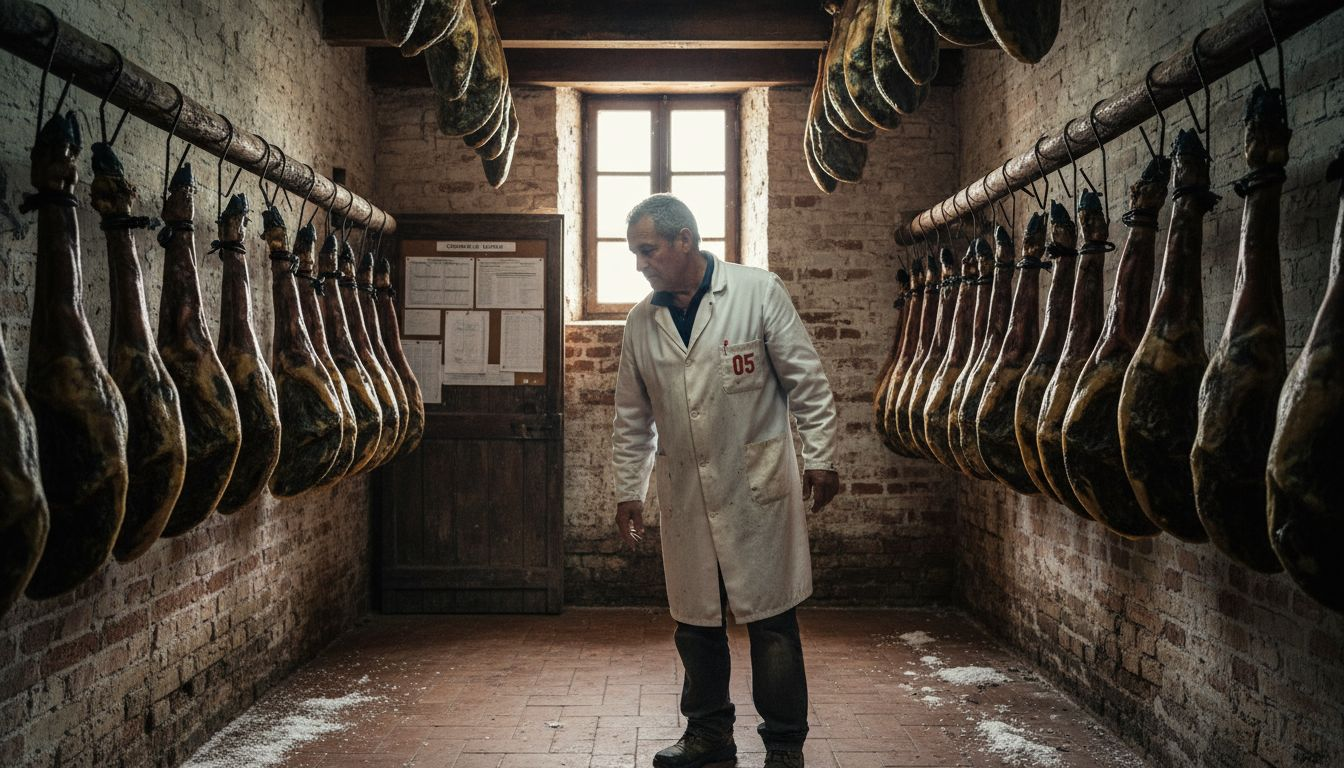
Iberico ham undergoes meticulous multi-stage curing that begins with salting. Producers bury hams in sea salt for one day per kilogram of weight, allowing salt to penetrate gradually. Following salting, hams hang in temperature-controlled chambers where humidity and airflow are precisely managed. The longest aging cycles, extending beyond 48 months, produce intensely concentrated flavors with remarkable tenderness.
Serrano ham follows a more streamlined curing protocol. After initial salting, hams move through drying and aging phases totaling 9 to 18 months. The shorter timeline produces firmer texture and more pronounced saltiness. Curing times and methods directly correlate with flavor development and price positioning.
| Ham Type | Minimum Cure | Maximum Cure | Texture Result |
|---|---|---|---|
| Iberico | 18 months | 64+ months | Tender, creamy |
| Serrano | 9 months | 18 months | Firm, compact |
Pro Tip: Longer curing doesn’t always mean better for every palate. Some prefer Serrano’s straightforward saltiness over Iberico’s complex nutty notes. Match curing duration to your taste preferences and intended culinary use.
Environmental factors during aging influence final characteristics. Mountain air in Serrano production regions provides ideal conditions for steady moisture loss. Iberico producers in Extremadura and other designated zones leverage local microclimates to develop signature flavor profiles. Learning to select Iberico ham for authentic quality requires understanding how these aging variables affect the finished product.
Flavor Profiles and Textural Differences
Tasting Iberico and Serrano side by side reveals dramatic sensory contrasts. Iberico ham’s high fat marbling produces a creamy, nutty melt-in-the-mouth texture; Serrano ham offers a saltier flavor with firmer, leaner texture. These distinctions guide which ham suits specific culinary applications and personal preferences.
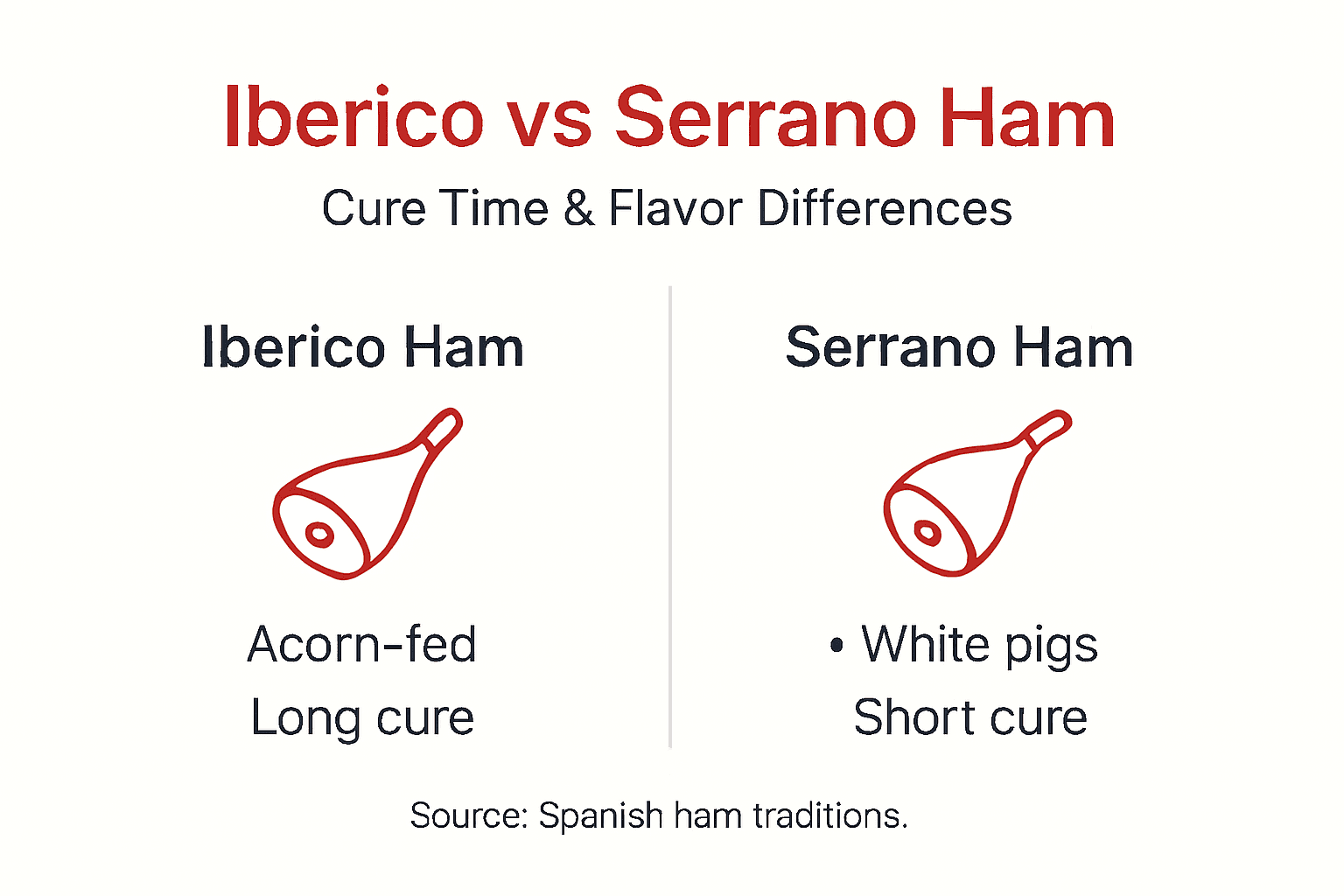
Iberico ham delivers complex flavor dimensions that evolve as you chew. Initial notes of sweet nuttiness give way to subtle herbaceous undertones from the pigs’ acorn and wild plant diet. The high oleic acid content creates luxurious mouthfeel comparable to premium aged cheeses. Fat melts at body temperature, coating your palate with rich, lingering finish.
Serrano ham presents bold, straightforward saltiness balanced by clean pork flavor. The leaner composition provides satisfying chew with less fatty richness. Flavor profiles of Iberico vs Serrano reflect their distinct production philosophies: complexity versus accessibility.
| Characteristic | Iberico Ham | Serrano Ham |
|---|---|---|
| Primary Flavor | Nutty, sweet, complex | Salty, savory, direct |
| Fat Content | High marbling throughout | Lean with minimal fat |
| Texture | Soft, melts easily | Firm, substantial chew |
| Finish | Long, buttery | Clean, refreshing |
Textural considerations for culinary use:
- Iberico’s softness works beautifully for standalone tasting
- Serrano’s firmness holds up well in cooked applications
- Temperature affects Iberico more dramatically due to fat content
- Serrano maintains consistency across serving temperatures
Pro Tip: Serve Iberico ham at room temperature to experience full flavor complexity. Cold storage mutes the delicate nutty notes and prevents proper fat melting on your palate.
Understanding these sensory profiles helps you apply Iberico ham flavor tips when planning menus or building charcuterie presentations. Each ham type excels in specific contexts, making neither universally superior to the other.
Geographical Origin and Authenticity
Regulatory protections ensure authentic Spanish ham meets strict quality standards. Iberico ham production is legally protected to four specific Spanish regions, ensuring stringent quality and authenticity, whereas Serrano ham is produced broadly in mountainous zones. These geographical limitations preserve traditional methods and prevent inferior imitations from diluting brand reputation.
Iberico ham holds Protected Designation of Origin status limited to Extremadura, Los Pedroches, Guijuelo, and Jabugo. Each region contributes unique characteristics based on local climate, vegetation, and production traditions. Producers must follow detailed regulations covering pig breeding, feeding, slaughter timing, and curing protocols. Any ham labeled Iberico must originate from these designated areas.
Serrano ham operates under Protected Geographical Indication covering broader mountain regions across Spain. The name “Serrano” references mountainous terrain where cool, dry air provides ideal curing conditions. While less restrictive than Iberico regulations, PGI status still requires adherence to traditional production methods and quality benchmarks.
Authenticity indicators to verify:
- Official certification seals on packaging and labels
- Traceability codes linking to specific producers
- Breed percentage declarations for Iberico products
- Geographic origin statements matching protected zones
Counterfeit products occasionally appear in markets claiming Iberico or Serrano designation without proper certification. Verifying Iberico and Serrano geographical origins protects you from purchasing inferior substitutes. Understanding geographical origin and authenticity ensures your investment delivers genuine quality and flavor.
Common Misconceptions About Iberico and Serrano Ham
Consumer confusion creates barriers to informed purchasing decisions. Not all Iberico hams are equal; labels (white, green, red, black) designate pig purity and diet with black label as premium. Understanding classification systems prevents overpaying for lower grades or dismissing excellent options based on incomplete information.
The color-coded labeling system for Iberico ham indicates quality tiers. Black labels signify 100% Iberian breed pigs fed exclusively on acorns during montanera. Red labels indicate 50 to 75% Iberian genetics with acorn feeding. Green labels denote Iberian pigs fed compound feed. White labels represent the entry level with mixed genetics and standard diets. Each tier delivers different flavor profiles and price points.
Serrano ham is often wrongly seen as inferior, but it has a respected artisanal tradition with graded varieties and unique flavors. Serrano Reserva and Gran Reserva designations indicate extended aging that rivals mid-tier Iberico products in complexity. Dismissing all Serrano as budget ham ignores exceptional examples that satisfy sophisticated palates.
Frequent misconceptions to correct:
- Assumption that all Iberico automatically surpasses all Serrano in quality
- Belief that higher price always indicates better taste match for your preferences
- Confusion between breed purity and feeding regime in quality assessment
- Expectation that Serrano lacks artisanal value or traditional craftsmanship
Pro Tip: Start your Spanish ham journey with quality Serrano Reserva before investing in premium Iberico. This progression helps you appreciate the distinctions and determine whether the price premium aligns with your taste preferences.
Recognizing common misconceptions about Iberico and Serrano empowers confident decision making. Iberico ham labeling misconceptions and Serrano ham quality misconceptions both deserve examination before you commit to expensive purchases.
Economic and Luxury Positioning
Price differences between these hams reflect complex production economics. Premium Iberico whole hams can exceed $2,000, driven by breed, diet, long curing, and limited production; Serrano offers more accessible pricing suited for everyday use. Understanding value drivers helps you allocate your gourmet budget strategically.
Multiple factors contribute to Iberico’s luxury positioning. Black Iberian pig breeding requires specialized knowledge and longer production cycles. Free-range rearing across vast dehesa forests costs significantly more than confined feeding operations. Acorn availability fluctuates yearly, creating supply constraints. Extended aging ties up capital and warehouse space for years before products reach market.
Serrano ham’s affordability stems from efficient production scaling. White pig breeds reach market weight faster with predictable growth rates. Grain feeding costs less than maintaining oak forest ecosystems. Shorter curing cycles accelerate inventory turnover. These efficiencies make Serrano accessible for regular consumption without compromising traditional quality.
Economic considerations for buyers:
- Iberico suits special occasions and gifts requiring premium presentation
- Serrano provides excellent value for frequent consumption and entertaining
- Mid-tier Iberico (red or green label) bridges quality and affordability
- Sliced portions offer entry points for testing preferences before whole ham investment
Why Iberico ham commands luxury pricing becomes clear when examining production complexity. Iberico vs Serrano pricing and market positioning reflects genuine quality differences rather than marketing manipulation. Your choice should align with occasion importance, taste priorities, and budget realities.
Practical Culinary Applications and Pairings
Selecting the right ham elevates your culinary experiences. Choose 100% acorn-fed Iberico for luxury tasting or special celebrations due to unmatched flavor and texture. Reserve Serrano Reserva or Gran Reserva for everyday meals and versatile culinary applications. Each ham type excels in specific contexts that maximize its inherent qualities.
Iberico ham shines when served simply, allowing its complex flavors to take center stage. Arrange thin slices on warmed plates, letting fat achieve perfect consistency at room temperature. Pair with aged Manchego cheese, crusty bread, and ripe tomatoes. Aged red wines like Rioja Reserva complement Iberico’s nutty richness without overwhelming delicate notes.
Serrano ham offers greater versatility across cooking methods. Its firmer texture withstands heating in pasta dishes, pizzas, and egg preparations. Wrap Serrano around melon or asparagus for classic Spanish tapas. Crisp white wines, particularly Albariño or Verdejo, cut through Serrano’s saltiness while refreshing your palate. Green olives and Marcona almonds provide textural contrast.
Step-by-step serving guide:
- Remove ham from refrigeration 30 minutes before serving to reach ideal temperature
- Slice paper-thin perpendicular to the bone for optimal texture
- Arrange slices in single layer, avoiding overlap that traps moisture
- Serve immediately to prevent drying and flavor loss
- Store remaining ham properly wrapped to maintain quality
Pairing suggestions by occasion:
- Formal dinner parties: Black label Iberico with vintage Rioja
- Casual gatherings: Serrano Gran Reserva with crisp Spanish whites
- Breakfast or brunch: Serrano with eggs and crusty bread
- Romantic dinners: Premium Iberico with aged Manchego and fresh figs
Pro Tip: Invest in a quality ham knife with long, flexible blade for proper slicing. Correct technique dramatically impacts texture and flavor perception, making even mid-tier ham taste exceptional.
Learning how to choose Iberico ham for gourmet eating requires understanding your intended use. Apply Iberico ham buying tips and explore types of Iberico ham to match products with your culinary goals.
Discover Authentic Iberico and Serrano Hams at 7 BELLOTAS®
Now that you understand the distinctions between these Spanish treasures, experience them firsthand. 7 BELLOTAS® offers carefully curated selections of authentic Iberico ham from Spain, sourced directly from trusted producers in designated regions. Every product meets strict quality standards, ensuring you receive genuine articles worthy of your investment.
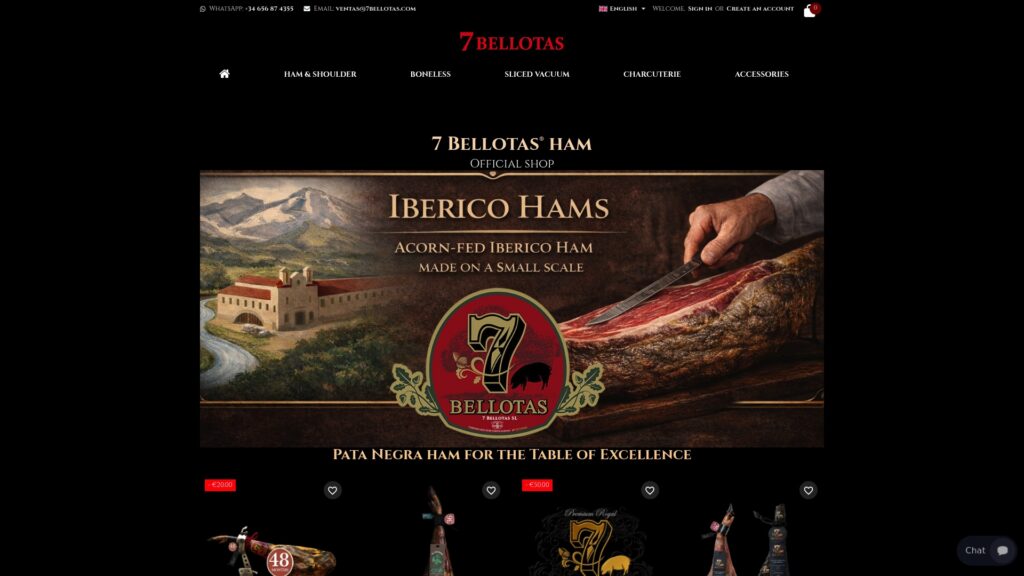
Our collection includes premium black label bellota hams aged up to 64 months, mid-tier options for regular enjoyment, and exceptional Serrano varieties. Detailed product descriptions help you navigate quality grades and make informed choices. Expert guidance on How To Select Iberico Ham ensures your purchase aligns with taste preferences and culinary applications. Explore our comprehensive Iberico vs Serrano guide to deepen your appreciation before ordering.
FAQ
What is the primary difference between Iberico and Serrano ham?
Iberico ham comes from Black Iberian pigs that feed on acorns in oak forests, creating rich marbling and complex nutty flavors. Serrano ham uses white pig breeds fed grain-based diets, producing leaner meat with straightforward salty taste. These fundamental differences in genetics and diet create entirely distinct products despite both being Spanish cured hams.
How does the curing time affect the flavor of Iberico and Serrano ham?
Iberico ham cures 18 to 64 months, allowing enzymes to break down proteins and develop layered complexity with tender, creamy texture. Serrano ham cures 9 to 18 months, resulting in firmer consistency and more pronounced saltiness. Extended aging concentrates flavors while enzymatic action creates the melt-in-mouth quality prized in premium Iberico.
What do the different Iberico ham labels mean?
Color-coded labels indicate pig breed purity and feeding regime. Black labels represent 100% Iberian breed pigs fed exclusively on acorns, the highest quality tier. Red labels denote 50 to 75% Iberian genetics with acorn feeding, while green labels indicate Iberian pigs on compound feed. White labels represent entry-level products with mixed genetics and standard diets.
Is Serrano ham a lower-quality option compared to Iberico?
Serrano ham represents distinct artisanal traditions with its own quality grades rather than inferior Iberico. Premium Serrano Reserva and Gran Reserva offer excellent flavor complexity suitable for sophisticated palates. The firmer, saltier profile serves different culinary purposes, making it ideal for everyday meals and versatile cooking applications where Iberico might be excessive.
Which ham should I choose for my first Spanish ham experience?
Start with quality Serrano Reserva to understand traditional Spanish ham characteristics without major investment. This approach helps you appreciate distinctions before committing to premium Iberico. Once familiar with Serrano’s profile, upgrade to mid-tier Iberico (red or green label) to experience richer complexity, then progress to black label bellota if the flavor justifies the significant price premium for your palate.