Not all Iberico ham is created equal. Walk into any fine delicatessen and you will find hams bearing similar labels, similar prices, and similar promises. Yet the difference between a mass-produced leg and a genuine small-batch Pata Negra is profound. Most connoisseurs focus on the label or the curing time, but rarely question the production philosophy behind it. Small-batch artisanal ham is shaped by a fundamentally different set of values: individual attention, natural environments, and hands-on expertise at every stage. What follows is a closer look at how those values translate into aroma, texture, maturity, and flavour that simply cannot be replicated at scale.
Table of Contents
- What defines small-batch ham?
- How small-batch methods enhance aroma and texture
- Genetics, welfare, and producer pedigree
- Artisan tradition versus modern mass production
- The uncomfortable truth gourmets rarely discuss
- Experience authentic small-batch ham
- Frequently asked questions
Key Takeaways
| Point | Details |
|---|---|
| Meticulous hands-on care | Small-batch ham receives individual attention from expert artisans, ensuring exceptional quality at every stage. |
| Superior aroma and flavour | Natural ageing and climate control give small-batch ham complex notes and extraordinary texture. |
| Heritage breeds matter | Producers select premium Iberian pigs for their genetics, marbling, and taste potential. |
| Tradition over mass production | Artisan techniques deliver unmatched sensory experiences not possible with industrial methods. |
What defines small-batch ham?
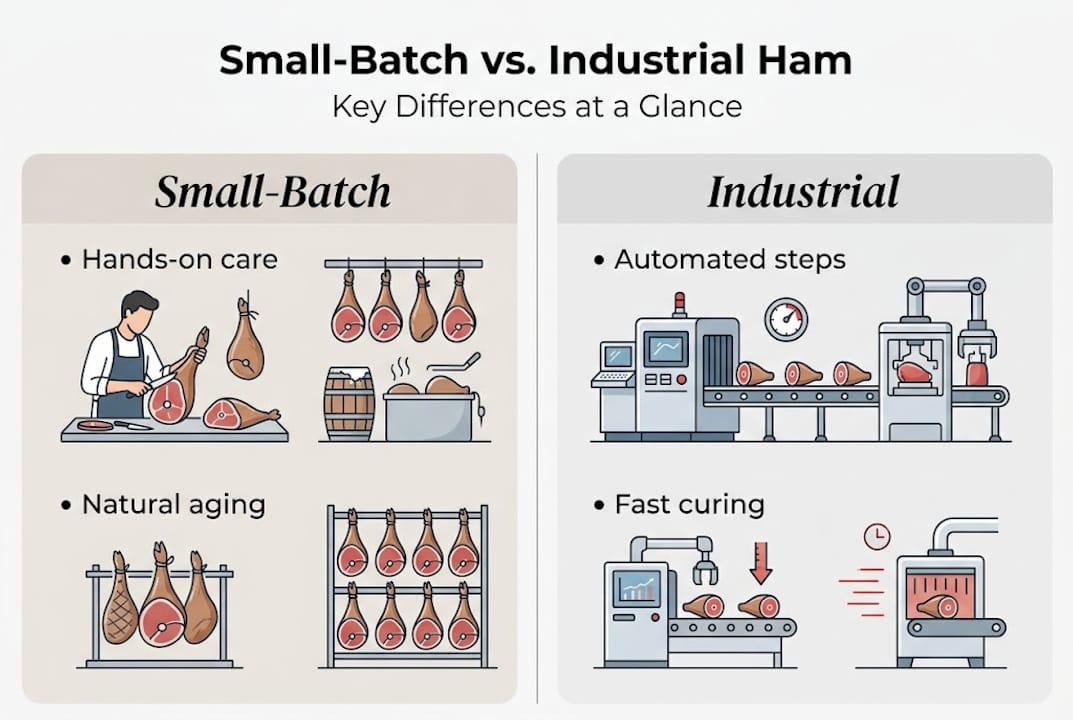
Small-batch ham production is not simply about making less of something. It is a philosophy. Each leg is treated as an individual, not a unit in a queue. Artisan producers work with limited numbers of pigs per batch, allowing for hands-on inspection at every stage of the curing process. No two legs are identical, and skilled producers account for that variation rather than engineering it away.
In contrast, industrial operations prioritise uniformity and throughput. Temperature and humidity are controlled by machines. Inspection is periodic rather than constant. The result is a consistent product, but consistency is not the same as excellence.
Small-batch production allows for meticulous quality control during the multi-stage curing process, something industrial lines simply cannot replicate. The stages of small-batch curing include salting, post-salting, drying, and extended cellar ageing, each requiring individual assessment. Guidance on selecting Iberico ham highlights how these distinctions matter enormously to the final product.
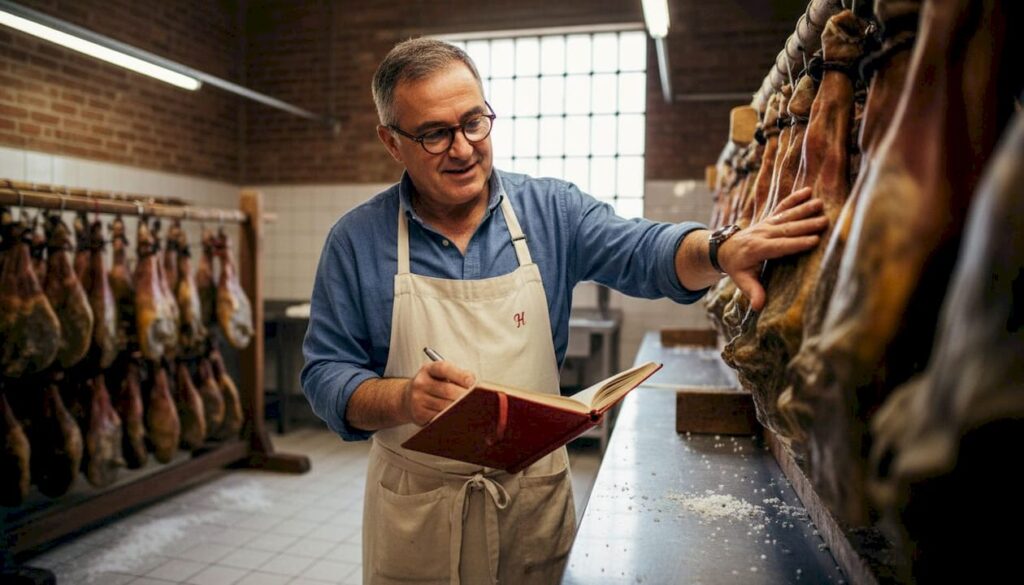
One of the most prized roles in small-batch production is that of the calador, a trained professional who assesses each ham by inserting a thin bone needle and inhaling the released aroma. This sensory test determines whether a leg is ready to advance to the next stage or requires more time. No algorithm can replicate that judgement.
| Feature | Small-batch artisan | Industrial production |
|---|---|---|
| Batch size | Limited, controlled | Thousands per cycle |
| Inspection method | Individual, hands-on | Automated or periodic |
| Curing adjustment | Per leg, by expert | Standardised settings |
| Calador involvement | Essential | Rare or absent |
| Curing duration | Extended, flexible | Fixed, compressed |
Key characteristics of genuine small-batch ham include:
- Clearly identified artisan producer and cellar origin
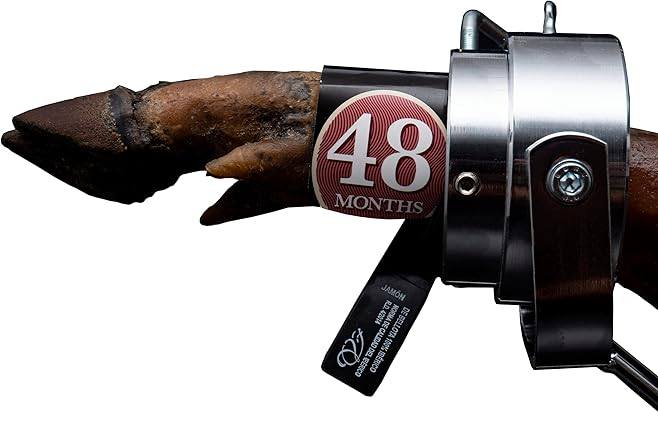
- Extended curing periods, often 36 to 64 months or beyond
- Batch or lot references on packaging
- Evidence of natural drying environments
- Certification of breed and feeding regime
Pro Tip: When purchasing, ask for the batch reference or producer code. Authentic small-batch operations can trace every leg back to a specific cellar and curing period.
How small-batch methods enhance aroma and texture
The sensory qualities of a great Iberico ham are not accidental. They are the product of deliberate, careful decisions made over months and years. Small-batch producers use traditional stone cellars with natural ventilation and microclimate control, which prevents defects and allows the fat to infiltrate the muscle slowly and evenly.
This process, known as lipid oxidation, is responsible for the complex nutty, floral, and savoury notes that distinguish a fine Pata Negra from anything mass-produced. Artisans adjust cellar conditions based on sensory cues, not just data readings. They feel the surface of each leg, observe the colour of the fat, and monitor the development of the characteristic white crystals of tyrosine, an amino acid that signals proper maturation.
The step-by-step attention in small-batch production looks like this:
- Each leg is individually salted according to its weight and fat coverage
- Post-salting rest periods are adjusted per leg, not per batch average
- Drying begins in naturally ventilated chambers, opened and closed by hand
- Cellar ageing is monitored by the calador at regular intervals
- Final assessment determines readiness, not a fixed calendar date
This individual care produces a texture that is silky and yielding, with a melt-on-the-palate quality that connoisseurs recognise immediately. The unique Spanish ham flavour owes much to this process, as does the difference explored in comparisons of Iberico versus Serrano ham.
“The finest Iberico hams are not made. They are tended.” This is the quiet truth behind every exceptional leg that reaches the table.
| Sensory quality | Small-batch result | Industrial result |
|---|---|---|
| Aroma complexity | Layered, nutty, floral | Mild, one-dimensional |
| Fat texture | Silky, even infiltration | Patchy or greasy |
| Muscle colour | Deep ruby, consistent | Variable, sometimes pale |
| Flavour depth | Long, evolving finish | Short, flat finish |
Pro Tip: When tasting, allow a slice to rest at room temperature for five minutes before eating. The fat should become almost translucent. If it remains white and waxy, the curing process was likely rushed.
Genetics, welfare, and producer pedigree
Individual care during curing is only part of the story. The quality of the raw material matters just as much. Small-batch producers invest heavily in genetic selection, choosing Iberian pigs with the highest proportion of pure breed genetics. The Iberian pig’s unique capacity to store fat within its muscle tissue, known as intramuscular fat or marbling, is a genetic trait that cannot be manufactured.
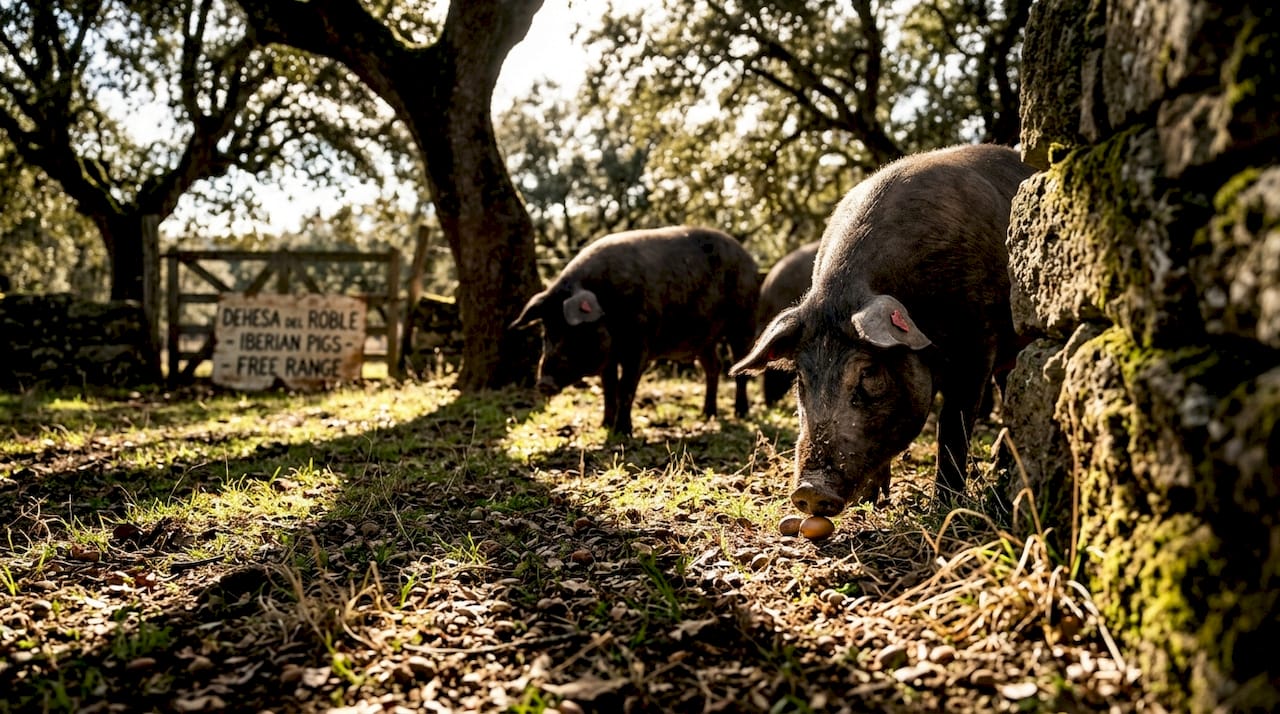
Producers such as Sánchez Romero Carvajal and Eduardo Donato are recognised for their strict genetic selection and limited scale, combined with advanced welfare standards that directly influence the final flavour. Pigs raised in open dehesa (oak woodland) with space to roam and forage develop stronger muscles and more evenly distributed fat. Stress in animals, even minor chronic stress, affects muscle chemistry and ultimately flavour.
The Iberian breed’s importance to premium Spanish cured meats cannot be overstated. Without the right genetics, no amount of artisanal curing will produce the characteristic flavour profile. The secrets of Iberico ham begin long before the cellar.
Key welfare and genetics factors in small-batch production:
- Pure or high-percentage Iberian breed genetics
- Free-range access to dehesa pasture during the montanera (acorn season)
- Low stocking density, reducing stress and promoting natural behaviour
- Acorn-fed diet during final months, driving intramuscular fat quality
- Absence of growth promoters or artificial feed supplements
The marbling that results from this combination is not merely aesthetic. It is the vehicle for flavour. Fat carries and amplifies the aromatic compounds developed during curing. A leg from a well-bred, well-raised pig cured by an attentive artisan will always outperform one that excels in only one of those dimensions.
Artisan tradition versus modern mass production
To truly appreciate small-batch ham, it helps to understand what has been lost in the shift towards industrial production. Artisanal methods in Spain date back centuries, rooted in the rhythms of the dehesa, the seasons, and the accumulated knowledge of families who have cured ham for generations. That knowledge is not written in manuals. It lives in hands, noses, and memories.
Small-batch curing, where each ham is treated individually, achieves optimal maturity that is impossible at industrial scale, where uniformity risks defects. This is not nostalgia. It is a measurable quality difference.
What connoisseurs should inspect when evaluating ham:
- The label: look for breed classification (100% Ibérico), feeding regime (bellota), and producer name
- The fat: it should be creamy white to pale yellow, soft to the touch at room temperature
- The aroma: complex, slightly sweet, with no sharp or sour notes
- The texture: firm but yielding when sliced thinly, not crumbly or dry
- The finish: flavour should linger and evolve, not disappear immediately
For those who prefer Iberico for its depth and complexity, understanding these distinctions is essential. Practical guidance on selecting authentic Iberico ham can sharpen your ability to identify genuine quality.
| Criterion | Artisan small-batch | Mass-produced |
|---|---|---|
| Curing oversight | Individual, expert-led | Automated, standardised |
| Breed traceability | Full, documented | Often partial |
| Cellar environment | Natural, microclimate-managed | Climate-controlled chambers |
| Flavour complexity | High, layered | Moderate to low |
| Batch transparency | Full traceability | Limited |
“Industrial ham can be good. But it cannot be great. Greatness requires time, attention, and the willingness to treat each leg as irreplaceable.”
The uncomfortable truth gourmets rarely discuss
Here is what most experts will not say plainly: a high price tag and a prestigious label are not guarantees of small-batch quality. Marketing budgets are large. Certification systems, while useful, are not infallible. Even experienced connoisseurs have been impressed by industrial hams dressed in artisanal language.
The honest truth is that sensory evidence and producer trust matter more than packaging. If a ham’s aroma is flat, its fat waxy, or its finish brief, no label will change that reality. The most reliable path to genuine quality is curiosity: researching producers, asking questions, and trusting your palate over your eyes.
Small-batch ham rewards the truly curious gourmet. It asks more of you, and it gives more in return. Guidance on choosing Iberico ham for gourmet experiences can help you develop that discernment. The connoisseurs who understand this distinction do not simply buy ham. They seek out a story, a tradition, and a standard of care that no machine can replicate.
Experience authentic small-batch ham
Having explored what truly sets small-batch ham apart, the next step is finding it. Genuine artisanal Iberico ham is not available everywhere, and the difference between a trusted specialist and a generic retailer is as significant as the difference between the hams themselves.
At 7 Bellotas, every ham is sourced from producers who meet the exacting standards described here: pure Iberian breed, acorn-fed, naturally cured, and individually monitored. The discover Spanish ham flavour experience begins with knowing exactly where your ham comes from. Explore the full selection and find the leg, the slice, or the portion that speaks to your palate. Authentic small-batch Iberico ham is waiting.
Frequently asked questions
How can I tell if ham is genuinely small-batch?
Genuine small-batch ham will list the artisan producer, provide details about cure duration, and often features batch or cellar information on the label. Meticulous, hands-on monitoring at every stage is the defining characteristic, so transparency from the producer is a strong indicator.
Why does small-batch ham cost more than mainstream options?
The higher price reflects limited production, hands-on artisan expertise, and the use of premium pigs and extended curing stages. Strict genetic selection and limited scale by premium producers result in exceptional quality that simply cannot be achieved at lower cost.
Does small-batch production influence health or safety?
Individual monitoring allows for safer curing and reduces the risk of defects, as natural ventilation and microclimate control actively prevent common curing faults. Always purchase from established, reputable producers for the best and safest results.
What does a calador do in small-batch ham production?
A calador is a trained expert who inserts a bone needle into the ham at key curing stages and assesses the released aroma to determine maturity and quality. This professional sensory assessment is one of the most critical and irreplaceable steps in artisanal ham production.
Recommended
- How To Select Iberico Ham For Authentic Flavour And Quality
- Why Choose Spanish Ham: Discover Iberico’s Unique Flavour
- Why Iberian Breeds Matter For Premium Spanish Cured Meats
- Why Buy Sliced Iberico Ham For Authentic Gourmet Flavour
- Buff Tenderloin Pastrami | Antibiotics And Hormone Free – Nature’s Sou – naturessoulshop