Spanish ham is not a single thing. Walk into any good delicatessen and you will find labels that read Bodega, Reserva, Gran Reserva, or Ibérico, each representing a distinct product with its own character, curing time, and price point. Many newcomers assume all Spanish ham tastes the same, or that only the most expensive cuts are worth exploring. Bodega ham challenges that assumption entirely. It is the mildest, most approachable classification of Jamón Serrano, and for those taking their first steps into the world of premium Spanish cured meats, it offers an honest and rewarding starting point.
Table of Contents
- What is Bodega ham and where does it come from?
- How Bodega ham is made: The traditional curing process
- Bodega vs Reserva vs Gran Reserva: A comparison of Spanish ham ages
- How does Bodega compare with Ibérico ham?
- Enjoying Bodega ham: Serving suggestions and pairing ideas
- Why Bodega ham deserves to be more than just an entry-level choice
- Try authentic Spanish hams for yourself
- Frequently asked questions
Key Takeaways
| Point | Details |
|---|---|
| Bodega ham basics | Bodega ham is the mildest and most approachable style of Spanish dry-cured ham. |
| Traditional craftsmanship | The curing process involves salting, air-drying, and ageing in bodegas for months to develop flavour. |
| Comparison with Iberico | Bodega ham is less complex and aged for a shorter time compared to nutty, long-aged Iberico ham. |
| Serving suggestions | Enjoy Bodega ham sliced thin at room temperature with bread or mild sides for a true Spanish experience. |
What is Bodega ham and where does it come from?
Not all Spanish hams are created equal, and Bodega sits at the gentler end of the spectrum. Bodega ham is a classification of Jamón Serrano, a dry-cured Spanish ham made from white pigs. The word Bodega itself translates loosely to cellar or aging room, which points directly to the final stage of the curing process where the ham rests and develops its character.
Unlike its more celebrated counterparts, Bodega ham is produced from white pig breeds such as Duroc or Landrace, rather than the prized black Iberian pig. This genetic difference plays a significant role in the final flavour. The result is a ham that is noticeably milder, slightly sweet, and far less intense than an aged Ibérico.
Here are the key features that define Bodega ham:
- Pig breed: White pig breeds (Duroc, Landrace, or similar)
- Cure time: 7 to 12 months in a controlled cellar environment
- Flavour profile: Mild, lightly salted, subtly sweet
- Texture: Firm yet tender, with a clean finish
- Price point: More accessible than Reserva or Gran Reserva grades
“Bodega ham represents the entry point into the world of Jamón Serrano, offering a mild and pleasant flavour that suits those discovering Spanish cured meats for the first time.”
Understanding Jamón Serrano quality grades is essential before making a purchase. If you are new to Spanish ham classifications, Bodega is the natural place to begin your education. It is a genuine product with real craft behind it, not simply a lesser version of something better.
How Bodega ham is made: The traditional curing process
Understanding Bodega ham’s roots sets the stage for exploring how it’s crafted with care. The production follows a time-honoured sequence that transforms a fresh leg of pork into a refined cured meat through patience and precision.
The curing process involves salting, hanging in ventilated rooms called secaderos, then Bodega cellar aging with controlled temperature and humidity for enzymatic breakdown and dehydration. Each stage serves a specific purpose.
- Salting: The fresh ham is buried in sea salt for a period proportional to its weight. This draws out moisture and begins preservation.
- Settling (post-salting rest): The ham rests in cold conditions, allowing the salt to distribute evenly throughout the meat.
- Secadero (air-drying): The ham hangs in naturally ventilated drying rooms. Temperature and airflow are carefully managed to encourage gradual moisture loss.
- Bodega aging: The final stage. The ham moves to a cooler, darker cellar where enzymatic activity slowly develops flavour and texture over 7 to 12 months.
Because Bodega aging is shorter than Reserva or Gran Reserva, the enzymatic breakdown is less advanced. This is precisely why the flavour remains mild and the texture stays relatively soft. It is not a flaw; it is the defining quality of this classification.
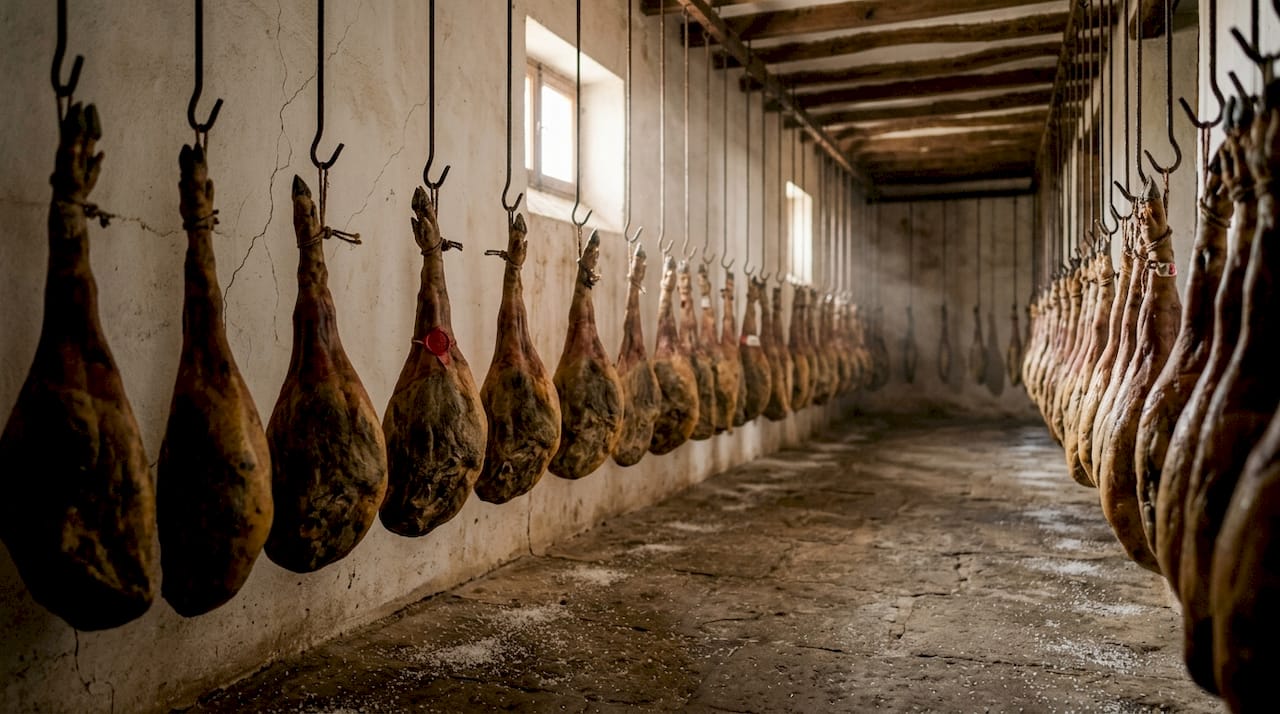
Artisanal producers of traditional Spanish hams monitor humidity and temperature throughout, ensuring consistency without shortcuts.
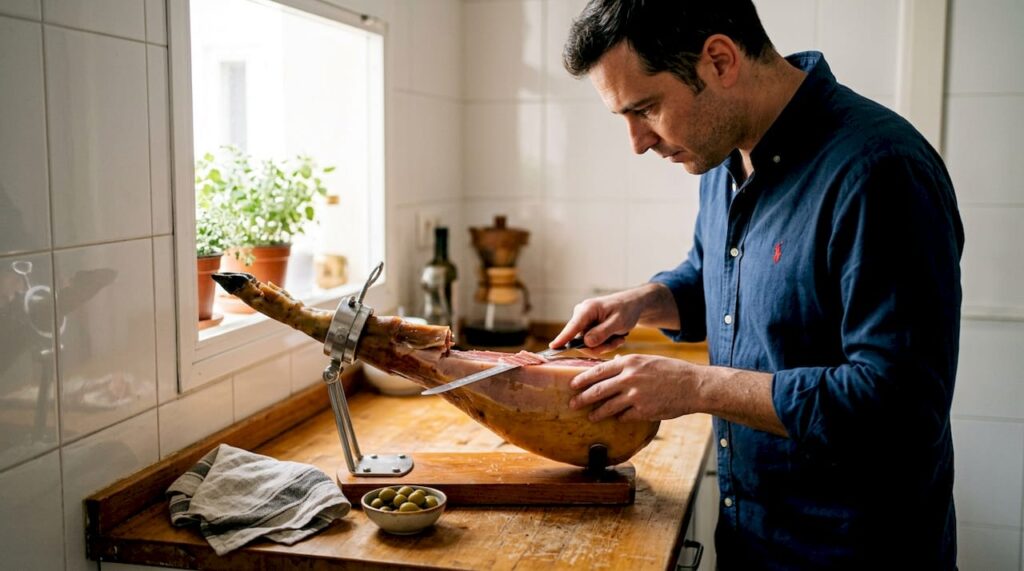
Pro Tip: When slicing Bodega ham, use a long, flexible knife and cut against the grain in thin, almost translucent slices. Thicker cuts can make the texture feel dense and mask the subtle flavour that makes Bodega worth savouring.
Bodega vs Reserva vs Gran Reserva: A comparison of Spanish ham ages
After following the path of its craft, it’s vital to see how Bodega fits into the overall world of Spanish ham grades. The three main Jamón Serrano ham ageing grades differ primarily in curing time, and that time changes everything.
| Classification | Cure time | Flavour profile | Best suited for |
|---|---|---|---|
| Bodega | 7 to 12 months | Mild, lightly sweet | Beginners, light snacking |
| Reserva | 12 to 15 months | Balanced, moderate depth | Everyday gourmet enjoyment |
| Gran Reserva | 15+ months | Intense, nutty, complex | Connoisseurs, special occasions |
Classifications by ageing confirm that Bodega offers a mild and sweet profile suited to beginners, Reserva delivers a balanced experience, and Gran Reserva reaches an intense, nutty depth for those who crave complexity.
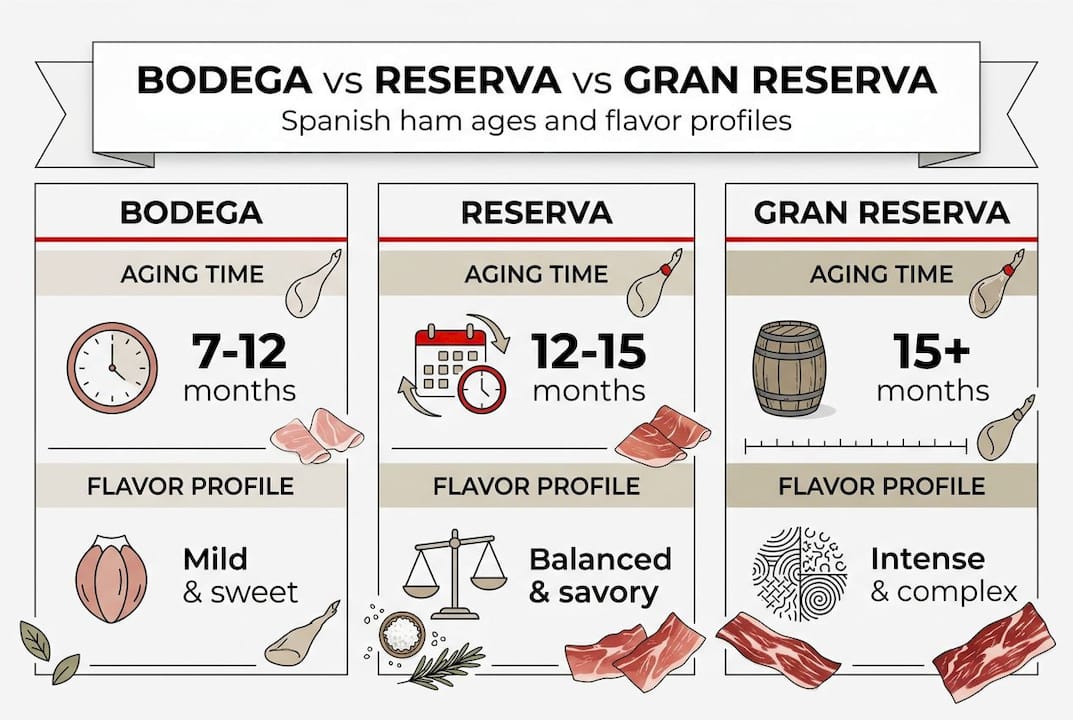
Price follows the same curve. Bodega is the most affordable entry point, while Gran Reserva commands a premium that reflects the additional time, space, and craft invested. Neither is superior in an absolute sense. They serve different occasions and different palates.
If you are selecting a ham for a casual gathering, Bodega’s approachable flavour works beautifully. For a formal dinner where the ham takes centre stage, Gran Reserva rewards the investment. Reserva sits comfortably in between, making it a reliable choice for those who have moved beyond Bodega but are not yet ready to commit to the intensity of Gran Reserva.
Exploring example Spanish hams across these grades is one of the most enjoyable ways to develop your palate.
How does Bodega compare with Ibérico ham?
Placing Bodega within its Serrano family is important, but comparing it to celebrated Ibérico reveals even more about what each style truly offers.
The most fundamental difference is genetic. Bodega is made from white pigs, while Ibérico ham comes from the black Iberian pig, a breed native to the Iberian Peninsula with a unique capacity to store fat within muscle tissue. This intramuscular fat, developed through an acorn-rich diet during the montanera season, produces the extraordinary marbling and nutty flavour that defines premium Ibérico.
| Attribute | Bodega ham | Ibérico ham |
|---|---|---|
| Pig breed | White (Duroc, Landrace) | Black Iberian pig |
| Diet | Standard feed | Acorns and natural pasture |
| Cure time | 7 to 12 months | 24 to 48+ months |
| Flavour | Mild, lightly sweet | Nutty, rich, umami |
| Price | Accessible | Premium to luxury |
Bodega is entry-level Serrano, contrasting sharply with Ibérico, which is acorn-fed, cured for 24 to 48 months or more, and delivers a nutty, umami-rich complexity that a shorter cure simply cannot replicate.
The Ibérico vs Serrano differences are significant, but that does not mean Bodega is inferior. It means it is different.
- Best uses for Bodega: Tapas boards, sandwiches, light starters, everyday snacking
- Best uses for Ibérico: Solo tasting, fine dining, paired with aged cheeses or premium wines
“Bodega ham is the everyday companion, the ham you reach for on a Tuesday afternoon. Ibérico is the occasion.”
Understanding why provenance matters helps clarify why both styles have earned their place in Spanish culinary culture.
Enjoying Bodega ham: Serving suggestions and pairing ideas
With the differences clear, it’s time to turn theory into practice. Here is how to truly savour Bodega ham.
Temperature matters enormously. Always allow Bodega ham to come to room temperature for at least 20 minutes before serving. Cold fat dulls flavour and firms the texture unnecessarily. Thin slicing, ideally with a proper ham knife, lets the delicate flavour express itself fully.
Because Bodega suits light snacks rather than those seeking intense depth, it pairs best with ingredients that complement rather than compete:
- Bread: Crusty sourdough, pan de cristal, or toasted baguette with a drizzle of olive oil
- Olives: Manzanilla or Arbequina varieties for a clean, briny contrast
- Cheese: Mild Manchego or fresh goat’s cheese
- Drinks: Light Spanish whites such as Albariño, cava, or a cold lager
- Fruit: Sliced melon or fresh figs for a classic Spanish combination
For gourmet bread pairings that elevate the experience further, quality bread makes a genuine difference to how the ham reads on the palate.
Pro Tip: To build a classic Spanish appetiser board with Bodega ham, layer thin slices loosely on a wooden board rather than stacking them flat. This preserves the texture and allows each slice to be lifted cleanly. Add small bowls of olives, a wedge of Manchego, and good bread. Simple, elegant, and genuinely impressive.
Consult ham serving techniques and creative serving ideas for further inspiration, along with detailed pairing suggestions to match your occasion.
Why Bodega ham deserves to be more than just an entry-level choice
Having covered how to enjoy Bodega, let’s pause for a frank perspective on its place in the gourmet world.
There is a tendency among food enthusiasts to treat Bodega ham as a stepping stone, something to move past quickly on the way to Reserva or Ibérico. We think that view is too narrow. Bodega’s mildness is not a limitation; it is a quality in its own right.
Consider the context. Not every meal calls for intensity. A weekday lunch, a relaxed picnic, a casual tapas spread for friends who are new to Spanish food: these are moments where Bodega’s approachable flavour shines without overwhelming. It is versatile in a way that Gran Reserva simply is not.
The most experienced palates know that simplicity has value. A beautifully sliced Bodega ham on good bread, eaten in good company, is not a lesser experience. It is a different one. Choosing the right ham for the right moment is the real skill, and Bodega earns its place at the table on its own terms.
Try authentic Spanish hams for yourself
Ready to experience the full spectrum of Spanish cured meats? At 7 Bellotas, we source and supply authentic Bodega, Reserva, Gran Reserva, and premium Ibérico hams directly from artisanal producers in Spain. Every product reflects the tradition, craft, and passion that defines genuine Spanish cured meat culture.
Whether you are beginning your journey with a mild Bodega or seeking the extraordinary depth of an acorn-fed Pata Negra aged for 48 months or more, we can help you find exactly what you are looking for. Taste the difference that provenance, patience, and small-scale production make. Explore our full range and discover your next favourite ham.
Frequently asked questions
Is Bodega ham suitable for first-time Spanish ham tasters?
Yes. Its mild, sweet profile and accessible price make Bodega ham the most recommended starting point for anyone new to Spanish cured meats.
What is the ideal way to serve Bodega ham?
Serve Bodega ham at room temperature, thinly sliced, alongside simple bread, olives, or mild cheese. Its light snacking character is best appreciated without heavy accompaniments.
How does Bodega ham differ from Ibérico ham?
Bodega is milder, made from white pigs, and aged for 7 to 12 months. Ibérico is entry-level Serrano’s opposite, produced from black Iberian pigs, cured for years, and delivering a rich, nutty complexity.
Can Bodega ham be used in cooking or only served fresh?
Bodega ham can be incorporated into recipes such as croquetas, pasta, or omelettes, though its subtle flavour is most appreciated when served simply at room temperature with minimal accompaniment.