TL;DR:
- A genuine whole Iberico ham is a bone-in, dry-cured product representing Spanish tradition and acorn-fed heritage.
- It is divided into zones like maza, babilla, jarrete, and punta, each with unique characteristics for carving.
- Carving and serving Iberico ham is a ritual that enhances flavor and appreciation of this gourmet specialty.
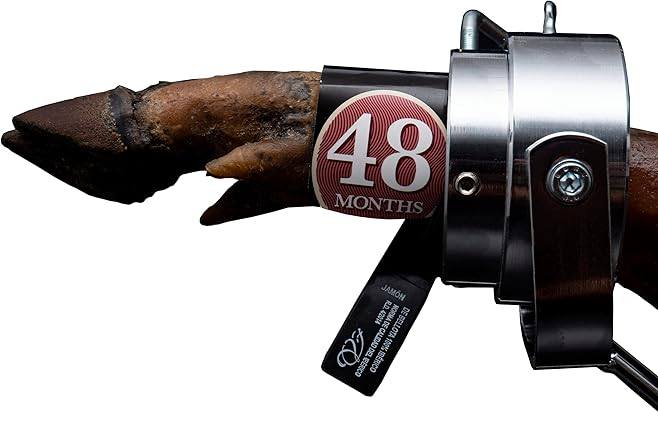
The word ‘whole ham’ gets thrown around loosely in supermarkets and food halls, but for those who truly know, it signals something far greater than a large cut of pork. A genuine whole Iberico ham represents centuries of Spanish tradition, acorn-fed heritage, and a curing process that can span over 48 months in natural dryers. It is a ritual as much as it is a product. This guide unpacks what whole ham really means, how to read its anatomy, carve it with confidence, and savour every paper-thin slice the way a true connoisseur would.
Table of Contents
- What exactly is whole ham?
- The anatomy of an Iberico whole ham
- Carving and serving: a gourmet ritual
- Tasting and pairing: the gourmet’s experience
- Why the ritual of whole ham matters more than convenience
- Bring the gourmet Iberico whole ham experience home
- Frequently asked questions
Key Takeaways
| Point | Details |
|---|---|
| True whole ham defined | Whole ham is the entire bone-in, dry-cured leg, prized for its texture, ritual, and taste. |
| Quality is everything | Iberico hams are classified by breed, feed, cure, and each part offers unique textures and flavours. |
| Carving is an art | Proper tools, thin slicing, and the right presentation dramatically enhance the gourmet experience. |
| Only half is edible | Expect around 40-50% of a whole ham to be edible meat; the rest is bone, rind, and fat. |
| Ritual matters | The process of slicing and sharing whole ham is a cherished cultural tradition for gourmets. |
What exactly is whole ham?
A whole ham, in its truest form, is an entire rear leg of a pig, bone-in and skin-on, dry-cured over an extended period. This is not the pre-cooked, pre-sliced product you find vacuum-packed on a supermarket shelf. The real thing is a living testament to patience and craft.
The contrast with common alternatives is stark. Most mass-market options are what food professionals call ‘city ham’, a term for wet-cured, pre-cooked products injected with brine and sold ready to eat. As the holiday ham guide from Food & Wine notes, whole Iberico ham elevates culinary ritual for gourmets, prioritising tradition over convenience, in direct contrast to the American city ham approach. The difference is not merely technical. It is philosophical.
Authentic Spanish whole hams are defined by four pillars:
- Lineage: The breed of pig, specifically the Ibérico, a native Spanish black-hoofed breed prized for its unique fat-marbling genetics.
- Feed: Acorn-fed (bellota) pigs roam free-range dehesa pastures, consuming acorns that transform the fat profile entirely.
- Curing style: Dry-cured with sea salt and hung in natural mountain air, never injected or artificially treated.
- Ageing: From 36 months to over 64 months, depending on quality classification.
| Feature | Iberico whole ham | Supermarket ‘city ham’ |
|---|---|---|
| Curing method | Dry-cured, natural | Wet-cured, brine-injected |
| Bone-in | Yes | Often boneless |
| Ageing period | 36 to 64+ months | None or minimal |
| Breed | Pure Ibérico | Commercial crossbreed |
| Flavour complexity | Intense, nutty, layered | Mild, uniform, salty |
For a gourmet, choosing a whole ham is an act of selecting authentic Iberico ham with full knowledge of what separates the prized from the ordinary. The flavour, the texture, and the ritual of carving it yourself are simply irreplaceable.
The anatomy of an Iberico whole ham
Knowing the structure of a whole Iberico ham transforms how you approach it. Each zone has a distinct character, and understanding them helps you carve intelligently and waste nothing.
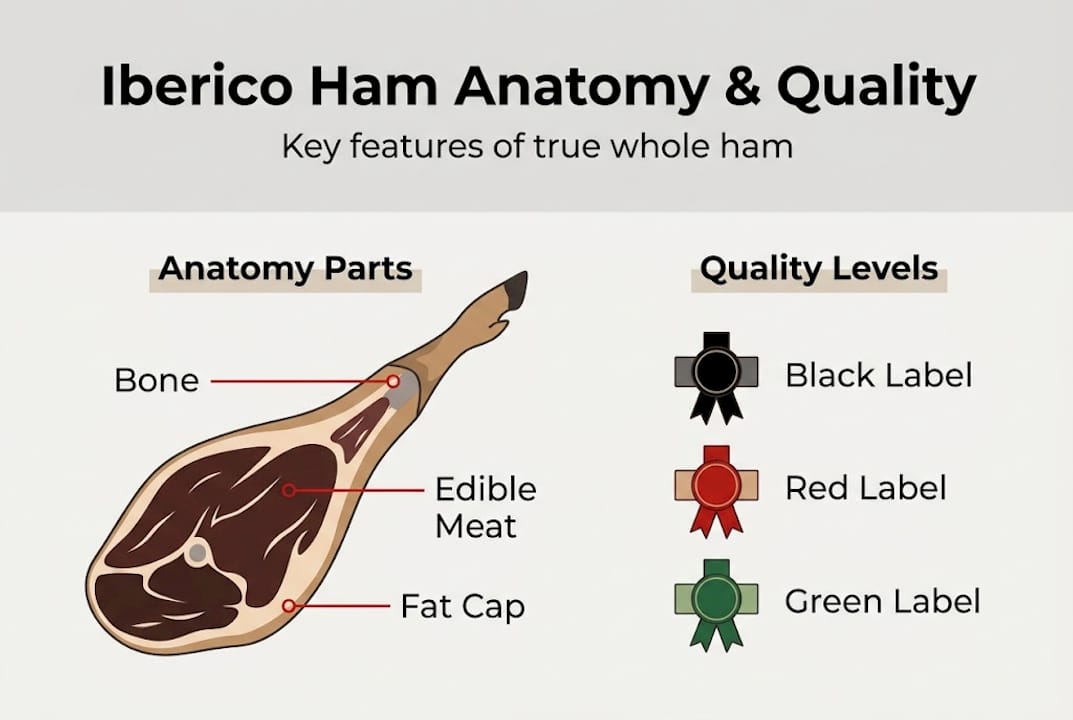
A whole leg has four main anatomical zones:
- Maza: The largest, most generous section. Richly marbled, juiciest, and the first area to carve. This is where the most prized slices come from.
- Babilla: The opposite, leaner side. Slightly firmer in texture, with less fat infiltration. Ideal to carve after the maza is exhausted.
- Jarrete: The lower shank area, close to the hoof. Tougher, more muscular, excellent for dicing into stews and braises.
- Punta: The tip of the leg, near the hip. Intensely flavoured due to fat concentration, often reserved for the most devoted connoisseurs.
One fact surprises many first-time buyers: as noted by Spain’s festive ham traditions, roughly 50 to 60% of a whole ham is bone, fat, and rind, meaning only 40 to 50% is edible meat. This is not a flaw. It is simply the nature of a bone-in, skin-on product that has been air-dried for years.
| Quality label | Typical whole weight | Approx. edible yield | Breed purity |
|---|---|---|---|
| Black label (Bellota 100%) | 7 to 9 kg | 40 to 50% | 100% Ibérico |
| Red label (Bellota 75%) | 7 to 8.5 kg | 40 to 48% | 75% Ibérico |
| Green label (Cebo de Campo) | 6.5 to 8 kg | 38 to 45% | 50%+ Ibérico |
Knowing these premium ham quality markers allows you to set realistic expectations and plan accordingly for a gathering.
Pro Tip: Never discard the bone, rind offcuts, or fatty trimmings. The bone makes an extraordinary base for lentil soup or caldo, and the fat renders beautifully for cooking vegetables. Nothing from a fine Iberico ham should go to waste.
Carving and serving: a gourmet ritual
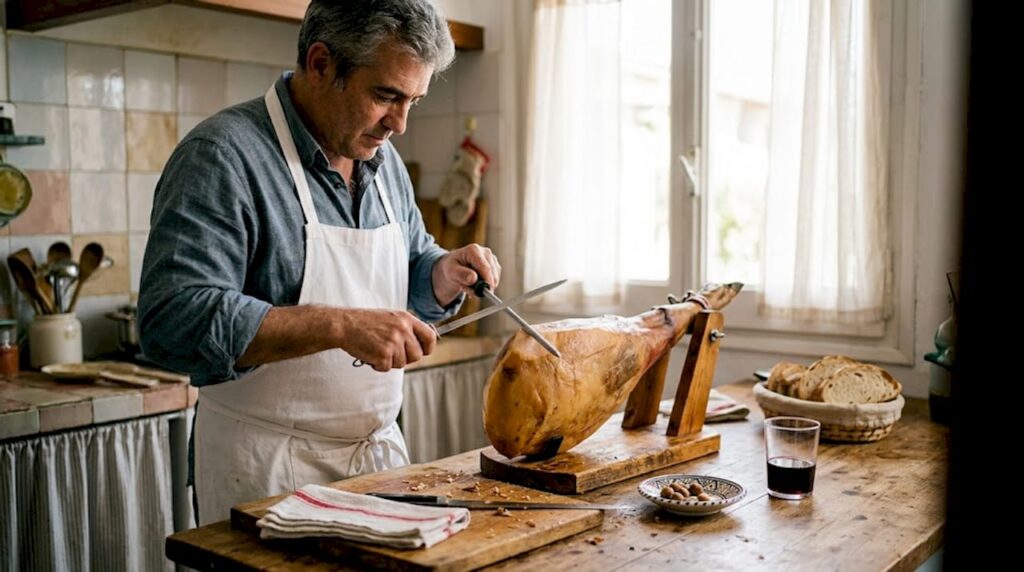
Carving a whole Iberico ham is not simply a practical task. It is a performance, a skill passed down through generations of Spanish carvers known as cortadores. Done well, it elevates the entire experience.
Start with the right equipment:
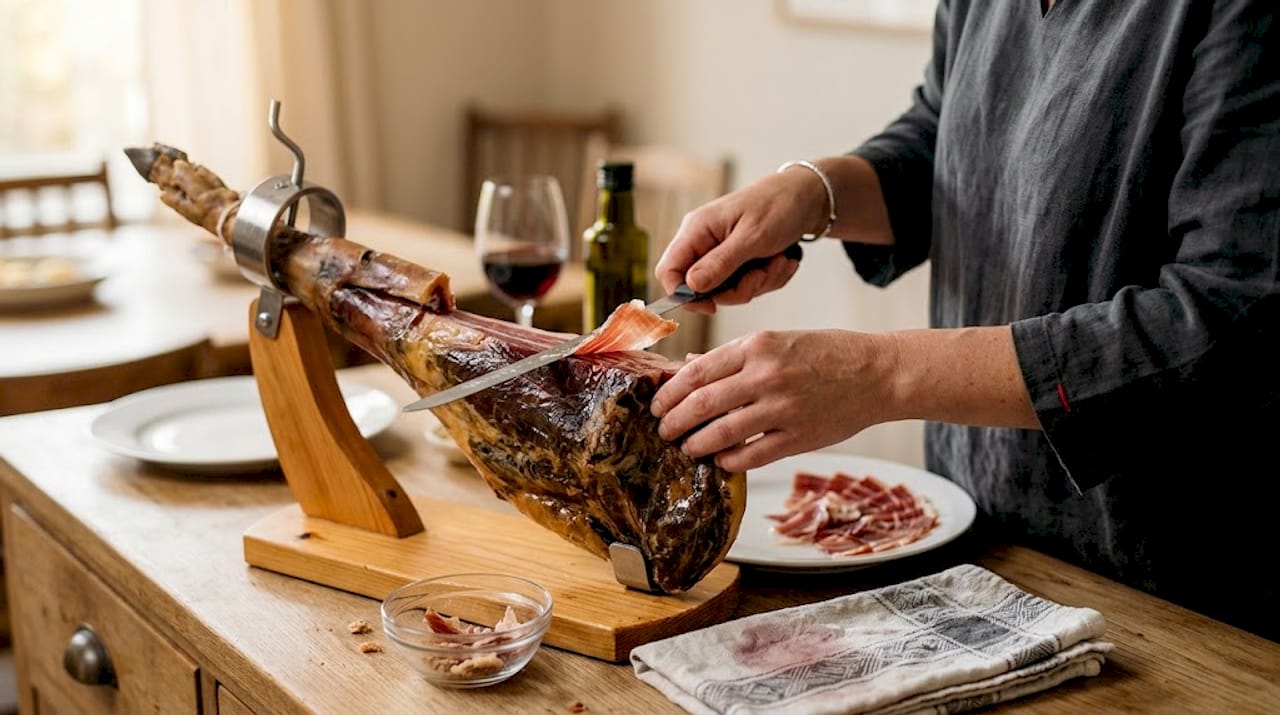
- A sturdy ham stand (jamonero) to hold the leg securely, hoof up for quick consumption or hoof down to begin with the maza.
- A long, flexible ham-slicing knife for producing paper-thin slices from the main zones.
- A short boning knife for working around the bone and cleaning the jarrete.
The step-by-step method, as outlined in the Iberico ham carving guide, is clear: secure the ham in the holder, remove the outer rind and yellowish surface fat to expose the deep red meat beneath, then slice parallel to the bone from the maza in smooth, confident strokes. Each slice should be 1 to 2 mm thin, almost translucent. Rotate the ham to the babilla side once the maza is carved down to the bone.
Common mistakes to avoid:
- Slicing too thick: Thick slices mask the fat’s silky melt and overwhelm the palate.
- Poor knife angle: Angling away from the bone wastes meat and creates uneven portions.
- Carving cold ham: Cold fat is waxy and flavourless. Always allow the ham to rest at room temperature before carving.
- Rushing: A fine Iberico ham deserves patience. Hurried carving produces ragged slices and lost flavour.
For presentation, follow the ham presentation tips from experienced cortadores: arrange slices loosely on a warm plate, never stacked, so each one can breathe and release its aroma.
Pro Tip: Remove the ham from any cool storage at least 30 minutes before carving. Room temperature allows the intramuscular fat to soften, releasing the full spectrum of nutty, sweet, and savoury aromas that define a great Iberico ham.
Tasting and pairing: the gourmet’s experience
Once the ham is carved, the real pleasure begins. Tasting Iberico ham mindfully is a skill, and it rewards those who slow down.
Approach each slice in sequence:
- Look: Note the deep ruby red of the lean meat against the creamy white or ivory fat. Black label bellota ham often shows a characteristic sheen from oleic acid.
- Smell: Bring the slice close before eating. The aroma should be complex, nutty, faintly sweet, with a subtle earthiness from the curing cellar.
- Mouthfeel: Place the slice on the tongue and let it rest for a moment. The fat begins to melt almost immediately at body temperature, coating the palate.
- Aftertaste: A long, lingering finish is the hallmark of quality. Poor ham disappears quickly. Great Iberico ham stays with you.
As confirmed in the Iberico ham tasting guide, slices served at room temperature and as thin as a credit card maximise aroma and allow the fat to perform as intended.
For pairing, keep accompaniments simple and purposeful:
- Drinks: Fino or Manzanilla sherry is the classic match, cutting through the richness. A young Tempranillo or a crisp Cava also works beautifully.
- Bread: Lightly toasted pan de cristal rubbed with ripe tomato and a drop of extra virgin olive oil.
- Sides: A few Marcona almonds, fresh figs in season, or mild Manchego cheese.
Explore further tasting techniques and discover how pairing Iberico ham with the right drinks transforms the experience entirely. The golden rule: less is more. Small portions, eaten slowly, reveal layers that a rushed mouthful never could.
Why the ritual of whole ham matters more than convenience
There is a growing temptation in food culture to optimise everything for speed. Pre-sliced, vacuum-packed, ready to serve. And yes, sliced Iberico ham has its place, particularly for weekday enjoyment. But choosing a whole ham and committing to the ritual is something categorically different.
When you mount a whole leg on a jamonero, select your knife, and begin carving, you are participating in a tradition that predates refrigeration, industrial farming, and food delivery apps. You are doing what Spanish families have done for centuries at Christmas, at weddings, at celebrations that matter.
The ham quality checklist is a useful starting point, but the deeper value is not in ticking boxes. It is in the community that gathers around the ham stand, in the conversation that flows as slices are passed around, in the pride of serving something genuinely exceptional.
Convenience has its virtues. But tradition has something convenience can never replicate: meaning. A whole Iberico ham is not just an ingredient. It is an occasion.
Bring the gourmet Iberico whole ham experience home
Ready to move from reading to carving? At 7 Bellotas, every whole ham is sourced from small-scale, artisanal producers who follow the same time-honoured methods described in this guide. Acorn-fed, naturally cured, and aged for a minimum of 36 months, these are hams worth gathering around.
Whether you are hosting a special occasion or simply investing in the finest Spanish tradition, you can order Iberico ham online directly from Spain to your door. Use the curated guides and expert advice on the site to choose the right Iberico ham for your occasion, your budget, and your palate. The ritual starts the moment you place your order.
Frequently asked questions
What is the difference between whole Iberico ham and regular ham?
Whole Iberico ham is dry-cured, served bone-in, and follows centuries-old Spanish tradition, while most regular hams are wet-cured or pre-cooked and lack the complex flavour, texture, and ritual of Iberico ham.
How much edible ham do you get from a whole leg?
Typically, only 40 to 50% is edible meat, with the remainder being bone, fat, and rind. This is entirely normal for a genuine bone-in, dry-cured whole ham.
What tools do I need to carve a whole ham?
A ham stand, a long flexible ham-slicing knife, and a short boning knife are the essential carving tools for safe, effective, and precise results.
Why is whole ham often served at room temperature and sliced thin?
Room temperature and paper-thin slices maximise aroma, flavour, and texture, allowing the intramuscular fat to melt and infuse every bite with the full depth of the ham’s character.