Many assume all Iberian hams deliver the same intense, salty punch. That’s a costly mistake when selecting premium Spanish cured meats. Guijuelo ham stands apart with its 18-month to 5-year natural curing process at over 1000 meters altitude, producing a delicate, slightly sweet flavor profile that challenges expectations. This guide reveals how geography, pig genetics, and artisanal tradition combine to create one of Spain’s most refined Iberico hams.
Table of Contents
- Introduction To Guijuelo Ham
- Geographical Origin And Microclimate Of Guijuelo
- Pig Breed, Diet, And Raising Conditions
- Traditional Curing And Aging Process
- Sensory Characteristics And Flavor Profile
- Protected Designation Of Origin (Pdo) And Quality Assurance
- Common Misconceptions About Guijuelo Ham
- How To Choose, Serve, And Enjoy Guijuelo Ham
- Experience Authentic Guijuelo Ham Tradition
- Frequently Asked Questions
Key takeaways
| Point | Details |
|---|---|
| Unique curing environment | Guijuelo ham matures 18 months to 5 years in high-altitude microclimates above 1000 meters, developing complex flavors naturally. |
| 100% Iberian heritage | Pigs roam oak forests during montanera season, feeding on acorns that create signature marbled fat and nutty notes. |
| PDO certification guarantee | Protected Designation of Origin status enforces strict geographic boundaries, pig breed standards, and traditional curing methods. |
| Delicate flavor signature | Mild sweetness, balanced saltiness, and tender texture distinguish Guijuelo from more intense regional Iberico varieties. |
| Artisanal production focus | Traditional natural curing without additives preserves authentic Spanish gourmet heritage and ensures premium quality. |
Introduction to Guijuelo ham
Guijuelo ham is an Iberian ham with Protected Designation of Origin (PDO) from southeastern Salamanca province in Spain, encompassing the towns of Guijuelo, Béjar, and Candelario. This designation connects the product to centuries of Spanish gourmet tradition, where small-scale producers perfected curing techniques using natural mountain environments. For US gourmet enthusiasts seeking authentic Iberico products, Guijuelo represents a refined alternative to mass-market options.
The region’s cultural importance extends beyond commercial production. Local families have passed down curing knowledge through generations, maintaining methods that prioritize slow maturation over industrial efficiency. This commitment to tradition resonates with American consumers who value Spanish ham’s uniqueness and heritage in their culinary explorations.
Key characteristics that define Guijuelo ham include:
- Geographic specificity limited to southeastern Salamanca’s high-altitude zones
- Mandatory use of 100% Iberian pigs raised in designated areas
- Natural curing periods extending from 18 months to over 5 years
- Flavor profiles emphasizing delicacy and balance over aggressive saltiness
Understanding these foundational elements helps buyers distinguish genuine Guijuelo ham from generic Iberico products flooding international markets.
Geographical origin and microclimate of Guijuelo
The Guijuelo region sits at altitudes exceeding 1000 meters with cold winters and mild summers that create ideal natural curing conditions. This elevated position in southeastern Salamanca province isn’t coincidental. Producers deliberately exploit the unique atmospheric pressure, humidity fluctuations, and temperature ranges that high-altitude environments provide.
Cold winter air slows enzymatic activity in hanging hams, preventing premature fat oxidation while allowing proteolysis to develop umami compounds gradually. Mild summers then accelerate moisture evaporation without overheating the meat, concentrating flavors without introducing rancidity. The slow natural maturation at this altitude enhances flavor complexity and texture beyond what controlled industrial chambers can replicate.
Natural breezes from surrounding oak and cork forests carry aromatic compounds into drying rooms, subtly influencing the ham’s final character. These forests also regulate regional humidity, creating microclimatic stability that traditional producers depend on. Modern climate-controlled facilities can’t duplicate this terroir effect, making geographic origin essential to authentic Guijuelo production.
Critical environmental factors include:
- Altitude above 1000 meters providing consistent cool temperatures
- Seasonal temperature swings between 5°C winters and 25°C summers
- Forest ecosystems surrounding production areas that moderate humidity
- Natural air currents that circulate without mechanical intervention
This microclimate explains why relocating production to other regions, even within Spain, fails to reproduce Guijuelo’s distinctive qualities. The Spanish ham artisanal heritage is inseparable from specific geographic conditions.
Pig breed, diet, and raising conditions
100% Iberian pigs raised free-range in oak and cork forests form the biological foundation of Guijuelo ham quality. These animals possess genetic traits that differentiate them from commercial white pigs, including enhanced intramuscular fat deposition and slower muscle fiber development. During the montanera season, typically October through March, pigs roam freely consuming up to 10 kilograms of acorns daily along with wild grasses and herbs.
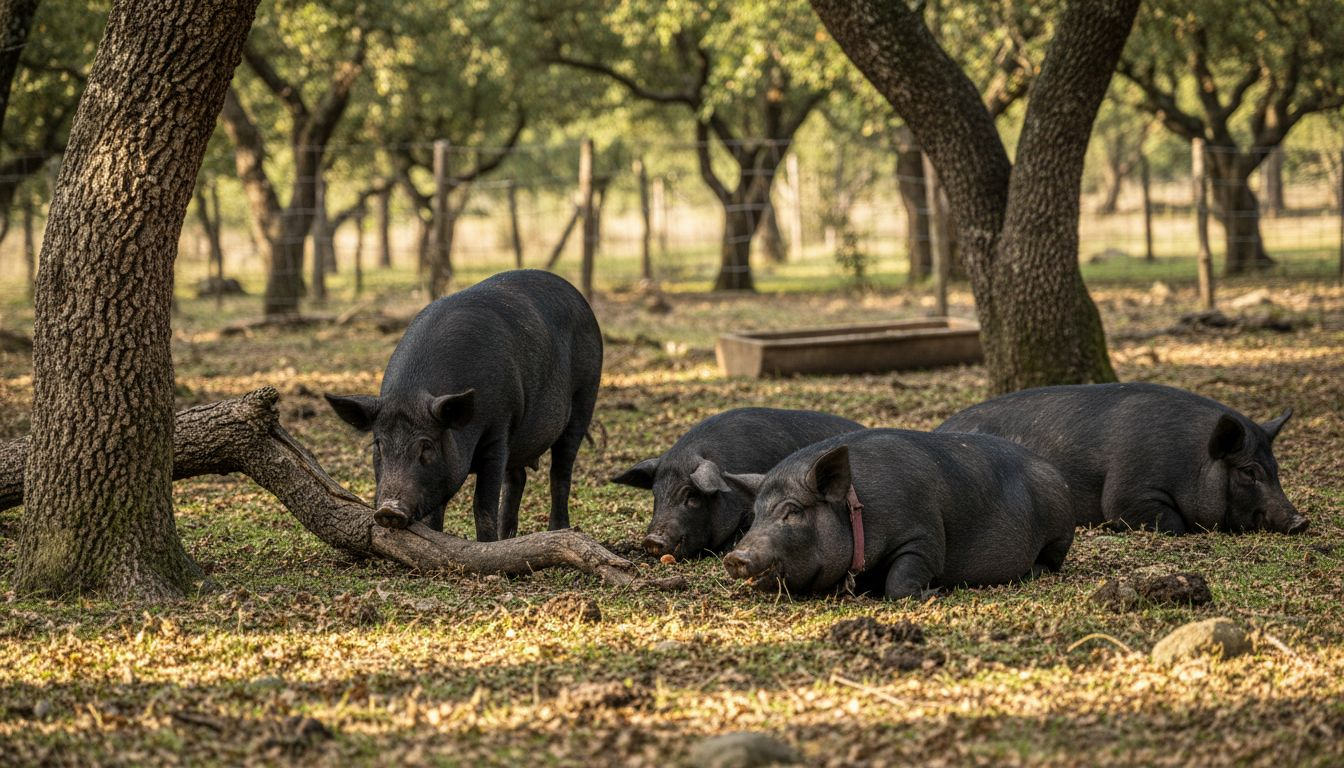
This acorn-rich diet produces healthy fat infiltration with high oleic acid content, the same monounsaturated fat found in olive oil. The resulting marbling melts at lower temperatures than saturated fats, creating the silky mouthfeel Guijuelo ham is known for. Pig genetics contribute to this marbled fat distribution and the delicate meat texture that distinguishes premium Iberico from commodity pork.
Natural rearing conditions promote superior products distinct from mass-market hams in several ways:
- Free-range movement develops lean muscle with complex fiber structures
- Wild forage introduces diverse flavor compounds into fat tissues
- Stress-free environments improve meat pH levels and tenderness
- Extended growth periods allow full physiological maturation before slaughter
The Iberico pig breed and diet impact extends beyond nutrition into cultural identity. These animals represent centuries of selective breeding for traits that complement natural forest ecosystems. Their ability to convert acorns into premium fat makes them irreplaceable in traditional Guijuelo production, even as industrial agriculture offers cheaper alternatives.
Traditional curing and aging process
Guijuelo ham production follows precise artisanal steps refined over generations. First, fresh hind legs undergo thorough salting using coarse sea salt for 1 to 1.5 days per kilogram of weight. Salt penetrates tissues, reducing water activity and creating an inhospitable environment for spoilage bacteria. After salting, producers wash excess salt away and allow hams to rest in cold chambers for 40 to 60 days.
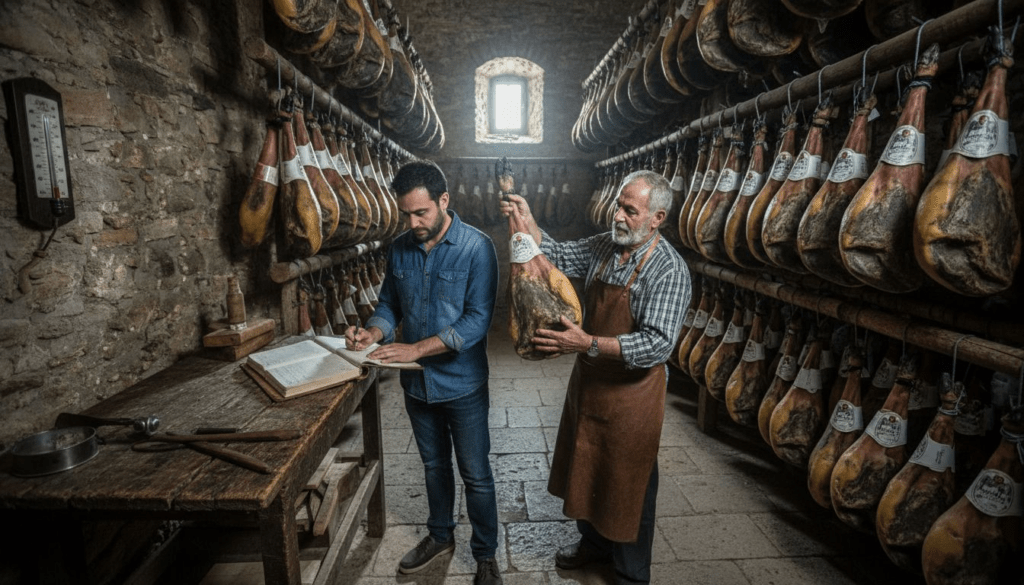
The drying phase begins as hams hang in natural drying rooms with controllable windows. Over 6 to 9 months, slowly rising temperatures promote gradual moisture loss while enzymatic breakdown tenderizes proteins and develops flavor precursors. This stage requires constant monitoring, as excessive heat causes fat rancidity while insufficient warmth halts curing progress. Guijuelo ham cures for a minimum of 18 months, up to 5 years, using natural oak and cork forest environments for final aging.
Aging in natural cellars allows complex biochemical transformations:
- Proteolysis breaks down muscle proteins into savory amino acids
- Lipolysis converts fats into aromatic compounds and flavor esters
- Maillard reactions between amino acids and sugars create nutty notes
- Gradual moisture evaporation concentrates all flavor compounds proportionally
- Extended time allows harsh volatile compounds to dissipate naturally
Traditional methods emphasize natural curing without additives, preserving artisanal heritage that modern accelerated processes compromise. The use of natural forest environments for drying enhances flavor complexity through ambient microbial activity and aromatic compound absorption.
Pro Tip: Longer-aged Guijuelo ham yields richer nutty flavor and softer texture, but costs more due to extended storage and greater weight loss during curing.
Understanding these traditional curing methods helps buyers appreciate why authentic Guijuelo commands premium prices compared to industrially accelerated alternatives.
Sensory characteristics and flavor profile
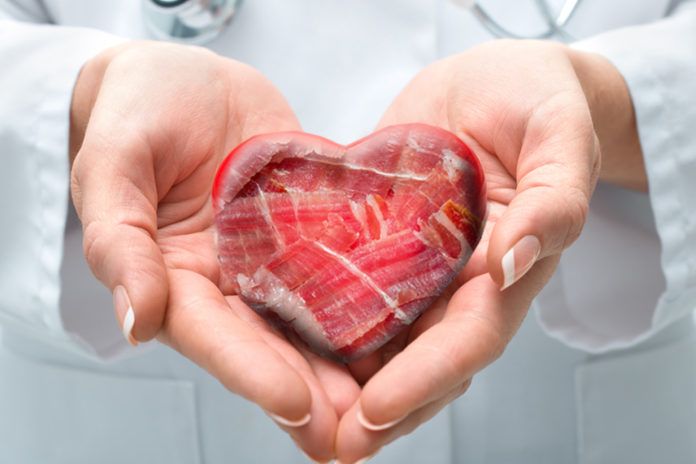
Guijuelo ham presents distinctive visual, taste, aroma, and texture features that identify authentic quality. The meat displays a deep bright red color with fine white marbled fat distributed evenly throughout muscle tissue. This marbling pattern indicates proper acorn feeding and natural curing, as industrial products show irregular fat distribution.
Flavor characteristics include mild, delicate, slightly sweet notes with balanced saltiness that never overwhelms the palate. Unlike more aggressively cured regional varieties, Guijuelo emphasizes subtlety and complexity over intensity. The aroma carries nutty undertones with distinctive acorn and forest notes that reflect both pig diet and natural curing environments.
Texture qualities distinguish premium Guijuelo from inferior products:
- Tender yet firm meat that slices cleanly without crumbling
- Silky fat that melts immediately at body temperature
- Smooth mouthfeel without fibrous or chewy resistance
- Uniform consistency throughout the ham indicating even curing
The following comparison highlights key sensory differences:
| Attribute | Guijuelo Ham | Generic Iberico |
|---|---|---|
| Meat color | Deep bright red | Variable pink to red |
| Salt level | Balanced, mild | Often aggressive |
| Dominant aroma | Nutty, acorn, forest | Generic cured meat |
| Fat texture | Silky, immediate melt | Waxy or firm |
| Flavor complexity | Multi-layered, subtle | One-dimensional |
These sensory characteristics of Guijuelo ham help discerning buyers identify authentic products and avoid mislabeled alternatives. Developing familiarity with these qualities transforms purchasing from guesswork into informed selection.
Protected designation of origin (PDO) and quality assurance
The Protected Designation of Origin framework provides legal guarantees for Guijuelo ham authenticity through enforceable production standards. PDO status means every aspect of production, from pig genetics to final aging, must occur within designated geographic boundaries using approved traditional methods. This certification builds consumer confidence by eliminating ambiguity about product origins.
PDO designation since 1986 enforces strict area, pig breed, diet, and curing requirements that producers must document and regulatory bodies verify. Legal restrictions include mandatory use of 100% Iberian pigs born and raised in approved zones. Geographic production boundaries limit processing to southeastern Salamanca’s high-altitude municipalities where traditional microclimates exist.
Quality controls extend to specific production requirements:
- Minimum 18-month natural curing periods in designated facilities
- Mandatory acorn feeding during montanera season for premium grades
- Prohibition of artificial additives, flavor enhancers, or accelerants
- Regular inspections and audits by certification authorities
- Traceable identification systems linking finished products to source farms
These PDO quality assurance measures differentiate legitimate Guijuelo from counterfeit products exploiting consumer confusion. For US gourmet buyers purchasing internationally, PDO certification provides the only reliable guarantee that products match their premium pricing and marketing claims.
The economic value of PDO protection extends beyond individual purchases. It preserves traditional knowledge, supports rural communities, and maintains genetic diversity in Iberian pig populations. Buyers who prioritize PDO-certified products directly contribute to sustaining artisanal food cultures threatened by industrial consolidation.
Common misconceptions about Guijuelo ham
Several persistent myths about Guijuelo ham create unrealistic expectations and poor purchasing decisions. The most common misconception claims Guijuelo ham is very salty, when in reality Guijuelo ham is not saltier than other Iberian hams; salt levels are balanced to complement sweetness. This confusion often stems from exposure to poorly cured or improperly stored products that concentrate salt through excessive dehydration.
Another widespread belief suggests all Iberian hams taste alike regardless of origin. This ignores how Guijuelo’s unique microclimate and extended curing create distinct flavor profiles emphasizing delicacy over intensity. Regional variations in altitude, humidity, and traditional practices produce measurable differences that trained palates easily detect.
The myth that Guijuelo curing is short and industrial contradicts documented production timelines. Authentic Guijuelo requires 18 months to 5 years of natural maturation, far exceeding industrial processes that artificially accelerate curing to reduce costs. This extended timeline directly contributes to flavor complexity and texture refinement.
Common misunderstandings include:
- Assuming darker meat color indicates superior quality, when color varies naturally with aging
- Believing excessive fat indicates poor quality, when intramuscular marbling signals proper acorn feeding
- Expecting uniform appearance across all hams, when natural production creates individual variation
- Thinking PDO certification is marketing hype rather than legally enforceable quality standards
Pro Tip: Look for PDO labeling and curing duration information on packaging to avoid misleading products claiming Guijuelo origin without certification.
Understanding these differences from other Iberian hams prevents disappointment and ensures purchases align with actual quality rather than marketing claims.
How to choose, serve, and enjoy Guijuelo ham
Identifying authentic Guijuelo ham requires verifying specific markers that counterfeit products can’t legally replicate. Start by confirming PDO label presence on packaging or attached to the ham itself. Official seals called vitolas display certification numbers traceable to regulatory databases. Reputable sellers provide documentation proving geographic origin and production compliance.
Choosing aging duration depends on personal flavor preferences and intended use:
- 18 to 24 months delivers mild, approachable flavor ideal for newcomers to Iberico ham
- 24 to 36 months develops moderate complexity with balanced sweetness and nuttiness
- 36 to 48 months produces rich, layered profiles with pronounced acorn notes
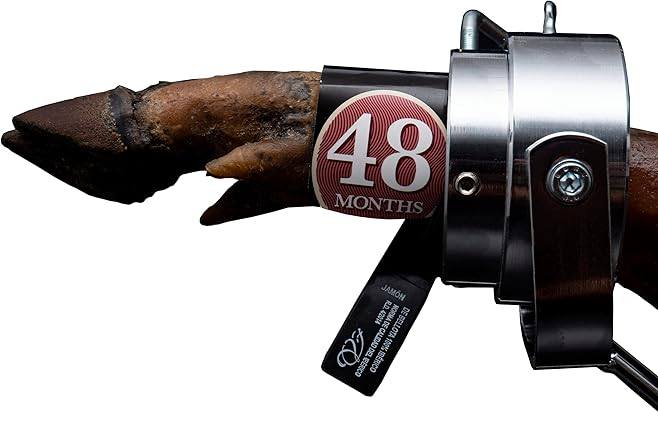
- 48 months and beyond creates intense, complex flavors suited to experienced enthusiasts
Serving techniques significantly impact how Guijuelo ham’s qualities express themselves. Slice paper-thin using a sharp knife at a 45-degree angle to the bone, cutting across muscle grain. Serve at room temperature after removing slices from refrigeration 20 to 30 minutes before eating. Cold temperatures solidify fats, masking texture and suppressing aromatic compounds.
Recommended pairings complement rather than compete with Guijuelo’s delicate profile:
- Light Spanish wines like Albariño or young Rioja that won’t overwhelm subtle flavors
- Crusty bread with mild olive oil for textural contrast
- Fresh figs or melon providing sweet counterpoints to savory notes
- Manchego cheese aged 6 to 12 months for complementary nuttiness
Storage and slicing tips preserve quality after purchase. Wrap cut surfaces in clean cotton cloth, never plastic, to prevent moisture accumulation and mold growth. Store whole hams in cool, dry locations between 15°C and 20°C. Once cut, consume within 3 to 4 weeks for optimal flavor, though properly stored ham remains safe longer.
These practices for selecting authentic Guijuelo ham and following the Iberico ham quality checklist transform passive consumption into active appreciation of artisanal craftsmanship.
Experience authentic Guijuelo ham tradition
Now that you understand what makes Guijuelo ham exceptional, from its high-altitude curing to PDO-protected authenticity, you’re ready to experience these qualities firsthand. At 7 Bellotas, we specialize in premium Iberico ham sourced directly from traditional Spanish producers who maintain the artisanal standards this guide describes. Our selection includes whole hams aged 36 to 64+ months, allowing you to choose the complexity level that matches your palate.
Every product we offer comes with full traceability documentation and PDO certification, ensuring you receive genuine Guijuelo ham rather than mislabeled alternatives. We provide detailed aging information, tasting notes, and serving recommendations so you can maximize your investment in authentic Spanish gourmet tradition. Our vacuum-packed sliced options offer convenient access to premium quality without requiring whole-ham storage.
Whether you’re exploring Iberico ham for the first time or seeking rare extended-aged varieties, our curated collection reflects the same commitment to natural curing and 100% Iberian genetics that defines Guijuelo’s reputation. Browse our selection to discover how altitude, acorns, and artisanal patience create one of Spain’s most refined culinary achievements.
Frequently asked questions
How does Guijuelo ham differ from Serrano ham?
Guijuelo ham comes exclusively from 100% Iberian pigs fed on acorns, while Serrano uses white pigs on commercial feed. Guijuelo requires minimum 18-month curing versus Serrano’s shorter 7 to 12 months.
What does PDO certification guarantee for Guijuelo ham?
PDO certification legally guarantees geographic origin in southeastern Salamanca, mandates 100% Iberian pig genetics, enforces minimum curing periods, and requires natural production without artificial additives or accelerants.
Can I distinguish authentic Guijuelo ham by appearance alone?
Authentic Guijuelo displays deep bright red meat with fine white marbled fat distributed evenly. However, always verify PDO labels and vitolas, as visual inspection alone can’t confirm geographic origin or production compliance.
Why does longer-aged Guijuelo ham cost significantly more?
Extended aging beyond 36 months increases costs through longer storage requirements, greater moisture loss reducing sellable weight, higher risk of production failures, and increased capital tied up in inventory over multiple years.
What temperature should Guijuelo ham reach before serving?
Serve Guijuelo ham at room temperature, approximately 20°C to 22°C, after removing from refrigeration 20 to 30 minutes prior. This allows fats to soften and aromatic compounds to volatilize, revealing full flavor complexity.