Introduction: The 7Bellotas Philosophy
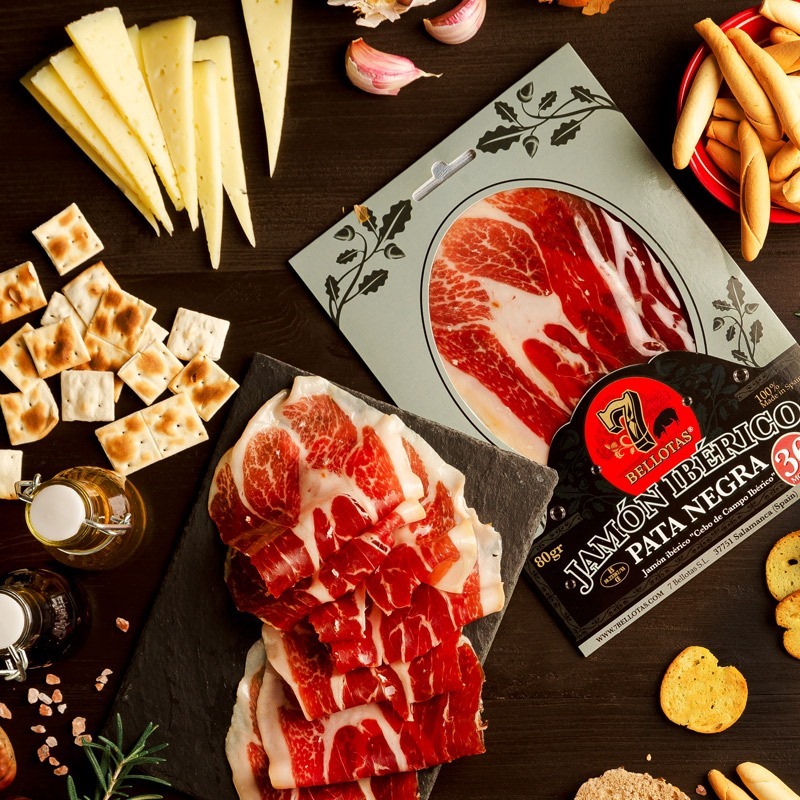
Jamón Ibérico de Bellota—Spain’s legendary acorn-fed ham—isn’t just delicious; it is a marvel of biochemical artistry. Behind its nutty, savory, and melt-in-your-mouth profile lies a fascinating interplay of genetics, diet, environment, and traditional curing methods. But understanding the science of flavor is only half the story. The other half is uncompromising patience.
The industry standard says a jamón is ready at 24 months. We disagree.
When we walk through the curing cellars, we aren’t looking at calendars; we are looking at the meat. We wait for the exact moment the fat turns translucent and the air fills with the deep, sweet aroma of roasted acorns. Sometimes that takes 36 months. Sometimes it takes 64. We don’t select a single piece for 7Bellotas until it tells us it’s ready.
That is the difference between a mass-produced ham, and a masterpiece.
In this guide, we will pull back the curtain on our selection process to explore the true science of flavor. From the ancient genetics of the Iberian pig to the complex enzymatic reactions of a slow, natural cure, discover what makes authentic acorn-fed Jamón Ibérico the ultimate gourmet experience—and why true luxury can never be rushed.
Chapter 1: The Pata Negra Lineage (The Genetics of Marbling)
Before a single acorn is eaten or a grain of sea salt is applied, the foundation of flavor is written in the animal’s DNA. The true 100% Iberian pig—identifiable by its dark skin and signature black hoof (pata negra)—is a direct descendant of the Mediterranean wild boar.
This ancient lineage gives the Iberian pig biological traits that have been entirely bred out of modern, commercial white pigs. For industrial farmers looking for high yields and fast turnarounds, the purebred Iberian pig is highly inefficient. For artisans and curators of flavor, it is the holy grail.
The Secret of Intramuscular Marbling
Commercial pig breeds are genetically engineered to deposit fat externally, in thick layers right under the skin, which is mostly trimmed away. The Iberian pig operates completely differently.
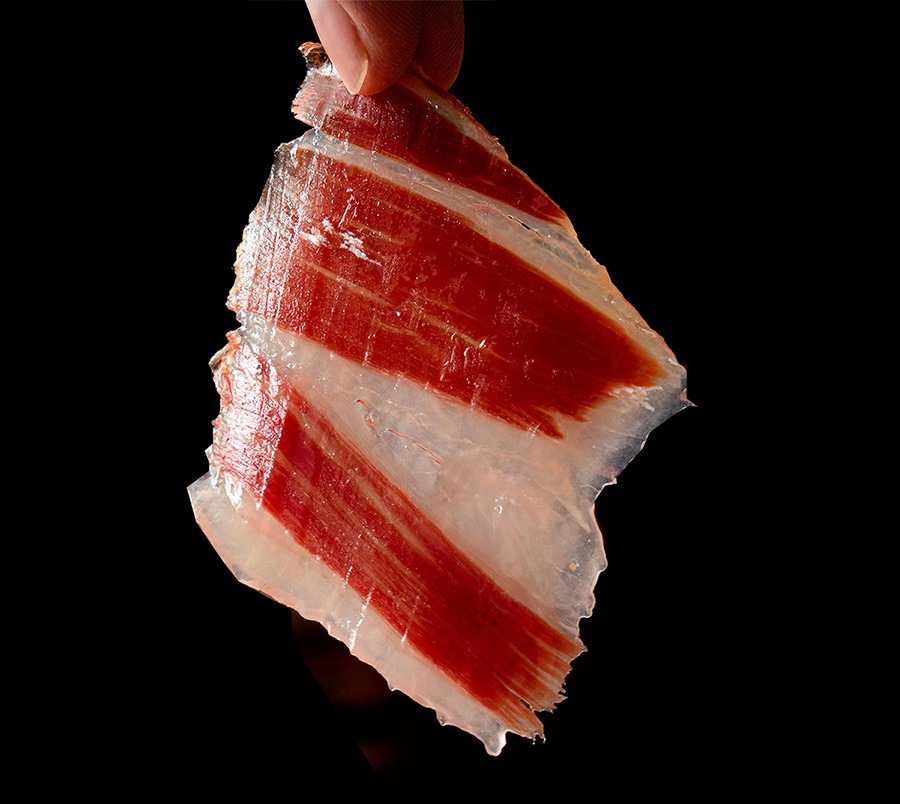
Because of its wild boar ancestry, the Iberico breed possesses a rare genetic predisposition to store fat inside its muscle tissue. This biological quirk creates the prized intramuscular marbling—the delicate white streaks that weave directly through the meat.
This is not just an aesthetic detail; this internal marbling is the vehicle for flavor. It allows the fat to melt slowly on your tongue at body temperature, carrying complex aromatic compounds across the palate and ensuring that every bite is rich, buttery, and remarkably tender.
The Ruby Red Matrix and the Rule of Time
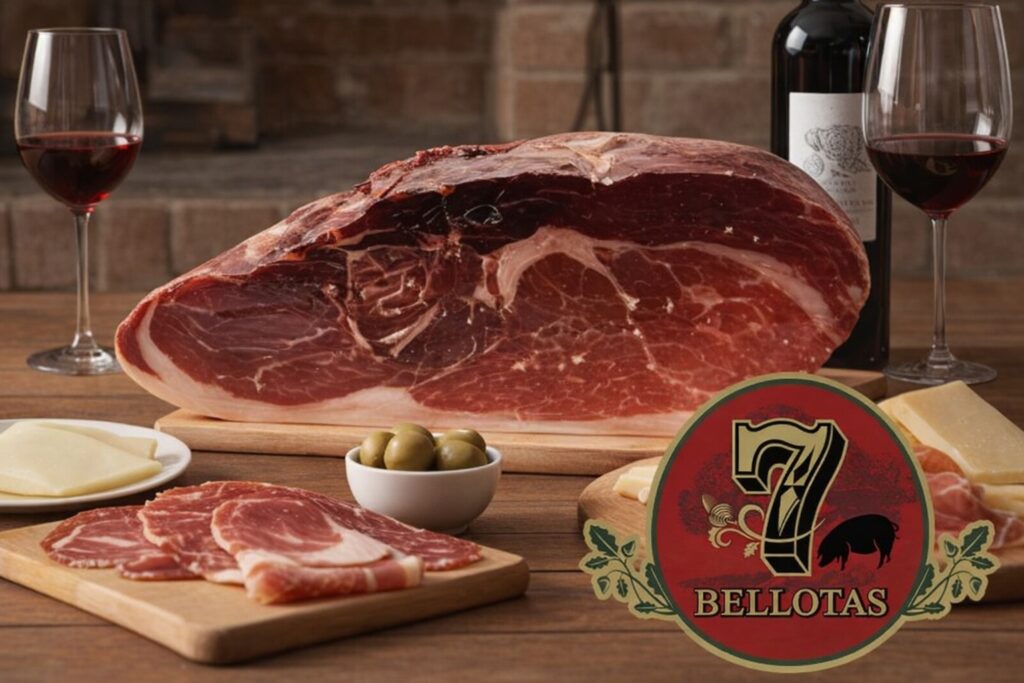
If you look at an industrial pork chop, it is pale pink. If you look at a slice of 7Bellotas 100% Iberico Bellota ham, it is a deep, vibrant ruby red.
This striking color comes from myoglobin, a protein that stores oxygen in the muscle tissue. Because our selected pigs are raised entirely free-range, walking kilometers every day across the varied terrain of the dehesa, their active muscles naturally develop exceptionally high myoglobin levels.
But that color also represents the luxury of time. An industrial farm pig reaches slaughter weight in a rushed five to six months. A true Iberian pig requires a minimum of 14 to 18 months of slow, natural growth. This extended biological timeline allows complex flavor compounds to accumulate naturally within the muscle fibers long before the curing cellar is even involved.
The Curator’s Note: Rushing biology compromises chemistry. If a pig hasn’t lived long enough to develop this deep red, myoglobin-rich structure, it won’t matter how many months you cure the ham—the depth of flavor simply won’t be there. That is why we demand absolute breed purity before we even consider a leg for the 7Bellotas collection.
Chapter 2: The Montanera Miracle (How Acorns Alter the Chemistry)
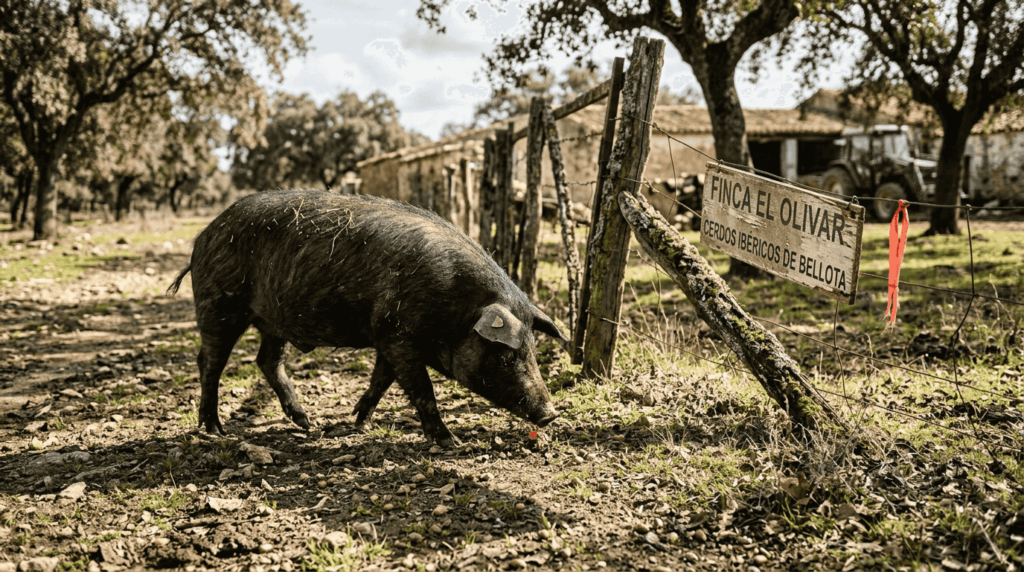
Genetics give the Iberian pig its canvas, but it is the environment that paints the masterpiece. Between October and March, a biological transformation occurs in the oak forests of southwestern Spain. We call this season the montanera.
During these crucial months, the holm and cork oaks drop their fruit across the dehesa—a sprawling, ancient ecosystem of open woodlands and wild pastures that cannot be replicated anywhere else on earth. Here, the pigs are not merely fed; they forage.
The 12-Kilogram Diet
To achieve the official “Bellota” (acorn-fed) designation, an Iberian pig must roam freely, with regulations strictly mandating one to two hectares of land per animal. This ensures they must walk miles every day, building the lean muscle that will later hold the marbling.
But the true miracle lies in their appetite. During the peak of the montanera, a single Iberian pig will consume 10 to 12 kilograms of acorns every single day, alongside wild herbs and grasses. Over three to four months, they will gain 50 to 60 kilograms of weight. This extraordinary intake fundamentally rewrites the animal’s lipid profile, shifting the fat from ordinary pork fat to something biochemically unique.
“The Olive Tree on Four Legs”
If you have ever wondered why true Bellota ham melts the moment it touches your tongue, the answer is Oleic Acid.
Acorns are incredibly rich in this heart-healthy, monounsaturated fat—the exact same lipid that gives olive oil its liquid, luxurious consistency. After a full montanera season, over 55% of the pig’s fat is composed of oleic acid. This high concentration dramatically lowers the melting point of the fat. At room temperature, it becomes soft, translucent, and incredibly effective at coating the palate with deep, hazelnut undertones.
But the acorns provide one more critical ingredient: Antioxidants.
Acorns are packed with natural Vitamin E and polyphenols. As the pigs consume them, these compounds transfer directly into the muscle tissue. This is a vital piece of the flavor science. These antioxidants act as a natural preservative, protecting the fat from oxidative damage (rancidity) during the years it will spend hanging in the cellar.
The Curator’s Note: Industrial hams require synthetic preservatives because their grain-fed fat would spoil during a long cure. True Bellota ham protects itself. The natural Vitamin E from the acorns is precisely what allows us at 7Bellotas to age our Royal Selection for 64 months. The acorn diet doesn’t just create the flavor—it makes the art of time possible.
Chapter 3: The Art of Time (Slow Curing & Biochemical Magic)
By the time the montanera ends, the Iberian pig has done its part. Its genetics have provided the marbling, and the acorns have packed that fat with high-oleic acids and natural antioxidants. Now, the artisan takes over.
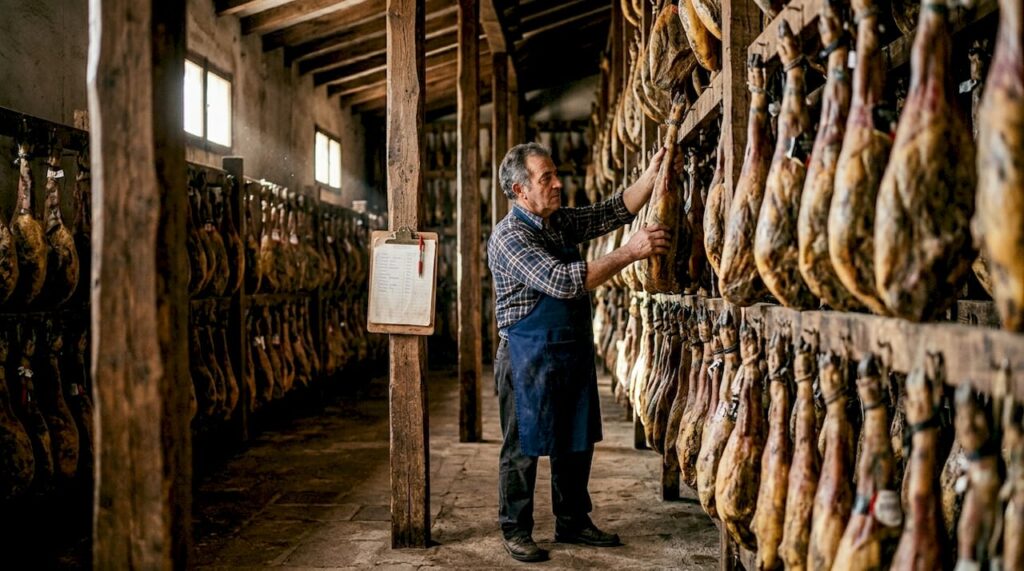
But true artisanship in the world of Jamón Ibérico is largely an exercise in patience. We cannot force the flavor; we can only create the perfect environment for biochemistry to do its work. This transformation from raw meat to a culinary masterpiece requires precise stages and an extraordinary amount of time.
The Foundation: Artisanal Sea Salting
Every luxury ham begins under a mound of coarse sea salt. This is not a quick preservation shortcut—it is the catalyst for everything that follows.
The hams are buried in salt for approximately one day per kilogram of weight. The salt gently draws out excess moisture while creating an environment where beneficial enzymatic processes can safely begin. Once this precise window closes, the hams are washed meticulously. Rushing this stage or leaving the salt on too long results in the harsh, overly salty profile common in industrial hams. A genuine 7Bellotas ham is characterized by a sweet, complex finish, which is only possible because we halt the salting process at the exact right moment.
The Biochemical Magic: Proteolysis and Lipolysis
As the hams are moved to the natural drying rooms (secaderos) and eventually the deep cellars (bodegas), they face the changing seasons of the Spanish mountains. As the temperature rises and falls over the years, two profound chemical reactions occur:
1. Proteolysis (The Creation of Umami)
Over months of slow aging, natural enzymes begin breaking down the meat’s long protein chains into individual amino acids. The most important of these is glutamic acid. This is the natural chemical compound responsible for umami—the deep, savory, mouth-watering “fifth taste.” This process also creates the tiny, chalky white specks you occasionally see in aged ham (tyrosine crystals). These crystals are not a defect; they are the ultimate proof of a long, slow, and masterful proteolysis.
2. Lipolysis (The Aromatic Awakening)
While the proteins break down, the acorn-rich fats undergo their own transformation. Lipolysis breaks down the complex lipids into hundreds of volatile compounds, including aldehydes, ketones, and esters. This is what gives a fully aged Jamón Ibérico de Bellota its astonishing aromatic complexity—producing scent notes that range from roasted hazelnuts and wild herbs to aged cheese and floral sweetness.
The 64-Month Wait
In industrial farming, a ham is pushed out the door in 12 to 24 months using artificial climate control to speed up moisture loss.
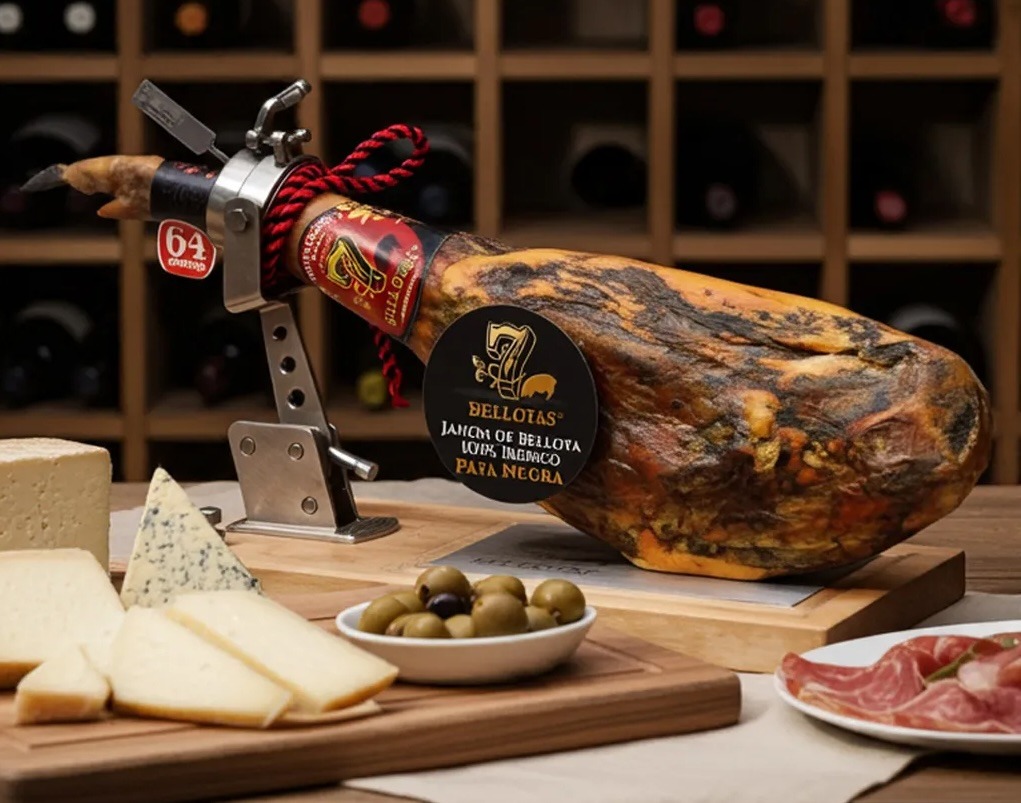
The Curator’s Note: You cannot rush proteolysis, and you cannot fake lipolysis. When we walk through the bodegas, we tap the hams, smell the fat with a bone needle (la cala), and wait for the precise moment the fat yields to body temperature and the aromas peak. A 64-month Royal Selection ham costs more because it represents over five years of dedicated biochemical curation.
Chapter 4: The Proof of Luxury (Decoding the Labels)
Because true Jamón Ibérico de Bellota commands a premium price, the market is unfortunately crowded with misleading marketing. Terms like “premium,” “artisanal,” or even “Pata Negra” are often thrown around by industrial producers to sell inferior, grain-fed meat.
To combat this, the Spanish government introduced a strict, legally mandated, color-coded tagging system. These plastic tags (bridas) are affixed to the pig’s ankle at the slaughterhouse and must remain on the ham throughout the entire curing process. They are the ultimate proof of traceability—verifying both the pig’s genetic purity and exactly what it ate.
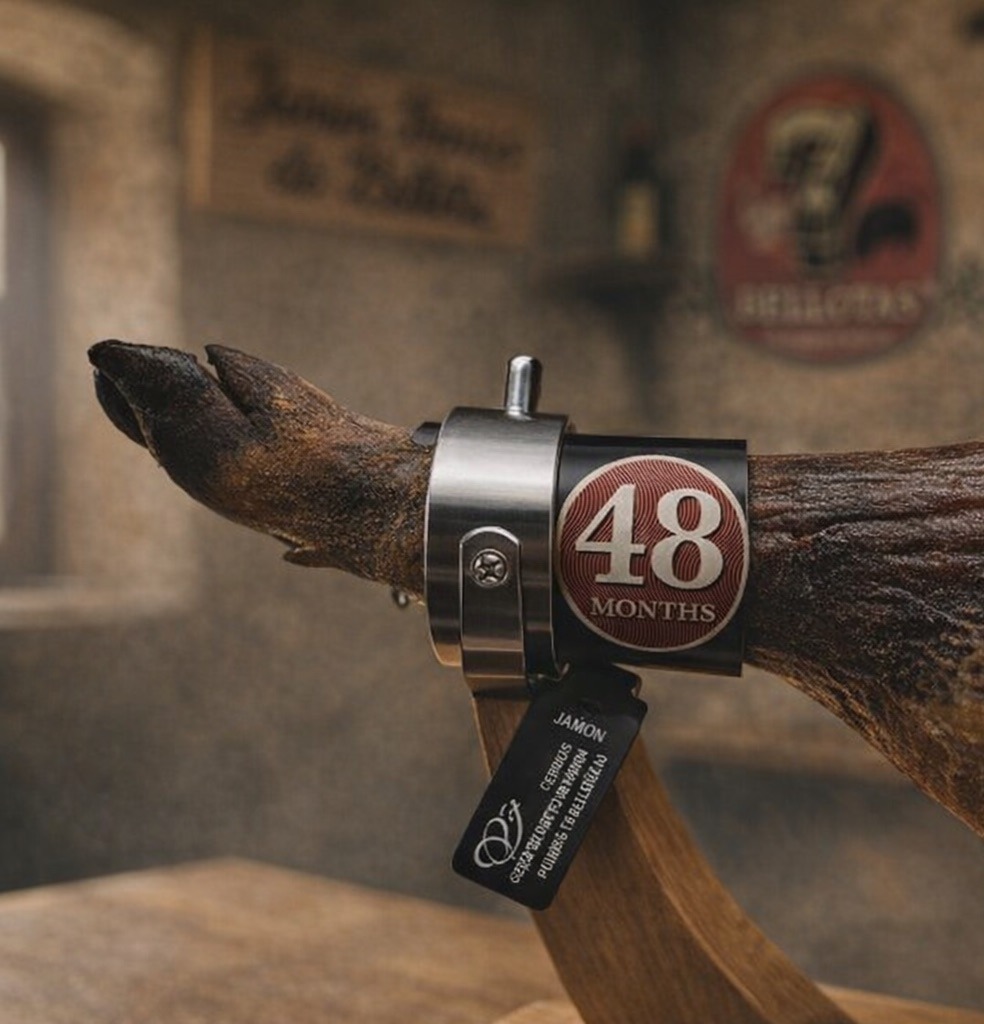
As curators, this is the first thing we look at. Here is exactly what each color means:
The Official Spanish Grading System
| Label Color | Breed Purity | Diet & Lifestyle | The Resulting Quality |
| Black Label (Bellota) | 100% Purebred Iberico | Free-range, 100% acorn diet (Montanera) | The absolute pinnacle. Deep ruby meat, massive oleic acid content, melting fat. This is the only standard 7Bellotas accepts for our premium selections. |
| Red Label (Bellota) | 50% – 75% Iberico Crossbreed | Free-range, 100% acorn diet (Montanera) | Premium quality and excellent flavor from the acorns, but lacks the intense intramuscular marbling of a genetically pure pig. |
| Green Label (Cebo de Campo) | 50% – 100% Iberico | Free-range, but fed grain and pasture (No acorns) | Good texture from the exercise, but completely missing the nutty sweetness and melting point provided by the oleic acid. |
| White Label (Cebo) | Commercial Crossbreed | Intensively farmed (confined), grain-fed only | The mass-market standard. Acceptable for everyday sandwiches, but lacks the biochemical complexity to be considered luxury. |
The Denomination of Origin (DOP)
Beyond the Black Label, the highest echelon of Jamón Ibérico is further protected by Denomination of Origin (DOP) certifications. DOPs like Jamón de Huelva or Dehesa de Extremadura mean that independent government inspectors have verified every single stage of production—from the specific oak trees the pigs foraged under, to the exact temperature of the curing cellars.
The Curator’s Note: We frequently see customers confused about why two hams with the exact same weight have vastly different prices. The label is the answer. A White Label ham takes months to produce on cheap grain. A Black Label ham takes a minimum of four years, acres of wild oak forest, and tons of fresh acorns. We reject anything below this standard because the chemistry simply doesn’t lie: if it didn’t eat the acorns, it won’t have the flavor.
Chapter 5: How to Taste Like a Connoisseur
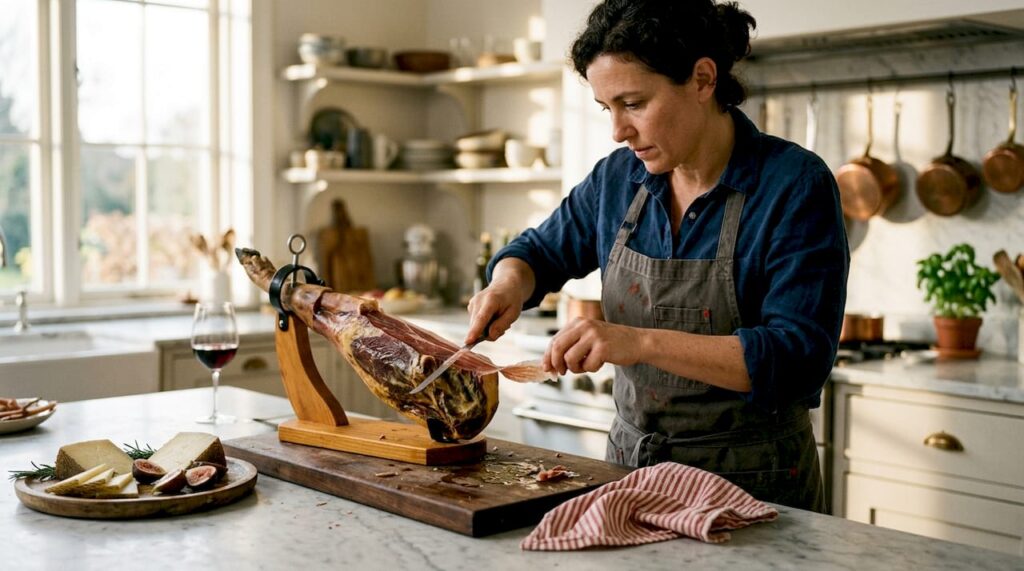
Understanding the science of the montanera and the cellar is rewarding, but the ultimate proof of this biochemical journey happens on the palate. However, even the finest 64-month Royal Selection can be muted if handled improperly in its final moments.
To taste like a master curator, you must respect the chemistry of the meat one last time.
- The Golden Rule of Temperature: Never serve Jamón Ibérico cold. If you take vacuum-sealed slices from the refrigerator, submerge the unopened package in warm tap water for three minutes before opening. The meat must be consumed at a warm room temperature (around 75°F or 24°C). At this precise temperature, the oleic acid reaches its melting point, and the fat will begin to sweat and turn glassy.
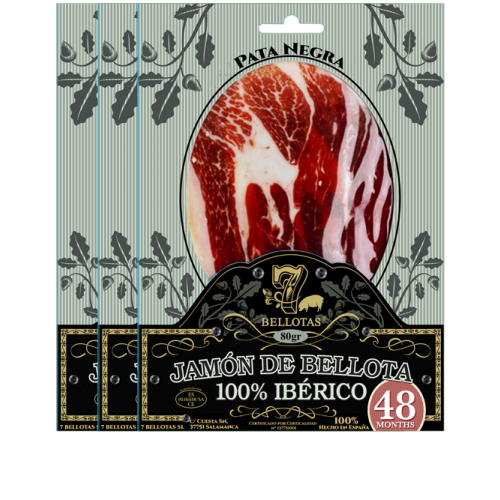
- The Visual Inspection: Hold a slice up to the light. You should see the intricate webbing of the intramuscular marbling. The fat should not look stark white and solid; it should look semi-translucent, almost melting onto your fingers.
- The Tasting Ritual: Do not immediately chew and swallow. Place the slice on your tongue, pressing it gently against the roof of your mouth. Allow your body temperature to melt the fat. You will first experience the savory burst of salt and umami (glutamic acid), followed shortly by the sweet, nutty, roasted hazelnut notes of the acorns. The finish should linger on your palate long after the bite is gone.
The Curator’s Desk: Frequently Asked Questions
When we speak with clients who are experiencing true, artisanal Jamón Ibérico for the first time, these are the questions we hear most often in the cellar:
What are the tiny white, chalky dots in the meat? Are they salt?
They are not salt, and they are not a defect. Those small, white specks are tyrosine crystals. As we discussed in Chapter 3, they are formed by amino acids clumping together during a very long, slow proteolysis (the breakdown of proteins). For a connoisseur, spotting these crystals is a moment of joy—they are the absolute guarantee of an unhurried, masterful, multi-year cure.
The outside fat on my whole leg looks yellow. Is it safe?
Yes, but you should not eat it. Because we do not use artificial waxes or synthetic preservatives, the outer layer of fat naturally oxidizes and turns yellow as it protects the precious meat inside over the course of 36 to 64 months. Always carve away this bitter yellow fat until you reach the pure, sweet, white or pink fat underneath.
How long does a whole leg last once I cut into it?
If you follow our traditional preservation techniques—covering the exposed meat with the white fat you trimmed away, followed by a breathable cotton cloth, and keeping it in a cool, dry place—a bone-in leg will retain its optimal flavor for about 30 to 40 days after the first cut.
Ready to taste the science of the Dehesa for yourself?
Experience our 100% Acorn-Fed Jamón Ibérico, where ancient genetics and the wild oak diet meet absolute perfection. We don’t sell calendars; we sell masterpieces.