Many gourmet enthusiasts have savoured Spanish cured meats, yet few truly grasp what elevates salchichon iberico above ordinary sausages. This prized delicacy represents centuries of tradition, combining the unique genetics of Iberian pigs with acorn-rich diets and time-honoured curing techniques. Understanding salchichon iberico means appreciating how geography, breed, and craftsmanship converge to create extraordinary flavour. This guide reveals the origins, production secrets, authenticity markers, and tasting rituals that distinguish genuine salchichon iberico from industrial imitations, empowering you to select and enjoy this Spanish treasure with confidence.
Table of Contents
- Origins And Traditional Production Of Salchichon Iberico
- What Makes Iberico Pigs And Their Diet Special For Salchichon
- Identifying Authentic Salchichon Iberico: Labels, Quality Markers And Curing Nuances
- Enjoying And Pairing Salchichon Iberico For A Gourmet Experience
- Explore Authentic Iberico Products At 7 Bellotas
Key takeaways
| Point | Details |
|---|---|
| Unique breed and diet | Salchichon iberico comes from acorn-fed Iberian pigs raised in dehesa forests, creating distinctive marbled fat and nutty flavour. |
| Traditional curing | Natural curing in specific microclimates over 60-120 days develops complex aromas without artificial additives. |
| Authenticity labels | DOP Guijuelo and 100% Iberian bellota certifications guarantee geographical origin and premium quality standards. |
| Flavour profile | Expect earthy, nutty notes with subtle spice from black pepper and nutmeg, not the paprika heat of chorizo. |
| Gourmet pairing | Serve at room temperature with Spanish wines and Manchego cheese to appreciate layered textures and aromas. |
Origins and traditional production of salchichon iberico
Salchichon iberico emerges from the southwestern regions of Spain, particularly the dehesa ecosystems of Extremadura and Salamanca. These ancient oak forests provide the foundation for raising Iberian pigs, whose meat becomes the basis for this exceptional cured sausage. The dehesa landscape shapes not only the pigs’ diet but also the entire production philosophy, where traditional methods have remained largely unchanged for generations.
The production journey begins with selecting meat from Iberian pigs that have completed their montanera season, feeding extensively on acorns. Artisans mince the pork, incorporating natural spices like black pepper, nutmeg, and sea salt, then stuff the mixture into natural casings. No artificial preservatives or flavour enhancers interrupt the authentic process. This commitment to purity distinguishes genuine salchichon iberico from mass-produced alternatives.
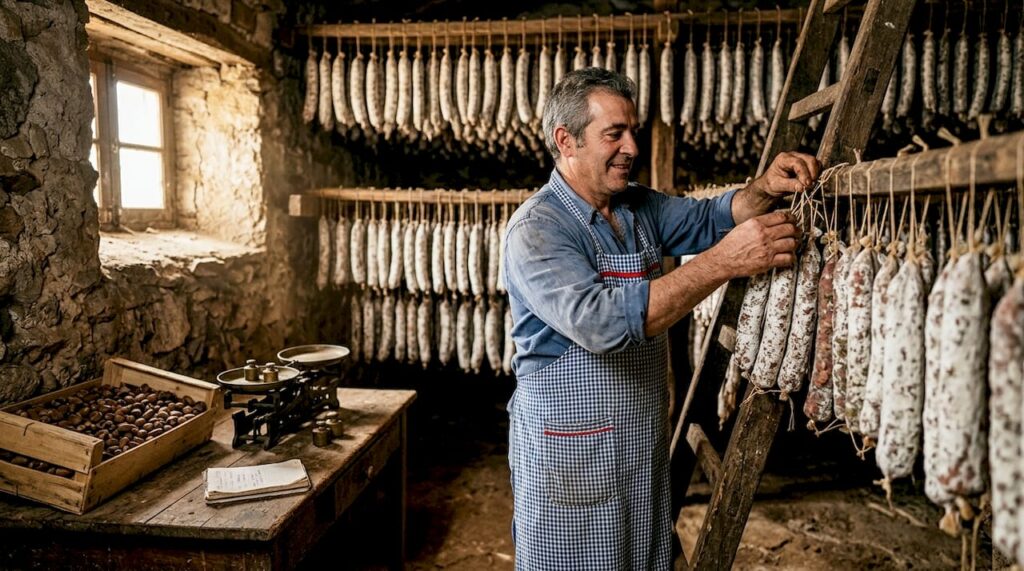
Curing takes place in specific microclimates that contribute distinctive characteristics. Regional winds and microclimates influence salchichon curing, particularly in mountain areas like Béjar, where temperature fluctuations and humidity levels create ideal conditions. Natural moulds form on the casing during this period, acting as protective barriers whilst enhancing flavour complexity. These moulds are not defects but rather hallmarks of traditional production.
The curing duration varies from 60 to 120 days or longer, depending on the sausage diameter and regional traditions. During this time, enzymatic processes break down proteins and fats, developing the characteristic texture and aroma profile. Artisans monitor each batch carefully, adjusting conditions as needed to ensure optimal results. This hands-on approach reflects the craftsmanship that defines authentic salchichon iberico heritage.
Traditional producers maintain small-scale operations, often family-run businesses that have perfected their techniques over decades. They source pigs from trusted local farms, ensuring traceability and quality at every stage. This localised production model preserves regional variations, where each area’s unique climate and customs contribute subtle flavour differences. Understanding these traditional salchichon production methods helps you appreciate why authentic salchichon iberico commands premium prices and devoted followings amongst connoisseurs.
“The dehesa ecosystem creates a symbiotic relationship between land, trees, and livestock, resulting in products that cannot be replicated elsewhere.”
Key production elements include:
- Natural casings from Iberian pigs
- Coarse sea salt for preservation
- Black pepper and nutmeg for subtle spice
- Controlled humidity between 70-85%
- Temperature fluctuations promoting proper curing
What makes Iberico pigs and their diet special for salchichon
Iberian pigs possess unique genetic traits that set them apart from commercial breeds. Their ability to infiltrate fat throughout muscle tissue creates the marbling that gives salchichon its melt-in-mouth texture. This biological characteristic, combined with their slower growth rates, allows for superior flavour development that industrial breeds simply cannot match. The iberico pigs diet and flavour connection represents one of gastronomy’s most remarkable examples of terroir.
Acorn-fed Iberian pigs in dehesa yield marbled fat for melt-in-mouth texture and nutty/earthy notes. The montanera season, typically running from October through February, sees pigs roaming freely through oak forests, consuming up to 10 kilograms of acorns daily. These acorns, rich in oleic acid, transform the pigs’ fat composition, making it healthier and more flavourful than fat from grain-fed animals.
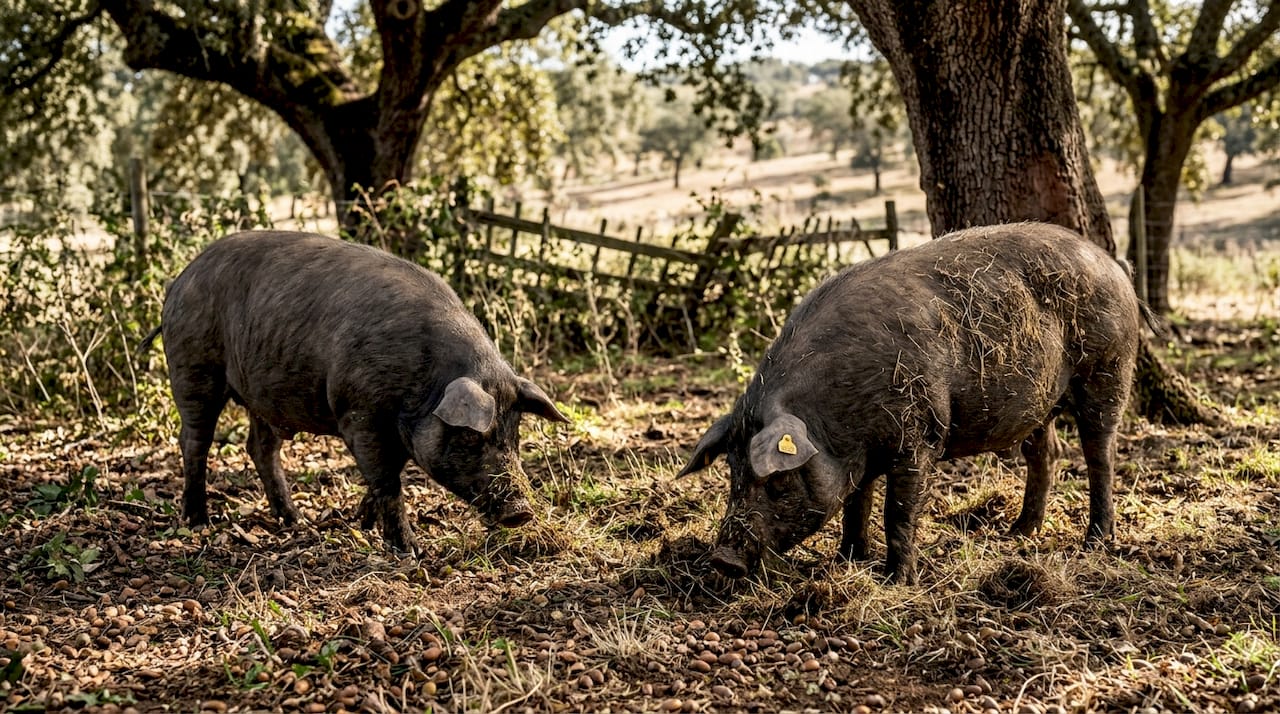
The double montanera system, practised by premium producers, extends this feeding period across two seasons. Pigs experience an initial montanera, followed by a controlled diet phase, then return to the dehesa for a second acorn-feeding cycle. This extended natural diet period enhances fat quality even further, producing meat with exceptional flavour complexity. Understanding these iberico pig farming differences helps explain price variations amongst salchichon products.
Beyond acorns, the dehesa provides diverse forage including grasses, herbs, and roots. This varied diet contributes subtle flavour nuances that change with seasons and specific forest compositions. Pigs raised in Extremadura’s dehesas may develop slightly different taste profiles compared to those from Salamanca, reflecting the unique botanical makeup of each region. These variations add to salchichon iberico’s appeal amongst discerning consumers.
The exercise these pigs receive whilst foraging also impacts meat quality. Free-range movement develops muscle structure differently than confined raising, resulting in firmer texture and more concentrated flavour. The stress-free environment contributes to better meat quality overall, as cortisol levels remain low throughout the pigs’ lives. This holistic approach to animal husbandry produces superior raw materials for salchichon production.
Pro Tip: When selecting salchichon iberico, ask about the pigs’ montanera duration and whether they completed a double feeding cycle, as these factors directly impact flavour intensity and fat quality.
Key dietary factors include:
- Acorns providing oleic acid for healthy fat
- Natural exercise developing muscle texture
- Diverse forage adding flavour complexity
- Stress-free environment improving meat quality
- Seasonal variations creating unique batches
Identifying authentic salchichon iberico: labels, quality markers and curing nuances
Navigating the salchichon market requires understanding certification systems that guarantee authenticity. The DOP Guijuelo designation protects salchichon produced in specific municipalities of Salamanca province, ensuring adherence to strict quality standards. This geographical indication guarantees that pigs were raised, slaughtered, and processed within designated areas using traditional methods. Seek Guijuelo DOP, 100% Iberian bellota labels, natural casings, no additives to identify premium salchichon.
The 100% Iberian bellota label represents the pinnacle of quality, indicating pigs of pure Iberian lineage that completed their entire montanera feeding on acorns. This certification involves rigorous inspections and DNA testing to verify breed purity. Products bearing this label command premium prices but deliver unmatched flavour and texture. Understanding the guijuelo ham label significance helps you appreciate similar quality markers on salchichon.
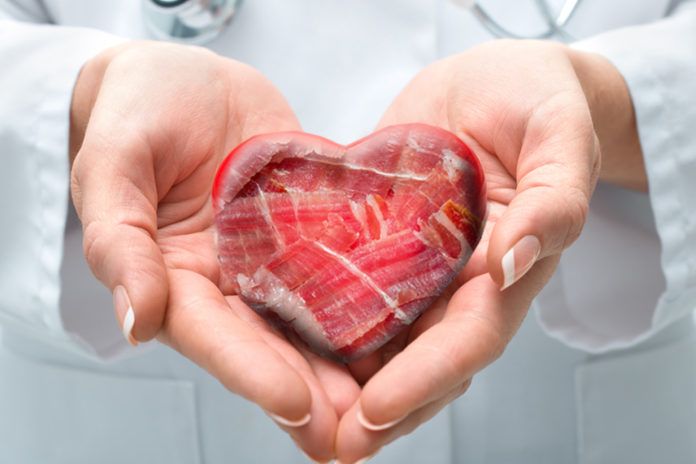
Visual inspection reveals much about salchichon quality. Authentic products display visible white fat marbling throughout the red meat, creating an attractive mosaic pattern. The casing should appear slightly wrinkled with natural mould coverage, typically white or greyish. Avoid products with uniform, shiny casings or those lacking visible fat, as these indicate industrial production methods. The selecting authentic iberico ham principles apply equally to salchichon selection.
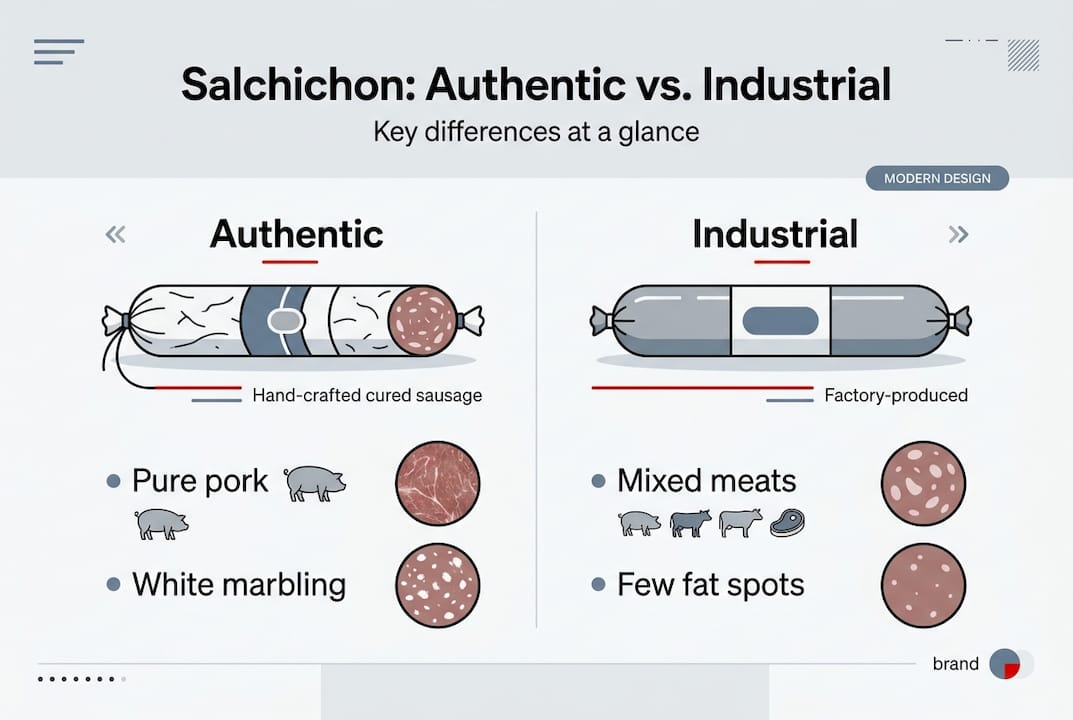
Ingredient lists provide crucial authenticity clues. Traditional salchichon contains only pork, salt, black pepper, nutmeg, and natural casings. Any mention of preservatives, artificial flavourings, or colour enhancers signals industrial production. Natural casings, typically from pig intestines, allow proper air circulation during curing and contribute to flavour development. Synthetic casings prevent this beneficial exchange and often indicate shortcuts in production.
| Feature | Authentic Salchichon Iberico | Industrial Salchichon |
|---|---|---|
| Fat content | Visible marbling throughout | Minimal or uniform fat |
| Casing | Natural with protective mould | Synthetic or overly clean |
| Ingredients | Pork, salt, pepper, nutmeg only | Contains preservatives, additives |
| Texture | Firm yet yielding | Rubbery or overly soft |
| Aroma | Complex, nutty, earthy | One-dimensional, artificial |
| Price | Premium reflecting quality | Significantly cheaper |
The iberico ham quality checklist offers a systematic approach to evaluating cured meats that works equally well for salchichon. Check for proper labelling, verify certifications, examine physical appearance, and assess ingredient purity. Reputable retailers provide detailed product information, including curing duration, pig diet, and regional origin.
Pro Tip: Natural mould on the casing is a positive sign, not a defect, indicating traditional curing methods and proper environmental conditions during maturation.
Authenticity markers to verify:
- DOP Guijuelo or similar geographical certifications
- 100% Iberian bellota designation
- Natural casings with protective mould
- Visible fat marbling in cross-section
- Minimal ingredient list without additives
- Premium pricing reflecting production costs
Enjoying and pairing salchichon iberico for a gourmet experience
Tasting salchichon iberico properly reveals the layers of flavour that slow curing enhances complexity without overpowering spices, offering nuanced tasting profiles. The initial bite delivers nutty sweetness from acorn-fed fat, followed by earthy undertones and subtle spice from black pepper and nutmeg. Unlike chorizo’s paprika heat, salchichon offers refined complexity that unfolds gradually. Temperature plays a crucial role, as serving too cold masks delicate flavours whilst proper room temperature allows fat to soften, releasing aromatic compounds.
Wine pairings enhance the salchichon experience significantly. Spanish Rioja, with its balanced tannins and fruit notes, complements the sausage’s richness without overwhelming subtle flavours. Alternatively, crisp Albariño from Galicia provides refreshing contrast, cleansing the palate between bites. Sherry, particularly Fino or Manzanilla styles, offers traditional Spanish pairing that highlights both the wine’s complexity and the salchichon’s nuanced character.
Cheese combinations create harmonious flavour bridges. Manchego, Spain’s iconic sheep’s milk cheese, shares similar terroir characteristics with salchichon iberico, making them natural companions. The cheese’s nutty, slightly tangy profile balances the sausage’s richness. Aged Manchego, with crystalline texture and concentrated flavour, pairs exceptionally well with premium salchichon. Consider also Torta del Casar, a creamy sheep’s cheese that provides luxurious textural contrast.
To maximise your tasting experience, follow this ritual:
- Remove salchichon from refrigeration 30 minutes before serving, allowing it to reach room temperature.
- Slice thinly, about 3 millimetres thick, using a sharp knife to preserve the delicate texture.
- Arrange slices on a wooden board, allowing them to breathe and release aromas for 5 minutes.
- Taste a slice alone first, noting the progression of flavours from initial sweetness to lingering spice.
- Pair with chosen accompaniments, alternating between salchichon, cheese, and wine to appreciate each element.
- Finish with bread or crackers only if needed, as they can mask subtle flavours.
Storage and handling significantly impact flavour preservation. Keep whole salchichon in a cool, dry place with good air circulation, ideally hanging in a pantry. Once cut, wrap the exposed end tightly in parchment paper, then loosely in cloth, avoiding plastic that traps moisture. Consume within three weeks of cutting for optimal flavour. The expert salchichon tasting tips provide additional guidance on proper handling.
“Appreciating salchichon iberico requires patience and attention, allowing each flavour note to emerge naturally rather than rushing through the experience.”
Ideal accompaniments include:
- Crusty bread or breadsticks for texture
- Marcona almonds echoing acorn flavours
- Fig jam providing sweet contrast
- Pickled vegetables cutting richness
- Fresh tomatoes with olive oil
The iberico ham gourmet guide principles extend to salchichon appreciation, emphasising quality over quantity and mindful consumption. Create tasting events where guests compare different producers or regions, discussing flavour variations and personal preferences. This educational approach deepens appreciation whilst building community around Spanish culinary traditions.
Explore authentic Iberico products at 7 BELLOTAS®
Now that you understand what distinguishes genuine salchichon iberico, finding a trusted source becomes essential. 7 BELLOTAS® specialises in premium acorn-fed Iberian products, offering carefully curated selections that meet the authenticity standards discussed throughout this guide. Their commitment to traditional production methods and transparent sourcing ensures you receive genuine quality.
Every product at 7 BELLOTAS® comes with detailed provenance information, including pig breed, diet specifications, and curing duration. This transparency allows you to apply your newfound knowledge when selecting products. Whether you’re seeking salchichon iberico for personal enjoyment or gifts for fellow enthusiasts, their expert descriptions guide informed choices. Their platform connects you directly with Spain’s finest producers, eliminating intermediaries whilst maintaining competitive pricing. Explore their range to discover how authentic iberico selection transforms your culinary experiences.
Frequently asked questions
Is salchichon iberico gluten free?
Traditional salchichon iberico contains only pork, salt, black pepper, and nutmeg, making it naturally gluten free. However, some commercial producers add fillers or processing aids that may contain gluten. Always verify ingredient lists on product labels, especially when purchasing from unfamiliar brands. Reputable producers clearly state allergen information and maintain gluten-free production environments.
How long should salchichon iberico be cured?
Authentic salchichon iberico typically cures between 60 and 120 days, though some premium products age longer depending on diameter and regional traditions. Slow curing enhances complexity without overpowering the natural pork and acorn flavours. Extended curing periods develop firmer texture and more concentrated aromas, with larger-diameter sausages requiring additional time for proper moisture reduction. Artisan producers adjust timing based on environmental conditions and desired flavour profiles.
What distinguishes salchichon iberico from chorizo?
Salchichon features milder seasoning with black pepper and nutmeg, whilst chorizo uses paprika for distinctive red colour and spicier flavour. Salchichon typically has finer texture from more thoroughly minced meat, whereas chorizo often displays coarser grain. The curing processes differ slightly, with salchichon emphasising subtle spice development and chorizo highlighting paprika’s bold character. Both come from Iberian pigs when labelled iberico, but their flavour profiles serve different culinary purposes.
Can you eat the white mould on salchichon casing?
The white mould forming naturally on salchichon casings during curing is completely safe and actually beneficial. This protective layer prevents harmful bacteria whilst contributing to flavour development. Many connoisseurs appreciate the slight earthy notes the mould imparts. Simply wipe it gently with a cloth before slicing if you prefer, though leaving it intact preserves the sausage better during storage. Avoid products with unusual colours or fuzzy textures, which might indicate improper storage.
How should I store opened salchichon iberico?
Once cut, wrap the exposed end tightly in parchment paper, then loosely in breathable cloth, avoiding plastic that traps moisture and promotes unwanted mould growth. Store in a cool, dry place with good air circulation, ideally between 10-15°C. Consume within three weeks of cutting for optimal flavour, though properly stored salchichon remains safe longer. Whole, uncut salchichon can hang in a pantry for months, developing character as it ages. Never refrigerate unless absolutely necessary, as cold temperatures dull flavours and alter texture.