TL;DR:
- Gourmet ham is defined by breed, terroir, traditional craftsmanship, and rarity.
- The quality depends on pigs raised on acorns, proper curing, and artisanal methods.
- Recognizing and serving gourmet ham involves visual cues, proper preparation, and appreciation of its cultural significance.
Not all ham is created equal. Walk past the charcuterie counter of any fine food hall and you will notice immediately that something is different about the finest cuts. The colour is deeper, the marbling more pronounced, the aroma almost intoxicating. Gourmet ham, particularly Iberico from Spain, represents centuries of tradition, rare genetics, and patient craftsmanship that most people have never truly explored. This guide cuts through the confusion, revealing exactly what separates an extraordinary ham from an ordinary one, and how understanding these distinctions will permanently transform the way you select, taste, and celebrate this remarkable product.
Table of Contents
- Defining gourmet ham: Rarity, tradition, and terroir
- The role of breed and feed in authentic flavour
- Artisanal craftsmanship: Time, technique, and patience
- How to recognise, taste and serve gourmet ham
- Why the gourmet experience is greater than the sum of its parts
- Bring gourmet ham to your table
- Frequently asked questions
Key Takeaways
| Point | Details |
|---|---|
| Breed and feed matter | Only specific breeds and natural diets produce true gourmet-quality ham. |
| Craftsmanship is key | Artisanal, small-batch production ensures deeper flavour and texture. |
| Recognition through the senses | Gourmet ham stands out through marbling, aroma, and mouthfeel. |
| Presentation completes the experience | Serving gourmet ham properly elevates its enjoyment. |
Defining gourmet ham: Rarity, tradition, and terroir
To grasp what sets gourmet ham apart, we first need to define its core attributes. Most people assume ham is simply cured pork leg. But gourmet ham carries something far greater: a lineage, a landscape, and a method handed down through generations.
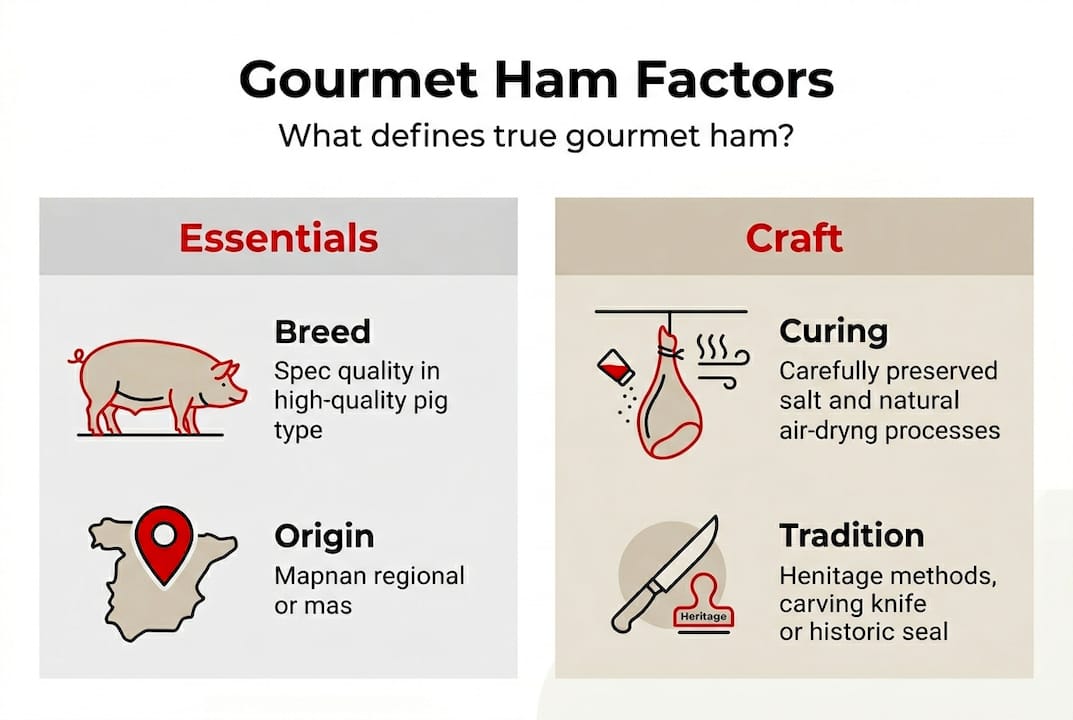
Defining gourmet ham involves its breed, origin, and artisanal methods working together in harmony. No single element is enough on its own. A pure-bred Iberico pig raised on poor-quality feed, or a fine animal processed through industrial methods, will never reach true gourmet status.
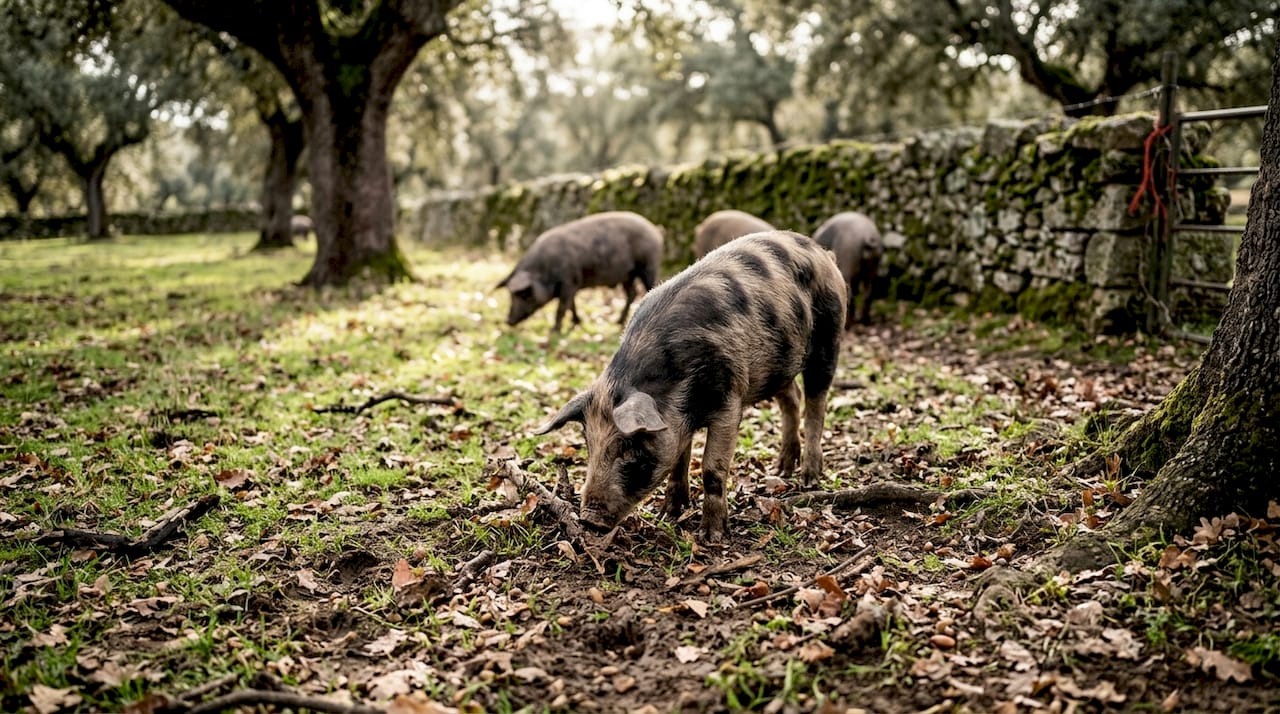
The concept of terroir is critical here. Borrowed from the wine world, terroir refers to the environment in which a product is made: the soil, the climate, the flora, the altitude. In the context of Iberico ham, the dehesa, a unique oak woodland ecosystem in western Spain, provides the acorns, shade, and space that shape the pig’s diet, behaviour, and ultimately its fat composition. This landscape is irreplaceable.
Key pillars that define a truly gourmet ham include:
- Breed purity: Iberico pigs carry genetics that produce extraordinary intramuscular fat, creating rich marbling impossible to replicate in standard breeds.
- Small-batch production: Industrial scale kills nuance. True gourmet producers work in limited quantities, monitoring each piece individually.
- Hand-crafted curing: Skilled artisans, not machines, guide the process from salting to final ageing.
- Geographical heritage: Region matters. Specific areas of Spain, such as Jabugo and Guijuelo, carry protected designation of origin status for good reason.
- Scarcity: True Pata Negra ham is rare by nature. The pigs take years to raise, and the curing adds more time still.
“Gourmet ham is not a product you manufacture. It is one you nurture, season by season, until it reaches its full potential.”
The price of a genuine gourmet ham reflects all of this. It is not luxury branding. It is the honest cost of rarity, patience, and irreplaceable craft.
The role of breed and feed in authentic flavour
Once grounded in tradition and rarity, the next layer is the animals themselves. Genetics and diet are perhaps the two most powerful forces shaping what ends up on your plate.
Pure-bred Iberico pigs produce ham with superior marbling and intense flavour that no cross-bred or commercial breed can match. The Iberico pig has an extraordinary biological ability to store fat within its muscle tissue rather than only beneath the skin. This intramuscular fat is the source of the legendary silky texture and nutty, complex taste that connoisseurs prize above all others.
Feed matters enormously. Pigs raised on a natural diet of acorns (bellotas) during the montanera season, the autumn and winter period when acorns fall, develop a fat composition rich in oleic acid, the same heart-healthy monounsaturated fat found in olive oil. This transforms the aroma, the melt, and the lingering finish of every slice.
| Attribute | Iberico bellota | Iberico serrano | Standard ham |
|---|---|---|---|
| Breed | 100% Iberico | Iberico cross or white pig | White pig |
| Feed | Wild acorns, free-range | Grain and compound feed | Commercial grain |
| Curing time | 36 to 64+ months | 12 to 18 months | 6 to 12 months |
| Fat character | Silky, oleic-rich, complex | Mild, firmer | Basic, flat |
| Flavour depth | Intense, nutty, layered | Pleasant, simple | Mild, one-dimensional |
Exploring small-batch ham techniques reveals just how significantly production scale affects the final taste. Smaller producers can afford the time and attention that large factories simply cannot.
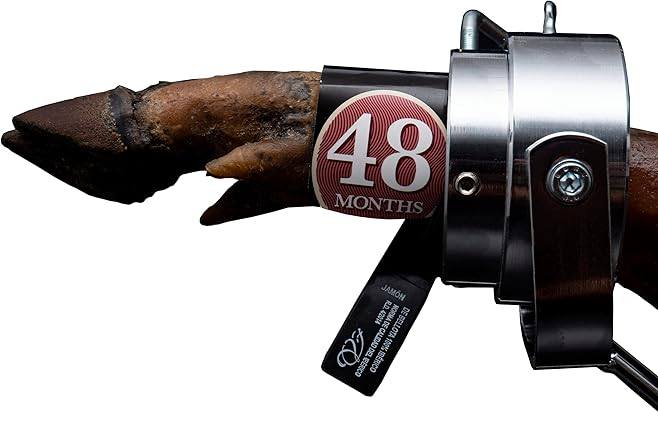
Pro Tip: When buying Iberico ham, look for a black or dark hoof (pezuña), a slender leg with visible marbling in the cut face, and the label “bellota” or “de bellota”. These are the clearest indicators of acorn-fed quality.
Artisanal craftsmanship: Time, technique, and patience
Yet, even the finest ingredients require the touch of real artisans. A magnificent Iberico pig raised on acorns is only the beginning. What happens over the following months and years in the curing house determines everything.
Small-batch and hand-crafted methods maximise flavour and texture in ways that industrialised processes cannot replicate. Each stage of production demands skill, observation, and extraordinary patience.
Here are the key stages of artisanal ham production and why each one matters:
- Salting: The fresh leg is buried in sea salt for a calculated number of days based on weight. This draws out moisture, halts spoilage, and begins flavour development. Too little salt and the ham is unsafe; too much and it becomes harsh.
- Washing and resting: After salting, the ham is washed and left to rest in cold conditions. This allows the salt to distribute evenly throughout the muscle tissue.
- Drying phase: Hams are hung in natural dryers where temperature and airflow are carefully managed. This stage lasts months and begins the critical concentration of flavour.
- Bodega ageing: The ham moves to underground cellars where slow, cool ageing develops complexity, aroma, and that distinctive, almost floral depth found only in the finest examples.
- Maestro assessment: Throughout the process, a skilled maestro jamonero tests, smells, and taps the ham with a bone needle to assess internal development. This is irreplaceable human judgement.
“A great ham does not hurry. It waits, breathes, and reveals itself only when it is truly ready.”
For those who want to understand the sensory rewards of this patience, tasting gourmet ham properly is itself an art form, and one very much worth learning.
How to recognise, taste and serve gourmet ham
To fully appreciate these details, it is vital to know how to spot and serve gourmet ham at home or in a restaurant. The knowledge transforms the experience from passive eating to genuine connoisseurship.
Visual and sensory cues help buyers distinguish true gourmet ham from imitations with confidence. Here is what to look for:
- Colour: Deep ruby red with white and golden fat streaks running through the muscle. Pale, homogeneous colour suggests low quality.
- Marbling: Visible threads of fat throughout the lean meat. The more pronounced and evenly distributed, the better.
- Hoof: Black, slender, and slightly rough in texture for authentic Iberico. A white or pale hoof signals a different breed entirely.
- Aroma: Rich, nutty, and slightly floral. Gourmet Iberico ham smells unlike anything industrial.
- Fat melt: Touch a thin slice and feel the fat soften almost immediately at body temperature. This is the oleic acid at work.
| Quality tier | Breed | Curing | Flavour | Visual |
|---|---|---|---|---|
| Gourmet (bellota) | 100% Iberico | 36 to 64+ months | Complex, nutty, layered | Deep ruby, rich marbling |
| Premium | Iberico cross | 18 to 24 months | Balanced, pleasant | Medium colour, some fat |
| Standard | White pig | 6 to 12 months | Mild, simple | Pale, minimal marbling |
Pro Tip: Before tasting, let sliced gourmet ham rest at room temperature for at least 15 minutes. The fat awakens, the aromas open, and the flavour reaches full expression. Pair it with Iberico ham pairings such as a dry fino sherry or aged Manchego.
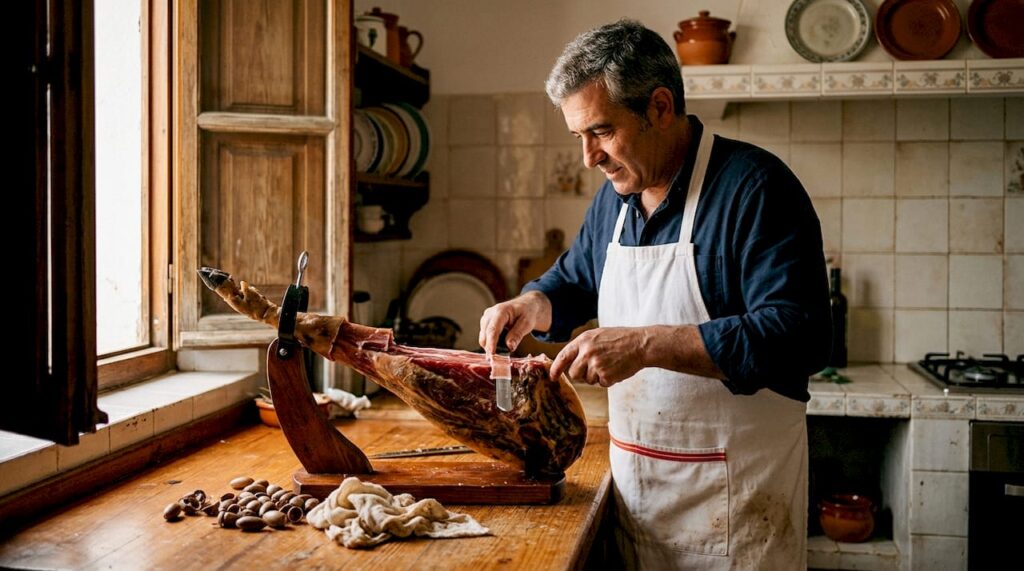
Serving is an act of respect for the product. Cut wafer-thin slices across the grain. Arrange them loosely on a warm plate. Do not refrigerate before serving. Consult a dedicated ham tasting guide for a structured approach to extracting every layer of flavour.
Why the gourmet experience is greater than the sum of its parts
Now that you can identify and enjoy gourmet ham, it is worth stepping back for a bigger-picture reflection. At 7 Bellotas®, we have observed something fascinating among first-time tasters of genuine Pata Negra: even well-travelled food lovers are often caught off guard. They expect something nice. What they encounter is something profound.
This is because true gourmet ham cannot be reduced to a checklist of breed, feed, and ageing time. Those elements are necessary, but they are not sufficient. The magic happens in the convergence: when a pure-bred Iberico pig, raised freely on acorns in the dehesa, is cured with seasonal wisdom and aged without shortcuts, the result transcends the ingredients themselves.
Most food experiences are additive. Gourmet Iberico ham is multiplicative. Each element amplifies the others. Patient artisanal curing draws expert tasting insights from tasters who might never have described food with such precision before. Tradition, biology, landscape, and skill combine to create something you genuinely cannot rush, fake, or mass-produce.
If you approach gourmet ham as a luxury product, you will enjoy it. If you approach it as a living expression of Spanish culture and craft, you will remember it.
Bring gourmet ham to your table
Ready to taste the difference yourself? Here is how you can bring this experience home.
At 7 Bellotas®, every ham in our selection is sourced from small-scale, artisanal producers committed to authentic acorn-fed methods and extended natural curing. We offer whole legs, sliced portions, and vacuum-packed selections, all quality-verified and shipped directly from Spain. Whether you are new to Iberico or seeking your finest cut yet, our Iberico ham from Spain range is curated to reflect genuine gourmet standards. Explore the collection, discover the difference, and bring a true piece of Spanish craftsmanship to your table.
Frequently asked questions
What does acorn-fed mean in gourmet ham?
Acorn-fed means the pigs roam freely in oak woodlands, eating a natural diet of acorns that results in richer, more complex flavour and distinctively creamy fat. This acorn diet fundamentally changes the fat composition and aroma of the finished ham.
Is the ageing process important for gourmet ham?
Absolutely. Long, careful ageing develops layers of flavour and a tender, yielding texture that shorter-cured hams simply cannot achieve. Ageing adds complexity that is one of the clearest markers of true gourmet quality.
How can you tell if a ham is truly gourmet?
Look for a black hoof, visible marbling, deep ruby colour, and confirmation of pure Iberico breed with a bellota designation on the label. Visual signs and production methods together indicate genuine quality.
What is the best way to serve gourmet ham?
Slice thinly, allow to rest at room temperature, and pair with a complementary wine or cheese for the fullest experience. Proper serving brings out the aroma and fat melt that define great Iberico ham.