TL;DR:
- Spanish ham classification relies on official label colours indicating breed, feed, and quality.
- Authentic bellota ham has distinctive deep red colour, fine marbling, and nutty aroma.
- To avoid fakes, verify labels, DOP seals, provenance, and sample the ham’s sensory qualities.
You’ve invested in what promises to be a prized leg of Spanish ham, only to slice into something that tastes oddly bland, poorly marbled, or simply wrong. That disappointment is more common than most gourmet consumers realise. mislabelled counterfeits are a growing international risk, and without the right knowledge, even enthusiastic buyers can be misled. This guide walks you through everything you need to know, from decoding official labels and assessing physical quality to spotting fakes and mastering a proper tasting. By the end, you’ll buy and enjoy genuine Spanish ham with complete confidence.
Table of Contents
- Understanding Spanish ham classifications and labels
- How to assess physical signs of authentic Spanish ham
- How to recognise and avoid common counterfeits
- How to master the tasting: experience genuine Spanish ham
- The uncomfortable truth about Spanish ham authenticity
- Where to buy authentic Spanish ham with confidence
- frequently asked questions
Key Takeaways
| Point | Details |
|---|---|
| Trust official labels | Authentic Spanish ham should have clear colour-coded labels, DOP/PDO seals, and direct provenance information. |
| Use your senses | Check for rich colour, fine marbling, and unique aroma to distinguish genuine ham from imitations. |
| Beware of vague terms | Avoid products labelled only as ‘Iberian-style’ or confusing terms without official certification. |
| Taste is final proof | The best hams have complex, lingering flavours that reflect acorn diet and long curing. |
Understanding Spanish ham classifications and labels
Before you can identify authenticity, you need to understand how Spanish ham is officially classified. Spain’s regulatory system uses a colour-coded label scheme that tells you precisely what breed of pig was used, how it was fed, and how it was raised. Getting this right is the foundation of everything.
The four official label colours are:
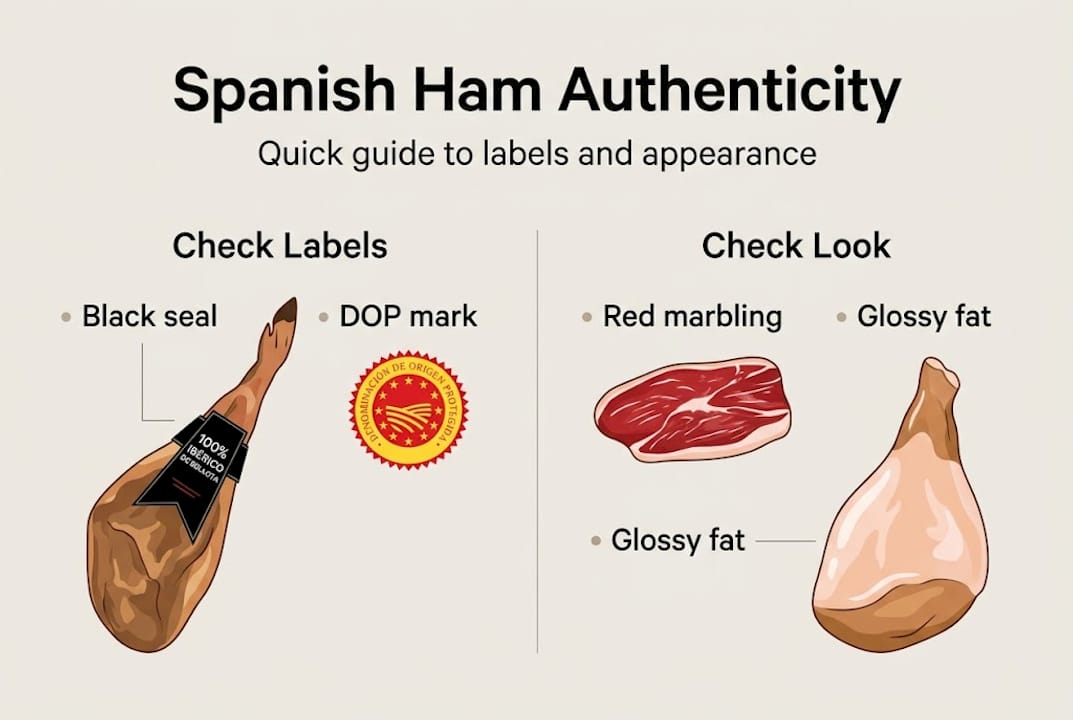
- Black label: 100% purebred bellota (acorn-fed) — the pinnacle of quality, produced from pigs roaming free-range dehesa (oak woodland pasture) during the montanera season
- Red label: 50% to 75% acorn-fed, cross-breed bellota — genuine acorn-fed but from crossbred animals
- Green label: cebo de campo — free-range but grain and grass-fed, not acorn-fed
- White label: cebo — grain-fed, intensively reared
The differences between these categories are profound. Only black and red labels involve acorn feeding during montanera, which is the period between October and March when pigs fatten naturally on fallen acorns. This diet produces the celebrated oleic acid-rich marbling that distinguishes premium Spanish ham from everything else.
| Label colour | % iberian breed | Feed type | Free-range? | Quality tier |
|---|---|---|---|---|
| Black | 100% | bellota (acorn) | Yes | Premium |
| Red | 50–75% | bellota (acorn) | Yes | High |
| Green | 50–100% | campo (pasture/grain) | Yes | Mid |
| White | 50–100% | cebo (grain) | No | Standard |
Now, what about pata negra terminology? Many consumers assume pata negra (literally ‘black hoof’) automatically means 100% purebred bellota ham. It does not. The term describes the natural black hoof of the cerdo ibérico breed but has no legally protected meaning on its own. Always look past the marketing and check the official label colour.
Denominación de origen protegida (DOP), also known internationally as PDO (Protected designation of origin), is the other critical marker. Spain has four recognised DOP regions: jabugo, guijuelo, dehesa de extremadura, and los pedroches. A genuine DOP seal confirms that the ham was produced, processed, and cured within a specific regulated region. Check for these official seals alongside the label colour when using these buying tips for iberico ham as your reference point.
Pro tip: Always photograph both the label and the DOP seal before purchasing at a specialist shop or market. Compare with the official classifications when you’re unsure.
How to assess physical signs of authentic Spanish ham
Once you’ve understood labels, examining the physical traits of the ham offers further confirmation. Your eyes and nose are powerful instruments here.

Genuine acorn-fed ibérico ham has a very distinctive visual profile. The deep red, mahogany colour is one of the most immediate clues, along with fine streaks of intramuscular fat that appear almost like brushstrokes through the meat. This marbling comes from the acorn diet and free-range movement. Industrial or grain-fed hams often look paler, with fat sitting in discrete clumps rather than delicate veins.
Here is what to check systematically:
- Visual colour: Deep red to mahogany. Not pink, not grey.
- Fat marbling: Fine, well-distributed veins of ivory fat running through the muscle. Not solid fat blocks.
- Surface fat colour: The outer fat should be yellowish, almost golden, not pure white.
- External shape: A long, slender leg with a small black hoof. Cross-breeds may be slightly shorter.
- Surface texture on slices: Semi-translucent, glossy when warmed to room temperature.
| Physical indicator | Premium ibérico bellota | Industrial or grain-fed ham |
|---|---|---|
| Internal colour | Deep red, mahogany | Pink or pale red |
| Fat marbling | Fine, intramuscular | Dense, external |
| Fat colour | Golden to ivory | Pure white |
| Surface gloss | Semi-translucent, oily | Variable, drier |
| External fat | Yellow-tinged | White |
Aroma matters enormously. When you hold a freshly cut slice and breathe in, premium bellota ham should offer a complex, nutty fragrance with slightly sweet undertones. A good test is to rub a slice between your fingers and then smell. The warmth releases the fat, and a genuine acorn-fed ham will give off that distinctive hazelnut-and-oak quality. An industrial product smells flat by comparison.
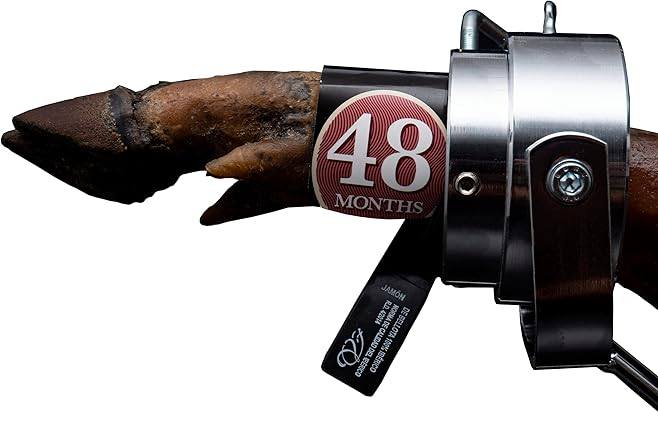
Curing duration is also a reliable marker of quality. Top-tier hams are typically cured for 36 months or longer in signs of premium ham production. Some exceed 48 or even 60 months. Always ask for the curing period when buying, and check whether the producer can confirm authentic ibérico provenance with documentation.
How to recognise and avoid common counterfeits
Understanding what is genuine also equips you to spot and avoid the growing threat of counterfeits. This is a serious issue, not a fringe concern.
In 2023, authorities seized over 50 tonnes of fake, mislabelled ham internationally, and new 2026 regulations now demand greater labelling transparency across the Spanish market.
Fraudsters have become remarkably sophisticated. Modern counterfeits may use artificial coatings to mimic the yellowish exterior fat, printed labels that closely resemble official DOP seals, and even artificially aged packaging. Some producers exploit loosely defined terms that are completely legal but deeply misleading.
Terms to treat with immediate scepticism:
- ‘iberian-style’: A marketing term with no legal protection or breed requirement.
- ‘estilo pata negra’: Similarly unprotected and often applied to standard pork.
- ‘de bellota’ without a black or red label: The claim means nothing without a corresponding official classification.
- ‘artisanal’ or ‘traditional’ alone: Without DOP or label colour confirmation, these are purely decorative adjectives.
It is also worth noting that, as consumer awareness research shows, ‘pata negra’ is not legally exclusive to 100% ibérico and can technically appear on crossbred products. High-quality hams produced outside official DOP norms, sometimes called fuera de norma, may be genuinely excellent but are not officially certified. These require extra scrutiny.
The 2026 regulatory update tightens labelling requirements, demanding that breed percentages and feed categories appear visibly on all certified products. This helps, but it does not eliminate fraud entirely. The smartest approach is to always avoid counterfeits by buying from retailers who provide full traceability documentation, including the producer’s registration number.
Pro tip: Request the producer’s número de registro (registration number) from any retailer. A reputable supplier will provide this without hesitation.
How to master the tasting: experience genuine Spanish ham
The final step in proving authenticity is savouring and evaluating the ham’s unique sensory qualities. A properly conducted tasting is the most pleasurable form of verification available.
Set up your tasting session correctly. Let slices reach room temperature, around 20 to 22 degrees centigrade, before tasting. Cold ham suppresses the release of volatile aromatic compounds, which mutes the nutty complexity you’re looking for. Use a plain white plate to assess colour accurately. Skip strong-flavoured drinks at first; start with still water to keep your palate clean.
Follow these steps in order:
- Visual assessment: Hold the slice to the light. Look for translucency, marbling, and that characteristic deep red tone.
- Initial aroma: Without touching, inhale slowly. Note whether you detect nuttiness, oak, or a gentle sweetness.
- Touch: Feel the surface. bellota ham should feel silky and slightly oily, not dry or rubbery.
- First taste: Place the slice on the tongue and let it rest for a few seconds before chewing. Note the first burst of flavour.
- Full flavour evaluation: The montanera acorn diet produces a characteristic sweetness layered over savoury umami depth. That balance is unmistakable.
- A persistent finish: A quality bellota ham lingers on the palate for 30 seconds or more after swallowing.
Key sensory markers of genuine acorn-fed ibérico ham:
- Sweet-salty-umami balance, not one-dimensional saltiness
- A distinctly nutty, sometimes hazelnut-like quality in the aftertaste
- The fat melts gently at room temperature, coating the palate pleasantly
- No harsh, acid, or metallic notes
- Complex aroma that evolves as the slice warms
By contrast, an imitation or industrial product tends to taste sharp, overly salty, or flat. The fat feels waxy rather than melting. The finish is short and lacks that layered, memorable quality. Once you’ve tasted the real thing via a trusted ibérico ham tasting guide, spotting an inferior product becomes almost instinctive.
The uncomfortable truth about Spanish ham authenticity
Here is something the official labelling framework will not tell you. Labels, seals, and even 2026 regulations can be gamed. The most experienced connoisseurs in Spain do not rely solely on certificates. They cultivate long-term relationships with specific producers, visit the dehesa in person, and build a sensory memory across years of tasting.
That kind of knowledge cannot be legislated into existence. What it can do is guide you towards something practical: buy from sources with genuine traceability and a reputation staked on their curation. Browse top Spanish ham selections from producers who are willing to share their full production documentation, not just a QR code on the packaging.
Artisanal heritage matters as much as any certificate. A small-scale producer who has been curing jamón in the same natural dryers for three generations has something no regulatory framework can replicate. That is the real final authority on authenticity.
Where to buy authentic Spanish ham with confidence
If you’re ready to put your knowledge into action, here’s where to buy with absolute peace of mind.
At 7 bellotas, every ham in our authentic ibérico ham selection is sourced from small-scale, artisanal producers committed to natural curing and traceable acorn-fed production. We offer whole legs, sliced portions, and vacuum-packed options, all cured for a minimum of 36 months and many exceeding 48 or 64 months. Each product comes with full DOP documentation and breed certification, so you can shop with complete assurance. No vague labels, no marketing language, no compromise on quality.
frequently asked questions
What label guarantees acorn-fed 100% ibérico ham?
The black label, accompanied by an official DOP/PDO seal, guarantees 100% ibérico acorn-fed ham and represents the highest classification in the Spanish regulatory system.
How can I tell if Spanish ham is fake?
Look for unclear label colours, replica DOP seals, and suspiciously uniform marbling. New 2026 regulations improve transparency, but genuine ham is always backed by a producer’s registration number and traceable provenance.
Are all ‘pata negra’ hams the same?
No. The term ‘pata negra’ is not exclusive to 100% ibérico ham and carries no independent legal protection. Always verify the official label colour and DOP seal separately.
What should genuine ibérico ham taste and look like?
It should display a deep red, mahogany colour with fine intramuscular fat marbling, a nutty and complex aroma, and a persistent sweet-salty-umami flavour that lingers well after each bite.