Not all Iberico ham is created equal. Walk into any specialist deli or browse a fine food catalogue, and you will encounter the word ‘bellota’ on labels that command significantly higher prices. Yet many enthusiasts and even seasoned culinary professionals assume that ‘Iberico’ alone guarantees the finest quality. It does not. The bellota classification carries a precise legal and agricultural meaning that separates truly exceptional ham from merely good ham. Understanding it gives you the knowledge to make informed choices, appreciate what is in your hand, and recognise when a product falls short of its claims.
Table of Contents
- The origins of bellota classification
- Bellota versus other Iberico classifications
- Official regulations and authenticity of bellota ham
- The sensory virtues: tasting and serving bellota ham
- How to choose genuine bellota ham
- Experience authentic bellota with 7 Bellotas
- Frequently asked questions
Key Takeaways
| Point | Details |
|---|---|
| Bellota means acorn-fed | True bellota ham is made from Iberian pigs fed on acorns in the dehesa during montanera season. |
| Bellota tops Iberico grades | It stands above other classifications for diet, breed, and strict regulation. |
| Label authenticity matters | Check for regulatory certification and clear breed and feed information before purchasing. |
| Sensory quality is unique | Bellota ham offers exceptional marbling, nutty aroma, and complex taste due to its feeding and ageing. |
| Shop from trusted sellers | Choose established retailers like 7 Bellotas for guaranteed genuine bellota-class ham. |
The origins of bellota classification
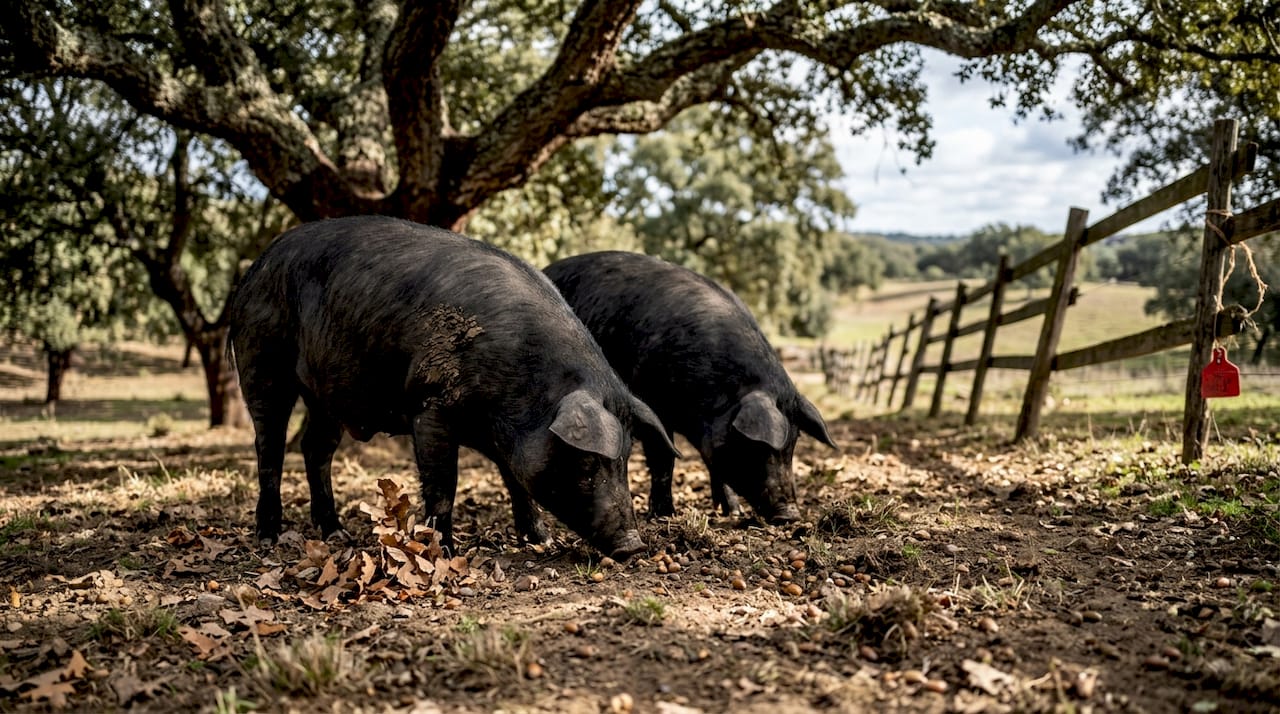
The word ‘bellota’ is simply the Spanish for ‘acorn.’ But in the world of Iberico ham, it signals something far more specific than a single ingredient. Bellota refers to Iberian pigs raised on acorns in the dehesa during the montanera season, a period running roughly from October to February when the oak and cork forests of southwestern Spain drop their fruit.
The dehesa is a remarkable, semi-wild landscape. Ancient holm oaks and cork oaks spread across Extremadura, Andalusia, and parts of Salamanca, producing the acorns that give bellota ham its distinctive flavour. During the montanera, pigs roam freely across this terrain, consuming acorns and wild grasses. A single pig can consume up to 10 kilograms of acorns per day, gaining weight rapidly and developing the extraordinary intramuscular fat that defines the finest Pata Negra.
Only certain Iberian pig breeds qualify for this tradition. The purebred 100% Ibérico pig is the gold standard, though crossbreeds with at least 50% Iberian genetics can also qualify under specific conditions. Breed purity directly affects the final flavour and the classification label permitted on the product.
“The dehesa ecosystem and the montanera season are inseparable from what makes bellota ham genuinely exceptional. Without them, the label loses its meaning.”
- Pigs must roam freely in the dehesa during montanera
- Diet must consist primarily of acorns and natural pasture
- Breed must meet minimum Iberian genetic requirements
- Curing must follow traditional methods over extended periods
Pro Tip: Only products carrying verified certifications from Spain’s regulatory bodies genuinely guarantee bellota status. A coloured label system introduced in 2014 makes this easier to check at a glance.
Bellota versus other Iberico classifications
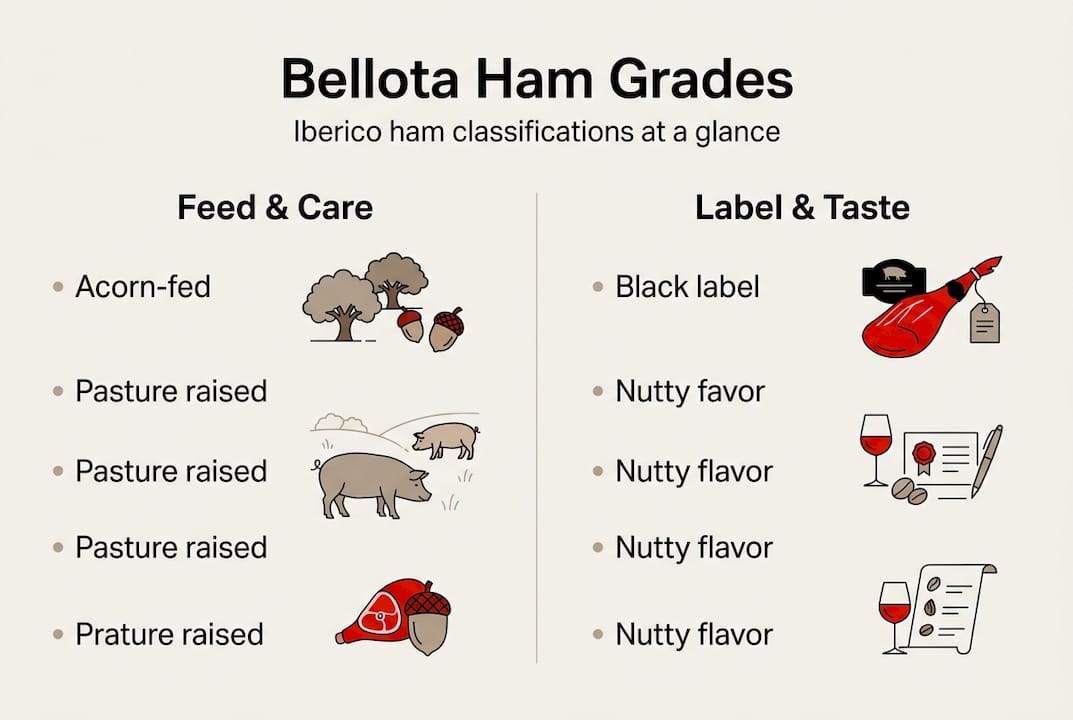
Understanding these origins, it is crucial to see how bellota sits among other Iberico ham classifications. Iberico ham is classified into several grades, with bellota at the top, followed by cebo de campo and cebo. Each grade reflects a different combination of breed, diet, and rearing conditions.
| Classification | Diet | Rearing | Label colour | Flavour profile |
|---|---|---|---|---|
| Bellota 100% Ibérico | Acorns and pasture | Free-range dehesa | Black | Intense, nutty, complex |
| Bellota Ibérico | Acorns and pasture | Free-range dehesa | Red | Rich, rounded, aromatic |
| Cebo de campo | Pasture and feed | Partly free-range | Green | Mild, pleasant, less complex |
| Cebo | Commercial feed | Intensive farming | White | Subtle, lighter finish |
The detailed classification guide makes clear that the black label, reserved for 100% purebred Ibérico pigs fed exclusively on acorns, represents the absolute pinnacle. Price differences between grades are substantial. A black-label whole ham can cost three to five times more than a white-label equivalent.
How to recognise authentic bellota packaging:
- Check the label colour: black for 100% Ibérico bellota, red for crossbreed bellota.
- Look for the breed percentage printed clearly on the label.
- Confirm the Denominación de Origen or official certification seal.
- Verify the producer’s name and region of origin.
- Check the curing period: genuine bellota hams are typically aged 36 months or longer.
The flavour difference is not subtle. Bellota ham carries a depth and persistence that cebo simply cannot replicate, no matter how well it is cured.
Official regulations and authenticity of bellota ham
As the grades differ, robust regulation ensures authenticity. Strict regulations govern the use of ‘bellota’ on Iberico ham labels, covering breed genetics, feeding protocols, and rearing conditions. Spain’s Royal Decree 4/2014 formalised the current colour-coded label system, making it the clearest framework the industry has ever had.
| Requirement | Bellota | Cebo de campo | Cebo |
|---|---|---|---|
| Minimum Iberian breed | 50% (red), 100% (black) | 50% | 50% |
| Feeding period | Montanera acorn season | Pasture and feed | Commercial feed only |
| Rearing environment | Free-range dehesa | Partly free-range | Intensive |
| Minimum curing time | 24 months (shoulder), 36 months (leg) | 18 months | 12 months |
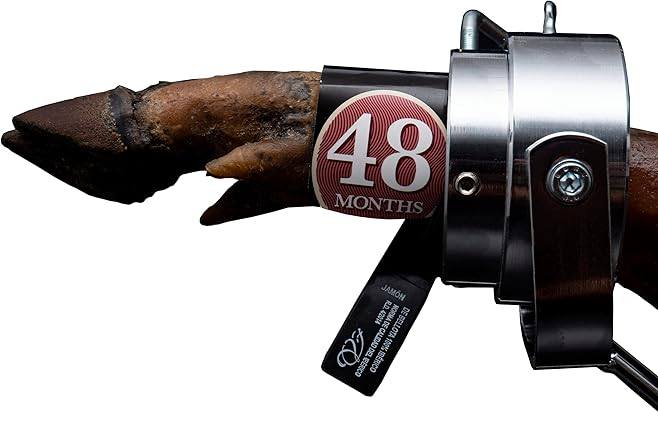
“A coloured plastic tag attached to the trotter is the simplest way to verify grade at point of purchase. Black means bellota 100% Ibérico. No tag or an unofficial tag is an immediate warning sign.”
Mislabelling remains a genuine concern in international markets. Products sold outside Spain sometimes use ‘bellota’ loosely in branding without meeting the legal requirements. This is particularly common in online retail where documentation is harder to verify.
Pro Tip: Always request the official certification documentation from your supplier. Legitimate producers and importers will provide this without hesitation. Look for the official seal, the breed percentage, and the Denominación de Origen reference on both the label and the accompanying paperwork.
The sensory virtues: tasting and serving bellota ham
Knowing what defines authenticity, let us explore what makes bellota ham exceptional and how best to enjoy it. Bellota ham delivers sensational marbling, nutty aroma, and complex flavour due to its acorn-rich diet. The oleic acid content from acorns infiltrates the muscle fibres, creating the characteristic white veins of fat that melt at room temperature.
The primary tasting markers to look for:
- Aroma: A warm, toasted nuttiness with subtle floral notes. The scent should be inviting and persistent.
- Marbling: Fine, evenly distributed fat running through deep red muscle. This is the visual signature of quality.
- Complexity: Layers of flavour that evolve across the palate, from sweet and saline at first contact to a long, lingering finish.
- Aftertaste: A clean, extended finish with no bitterness. The best bellota hams leave a pleasant warmth for minutes after each slice.
Serving temperature matters enormously. Fat that remains cold will not release its aroma or melt correctly on the palate. For tasting Iberico ham at its finest, slices should be thin enough to be almost translucent. Thick cuts mask the subtlety of the fat distribution.
Pro Tip: Allow slices to rest at room temperature between 20 and 24°C for at least 10 minutes before serving. The fat will begin to glisten and the aroma will open fully. This single step transforms the experience.
For serving Iberico ham creatively, consider pairing with aged Manchego, toasted sourdough, or a glass of dry fino sherry. These combinations amplify the nutty, saline qualities without competing with them. Equally, gourmet presentation tips suggest serving on a warm slate or wooden board to maintain temperature and visual appeal.
How to choose genuine bellota ham
Armed with knowledge of taste and presentation, making the right purchase becomes the next challenge. Recognising bellota authenticity involves checking for certification labels, breed information, and production origin. Here is a practical five-step checklist:
- Certification: Confirm the product carries an official Spanish certification seal or Denominación de Origen reference. This is non-negotiable.
- Breed: Check the Iberian breed percentage. Black label requires 100% Ibérico genetics. Red label requires a minimum of 50%.
- Feed: Verify that the montanera acorn-feeding period is documented. Reputable producers will state the specific dehesa region and season.
- Producer: Research the producer’s reputation. Small-scale, artisanal producers with long family histories in the dehesa regions are generally the most reliable.
- Sensorial traits: If possible, taste before committing to a large purchase. Genuine bellota ham has an unmistakable aroma and marbling that no imitation can replicate.
Price is a reliable signal. Authentic black-label bellota ham from a reputable producer will never be cheap. If an offer seems too good to be true, it almost certainly is. Ask your retailer or supplier directly: which dehesa did these pigs graze in? What was the montanera duration? A confident, detailed answer is a strong indicator of genuine provenance.
The bellota grade guide reinforces that shortcuts in rearing and feeding cannot be compensated for by extended curing. The quality must begin in the field.
Experience authentic bellota with 7 Bellotas
For those who have developed a genuine appreciation for what bellota classification truly means, sourcing from a trusted specialist is the only logical next step. 7 Bellotas offers certified bellota-grade Pata Negra ham sourced directly from Spain’s finest small-scale producers, with full documentation and traceability for every product.
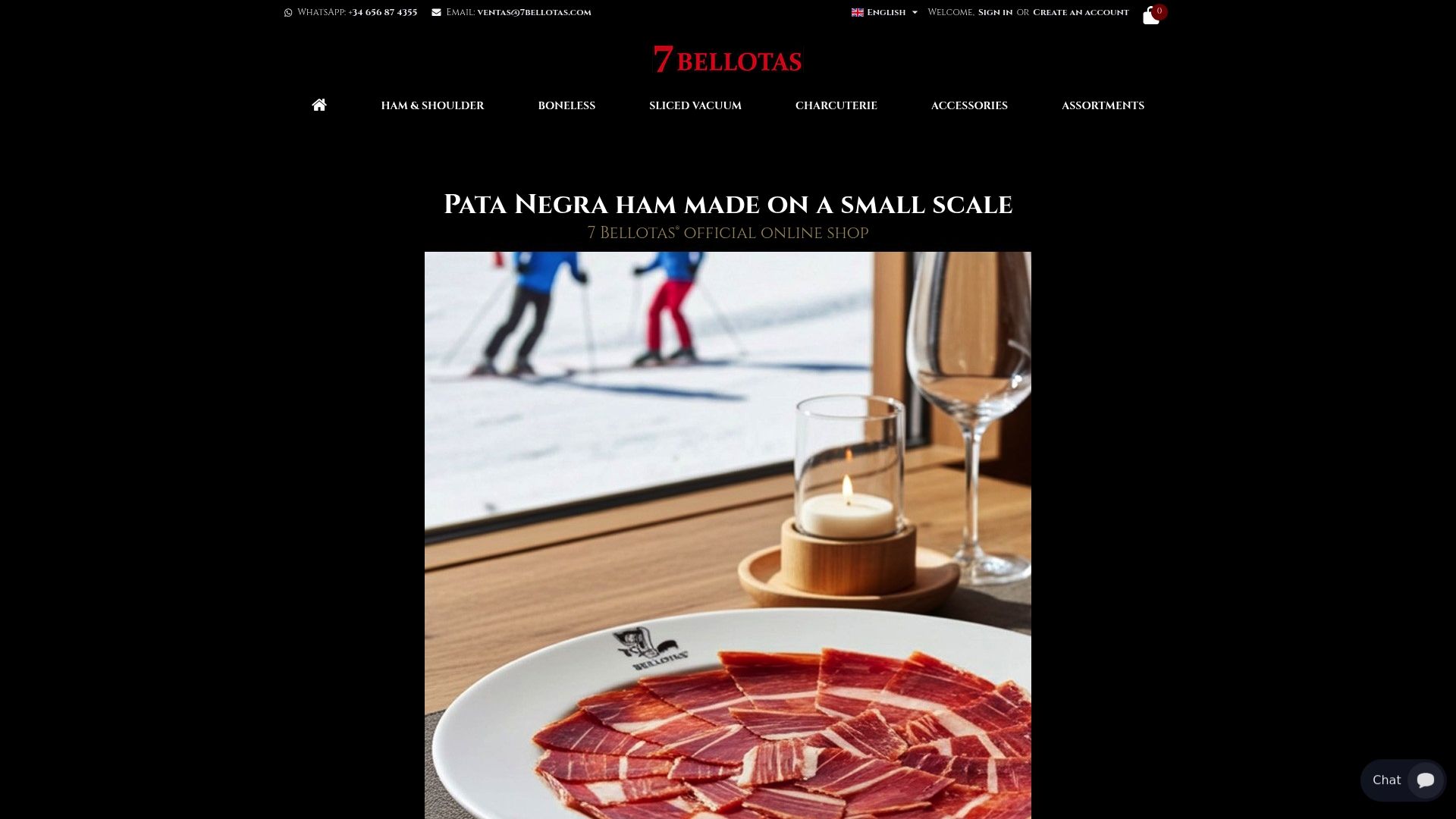
Every ham in the 7 Bellotas range is dry cured using traditional methods, aged in natural dryers for a minimum of 36 months and up to over 64 months for the most prized selections. The commitment to authenticity, breed purity, and dehesa provenance is absolute. Whether you are building a professional charcuterie programme or seeking the finest addition to your personal collection, buy Iberico ham from a source that understands every detail of what makes bellota exceptional. Expert guidance is available for those who want to explore the range in depth.
Frequently asked questions
What does ‘bellota’ mean on Iberico ham?
‘Bellota’ indicates the ham comes from acorn-fed Iberian pigs raised in the dehesa during the montanera season. The pigs are acorn-fed in the dehesa, making this the defining characteristic of the classification.
How can I tell if a ham is truly bellota?
Look for certification labels, detailed breed information, and the official coloured tag on the trotter. Official seals confirm bellota status and should always accompany legitimate products.
How does bellota ham taste different?
Bellota ham is known for intense marbling, nutty aroma, and a long, complex finish. The distinct flavour and aroma come directly from the acorn-rich diet during the montanera season.
Are there common fakes or mislabelling to watch out for?
Yes. Non-certified products sometimes use ‘bellota’ loosely in branding without meeting legal requirements. Strict Spanish regulations govern bellota labelling, so always request official documentation from your supplier.