TL;DR:
- Artisanal ham is produced through traditional methods, natural curing, and extended aging.
- Jamón Ibérico de Bellota is considered the finest, with unique genetics and acorn-fed diet.
- Buyers should verify breed, origin, curing time, and certification to ensure authenticity.
Not all ham deserves a place on a fine table. The gap between mass-produced cured meat and genuine artisanal ham is vast, shaped by centuries of Spanish tradition, rare pig breeds, and a curing process that cannot be rushed. For the true connoisseur, understanding that difference transforms every slice into something far more meaningful. This guide explores what sets artisanal ham apart, from the dehesa pastures of Spain to the natural dryers where legs hang in silence for years, developing flavours that industrialised production can never replicate.
Table of Contents
- Defining artisanal ham: craft, tradition, and terroir
- The making of artisanal ham: from pig to perfection
- What makes Spanish Jamón Ibérico the gold standard?
- Selecting and enjoying artisanal ham: tips for the connoisseur
- A connoisseur’s perspective: the future and ethos of artisanal ham
- Experience true Spanish artisanal ham
- Frequently asked questions
Key Takeaways
| Point | Details |
|---|---|
| Tradition matters | Artisanal ham owes its complexity to centuries-old methods, regional pride, and carefully selected ingredients. |
| Iberian breed and diet | The Iberian pig’s genetics and acorn-rich diet shape Jamón Ibérico’s distinctive nutty flavour and buttery texture. |
| Quality is in the detail | Authenticity is revealed by breed, region, diet, and production technique—look for ‘dehesa’ and ‘bellota’ on labels. |
| Global benchmark | Spanish Jamón Ibérico is the standard by which all artisanal hams are judged, admired for its flavour and craft. |
| Connoisseur’s approach | True enjoyment comes from understanding, selecting, and savouring artisanal ham as a finely crafted gourmet product. |
Defining artisanal ham: craft, tradition, and terroir
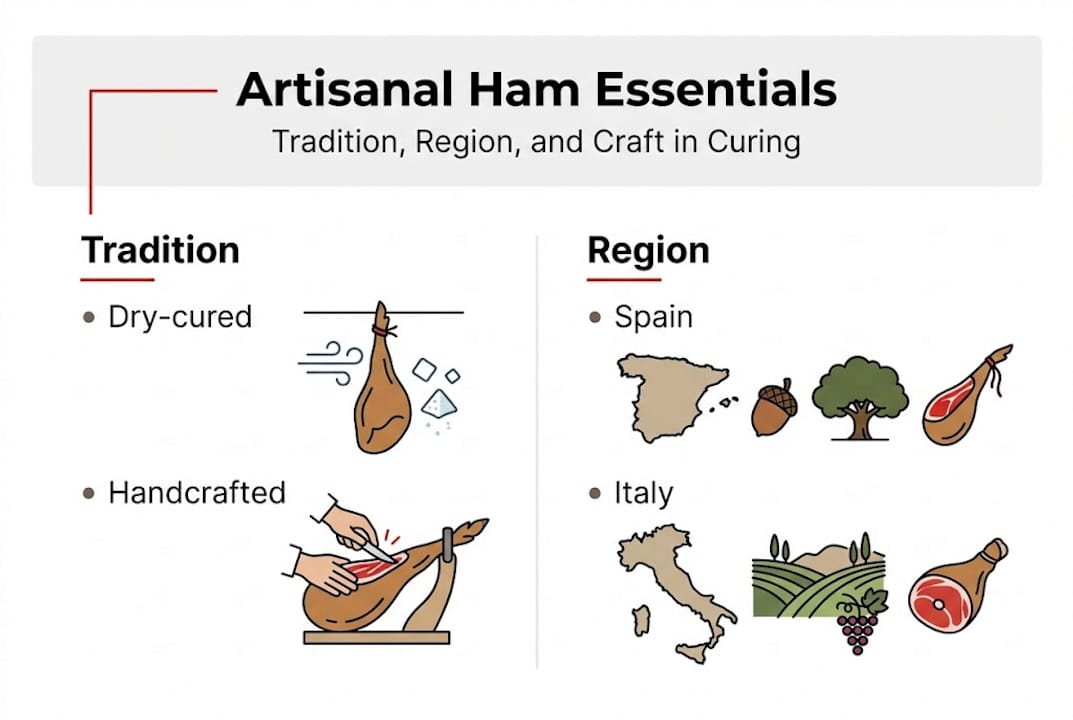
Artisanal ham is not simply a marketing label. It refers to dry-cured ham produced on a small scale, using traditional methods passed down through generations, with natural ingredients and no artificial shortcuts. As a category, it emphasises traditional, small-batch production using natural ingredients and extended ageing, which fundamentally separates it from factory-cured alternatives that prioritise volume over character.
The European context matters enormously here. Countries such as Spain and Italy have codified regional ham traditions into protected designations of origin, ensuring that names like Jamón Ibérico de Bellota or Prosciutto di Parma carry legal weight. These frameworks preserve the integrity of traditional crafts and give consumers a reliable signal of authenticity. Spain, in particular, has elevated this to an art form, and understanding the secrets of Jamón Ibérico reveals just how intricate that tradition truly is.
Terroir, a concept borrowed from the wine world, applies equally to artisanal ham. The region where a pig is raised directly shapes the flavour of the cured product. Soil composition, native flora, microclimate, and altitude all influence the acorns the pigs consume and the way the meat matures. A ham from the Extremadura dehesa carries a sensory signature distinct from one produced in Salamanca or Huelva.
Key attributes that define a genuine artisanal ham include:
- Small-scale, hands-on production with direct oversight at each stage
- Natural curing agents such as sea salt, without chemical preservatives or accelerants
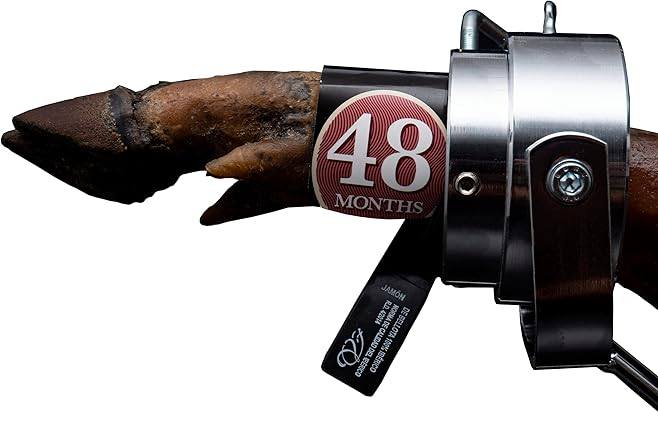
- Extended ageing of at least 24 months, and often 48 months or more for premium grades
- Regional breed selection, with Iberian pigs forming the pinnacle of this tradition
- Traceability from farm to finished product
“True artisanal ham is inseparable from its landscape. The flavour in every slice is the accumulated story of soil, season, and craft.”
The sensory experience of a properly aged artisanal ham is unlike any other cured meat. The aroma is complex, nutty, and faintly floral. The texture melts rather than chews. Fat marbles through the flesh in ribbons that glisten at room temperature. These qualities cannot be manufactured. They are earned. Exploring the rich history of Jamón Ibérico origins puts these qualities into even sharper perspective.
The making of artisanal ham: from pig to perfection
The journey from a prized Iberian pig to a finished artisanal ham is long, deliberate, and uncompromising. Each stage demands expertise, patience, and respect for the animal and its environment.
Here is how the process unfolds:
- Breed selection — Only Iberian pigs with a verified genetic lineage qualify for the highest grades. Purity of breed directly affects fat composition and curing potential.
- Rearing in the dehesa — Iberian pig breeds are raised semi-wild across vast oak pastures, building muscle tone and absorbing the flavours of their environment.
- Montanera feeding — During autumn and winter, pigs graze exclusively on acorns and wild herbs. Iberian pigs at 50 to 100% purebred are raised in the dehesa ecosystem and fed acorns during montanera, leading to superior marbling and flavour.
- Slaughter and salting — Legs are rubbed with sea salt and left to cure for several weeks, drawing out moisture and beginning the preservation process.
- Post-salting rest — The ham rests in cold chambers to allow salt to distribute evenly through the meat.
- Slow drying — Legs hang in natural dryers, where seasonal temperature changes drive the curing process over months.
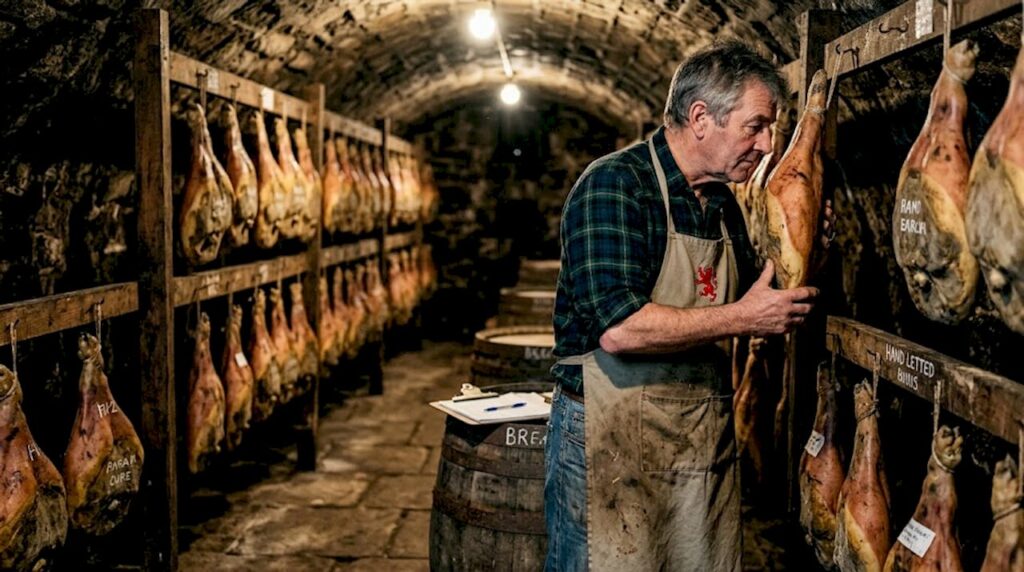
- Cellar ageing — The final stage. Hams are moved to underground cellars and aged for 36 to 64 months or beyond, depending on the grade.
| Stage | Duration | Purpose |
|---|---|---|
| Salting | 1 to 2 weeks | Moisture removal and preservation |
| Post-salting rest | 1 to 3 months | Salt equalisation |
| Drying | 6 to 18 months | Flavour development |
| Cellar ageing | 12 to 36+ months | Complexity and texture refinement |
The contrast with industrial methods is stark. Factories accelerate drying with artificial temperature controls and may skip extended cellaring entirely. The result is a product that looks similar but tastes entirely different, lacking the depth and character that slow time imparts.
Pro Tip: When reading a label, look for words like dehesa, bellota, and montanera. These terms indicate the pig was raised and fed in the traditional manner, and they serve as reliable markers of artisanal quality. Also consider exploring the nuanced debate around wild vs farmed Iberico pigs to sharpen your purchasing instincts.
What makes Spanish Jamón Ibérico the gold standard?
Among all artisanal hams produced globally, Jamón Ibérico de Bellota occupies a singular position. It is not simply the finest Spanish ham. Many food authorities regard it as the finest cured meat in the world, full stop.
The distinction begins at a genetic level. Iberian pigs carry a unique physiological trait: their fat infiltrates the muscle tissue rather than sitting on top of it. This intramuscular fat, or marbling, dissolves at just below body temperature, creating that celebrated melt-in-the-mouth quality. Pig genetics and an acorn-rich diet create fat high in oleic acid, giving Jamón Ibérico its melt-in-the-mouth texture and nutty, fruity notes.
The grading system for Jamón Ibérico is precise and legally regulated:
| Grade | Breed purity | Diet | Label colour |
|---|---|---|---|
| Jamón Ibérico de Bellota | 100% purebred | Acorn-fed (montanera) | Black |
| Jamón Ibérico de Bellota | 50–75% Iberian | Acorn-fed (montanera) | Red |
| Jamón Ibérico de Cebo de Campo | 50–100% Iberian | Pasture and feed | Green |
| Jamón Ibérico de Cebo | 50–100% Iberian | Feed only | White |
For connoisseurs, the black label is the pinnacle. It signals 100% purebred Iberian genetics and acorn feeding during montanera. The Iberico vs Serrano comparison reveals just how significant that difference is when the two hams are placed side by side.
Key sensory features of a top-grade Jamón Ibérico include:
- Aroma: complex, with notes of toasted nuts, dried fruit, and subtle floral undertones
- Marbling: abundant, with fat that glistens and melts at room temperature
- Flavour: deeply savoury, with a long, sweet, and slightly smoky finish
- Texture: yielding and silky, never rubbery or dry
- Colour: deep rose to burgundy, with ivory-white fat threads
During montanera, a single pig can nearly double its body weight, consuming up to 10 kilograms of acorns per day. This rapid, acorn-rich weight gain is what creates the extraordinary fat profile that defines Iberico’s unique flavour and sets it apart from every other cured ham on earth.
Selecting and enjoying artisanal ham: tips for the connoisseur
Knowledge is the connoisseur’s greatest advantage. Knowing what to look for protects you from overpriced imitations and ensures every purchase delivers the experience you are seeking.
Follow these steps when selecting an artisanal ham:
- Read the label carefully — Verify breed purity, feeding method, and region of origin. A genuine product will carry this information with pride.
- Check for protected status — Look for Denominación de Origen Protegida (DOP) seals, which confirm regional and production standards.
- Assess the curing time — Longer is generally better for complexity. Minimum 36 months for quality; 48 months or more for exceptional depth.
- Inspect the fat — At room temperature, the fat on a quality ham will soften slightly and glisten. Hard, white fat is a sign of inadequate ageing or poor-quality genetics.
- Trust certified sellers — Source from suppliers who provide full traceability and work directly with small-scale Spanish producers.
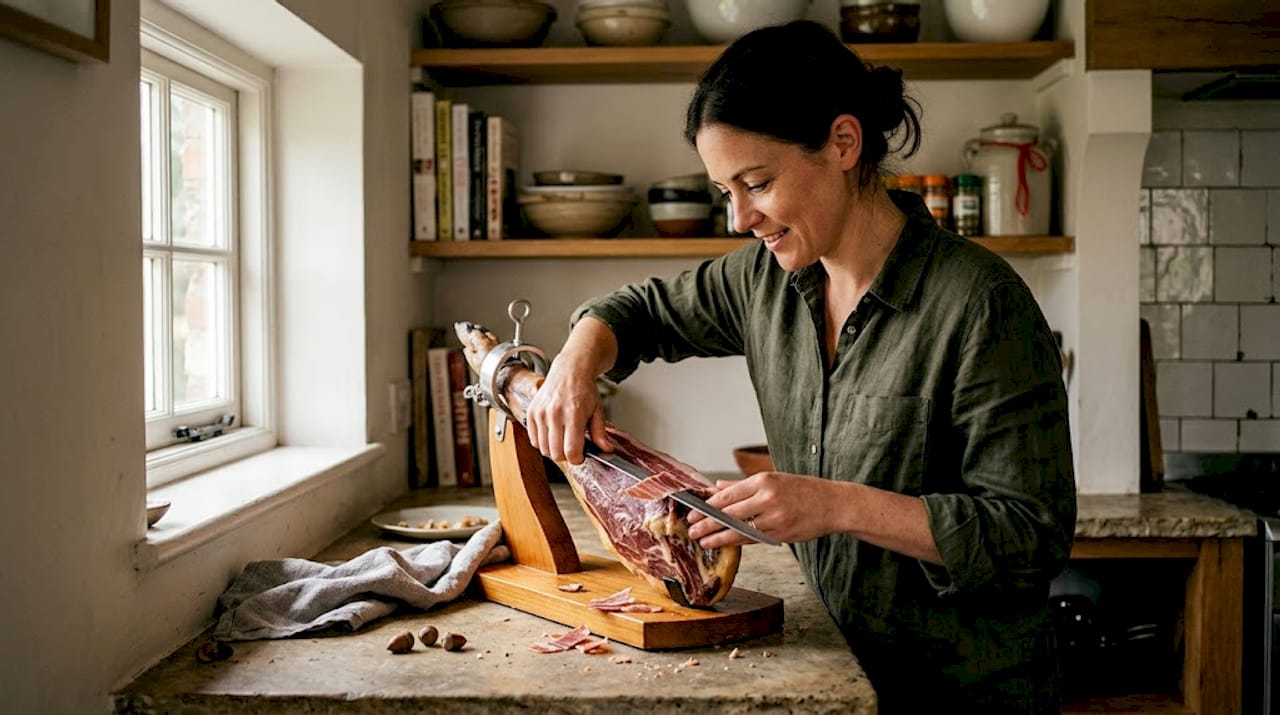
For serving, simplicity is essential. Slice thinly, ideally with a long, flexible ham knife. Allow the slices to rest at room temperature for at least 15 minutes before tasting. Pair with crusty bread, a glass of fino sherry, or a light red wine. Nothing more is needed.
It is also worth noting that organic artisanal hams follow similar traditional processes but use GMO-free feed, catering to a growing health-conscious audience without sacrificing heritage or quality. These are a superb choice for those who want the full artisanal experience with an additional ethical dimension.
Pro Tip: Before making a significant purchase, consult a quality checklist for Iberico ham to verify every critical factor, from label claims to visual inspection. You can also explore why the unmatched quality of Spanish pork starts well before the curing room.
Pitfalls to avoid include buying solely on price (cheap Iberico ham is a contradiction in terms), ignoring certification, and storing ham in the refrigerator once cut, which kills its flavour. A whole ham, once cut, should be kept at room temperature covered with its own fat and a clean cloth.
A connoisseur’s perspective: the future and ethos of artisanal ham
Mass production has never been able to replicate what centuries of tradition produce. That is not sentiment. It is a simple material fact. The flavour complexity of a properly aged Jamón Ibérico de Bellota comes from time, genetics, and a living ecosystem. None of these can be accelerated or substituted.
The real risk today is not that artisanal ham disappears. It is that the term itself becomes diluted, applied to products that merely gesture at craft rather than embody it. As global demand grows, the pressure to scale inevitably mounts. Some producers resist this admirably. Others do not.
For the enthusiast, this creates both a responsibility and an opportunity. By choosing verified artisanal producers, you directly sustain a food culture that has survived intact for centuries. Your purchasing decision is, in a real sense, a cultural act. The dehesa ecosystem, home to Iberian pigs and hundreds of plant and animal species, depends on continued demand for the products it supports.
Artisanal ham is not a luxury indulgence in the pejorative sense. It is one of the most honest food products available: transparent in its origins, remarkable in its complexity, and deeply connected to a landscape and a people.
Experience true Spanish artisanal ham
Understanding the craft behind artisanal ham changes how you taste it. Each slice carries the story of the dehesa, the montanera season, and the hands that tended it for years. That knowledge belongs on the table alongside the ham itself.
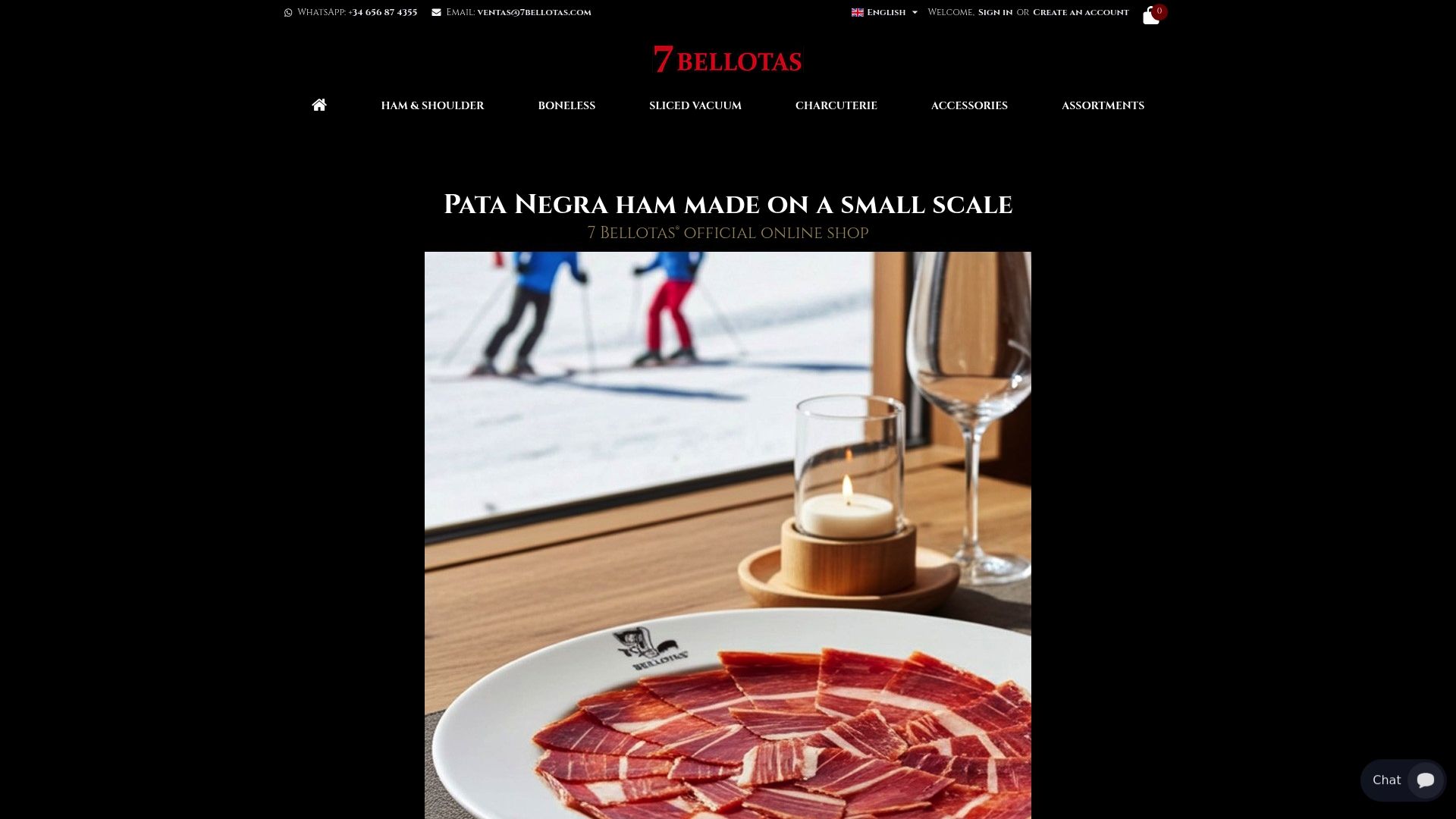
At 7 Bellotas, every product is sourced directly from small-scale Spanish producers who honour these traditions without compromise. Whether you are purchasing your first whole leg or adding to a well-curated collection, the range spans 36-month to 64-month aged hams, sliced portions, and vacuum-packed selections. The provenance is guaranteed. The quality is prized. Explore the full collection and taste for yourself what true Spanish artisanal ham delivers.
Frequently asked questions
What animals are used to produce true artisanal ham?
Authentic artisanal ham is most often made from Iberian pigs, ideally 50 to 100% purebred, raised in dehesa ecosystems that provide the acorn-rich diet essential for superior marbling and flavour.
How is the quality of artisanal ham determined?
Quality depends on pig breed, the acorn-feeding montanera period, extended curing time, and strict adherence to regional traditions. Montanera acorn feeding and breed purity are the two most decisive factors in any quality assessment.
What distinguishes Jamón Ibérico from other artisanal hams?
Jamón Ibérico stands apart because of its unique Iberian pig genetics, acorn-led diet, and unique fat composition that yields a melting texture and deeply complex, nutty flavour profile unmatched by any other cured ham.
Can organic artisanal ham be as good as traditional varieties?
Organic artisanal hams follow the same heritage-driven methods but use GMO-free feed throughout the rearing process, making them an equally fine choice for those who value both tradition and ethical sourcing.
How should authentic artisanal ham be served and enjoyed?
Slice thinly using a proper ham knife and allow the slices to rest at room temperature for at least 15 minutes before eating, so the fat softens and the full complexity of flavour is expressed.