TL;DR:
- Whole ham preserves the full curing process and offers richer flavor and aroma.
- Iberico and Serrano are the main Spanish ham varieties, differing in breed, diet, and curing time.
- Proper sourcing, storage, and carving enhance the traditional experience and flavor of whole Iberico ham.
Most people encounter ham as thin, plastic-wrapped slices stacked in a supermarket chiller. That product and a genuine whole Iberico ham occupy entirely different worlds. A authentic whole ham ritual is not simply a larger quantity of the same thing. It is a living expression of Spanish heritage, acorn-fed breeding, and years of careful curing in mountain air. For the serious gourmet, choosing and serving a whole ham is an experience as much as a purchase. This guide walks you through everything: what whole ham means, the celebrated varieties, how to buy wisely, and how to present it at its very best.
Table of Contents
- What defines a whole ham purchase?
- Different types of whole ham: From Iberico to Serrano
- How to purchase a whole ham: Process, pitfalls, and insider tips
- Serving and storing whole ham for peak flavour
- Why traditional whole ham purchases still matter in the modern gourmet world
- Bring home authentic Iberico: Shop the best whole hams
- Frequently asked questions
Key Takeaways
| Point | Details |
|---|---|
| Whole ham defined | Whole ham is a complete cured leg, a gourmet tradition prized for rich flavour and presentation. |
| Varieties matter | Iberico and Serrano hams offer unique tastes; understanding these helps you choose the best for any culinary event. |
| Buying process | Buy from trusted sources, check origin labels and avoid mass-produced options for authenticity. |
| Storage and serving | Proper storage and slicing turn your whole ham into an exceptional centrepiece for gourmet gatherings. |
| Tradition’s value | Embracing the ritual of whole ham brings depth, culture and genuine pleasure to gourmet dining. |
What defines a whole ham purchase?
Having set the gourmet context, let us explore precisely what makes a whole ham purchase unique.
A whole cured leg consists of the entire cured leg, often with bone and skin intact for preservation. That is not a minor detail. The bone conducts flavour deep into the muscle during curing, while the outer layer of fat and skin shields the meat from drying too aggressively. The result is a complexity of aroma and taste that pre-sliced products simply cannot replicate.
To understand what you are investing in, it helps to know what you are not buying:
- Pre-sliced ham: Convenient, but exposed to air and degraded in flavour before it reaches you.
- Boneless ham: Easier to carve, but without the bone to guide flavour development during curing.
- Processed ham: Often contains additives, binders, and a fraction of the artisanal craft.
- Whole ham: The complete leg, dry cured over many months, presented as nature and tradition intended.
For connoisseurs, the whole ham is the only honest format. It preserves the integrity of the curing process from start to finish. You can inspect the leg, assess the fat marbling, and understand the producer’s craft at a glance. It also becomes a centrepiece: placed on a jamonero (ham stand), it anchors a gathering with a kind of theatre that no charcuterie board can match.
Why do serious food lovers seek out about Jamón Ibérico in its whole form? Because the experience of carving your own ham, slice by translucent slice, connects you directly to the Dehesa landscape of southwest Spain where the pigs roamed freely among oak trees.
Pro Tip: Once you begin cutting into a whole ham, cover the exposed surface with a thin slice of its own fat or a clean cloth to prevent the meat from drying out between uses. Store at room temperature in a cool, ventilated space, never in a refrigerator, which strips moisture and dulls the flavour.
Different types of whole ham: From Iberico to Serrano
Now that you know what a whole ham is, let us examine the celebrated varieties available to gourmet buyers.
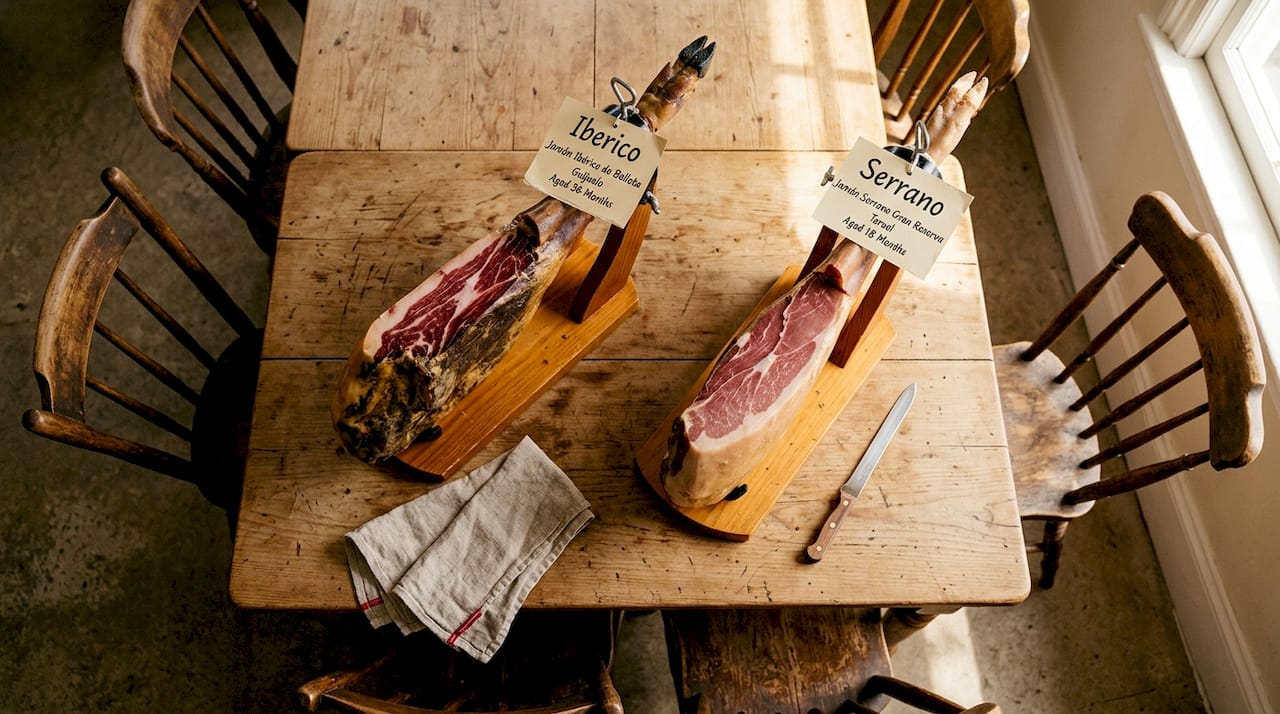
Iberico and Serrano are two prominent Spanish ham types, each with distinct curing times and characteristics. Iberico comes from the native Iberian pig, a breed defined by its ability to infiltrate fat directly into the muscle tissue, creating the extraordinary marbling that connoisseurs prize. Serrano, by contrast, comes from white pig breeds and is cured in mountain conditions, producing a drier, firmer texture.
| Feature | Jamón Ibérico | Jamón Serrano | Standard cured ham |
|---|---|---|---|
| Breed | Iberian pig | White pig | Various breeds |
| Diet | Acorn-fed (bellota) or mixed | Grain-fed | Grain-fed |
| Curing time | 24 to 64 months | 12 to 18 months | 6 to 12 months |
| Fat marbling | Exceptional | Moderate | Low |
| Flavour profile | Rich, nutty, complex | Mild, clean, savoury | Simple, straightforward |
| Origin | Extremadura, Andalusia | Various Spanish regions | International |
Within Iberico itself, there are quality tiers worth knowing:
- Jamón Ibérico de Bellota: Acorn-fed, free-range pigs. The pinnacle of Spanish ham.
- Jamón Ibérico de Cebo de Campo: Part outdoor, part grain diet.
- Jamón Ibérico de Cebo: Grain-fed Iberian pigs, indoor reared.
A detailed guide to Spanish hams reveals just how precise these distinctions are in practice. For the most discerning palates, only Bellota grade will do.
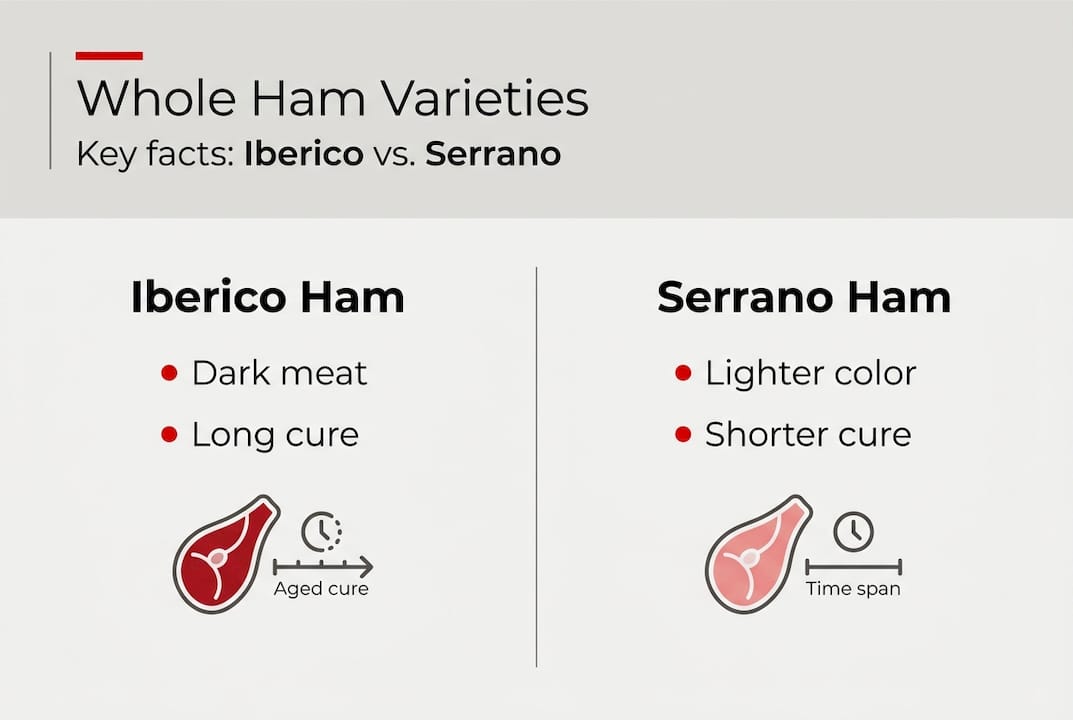
Worth noting: Premium Iberico can be cured for up to 48 months, with some exceptional legs reaching 64 months. That extended time in natural dryers transforms the meat’s texture and concentrates its flavour into something remarkable. When comparing traditional Spanish ham types, curing duration is often the clearest indicator of quality.
Serrano remains an excellent choice for everyday gourmet eating: more accessible in price and still far superior to processed alternatives. But for a special occasion, Iberico de Bellota is in a league of its own.
How to purchase a whole ham: Process, pitfalls, and insider tips
Understanding the types available prepares you for the most crucial step: making the actual purchase.
Sourcing from specialist retailers ensures authenticity and quality that mass-market channels simply cannot guarantee. Here is how to approach the process:
- Identify the origin. Look for Denominación de Origen (DO) certification. Recognised regions include Jabugo, Guijuelo, Extremadura, and Los Pedroches.
- Check the breed and diet label. Spanish law requires hams to carry a coloured label: black for Bellota 100% Ibérico, red for Bellota Ibérico, green for Cebo de Campo, and white for Cebo.
- Assess the producer. Small-scale, artisanal producers following traditional processes are preferable to industrial operations. Ask your retailer for producer information.
- Evaluate the leg visually. A quality whole ham should have a narrow hoof, a long leg, and a generous coating of ivory-toned fat. Excessive trimming is a warning sign.
- Consider curing time. Longer is not always better for every palate, but 36 months or more is a reliable marker of considered, patient craft.
A comprehensive Spanish ham buying guide confirms that misleading labels remain a genuine problem in the market. Some hams are marketed with evocative language but carry no certified origin.
“In gourmet dining, provenance is everything. A ham without a traceable story is a ham without a soul.”
Common pitfalls include purchasing from retailers who cannot provide documentation, confusing breed-based labelling with quality-based labelling, and storing a newly purchased ham incorrectly before the first cut. Solid Iberico ham buying tips will always centre on transparency: from pig to plate, every step should be accountable.
Pro Tip: When ordering online from Spain, choose retailers who ship whole legs with the original producer seal intact. This confirms the ham has not been opened or re-labelled during transit.
Serving and storing whole ham for peak flavour
Once you have secured your gourmet ham, attention turns to proper enjoyment and care.
Careful slicing preserves the aroma and texture of whole ham. Rushing this step, or using the wrong tools, wastes years of patient curing. Here is how to do it properly.
You will need two essential items: a sturdy jamonero (ham stand) to hold the leg securely, and a long, flexible ham-carving knife. Do not attempt to carve with a standard kitchen knife. The blade will not flex around the bone, and the slices will be uneven and thick.
| Ham type | Ideal storage temperature | Shelf life (uncut) | Shelf life (after first cut) |
|---|---|---|---|
| Jamón Ibérico de Bellota | 15 to 20°C, ventilated | Up to 24 months | 3 to 6 weeks |
| Jamón Serrano | 15 to 20°C, ventilated | Up to 18 months | 2 to 4 weeks |
| Boneless vacuum-packed ham | 5 to 8°C refrigerated | As labelled | 7 to 10 days |
For serving Iberico ham at its finest, let the sliced meat rest at room temperature for five to ten minutes. The fat blooms, the aroma opens, and the flavour reaches its full potential. Serve on a warmed plate, never cold ceramic, which suppresses the fat’s qualities.
After each carving session, follow these steps to preserve the ham:
- Cover the cut surface with the thin outer fat slices you removed at the start.
- Drape a clean, breathable cloth over the exposed area.
- Never wrap in cling film or seal in plastic, as this causes sweating and flavour loss.
- Carve only what you intend to consume immediately.
For further guidance on storage and serving Spanish ham, consistent temperature and air circulation are the two factors that matter most over weeks of use.
Why traditional whole ham purchases still matter in the modern gourmet world
There is a temptation, in an era of instant delivery and portioned convenience foods, to treat whole ham as a romantic anachronism. We disagree. The act of purchasing a whole ham is a commitment: to a producer, to a method, to a tradition that spans centuries.
Pre-sliced Iberico in a vacuum pouch is undeniably practical. But it removes the ritual entirely. When you carve a whole leg yourself, you engage with the craft that produced it. You learn where the sweetest meat lies near the bone. You understand why artisanal ham traditions endure despite every industrial shortcut available.
For gatherings, the whole ham is also a conversation. Guests do not simply eat. They watch, they ask, they taste at different points along the leg and discover that no two slices are identical. That experience cannot be portioned, vacuum-packed, or delivered in a chilled envelope. The modern gourmet world offers more choice than ever. Yet the whole ham purchase remains singular, irreplaceable, and worth every bit of the investment.
Bring home authentic Iberico: Shop the best whole hams
Everything in this guide points to one truth: the quality of your whole ham experience begins long before the first slice.
At 7 Bellotas, we source acorn-fed Pata Negra hams from small-scale Spanish producers who still follow traditional curing methods, hanging legs for 36 to over 64 months in natural dryers. Every ham we offer is traceable, certified, and selected with passion. If the advice above has sharpened your appreciation for what genuine Iberico ham represents, let that knowledge guide you towards a confident purchase. Explore our full range and buy genuine Iberico ham directly from Spain, with the provenance and quality that true connoisseurs deserve.
Frequently asked questions
What does ‘whole ham’ mean when buying gourmet ham?
A whole ham is the entire cured leg, usually with bone and skin intact, offering depth of flavour and traditional presentation that sliced products cannot match.
How can you tell if a whole ham is authentic Iberico?
Look for certified origin labels, recognised breed information, and specialist retailers who provide full producer documentation alongside the ham.
What is the best way to store a whole ham at home?
Store whole ham in a cool, ventilated space on a ham stand and cover the cut surface with its own fat or a clean cloth to maintain freshness between carvings.
How long does whole ham stay fresh after opening?
Once opened, whole ham keeps for several weeks if stored and sliced correctly, with the cut face protected after every use.
Is buying a whole ham worth it for home entertaining?
For gourmet occasions, a whole ham creates an authentic centrepiece and brings unmatched depth of flavour compared to any pre-sliced alternative.