TL;DR:
- Authentic Ibérico ham, especially black label bellota, offers complex flavors with careful selection and preparation.
- Proper slicing, tempering, and sensory evaluation through sight, smell, texture, and taste are crucial for appreciation.
- Slow, deliberate tasting and minimal distractions reveal the ham’s subtle nuances and deepen connoisseurship.
Most people eat Ibérico ham. Connoisseurs taste it. The difference lies not in the ham itself but in the approach. Acorn-fed Pata Negra, aged for 36 months or more, carries extraordinary complexity: sweet onset, salty umami depth, nutty persistence, and a finish that lingers long after the slice has melted away. Yet without a systematic sensory progression through sight, smell, texture, and taste, much of that craftsmanship goes unnoticed. This guide walks you through every stage of a professional tasting workflow, from selecting the right specimen to storing the leftovers, so you can experience every nuance this prized cured meat has to offer.
Table of Contents
- Selecting and preparing premium Ibérico ham
- Essential tools and workspace setup
- Systematic tasting: sight, aroma, texture, and flavour
- Advanced tips, troubleshooting, and storing leftovers
- What most experts miss about Ibérico ham tasting
- Discover and order authentic Ibérico ham
- Frequently asked questions
Key Takeaways
| Point | Details |
|---|---|
| Selection is crucial | Authentic black label acorn-fed Ibérico ham delivers superior flavour and must be served at the right temperature. |
| Systematic tasting unlocks depth | Following a sensory progression from sight and aroma to taste is essential for gourmet appreciation. |
| Master slicing and presentation | Thin, uniform slices using specialised tools highlight texture and taste nuances. |
| Store and enjoy wisely | Store leftovers properly and consume within days to maintain all of the ham’s quality and character. |
Selecting and preparing premium Ibérico ham
Before you move your attention to slicing and the first taste, it is essential to begin with the right specimen and set-up. Not all Ibérico ham is equal. Spain’s official label system separates quality clearly, and selecting authentic ham is the single most important decision you will make before any tasting begins.
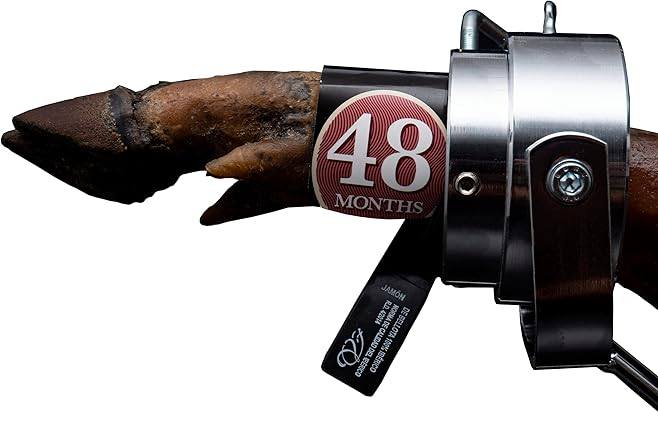
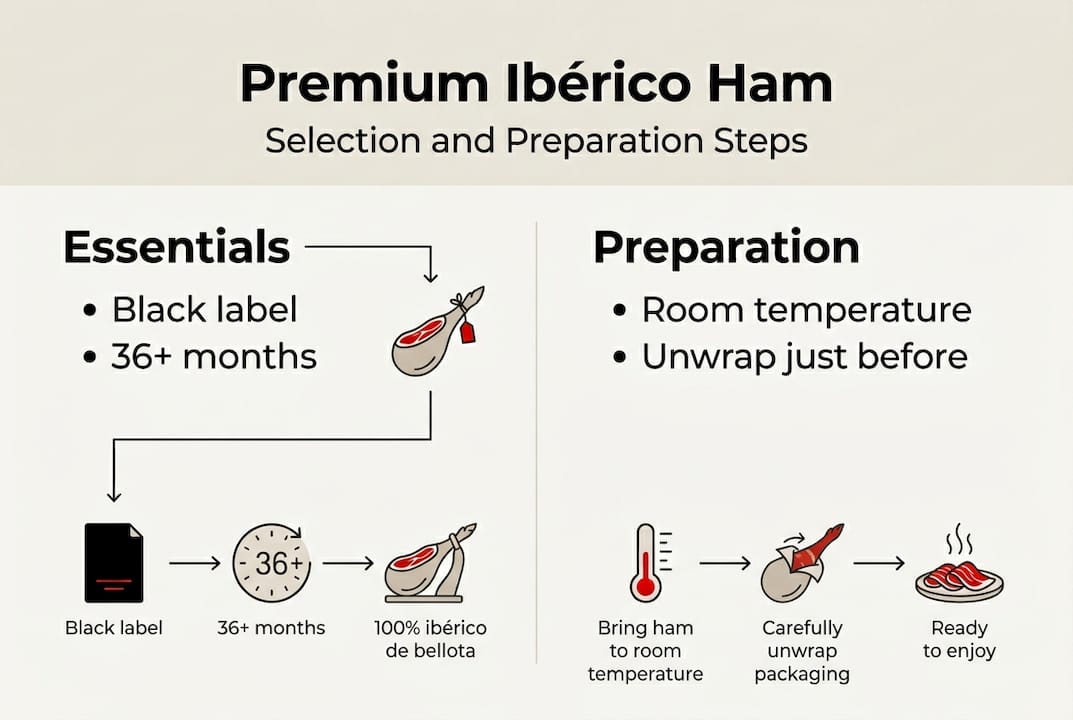
The black label bellota ham aged over 36 months represents the pinnacle: 100% Iberian breed, free-range, acorn-fed during the montanera season. Red label is still bellota but from a crossbred pig. Green label indicates free-range with mixed feed. White label denotes farm-raised, grain-fed animals. For a serious tasting workflow, always begin with black label.
| Label colour | Breed | Feeding | Minimum ageing |
|---|---|---|---|
| Black | 100% Ibérico | Acorn-fed (bellota) | 36 months |
| Red | 50–75% Ibérico | Acorn-fed (bellota) | 36 months |
| Green | 50–100% Ibérico | Free-range, mixed | 24 months |
| White | 50–100% Ibérico | Farm grain-fed | 24 months |
Once you have recognised genuine Ibérico ham and sourced your specimen, preparation matters. Essential tools include:
- A jamonero (ham stand) for stability during carving
- A long, flexible slicing knife with a sharp edge
- A short, rigid boning knife for working around the bone
- A clean cloth for wiping the knife and covering the ham
- Storage wrap or the ham’s own fat for preservation
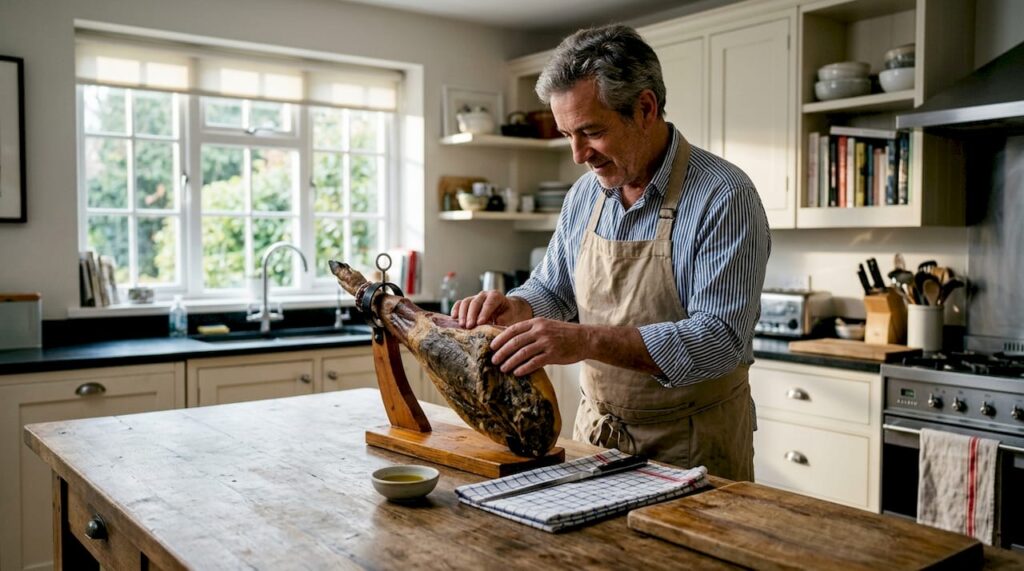
Allow the ham to rest at room temperature for at least 30 minutes before unwrapping. This tempers the fat, allowing it to soften and release its full aromatic profile. Cold fat is firm and muted. Warm fat is glossy, fragrant, and alive.
Pro Tip: Only expose as much surface as you intend to carve in one session. Cover the cut face with the reserved fat and a clean cloth between tastings to prevent the surface from drying out and oxidising.
Essential tools and workspace setup
Once the ham is selected and properly tempered, attention turns to having the correct tools and workspace for carving and serving. A well-organised station is not about aesthetics. It is about precision, safety, and consistent slice quality.
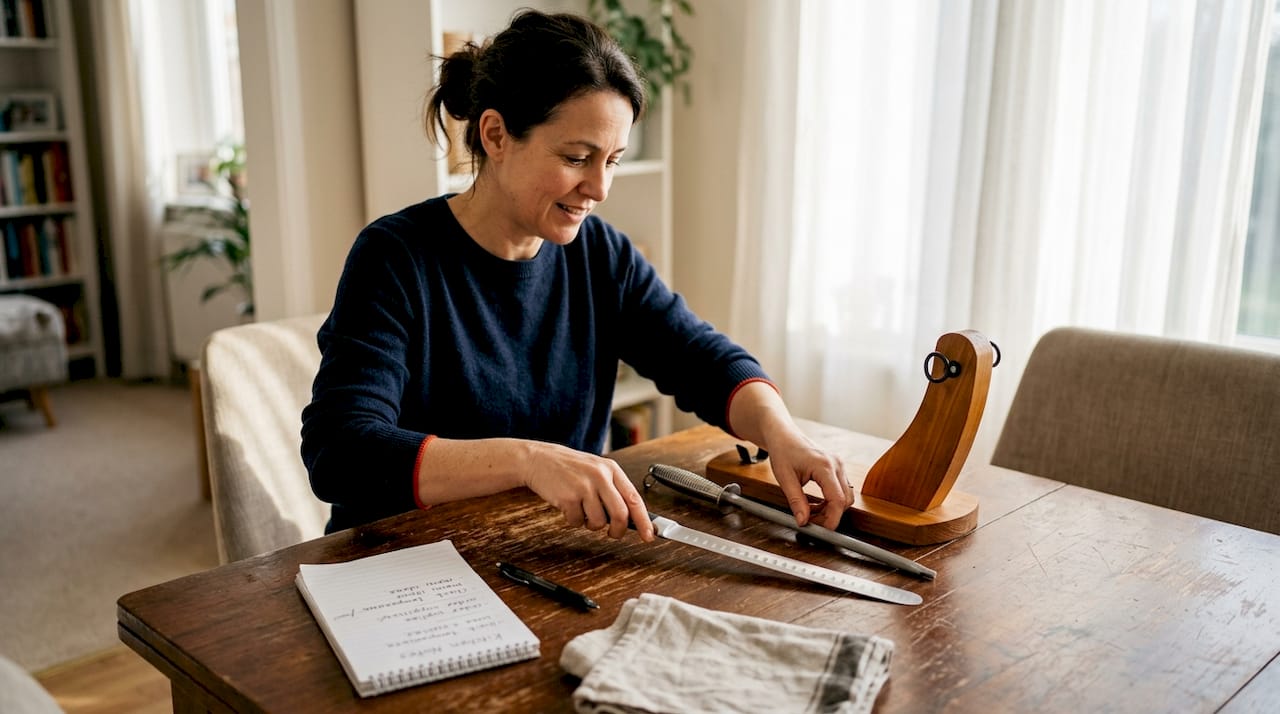
The jamonero stand is non-negotiable. It locks the ham securely and allows you to apply controlled pressure during each stroke. A wobbly ham produces uneven slices and increases the risk of injury. Position the stand on a non-slip surface at a comfortable working height.
The knife choice separates good slices from great ones. Compare the two main options:
| Knife type | Blade length | Flexibility | Best use |
|---|---|---|---|
| Flexible slicing knife | 28–35 cm | High | Thin, uniform slices from maza and babilla |
| Standard kitchen knife | 15–25 cm | Low | Not recommended for Ibérico ham |
For a tasting workflow focused on maximum flavour release, paper-thin 1–2mm slices cut parallel to the bone from the maza section first are essential. The maza is the largest, most marbled section and the ideal starting point. Thicker slices mute the textural subtlety that defines premium ham.
Required tools for a complete setup:
- Jamonero stand with adjustable clamp
- Flexible slicing knife (28–35 cm)
- Rigid boning knife for bone sections
- Sharpening steel or whetstone
- Wooden or slate serving board
- Tweezers for precise slice placement
For a broader view of carving comparison tips and technique variations, experienced carvers consistently emphasise knife sharpness above all else. A dull blade tears rather than slices, destroying the delicate fat structure. Find further presentation advice to complete your serving setup.
Pro Tip: Always carve away from your body with steady, deliberate strokes. Keep a first-aid kit nearby. Even experienced carvers respect the blade.
Systematic tasting: sight, aroma, texture, and flavour
With the stage set and tools in hand, begin the systematic sensory evaluation that is the heart of the tasting workflow. This is where casual eating ends and genuine appreciation begins.
- Sight. Hold a slice to the light. Premium black label ham displays vivid marbling, with ivory and golden fat threaded through deep ruby flesh. The slice should be translucent at its thinnest points. Dull colour or excessive white fat signals lower quality or improper ageing.
- Aroma. Bring the slice close before tasting. Rich, nutty, savoury scents with subtle sweetness are the hallmark of bellota quality. Any rancid, flat, or sour odour indicates a problem with curing or storage.
- Texture. Touch the slice gently between thumb and forefinger. It should feel silky, slightly oily from the acorn-derived oleic acid, and yield without resistance. Stiffness suggests the ham was served too cold.
- Flavour. Follow the sensory analysis process used by professionals: place the slice flat on the tongue and allow it to melt slowly without chewing initially. The sweet onset arrives first, followed by salty umami depth, then the nutty persistence that distinguishes true bellota from all other cured meats.
‘Judging Ibérico ham with all senses enhances appreciation far beyond casual eating.’
Pro Tip: For your first two or three slices, resist bread, garnish, or wine. Serve on a plain slate board at room temperature and let the ham speak entirely for itself. Pairings come later, once you have established the ham’s pure character.
Advanced tips, troubleshooting, and storing leftovers
After the initial tasting, integrating these advanced strategies elevates both your skill and outcome, and helps you preserve and serve the remaining ham perfectly.
Ageing duration profoundly shapes what you experience. Longer ageing at 48+ months yields deeper complexity and firmer texture, while 36-month hams offer a more tender, balanced profile. Comparing slices side by side under light for marbling translucency is a technique used by professional tasters.
| Ageing duration | Texture | Flavour profile | Best for |
|---|---|---|---|
| 36 months | Tender, supple | Balanced, sweet, mild nuttiness | First-time tasters |
| 48 months | Firmer, denser | Intense umami, deep nuttiness | Experienced connoisseurs |
| 60+ months | Very firm, crystalline | Complex, mineral, bold | Advanced tasting sessions |
Common mistakes and how to correct them:
- Slicing too thick. Slices above 2mm mute texture and fat melt. Return to slow, deliberate strokes with a sharp flexible knife.
- Serving too cold. Fat remains firm and aromas stay locked in. Always temper for 30 minutes before carving.
- Overpowering pairings. Strong cheeses or heavy reds compete with the ham’s subtlety. Introduce pairings gradually.
For advanced pairing rounds after the initial pure tasting:
- Aged Manchego (12 months) for complementary nuttiness
- Fino sherry or Manzanilla for saline, mineral contrast
- Marcona almonds or green olives for textural variety
Storage is critical. Carved ham should be consumed within 3–4 days for optimal freshness. Store covered in the fridge at 0–4°C, then re-temper at room temperature for 30 minutes before the next tasting session. Explore master gourmet techniques and the expert tasting guide for further refinement.
What most experts miss about Ibérico ham tasting
Stepping beyond technique, there is something that connoisseurs learn only with repeated experience: slowing down is the most advanced skill of all.
Most enthusiasts arrive at a tasting eager to compare labels, stack pairings, and move quickly through the sensory stages. The result is a cluttered palate and a missed experience. The ham’s most delicate notes, the faint sweetness of acorn fat, the mineral whisper in a 60-month slice, reveal themselves only in quiet, unhurried moments.
Some experts prefer 36-month balance for tenderness, while others favour 48+ months for intensity. Both positions are valid. What matters is that your preference evolves through repeated tasting, not through reading about it.
‘True connoisseurs measure their tasting in quiet moments, not in the number of pairings or labels.’
Over-complicating pairings is the most common distraction. A glass of fino sherry is a companion, not a competition. When in doubt, remove everything from the board except the ham. The gourmet tasting tips that endure are always the simplest ones.
Discover and order authentic Ibérico ham
If you are ready to experience the difference yourself, knowing where to source authentic ham matters as much as how you taste it. The workflow described here only reaches its full potential when the ham itself is genuinely premium, acorn-fed, and properly aged.
At 7 Bellotas, every ham is selected for black label quality, small-scale artisanal production, and authentic Spanish heritage. From 36-month to 64-month aged Pata Negra, the range is curated for connoisseurs who demand the real thing. For further reading before you order, explore our more tasting tips to deepen your appreciation before the first slice.
Frequently asked questions
What is the ideal serving temperature for Ibérico ham?
Serve at around 24°C after resting for 30 minutes out of the fridge, allowing the fat to soften and aromas to develop fully.
How should I store Ibérico ham after carving?
Store covered in the fridge at 0–4°C and consume within 3–4 days, re-tempering at room temperature before each subsequent tasting.
What are common mistakes when tasting Ibérico ham?
The most frequent errors are slicing too thick, serving too cold, and introducing strong pairings too early, all of which mask the ham’s delicate flavour profile.
How can I tell if my Ibérico ham is authentic acorn-fed bellota?
Look for the black label certification and confirm 100% Iberian breed and bellota feeding on the packaging; expect rich marbling, a nutty aroma, and a subtle sweet finish.