Many people assume all Spanish chorizo is much the same. A supermarket ring of chorizo and a hand-crafted chorizo ibérico may share a name, but they occupy entirely different worlds. Chorizo ibérico is produced from the legendary Ibérico pig, seasoned with care, and cured slowly using methods refined across centuries. It carries the flavour of acorn-rich pastures, artisan skill, and deep regional pride. In this guide, you will discover the origins, production secrets, taste profile, and the best ways to enjoy one of Spain’s most prized gourmet treasures.
Table of Contents
- The origins and heritage of chorizo ibérico
- How chorizo ibérico is made: ingredients and production process
- Chorizo ibérico versus other Spanish cured meats
- Flavour profile and serving suggestions for chorizo ibérico
- Why chorizo ibérico stands in a class of its own
- Experience authentic chorizo ibérico for yourself
- Frequently asked questions
Key Takeaways
| Point | Details |
|---|---|
| Historic Spanish delicacy | Chorizo ibérico represents centuries of craftsmanship and regional pride in Spanish cuisine. |
| Unique ingredients and methods | Its quality stems from Ibérico pig meat, natural spices, and slow curing for exceptional flavour. |
| Gourmet flavour experience | Savoury and aromatic, chorizo ibérico is perfect for refined palates and versatile in culinary uses. |
| Serving and pairing tips | Serve thinly sliced at room temperature and pair with quality Spanish wines or cheeses. |
The origins and heritage of chorizo ibérico
Chorizo ibérico is not a modern invention. Its roots stretch back deep into the culinary history of the Iberian Peninsula, where pigs were raised on open land and every part of the animal was used with respect and ingenuity. For rural Spanish communities, the matanza (the traditional pig slaughter) was a cornerstone event of the calendar year, bringing families together to prepare cured meats that would sustain them through the colder months. Chorizo ibérico emerged from this tradition as one of the most celebrated results of that process.
The Spanish gourmet tradition surrounding chorizo ibérico is remarkably enduring. Chorizo ibérico has been central to Spanish gourmet culture for over 500 years, and its production methods have changed very little in that time. That continuity is not stubbornness. It is confidence. Producers know that the old ways produce the finest results.
What makes chorizo ibérico so special begins with the pig itself. The Ibérico breed is an ancient Spanish pig, genetically distinct from the white pigs used in most commercial pork production. These animals are uniquely capable of storing fat within their muscle tissue, creating the extraordinary marbling that gives Ibérico products their signature richness. The Spanish heritage explained through Ibérico breed history reveals just how rare and carefully managed these animals are.
Regional pride plays a major role in chorizo ibérico’s identity. Certain areas of Spain, particularly Extremadura, Salamanca, and Andalucía, are considered the heartland of Ibérico production. The Seville culinary culture reflects how deeply embedded cured meats are in everyday Spanish life, from festive tables to neighbourhood tapas bars.
Here are the key pillars of chorizo ibérico’s heritage:
- Ibérico breed: An ancient, protected Spanish pig with unique fat-marbling qualities
- Dehesa landscape: Free-range pigs raised in oak woodland pastures, feeding on acorns
- Matanza tradition: Seasonal, communal pig preparation rooted in rural Spanish culture
- Generational expertise: Recipes and techniques passed from master to apprentice over centuries
- Regional identity: Production concentrated in specific Spanish regions with distinct microclimates
“Chorizo ibérico represents more than food. It is a living expression of Spain’s agricultural soul, shaped by landscape, tradition, and an uncompromising commitment to quality.”
How chorizo ibérico is made: ingredients and production process
Understanding what goes into chorizo ibérico explains why it tastes so distinctly superior. The process is precise, unhurried, and rooted in respect for the raw ingredients.
It begins with the pig. Only Ibérico pigs that have been raised in the dehesa, the open oak woodland of western Spain, and fed on a diet rich in bellotas (acorns) qualify for the finest chorizo ibérico. This acorn-fed diet gives the pork its characteristic nutty sweetness and extraordinary fat quality. The fat is not just flavour; it is the vehicle that carries every spice and aroma deep into the meat during curing.
The traditional chorizo ibérico production process uses select cuts of Ibérico pork, paprika, garlic, and natural casings, followed by slow curing that can last several weeks. The paprika used is pimentón, Spain’s prized smoked paprika, which gives chorizo ibérico its vivid red colour and deeply smoky character. Sweet or spicy varieties exist, each offering a different intensity.
The key ingredients and steps are:
- Ibérico pork: Coarsely ground cuts, rich in intramuscular fat
- Pimentón: Spanish smoked paprika, the defining spice
- Garlic: Fresh, pungent, and used generously
- Sea salt: For preservation and seasoning
- Natural pork casings: Traditional and breathable, essential for proper curing
- Slow curing: Hung in natural dryers for several weeks, allowing flavour to concentrate
Once the meat is seasoned and mixed, it is stuffed tightly into natural casings and hung in cool, well-ventilated curing rooms. Temperature and humidity are carefully managed. The chorizo loses moisture gradually, and the flavours intensify and meld together over time. Rushing this process is simply not possible without sacrificing quality.
Pro Tip: When buying chorizo ibérico, look for a deep brick-red colour and a firm but slightly yielding texture. These are signs of proper curing and high-quality pimentón, not artificial colouring.
The result is a sausage with a firm, sliceable texture, a glistening cross-section of red meat and creamy white fat, and an aroma that is immediately recognisable to anyone who has experienced genuine Ibérico products.
Chorizo ibérico versus other Spanish cured meats
Spain produces an extraordinary range of cured meats, and it is easy to confuse them. Knowing the differences helps you make informed choices and appreciate what each product truly offers.
Chorizo ibérico is distinguished from other cured meats by its unique seasoning and its exclusive use of Ibérico pork. That combination places it in a category that few other products can match. Here is how it compares to the most celebrated alternatives:
| Product | Base meat | Key seasoning | Flavour profile | Texture |
|---|---|---|---|---|
| Chorizo ibérico | Ibérico pork | Pimentón, garlic | Smoky, spicy, rich | Firm, sliceable |
| Salchichón ibérico | Ibérico pork | Black pepper | Mild, peppery, nutty | Firm, dense |
| Jamón ibérico | Ibérico whole leg | Salt only | Nutty, complex, sweet | Silky, melt-in-mouth |
| Jamón serrano | White pig leg | Salt only | Mild, savoury, dry | Firm, lean |
The Spanish cured meat traditions reveal that each product serves a distinct purpose on the table. Salchichón ibérico, for example, uses black pepper rather than pimentón, making it milder and more subtle. It is an excellent choice for those who prefer less intensity. Chorizo ibérico, by contrast, is bold and unapologetic.
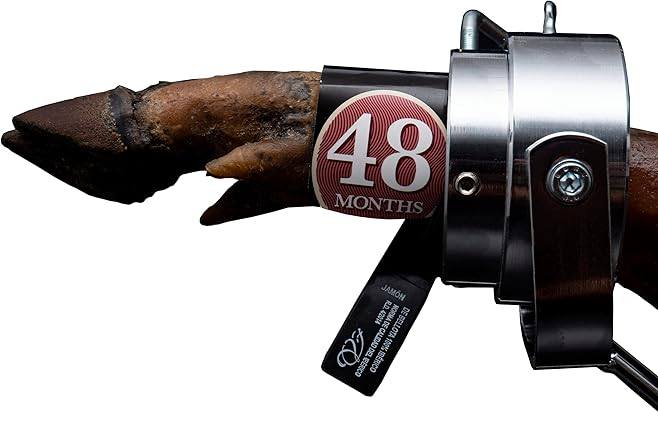
The finest Spanish hams represent a different tradition entirely. Jamón ibérico is cured as a whole leg for up to 48 months or more, developing extraordinary complexity through slow enzymatic change. It is a different experience from chorizo ibérico, though both share the same exceptional raw material.
The Ibérico vs Serrano ham comparison illustrates how dramatically the breed of pig affects the final product. Jamón serrano, made from white pigs, is pleasant and widely enjoyed, but it cannot replicate the depth of fat marbling and flavour that Ibérico genetics provide.
Key distinctions at a glance:
- Chorizo ibérico: Paprika-driven, bold, aromatic, unmistakably Spanish
- Salchichón ibérico: Pepper-seasoned, refined, quieter on the palate
- Jamón ibérico: Long-cured whole leg, the pinnacle of Spanish ham craftsmanship
- Jamón serrano: White pig, leaner, milder, more widely available
The tapas and tradition of Seville show how all these meats coexist beautifully on a single board, each playing a different role in the overall experience.
Flavour profile and serving suggestions for chorizo ibérico
Chorizo ibérico delivers rich flavours of acorn, paprika, and a melt-in-the-mouth texture that is highly prized by gourmets worldwide. The first thing you notice is the aroma: smoky, garlicky, and deeply savoury. Then comes the taste, layered and long-lasting, with the sweetness of acorn-fed fat balancing the heat of pimentón.
The flavour does not fade quickly. A single slice of quality chorizo ibérico lingers on the palate, evolving as you chew. That persistence is the mark of genuine slow curing and exceptional raw ingredients.
| Flavour note | Origin |
|---|---|
| Smokiness | Pimentón (smoked paprika) |
| Nuttiness | Acorn-fed Ibérico fat |
| Spice and warmth | Garlic and pimentón combination |
| Savoury depth | Extended curing process |
| Subtle sweetness | Natural Ibérico pork sugars |
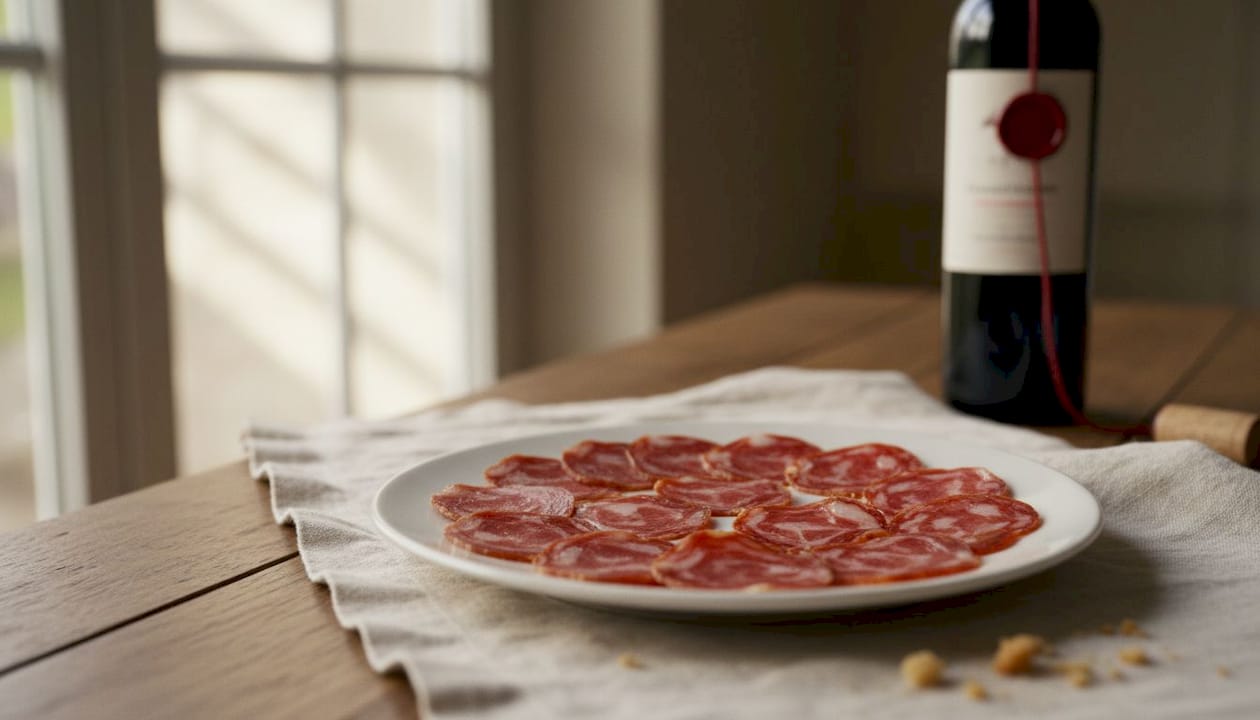
Serving chorizo ibérico well is straightforward, but a few principles make a real difference. The most important rule: always serve it at room temperature. Cold suppresses the fat’s aroma and flavour. Allow slices to rest for 15 minutes before serving.
Top serving suggestions:
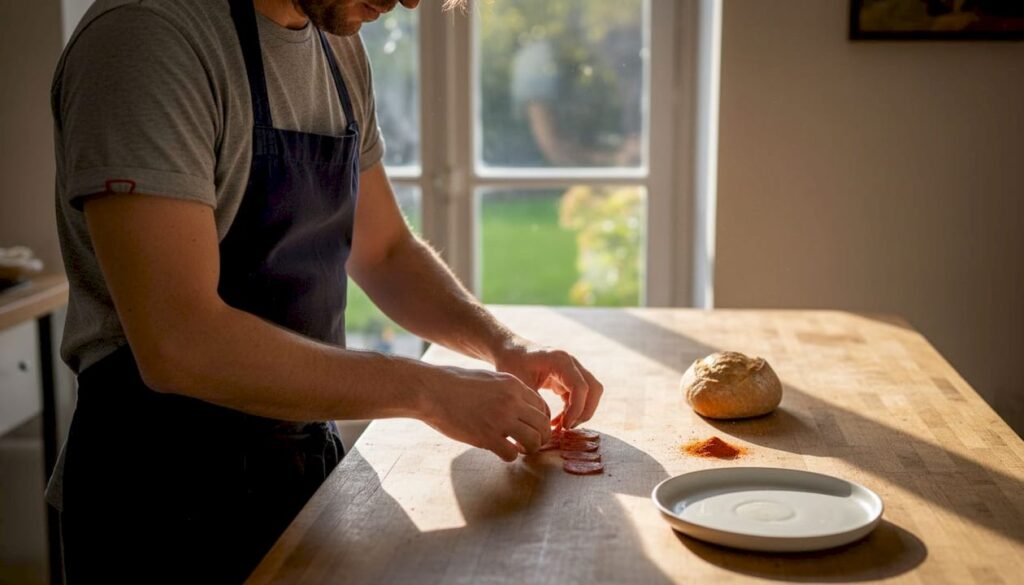
- Classic thinly sliced: Arrange on a wooden board alongside manchego cheese and crusty bread
- Tapas style: Serve with olives, pickled peppers, and a glass of chilled fino sherry
- Pizza topping: Add thin slices after baking for a gourmet finish
- Pasta or rice dishes: Slice and stir through warm dishes to release the paprika oils
- Charcuterie board: Pair with jamón ibérico and salchichón for a full Ibérico experience
The classic Seville dishes that feature chorizo ibérico demonstrate how versatile this product truly is in traditional Spanish cooking. For wine, Spanish wine pairings suggest full-bodied reds from Ribera del Duero or Rioja, which complement the smokiness beautifully. Dry sherry is equally superb.
The gourmet Spanish sausage experience is elevated further when paired with aged manchego or a creamy torta del casar cheese, both of which echo the richness of the Ibérico fat.
Pro Tip: Avoid serving chorizo ibérico alongside heavily acidic foods like pickled onions or vinegar-dressed salads. The acidity can overpower the delicate fat notes that make this product so special.
Why chorizo ibérico stands in a class of its own
After years of working with premium Ibérico products, one truth becomes clear: there is no shortcut to the authentic flavour of chorizo ibérico. Industrial producers have tried. They use white pigs, artificial colouring, and fast-drying chambers. The result looks similar on the surface but tastes hollow. The complexity simply is not there.
What makes chorizo ibérico irreplaceable is the convergence of three things that cannot be manufactured: the genetics of the Ibérico pig, the terroir of the dehesa, and the human skill of generations of artisan producers. Remove any one of these elements and the product changes fundamentally. This is why [Iberian breeds for quality](https://7bellotas.com/blog/why iberian breeds matter premium spanish cured meats) matter so profoundly in every Ibérico product.
For true gourmets, eating chorizo ibérico is not simply consuming a cured sausage. It is a sensory connection to a landscape, a culture, and a way of life that has endured for centuries. That is not sentimentality. That is the honest reason why connoisseurs keep returning to it, and why no imitation has ever truly replaced it.
Experience authentic chorizo ibérico for yourself
Reading about chorizo ibérico is one thing. Tasting it is another experience entirely. The depth of flavour, the quality of the fat, and the lingering finish can only be fully appreciated when the product is genuinely authentic, sourced from Spain’s finest small-scale producers.
At 7 Bellotas, we curate premium Ibérico products with the same passion and precision that goes into making them. Whether you are building your first Ibérico charcuterie board or adding to a seasoned collection, our selection brings the best of Spain directly to your table. Buy chorizo ibérico and discover the difference that true craftsmanship makes. Your palate will thank you.
Frequently asked questions
What makes chorizo ibérico different from regular chorizo?
Chorizo ibérico is made exclusively from Ibérico pigs and features a far more intense, complex flavour than regular chorizo, thanks to its traditional production methods and acorn-fed pork. The breed, diet, and slow curing process together create a depth that standard chorizo simply cannot replicate.
How should chorizo ibérico be stored?
Keep it in a cool, dry place away from direct light; once opened, wrap it tightly in wax paper or cling film and refrigerate to preserve its flavour and texture. Consume within two to three weeks of opening for the best experience.
Can chorizo ibérico be cooked as well as eaten sliced?
Yes, chorizo ibérico is versatile, enjoyed thinly sliced at room temperature or used as an ingredient in warm dishes such as stews, rice, and pasta. Cooking releases its paprika oils beautifully into whatever dish it accompanies.
What wines pair best with chorizo ibérico?
Spanish wines complement chorizo ibérico exceptionally well, particularly full-bodied reds from Rioja or Ribera del Duero and dry fino sherry. These wines match the smokiness and richness without overwhelming the palate.