TL;DR:
- Spanish salami, known as salchichón, has a distinct identity rooted in Iberian pork and traditional techniques.
- It differs from Italian salami and Spanish chorizo by ingredients, spice blends, and curing methods.
- Authentic Spanish salami emphasizes quality ingredients, regional diversity, and artisanal craftsmanship.
Most people assume salami is an Italian invention, full stop. Yet Spain has its own rich, centuries-old tradition of cured sausages that rival anything from Bologna or Milan. Spanish salami, most commonly known as salchichón, carries its own distinct identity rooted in Iberian pork, careful spice blends, and artisanal techniques passed down through generations. It is not a copy of anything. Understanding what separates Spanish salami from its European counterparts means looking closely at ingredients, regional pride, and the craft behind every slice. This article covers all of it, from flavour profiles to the cultural occasions where Spanish salami truly shines.
Table of Contents
- How Spanish salami differs from other cured sausages
- Traditional ingredients and preparation methods
- The diversity of regional Spanish salami
- Cultural significance and how to enjoy Spanish salami
- Why true Spanish salami is all about respecting tradition
- Where to discover and experience authentic Spanish salami
- Frequently asked questions
Key Takeaways
| Point | Details |
|---|---|
| Distinct flavour and texture | Spanish salami stands out through its choice of spices, premium meats, and coarse texture. |
| Rich regional diversity | Every part of Spain gives salami a unique taste, from Catalonia’s classics to Málaga’s richer styles. |
| Roots in tradition | Respect for artisanal methods and regional heritage defines authentic Spanish salami. |
| Not just chorizo | Salchichón and salami are separate from chorizo, both culturally and in their ingredients. |
| Best enjoyed fresh | For maximum flavour, slice Spanish salami thin and pair with local wines and cheeses. |
How Spanish salami differs from other cured sausages
The word salami is used loosely across Europe, but Spanish cured sausages have their own precise identity. Salchichón, Spain’s closest equivalent to salami, is not simply a local variation on an Italian theme. It is a product shaped by different animals, different spices, and a fundamentally different philosophy of curing.
The most common confusion among food lovers is between salchichón and chorizo. Both are Spanish cured sausages, but they serve entirely different roles on the table. Chorizo gets its signature red colour and smoky depth from pimentón, the smoked paprika that defines its taste. Salchichón, by contrast, relies on black pepper, nutmeg, and garlic. No paprika. No smoke. The result is a pale, firm sausage with a clean, peppery finish that is closer in spirit to Italian salami but unmistakably Spanish in character.
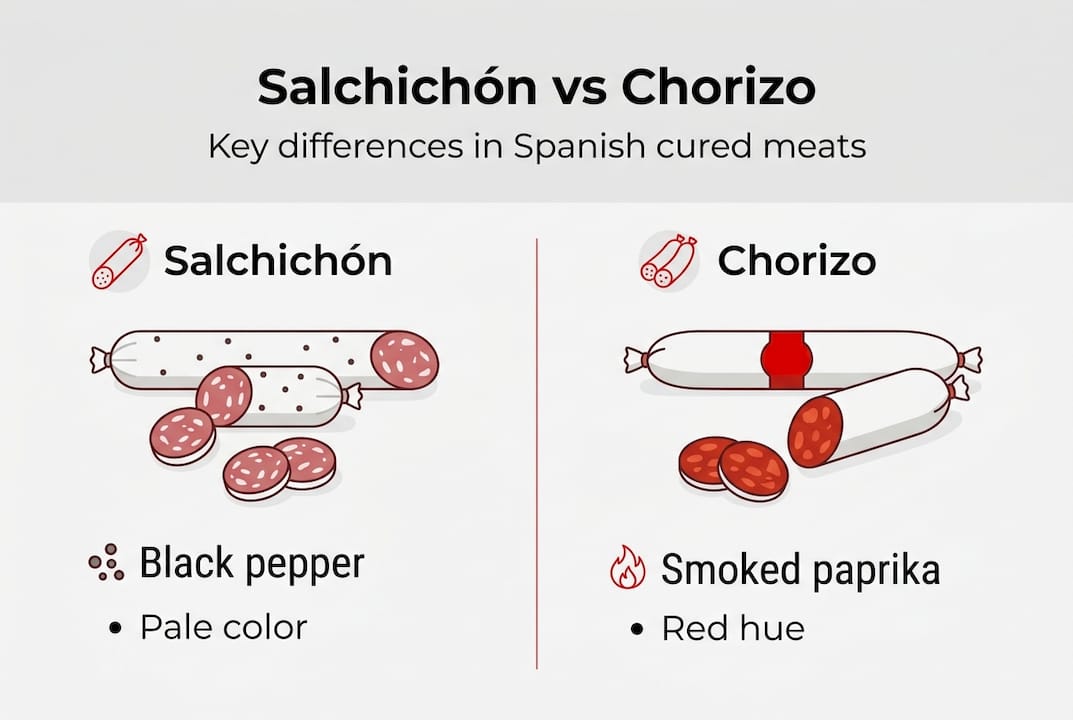
As salchichón and salami differ by spices and texture, the comparison with Italian salami is also worth making carefully. Italian salami often features wine, fennel, or chilli alongside pork fat. Spanish salchichón keeps its spice palette restrained and precise. The fat distribution is different too. Iberian pork, particularly from acorn-fed animals, carries a higher proportion of oleic acid, which gives the fat a silkier, more flavourful quality than standard commercial pork.
Here is a direct comparison of the key differences:
| Feature | Spanish salchichón | Italian salami | Spanish chorizo |
|---|---|---|---|
| Primary spice | Black pepper | Fennel or chilli | Smoked paprika |
| Colour | Pale pink to beige | Deep red | Vivid red |
| Fat type | Iberian pork fat | Commercial pork fat | Iberian pork fat |
| Smoke element | None | Rare | Yes |
| Curing time | 30 to 90 days | 30 to 120 days | 30 to 60 days |
Key distinctions worth noting:
- Grind size matters enormously. Salchichón typically uses a coarser grind, creating a more textured bite.
- Animal protein varies. Iberian pork is prized above all, but some regional varieties include beef.
- Casing type influences the final shape and how the sausage breathes during curing.
- Regional spice blends can shift the flavour dramatically from one province to another.
For a deeper look at how Salchichón Ibérico earns its place among Spain’s finest cured products, or to understand the distinct world of Chorizo Iberico, the differences become even more compelling.
Pro Tip: When tasting salchichón for the first time, focus on the texture before the flavour. Press a slice gently between your fingers. A well-made salchichón should feel firm but yielding, with visible flecks of fat distributed evenly throughout.
Traditional ingredients and preparation methods
The character of Spanish salami begins long before it reaches the curing room. It starts with the choice of meat, the quality of fat, and the precision of the spice blend.
Classic salchichón uses a relatively simple but carefully balanced set of ingredients. Black pepper is the dominant spice, present in whole or cracked form rather than ground fine. Nutmeg adds a subtle warmth. Garlic, used conservatively, provides depth without overpowering the pork. Salt draws out moisture and begins the preservation process. That is largely it. No artificial preservatives. No shortcuts.
The meat itself tells much of the story. Salchichón may use pork, acorn-fed varieties, beef, or spicy blends, and these choices directly shape the fat content and final texture. Iberian pork from acorn-fed animals, known as bellota grade, produces a fat that is rich in monounsaturated fatty acids. This fat melts at a lower temperature, which is why a slice of premium salchichón seems to dissolve on the tongue in a way that standard pork simply cannot replicate.
The artisanal process follows a clear sequence:
- Selection of meat and fat — lean cuts and back fat are chosen and trimmed carefully.
- Grinding — the meat is passed through a coarse plate, typically 8 to 12 millimetres, to preserve texture.
- Mixing — spices and salt are incorporated by hand or slowly in a mixer to avoid overworking the protein.
- Stuffing — the mixture is packed into natural casings, usually pork intestine, without air pockets.
- Resting — the sausage rests at low temperature to allow the spices to penetrate the meat evenly.
- Curing and drying — hung in natural dryers with controlled airflow, the salami loses moisture gradually over weeks or months.
The grinding plate size is a detail that separates artisanal producers from industrial ones. A coarser grind retains more of the meat’s natural structure, creating that satisfying chew. A finer grind produces a denser, more uniform texture, common in mass-produced versions.
The importance of purity in Spanish meats cannot be overstated here. Authentic producers avoid fillers and rely entirely on the quality of their raw ingredients. For those curious about how this philosophy extends across products, traditional Spanish ham examples illustrate the same commitment to craft.
Pro Tip: Fat content is your friend, not your enemy. A salchichón with visible, evenly distributed fat will always deliver more flavour than a lean version. Slow curing at lower temperatures allows the fat to integrate fully into the meat, creating a richer, more harmonious taste.
The diversity of regional Spanish salami
Spain is not one landscape. It is a country of mountains, plains, coastal humidity, and dry continental air. Each of these environments shapes how cured meats develop, and Spanish salami is no exception.
Catalonia is perhaps the most celebrated region for salami production. The Fuet de Vic, a slender, white-mould-coated sausage from the Osona region near Barcelona, is one of Spain’s most iconic cured products. Its thin casing and long, lean shape make it instantly recognisable. The flavour is mild, slightly tangy from the natural mould, and deeply satisfying.
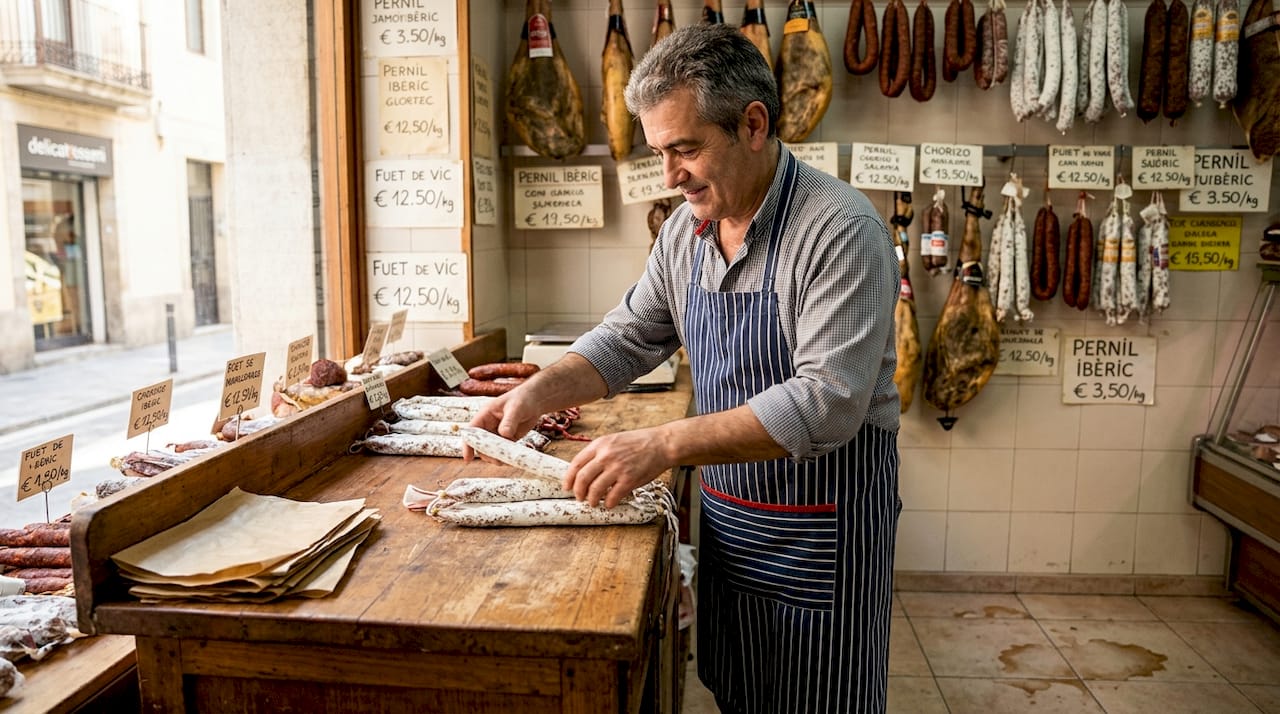
Extremadura, home to the finest Iberian pigs, produces salchichón of exceptional quality. The acorn-fed animals roam the dehesa, the ancient oak woodland pasture, and their meat carries a complexity that reflects their diet and lifestyle. Regional variations such as Salchichón Ibérico from Catalonia or salami from Málaga differ significantly in fat distribution, spice intensity, and texture, making each one a genuine regional product rather than a generic cured sausage.
Málaga, in Andalusia, produces a spicier variety influenced by the region’s Moorish culinary heritage. Castile offers firmer, more robustly spiced versions suited to the harsher inland climate.
Classic regional Spanish salami varieties worth seeking out:
- Fuet de Vic (Catalonia): slender, mild, with natural white mould casing
- Salchichón Ibérico de Bellota (Extremadura): rich, complex, from acorn-fed Iberian pigs
- Salchichón de Málaga (Andalusia): spicier, with a firmer texture
- Salchichón de Vic (Catalonia): coarser than Fuet, more pronounced pepper flavour
- Salchichón de Castilla (Castile): robust, dense, suited to cold-climate curing
“The terroir of Spain does not just shape its wines. It shapes every cured product that hangs in its drying rooms. A salchichón from Extremadura and one from Catalonia are as different as two wines from opposite ends of the country.”
For a fuller picture of Salchichón Ibérico varieties, or to understand how breed and feed influence flavour in Iberico vs Serrano ham, the regional dimension becomes even clearer. The reason Spanish pork quality stands apart globally is rooted in exactly this kind of geographic and genetic diversity.
Cultural significance and how to enjoy Spanish salami
In Spain, cured meats are not a luxury reserved for special occasions. They are woven into daily life, from the midday bocadillo to the elaborate tapas spread at a family gathering. Spanish salami holds its own distinct place in this culture, separate from chorizo and jamón, and equally prized.
As salchichón and chorizo each hold their own place in Spanish meals, understanding that distinction helps you appreciate why salchichón appears on the table when a cleaner, more refined flavour is wanted. It does not compete with chorizo. It complements it.
Festive gatherings across Spain, from Christmas Eve suppers to summer village festivals, almost always feature a board of mixed embutidos, cured sausages, where salchichón sits alongside chorizo, jamón, and lomo. Its pale slices provide visual contrast and a flavour counterpoint that balances the richer, smokier elements.
How to enjoy Spanish salami at its best:
- Pair with aged Manchego — the nutty, slightly crystalline texture of aged Manchego mirrors the complexity of salchichón beautifully.
- Choose a light red wine — a young Rioja or a Garnacha from Aragón complements the pepper notes without overwhelming them.
- Serve at room temperature — remove salchichón from the refrigerator at least 20 minutes before serving to allow the fat to soften and the aromas to open up.
- Slice thinly — a sharp knife and thin slices maximise surface area, releasing more aroma and making the texture more pleasurable.
- Keep it simple on the board — salchichón does not need accompaniments that compete. Good bread, a little olive oil, and perhaps some marcona almonds are enough.
Culinary tourism in Spain increasingly centres on the embutido tradition, with regions like Extremadura and Catalonia offering dedicated tasting routes. Understanding the Iberian breed significance behind these products adds another layer of appreciation when you taste them in their place of origin.
Pro Tip: Store salchichón in a cool, dry place wrapped loosely in paper rather than cling film. Once cut, cover the exposed end with a thin slice of its own fat or a piece of beeswax paper to prevent the surface from drying out unevenly.
Why true Spanish salami is all about respecting tradition
There is a tendency in the modern food market to treat cured meats as interchangeable. A salami is a salami. A sausage is a sausage. This thinking does a disservice to products that have taken centuries to develop their identity.
True Spanish salami cannot be replicated by simply following a recipe. It requires the right breed of pig, the right feed, the right climate for drying, and the right hands to guide the process. Mass-produced versions cut corners at every stage, using commercial pork, artificial casings, and accelerated drying. The result is technically edible but fundamentally hollow.
The producers who matter are those who understand that Spanish ham artisanship extends to every cured product they make. Salchichón from a serious Extremaduran producer is not just a sausage. It is a record of the land, the animal, and the maker’s knowledge. When you seek out authentic Spanish salami, look for regional designations, named breeds, and producers who can tell you exactly where their pigs were raised and what they ate. That transparency is the mark of genuine craft. Anything less is just a product.
Where to discover and experience authentic Spanish salami
Ready to taste the difference for yourself? Here’s where to start.
Finding genuinely artisanal Spanish salami outside Spain used to require a trip to a specialist delicatessen or, better still, a visit to the country itself. That has changed. At 7 Bellotas, you can access a curated selection of premium Iberico products, including authentic Spanish salami, sourced directly from small-scale producers who follow traditional methods. Every product reflects the same commitment to acorn-fed pork, natural curing, and regional integrity that defines the best of Spain’s embutido tradition.
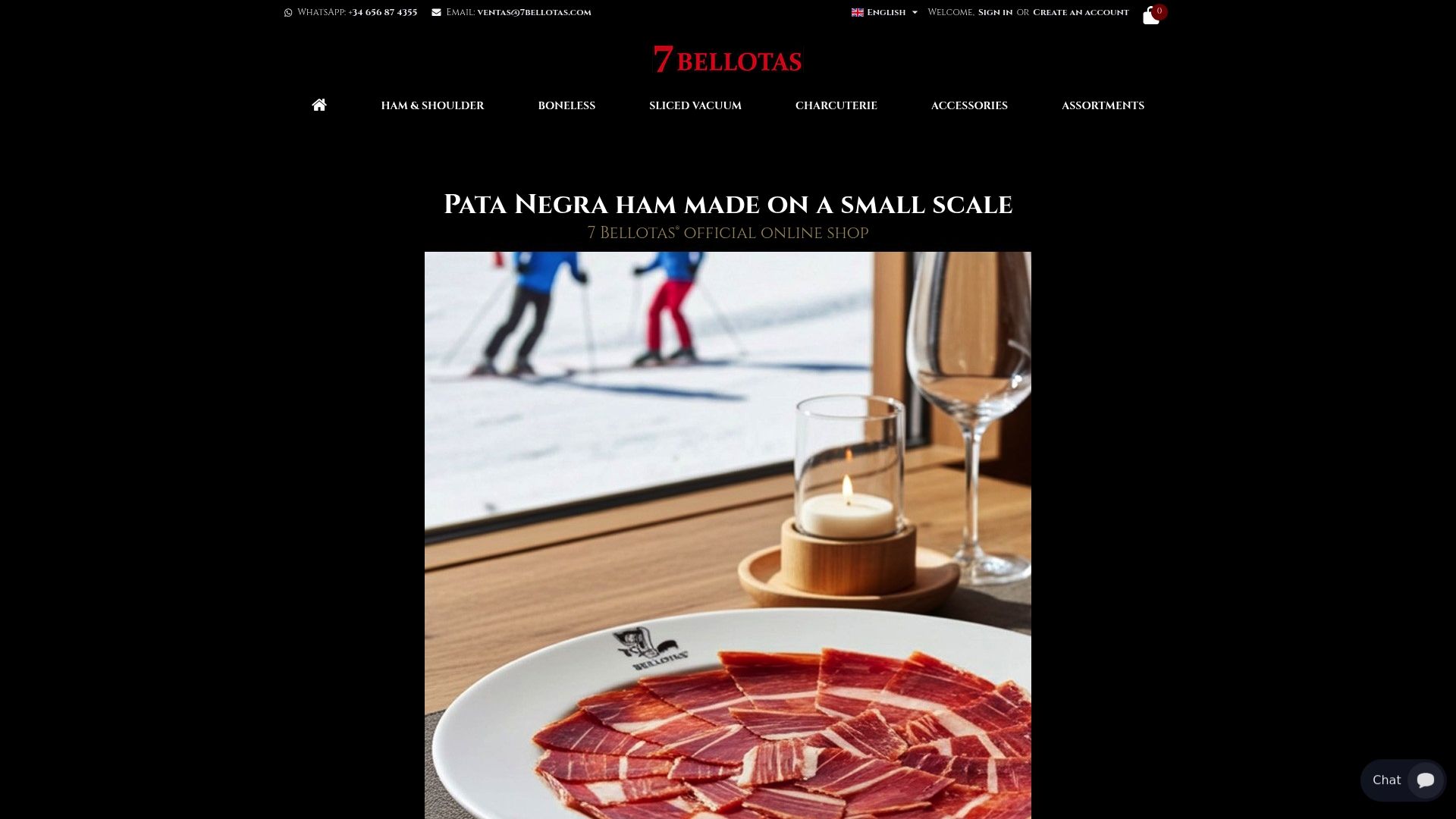
Whether you are building a gourmet tapas board, exploring Spain’s cured meat heritage for the first time, or searching for a product that genuinely delivers on its promise, the range at 7 Bellotas offers a trustworthy starting point. Quality this carefully sourced speaks for itself.
Frequently asked questions
What is the main ingredient in Spanish salami?
The main ingredient is pork, often from Iberian breeds, though some varieties include beef or acorn-fed pork. The breed and feed of the animal directly influence the fat quality and final flavour.
How is Spanish salami different from Italian salami?
Spanish salami uses black pepper, nutmeg, and specific Iberian pork cuts, while Italian salami often incorporates fennel, wine, or chilli. As salchichón is distinct by its spice blend and texture, the two traditions remain clearly separate despite surface similarities.
What is the difference between salchichón and chorizo?
Salchichón is seasoned with black pepper and carries no smoked paprika, giving it a pale colour and clean flavour. Chorizo relies on pimentón for its signature red colour and smoky, robust taste.
What are the most famous Spanish salami varieties?
Famous varieties include Salchichón Ibérico de Bellota from Extremadura, Fuet de Vic from Catalonia, and Salchichón de Málaga from Andalusia, each offering a distinct regional character in texture, spice, and fat content.