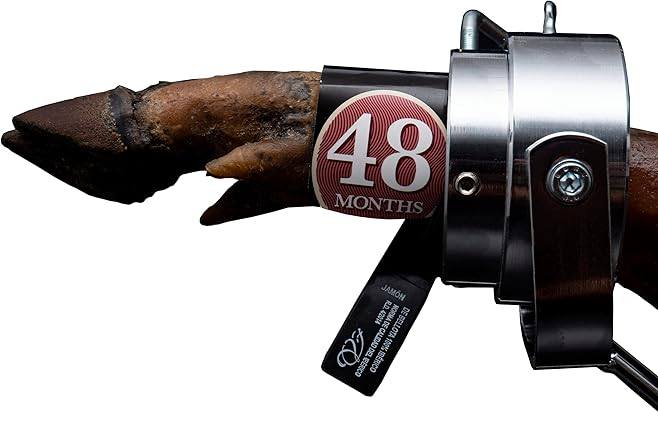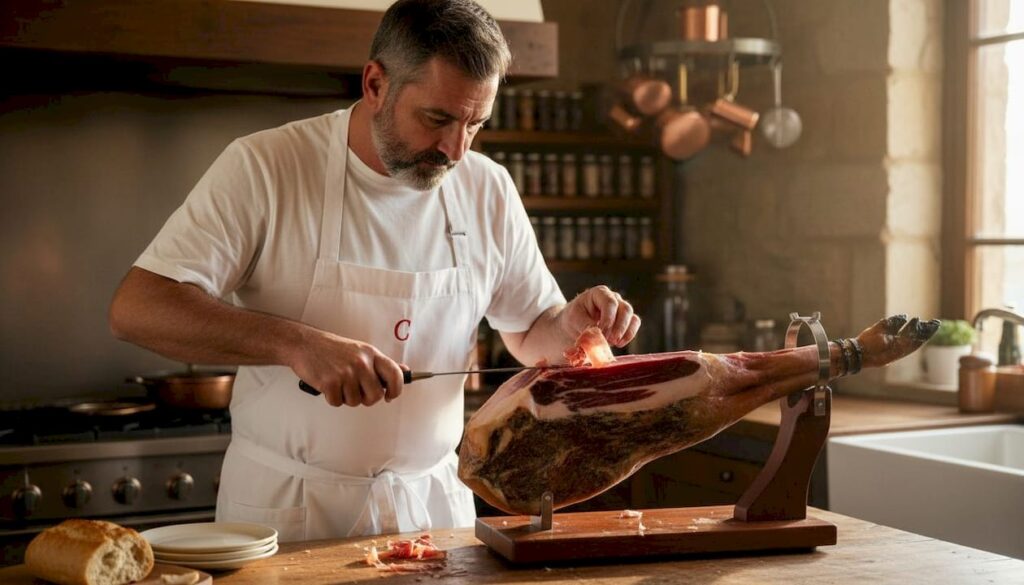
There is a persistent belief among food lovers that a well-sourced local cured ham can stand in for the real thing. It cannot. Authentic imported gourmet meats, particularly Spanish Ibérico ham, represent a category entirely apart from anything produced outside Spain’s ancient dehesa landscapes. The breed, the diet, the climate, the curing traditions passed down across generations — none of these can be transplanted. For those who have tasted genuine Pata Negra, the difference is not subtle. It is profound. This guide explores exactly why discerning palates seek out imported gourmet meats, what makes them irreplaceable, and how to navigate the process of bringing them to your table.
Table of Contents
- What makes imported gourmet meats truly special?
- Why can’t you get this quality locally? Scarcity, tradition, and supply
- Navigating the import process: Regulations, tariffs, and supply trends
- Real-world benefits: The gourmet experience for celebrations and connoisseurs
- Our take: Why authenticity matters more than ever
- Explore authentic Spanish gourmet meats
- Frequently asked questions
Key Takeaways
| Point | Details |
|---|---|
| Unmatched quality | Imported Ibérico ham delivers unique flavour, marbling, and authenticity unavailable from local alternatives. |
| Strict production standards | The rarity and artisanal process in Spain create limited supply and drive value for true connoisseurs. |
| Essential regulations | Certified importers and formal procedures are required to ensure legal, safe entry of gourmet meats. |
| Elevated experience | Choosing genuine imported meats enhances events, tastings, and gifting with prestige and real tradition. |
What makes imported gourmet meats truly special?
The term gourmet meat is used freely, but authentic imported gourmet meats occupy a different world entirely. At the pinnacle sits Jamón Ibérico de Bellota — acorn-fed Ibérico ham from Spain. Understanding why it commands such reverence starts with the animal itself.
The Iberian pig is a heritage breed found almost exclusively in Spain and Portugal. Unlike commercial pig breeds optimised for rapid growth, the Iberian pig carries a unique genetic capacity to infiltrate its muscle tissue with fat. This intramuscular marbling is what produces the extraordinary silky texture and depth of flavour that connoisseurs prize. Feed that pig on bellotas (acorns) during the montanera season, and the fat becomes rich in oleic acid — the same heart-friendly fat found in olive oil.
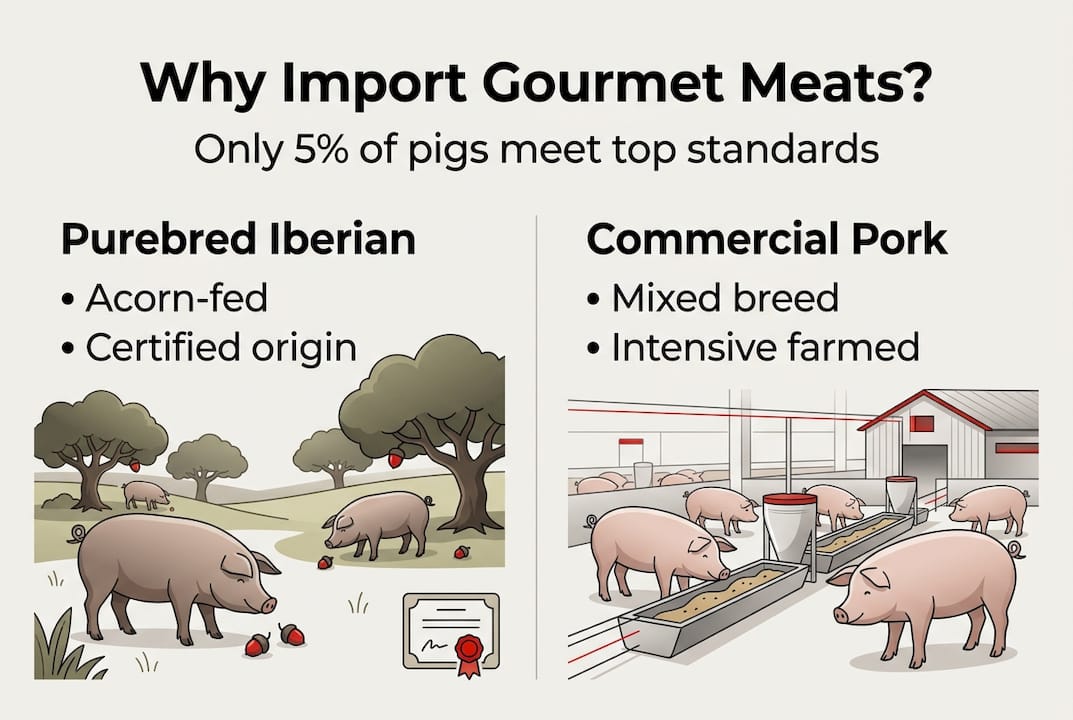
Terroir matters here as much as it does in fine wine. Spain’s dehesa — a vast, ancient ecosystem of cork oak and holm oak forests — provides the specific acorns, grasses, and microclimate that shape the pig’s flavour profile. You cannot recreate this in another country. The unique Spanish flavour is inseparable from its place of origin.
Then comes the curing. Legs are salted, dried in natural mountain air, and hung in traditional secaderos (natural dryers) for anywhere from 36 to over 64 months. Time is the final ingredient. No shortcut exists.
Key qualities that set authentic Ibérico ham apart:
- Breed: Purebred Iberian pig, carrying unique fat-marbling genetics
- Diet: Acorn-fed during the montanera, producing oleic-acid-rich fat
- Terroir: Spain’s dehesa ecosystem, irreplaceable by geography
- Curing time: 36 to 64-plus months in natural mountain conditions
- Flavour: Nutty, complex, melt-in-the-mouth — unavailable locally
“Ibérico ham offers unmatched nutty flavour, extraordinary marbling, and a melt-in-the-mouth texture that is simply unavailable from local sources.”
When sourcing Iberico ham, understanding these foundations helps you appreciate why the heritage and rarity of the product justifies every penny of its price.
Why can’t you get this quality locally? Scarcity, tradition, and supply
Knowing what sets gourmet imports apart, it is crucial to understand why quality like this is nearly impossible to replicate locally. The answer lies in a combination of biology, geography, and strict production controls.
Only 5% of Iberian pigs are purebred and acorn-fed to the standard required for top-grade Jamón Ibérico de Bellota. The rest are crossbreeds or grain-fed animals producing a lesser product. This is not a commercial choice — it is a biological and geographical reality. Purebred Iberian pigs grow slowly. They require enormous tracts of dehesa land, roughly one hectare per pig during the montanera. Spain simply does not have unlimited dehesa, and no other country has it at all.
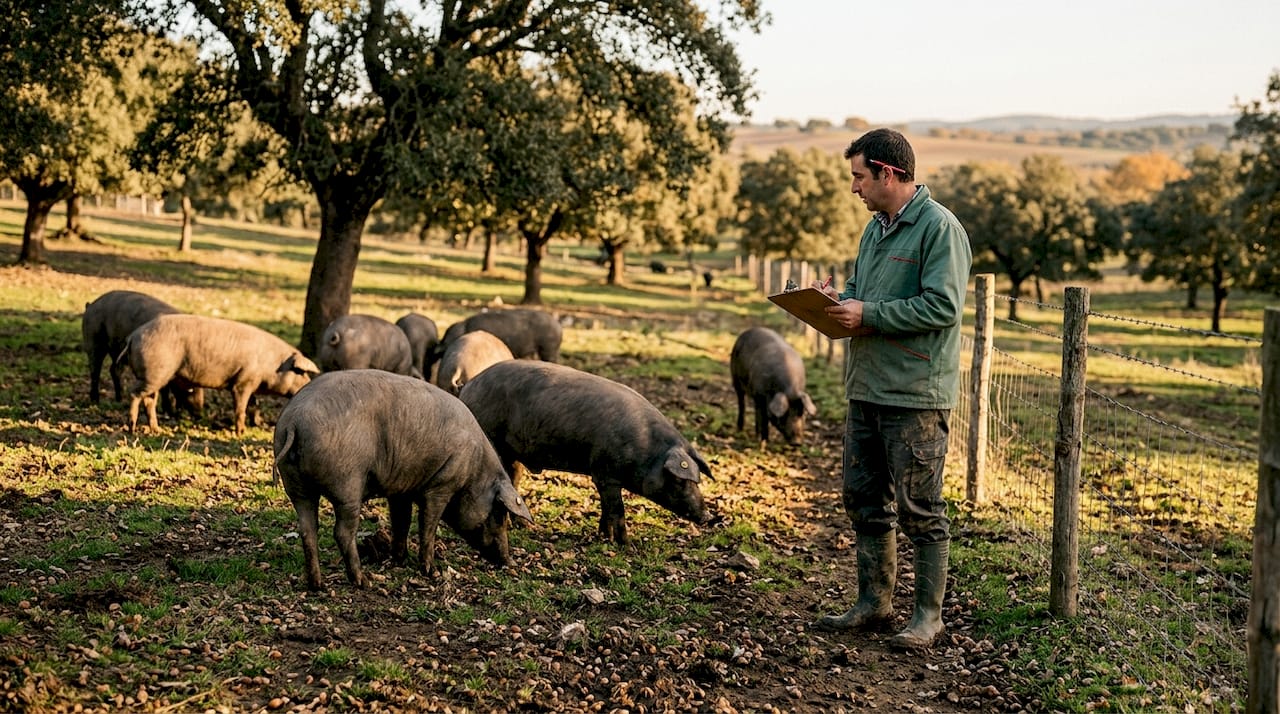
Once slaughtered, the curing process demands patience that most commercial producers cannot afford. Legs hang for a minimum of 36 months, with premium pieces reaching 48, 60, or even 64-plus months. Temperature, humidity, and airflow are managed naturally, not mechanically. Understanding why it’s expensive becomes clear when you map out the timeline and land requirements involved.
| Factor | Authentic Ibérico de Bellota | Standard cured ham |
|---|---|---|
| Pig breed | Purebred Iberian | Commercial crossbreed |
| Diet | Acorn-fed (bellota) | Grain-fed |
| Curing time | 36 to 64-plus months | 9 to 18 months |
| Land requirement | ~1 hectare per pig | Intensive farming |
| Supply percentage | ~5% of Iberian pigs | Mass produced |
| Flavour profile | Nutty, complex, silky | Mild, uniform |
Strict Spanish and EU regulations govern every stage of production. The Denominación de Origen system certifies origin, breed, and diet. Counterfeit or substandard products cannot legally carry the designation. This regulatory rigour is part of what makes the Iberian pig breeds so significant to the final product’s integrity.
Pro Tip: When purchasing Ibérico ham, look for the black label (etiqueta negra) — this designates 100% purebred Iberian pigs fed exclusively on acorns. It is the highest classification available and the clearest signal of authenticity.
Local producers in the UK, USA, or elsewhere simply cannot replicate these conditions. The dehesa cannot be imported. The breed’s genetic heritage cannot be rushed. The mountain air cannot be manufactured. Scarcity is not a marketing device — it is a structural reality.
Navigating the import process: Regulations, tariffs, and supply trends
Having explored what makes these meats so rare and desirable, it is vital to demystify how true gourmet products make their way across borders. The process is more complex than ordering a parcel from a neighbouring country.
For UK and US consumers, the most important fact is this: personal travellers cannot import Ibérico ham. No matter how carefully you pack it, bringing cured pork across international borders as a personal import is prohibited. Only certified commercial importers with the correct documentation may legally ship these products.
For the US market specifically, the importing regulations are stringent. Requirements include USDA/FSIS eligibility for ready-to-eat cured pork from Spain, sanitary certificates from the Spanish Ministry of Agriculture, FDA registration, and Prior Notice submission before each shipment. Every commercial consignment is subject to inspection.
Costs have also increased. A 20% EU tariff on cured ham, applied since 2025 under HS classification 0210.19, adds meaningfully to the retail price. Customs fees compound this further. These are not hidden costs — they are structural features of the import process that reputable suppliers absorb or pass on transparently.
Key requirements for importing Spanish cured meats commercially:
- USDA/FSIS equivalence certification for the exporting country
- Sanitary certificates from Spanish authorities
- FDA registration and Prior Notice for each shipment
- Correct HS tariff classification (0210.19 for cured ham)
- Compliance with ASF and FMD disease control protocols
Despite these hurdles, demand is surging. Tips for ordering Spanish ham online from certified suppliers simplify the process considerably. Following buying tips from specialists ensures you receive a product that has cleared every regulatory checkpoint with its quality intact.
Real-world benefits: The gourmet experience for celebrations and connoisseurs
Regulatory hurdles aside, gourmet imports deliver real enjoyment — here is how they transform personal and social dining.
The numbers confirm what connoisseurs already know. US ham imports from Spain reached $247.8 million in 2022, and in Q1 2025, Serrano exports alone rose 38.42% to 598.55 tons, driven by accelerating gourmet demand. People are not importing Spanish cured meats out of novelty. They are importing them because nothing else compares.
For entertaining, a whole leg of Ibérico ham on a jamonero stand is an immediate centrepiece. It signals taste, knowledge, and generosity. Guests who have never encountered genuine Pata Negra are invariably astonished by the flavour. For those who have, it is a mark of respect.
How to make the most of imported gourmet meats:
- Serve at room temperature. Remove from packaging at least 30 minutes before serving to allow the fat to soften and the aroma to open fully.
- Slice thinly. Authentic Ibérico ham is best cut in long, translucent slices that melt on the tongue. Invest in a proper ham knife.
- Pair thoughtfully. Dry fino sherry, aged Manchego, and crusty bread are classic companions. Avoid strong flavours that compete with the ham’s complexity.
- Gift with intention. A vacuum-packed selection of sliced Ibérico ham makes a genuinely memorable gift for any food lover.
- Explore serving suggestions from specialists to discover creative presentations beyond the classic tasting board.
Beyond flavour, there are real nutritional benefits worth noting. The oleic-acid-rich fat profile of acorn-fed Ibérico ham is genuinely distinctive, setting it apart from standard cured meats nutritionally as well as gastronomically.
Pro Tip: For a tasting event, offer three grades side by side — Serrano, Ibérico de Cebo, and Ibérico de Bellota. The progression in flavour, texture, and aroma tells the story of why the top grade commands its price without a single word of explanation needed.
Our take: Why authenticity matters more than ever
The globalisation of food has brought extraordinary variety to tables worldwide. That is genuinely positive. But it has also created a market saturated with imitations, approximations, and products that borrow the language of authenticity without earning it.
For serious connoisseurs, this matters. The difference between a genuine Jamón Ibérico de Bellota, hung for over 48 months in a mountain secadero, and a product labelled loosely as “Ibérico-style” is not a matter of marketing. It is a matter of craft, biology, and irreplaceable time. Shortcuts dilute everything that makes these products worth seeking out.
The curing and flavour differences between a 36-month and a 64-month cure are not incremental — they are transformative. Authenticity is not a premium add-on. It is the entire point. When you invest in a genuine imported gourmet meat, you are purchasing something that cannot be replicated by any other means. That is worth protecting, and worth insisting upon.
Explore authentic Spanish gourmet meats
For those inspired to experience the difference, accessing true Spanish gourmet is just a step away. At 7 Bellotas, every product is sourced from small-scale artisan producers who follow traditional curing methods, natural dryers, and acorn-fed heritage breeds. The selection spans whole legs aged from 36 to over 64 months, sliced vacuum-packed portions, and curated gift options — all shipped directly from Spain.
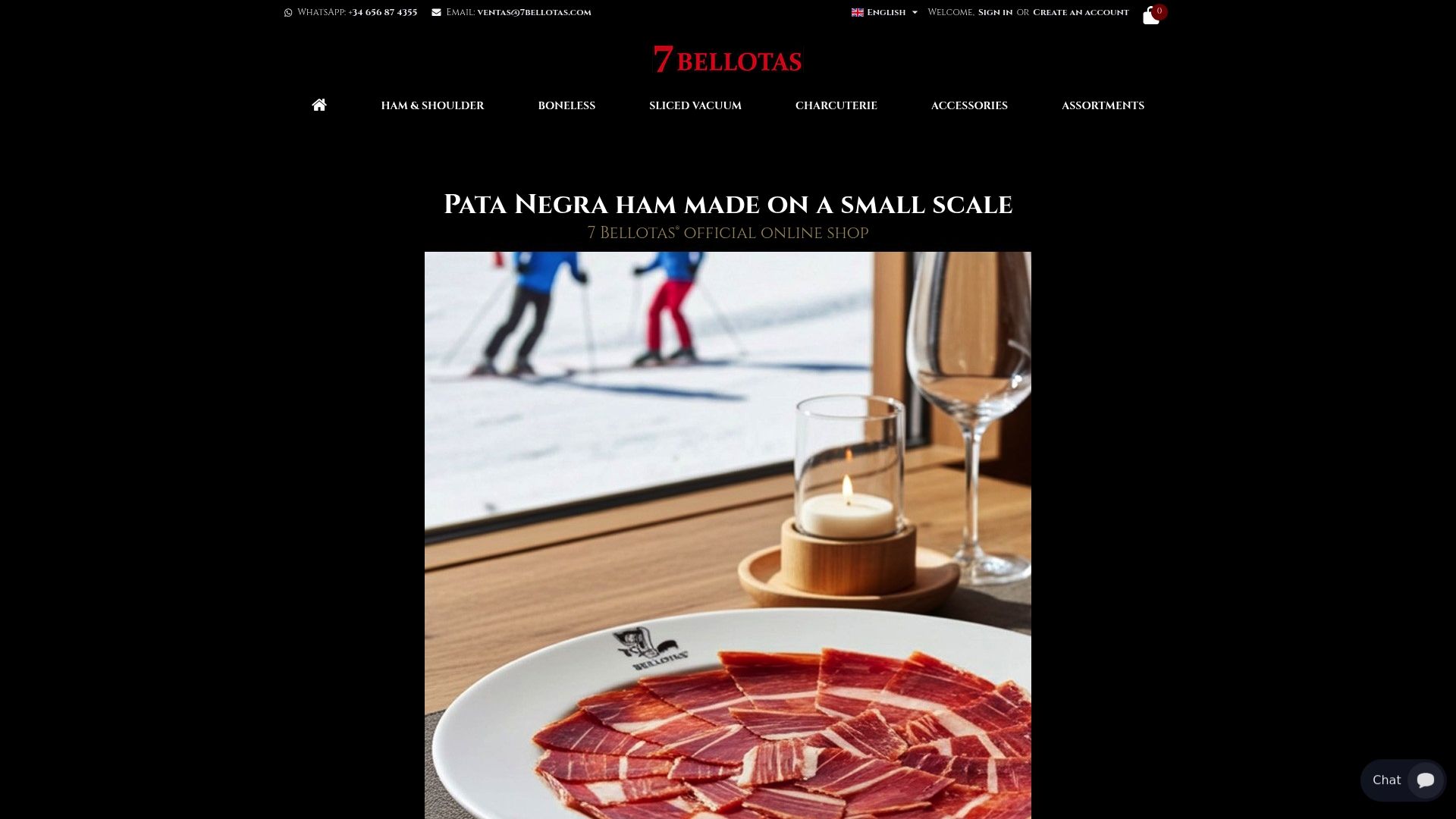
Whether you are planning a special occasion, building a tasting experience, or simply treating yourself to something genuinely extraordinary, shop authentic Iberico ham and discover what real gourmet quality tastes like. No approximations. No shortcuts. Just the authentic article, delivered to your door.
Frequently asked questions
Can I bring Iberico ham into the UK or USA as a personal traveller?
No. Personal travellers cannot import Ibérico ham into the UK or USA. Only certified commercial importers with the correct FSIS equivalence and disease control documentation may legally ship these products.
Why is authentic Iberico ham so scarce and expensive?
Only 5% of Iberian pigs are purebred and acorn-fed to the required standard. Combined with vast land requirements, slow natural growth, and a 36 to 48-plus month curing process, supply is structurally limited and the costs are genuinely high.
Are there extra costs when importing gourmet meats?
Yes. A 20% EU tariff on cured ham has applied since 2025, alongside HS 0210.19 classification fees and customs charges, all of which contribute to the final retail price.
What distinguishes Spanish Ibérico ham from local cured hams?
Authentic Ibérico ham derives its unmatched nutty flavour, extraordinary marbling, and silky texture from a unique breed, an exclusive acorn diet, and centuries-old curing traditions found only in Spain’s dehesa — none of which can be replicated elsewhere.