Even the most exclusive gourmet retailers occasionally stock Iberico hams of uncertain heritage, challenging the assumption that luxury always equals authenticity. For connoisseurs investing in premium Spanish cured meats, traceability systems track each pig from birth to cured product, capturing farm origin, feed, and journey details. This article reveals how traceability works, why it matters for your palate and investment, and how to confidently select authentic Iberico ham every time.
Table of Contents
- The origins of Iberico ham traceability: Why it matters
- How traceability systems work: From farm to table
- Coloured seals and certifications: Decoding labels for assurance
- Expert controls: From caladors to cutting-edge technology
- How traceability protects flavour, tradition, and investment
- Discover authentic Iberico ham with confidence
- Frequently asked questions
Key Takeaways
| Point | Details |
|---|---|
| Every stage is recorded | From farm to curing cellar, each step is tracked for your assurance. |
| Coloured seals build trust | Official seals visually confirm breed, feed, and authenticity at a glance. |
| Expert checks prevent fraud | Sensory experts and advanced tech combine to validate origin and quality. |
| Flavour and value are safeguarded | Traceability ensures only genuine Iberico hams deliver the true gourmet experience. |
The origins of Iberico ham traceability: Why it matters
Industrialisation and surging global demand for Iberico ham created opportunities for fraud and mislabelling. Producers began blending breeds, substituting grain for acorns, and misrepresenting curing times. The industry responded with rigorous oversight and protected designations to restore consumer confidence.
Traceability provides concrete assurance for connoisseurs. It guarantees the meat’s journey and quality through verified records at every stage. What gets tracked includes:
- Pig lineage and breed purity
- Feed type and acorn consumption
- Farm location and dehesa environment
- Curing duration and cellar conditions
These systems emerged from necessity. As one industry expert notes:
“Without transparent tracking, even knowledgeable buyers risk paying premium prices for inferior products masquerading as authentic Pata Negra.”
For those seeking to identify authentic Iberico Jamon, understanding food traceability seals becomes essential. Each checkpoint validates authenticity, transforming abstract claims into verifiable facts.
How traceability systems work: From farm to table
Traceability begins with ear tags or microchips, and collects lineage, birth date, feed, farm movements and more. Modern technology and traditional protocols work together to create an unbroken chain of custody.
The process follows these steps:
- Birth registration: Each piglet receives unique identification linking to genetic records
- Feeding documentation: Daily acorn consumption logged during montanera season
- Movement tracking: Transport between farms and facilities recorded with timestamps
- Slaughter verification: Weight, age, and health status confirmed at processing
- Curing monitoring: Temperature, humidity, and duration tracked throughout maturation
- Final certification: Coloured seals and QR codes applied before distribution
Advanced controls augment traditional oversight. Audits, individual pig inspections, blockchain records, and isotope analysis close potential loopholes. The HAMTRACE project employs artificial intelligence to verify origin with remarkable precision.
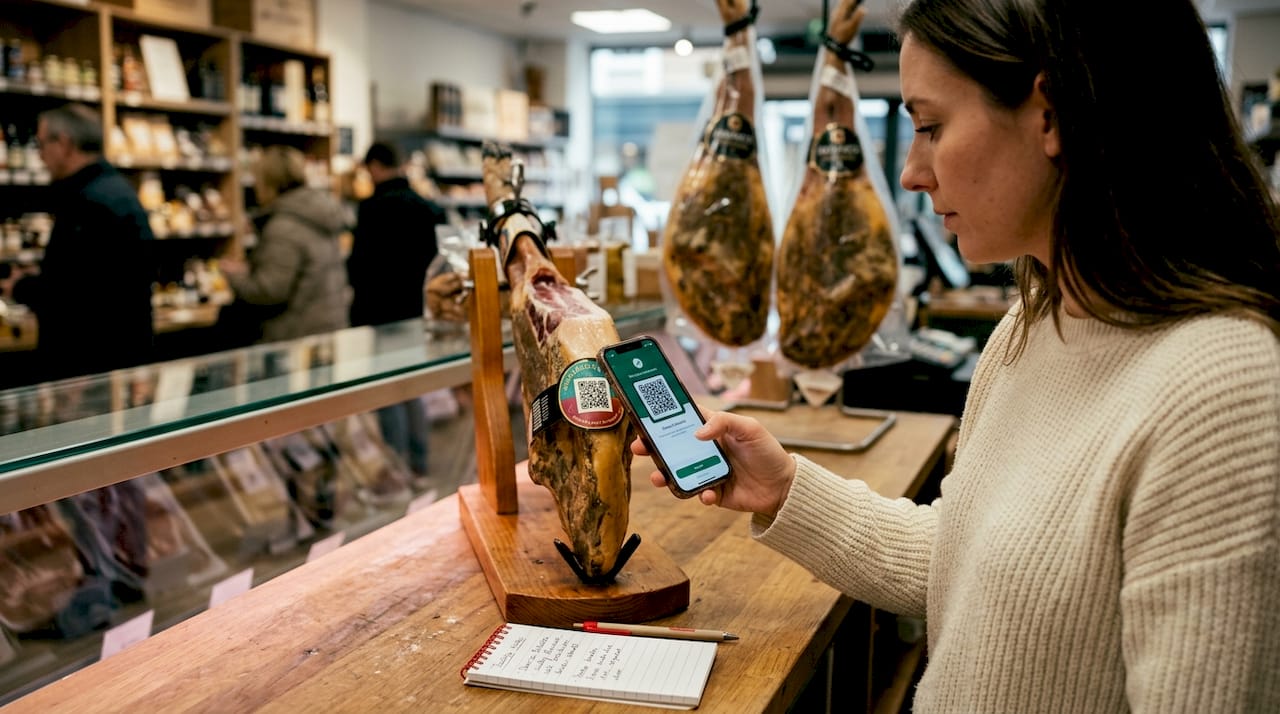
Consumers can access this data directly. Using the ASICI app, you scan a ham’s seal and view its complete history: farm coordinates, acorn percentage, curing start date, and calador inspection notes.
Pro Tip: Always verify both the coloured seal and QR code before purchase. Legitimate producers welcome scrutiny and provide instant access to traceability records.
Here’s what different checkpoints reveal:
| Stage | Data captured | Verification method |
|---|---|---|
| Farm | Breed purity, birth date | DNA testing, ear tags |
| Montanera | Acorn consumption, weight gain | Daily logs, GPS tracking |
| Slaughter | Age, health status | Veterinary inspection |
| Curing | Duration, conditions | Digital sensors, calador probes |
| Distribution | Origin, certification | Blockchain, QR codes |
This comprehensive approach ensures every claim about your ham can be substantiated. For more context on facts about Jamon Iberico and why Iberian breed importance matters, traceability transforms abstract quality into measurable reality.
Coloured seals and certifications: Decoding labels for assurance
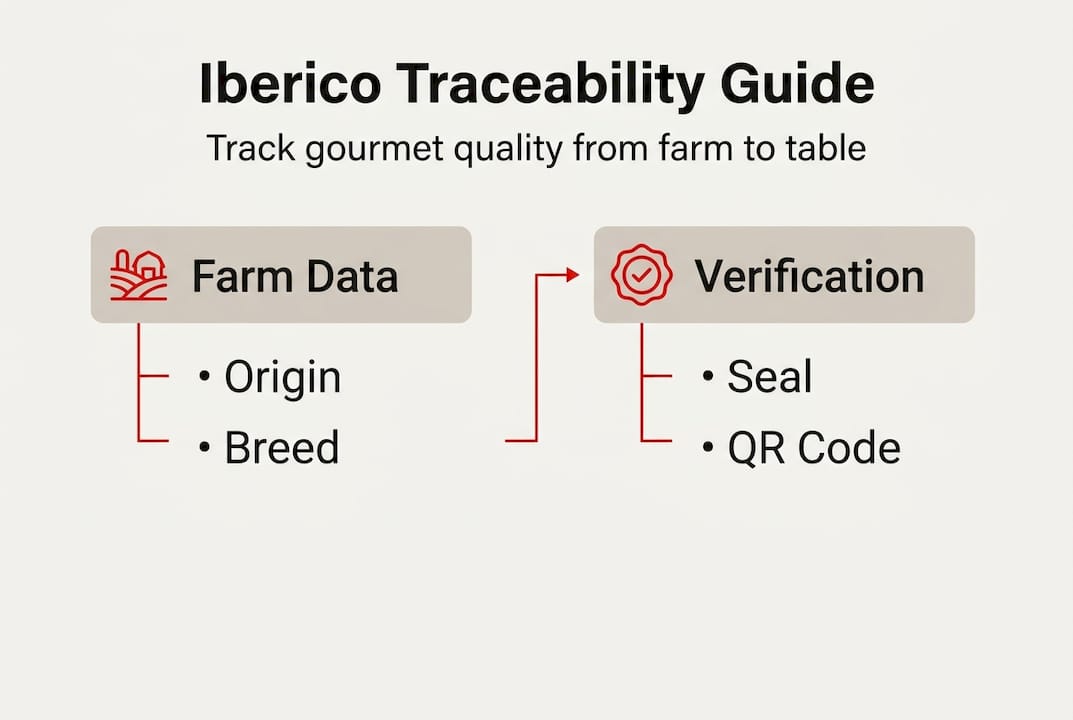
Every ham receives a colour-coded seal helping buyers distinguish by breed, diet, and origin. These visible markers translate complex traceability data into instant recognition.
The seal system works as follows:
- Black seal: 100% Ibérico breed, acorn-fed during montanera
- Red seal: 50–75% Ibérico breed, acorn-fed
- Green seal: 100% Ibérico breed, grass-fed or free-range
- White seal: Ibérico breed, grain-fed in controlled environments
Protected Designation of Origin (PDO) certifications add another layer. Dehesa de Extremadura, Guijuelo, and Los Pedroches PDOs guarantee specific regional practices and terroir characteristics.
Pro Tip: Use the seal and QR code to avoid costly mistakes, even from reputable suppliers. Scan before buying to confirm the ham matches its claimed category.
Here’s a comparison of what each seal guarantees:
| Seal colour | Breed purity | Feed type | Typical price range |
|---|---|---|---|
| Black | 100% Ibérico | Acorns only | £££££ |
| Red | 50–75% Ibérico | Acorns + supplement | ££££ |
| Green | 100% Ibérico | Pasture grass | £££ |
| White | Ibérico | Grain feed | ££ |
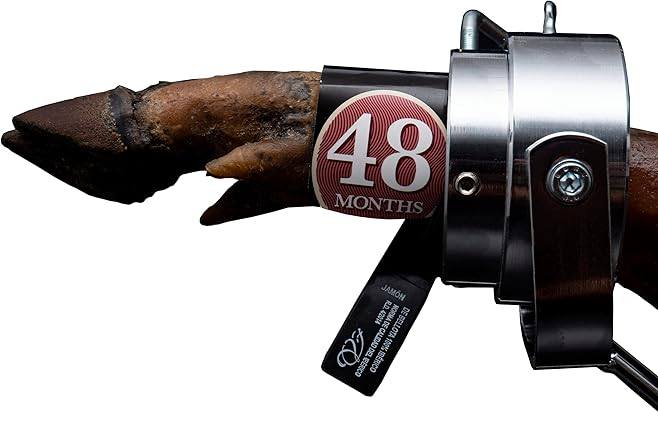
In-store, check for both breed information and diet markers. The seal should be intact, attached to the hoof, and feature a readable QR code. For tips for selecting authentic Iberico ham, these visual cues provide your first line of defence against mislabelling.
Expert controls: From caladors to cutting-edge technology
Traditional sensory expertise and modern analytics work together to validate traceability claims. Caladors use sensory probes to examine hams; projects like HAMTRACE employ AI and isotope analysis for >90% discrimination of PDO origin.
The calador’s role remains irreplaceable. These master assessors insert a thin bone probe into specific points of the ham, withdrawing it to evaluate:
- Aroma intensity and complexity
- Fat texture and marbling distribution
- Moisture content and curing progression
- Flavour development and maturity
Expert caladors use multi-sensory probes for maturity verification after curing in high-altitude cellars. Their assessments determine whether a ham meets the standards its traceability records claim.
Modern technology extends this validation beyond human senses. Isotope analysis examines the ham’s chemical signature, revealing the pig’s diet and geographic origin with scientific precision. Fatty acid profiling confirms acorn consumption. DNA testing verifies breed purity.
As one researcher explains:
“Pairing centuries-old sensory protocols with advanced analytics closes loopholes that neither method could address alone. The calador detects nuances machines miss, while technology prevents subjective bias.”
For those exploring Iberico ham quality checklist or Iberico ham tasting techniques, understanding these dual controls builds confidence. When recognising authentic Iberico ham, you’re backed by both human expertise and technological precision. This combination preserves Seville culinary traditions whilst preventing fraud.
How traceability protects flavour, tradition, and investment
Traceability covers everything from acorn consumption to fatty acid profile and curing regime, locking in authentic flavour and quality. This comprehensive oversight delivers tangible benefits for connoisseurs.
Consumers gain protection against fraud. Premium prices guarantee real quality when traceability validates every claim. You’re not trusting marketing language but verifiable records spanning months or years.
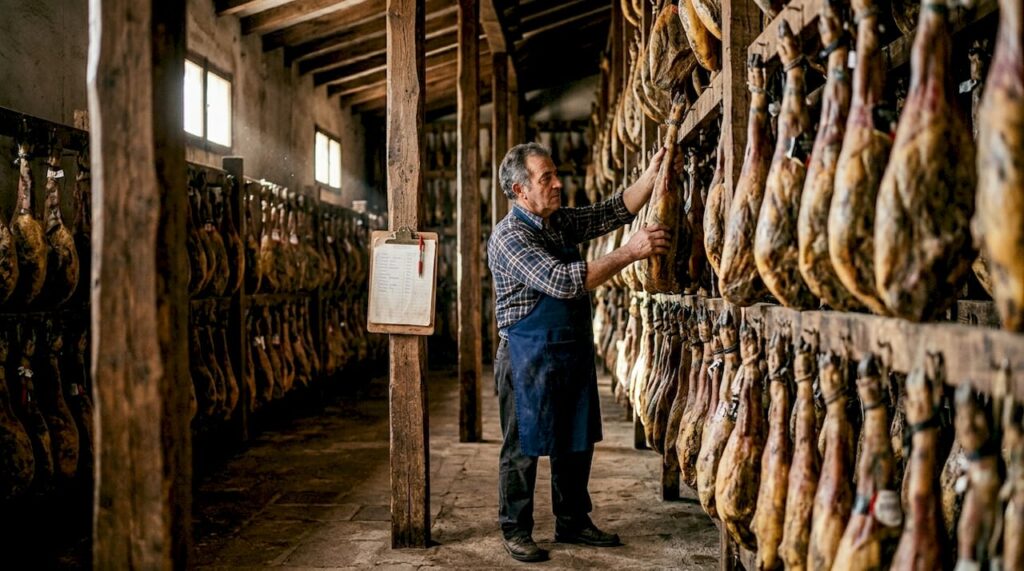
Long curing in high-altitude cellars, verified by traceability, enhances maturation and flavour. The system ensures producers follow traditional protocols rather than rushing products to market.
Traceability supports responsible practices:
- Animal welfare standards monitored throughout the pig’s life
- Sustainable dehesa landscapes preserved through verified free-range practices
- Traditional small-scale producers protected from industrial competitors
- Spain’s culinary heritage maintained through enforced quality standards
Your investment in top-tier ham is safeguarded. When you purchase a 64-month cured Pata Negra, traceability confirms it actually aged that long. The acorn-fed claim isn’t aspirational but documented fact.
For those comparing Iberico vs Serrano ham or selecting Iberico ham for quality, traceability transforms subjective preferences into objective criteria. You’re not guessing about quality but confirming it through transparent records.
The system preserves tradition whilst embracing innovation. Ancient curing methods continue because traceability proves their superiority. Modern technology serves heritage rather than replacing it.
Discover authentic Iberico ham with confidence
Now that you understand how traceability guarantees authenticity, you’re ready to select Iberico ham with complete assurance. Every detail matters when investing in premium Spanish cured meats.
7 BELLOTAS® guarantees full traceability from farm to plate. Each product includes verified seals and origin records, allowing you to confirm breed purity, acorn consumption, and curing duration before purchase.
Whether you’re planning a gourmet event, selecting a distinguished gift, or indulging your own palate, traceability ensures your investment delivers authentic flavour and quality. Our hams range from 36-month cured selections to rare 64-month aged Pata Negra, each with complete documentation.
Shop with confidence knowing every ham’s journey is transparent and verifiable. Buy authentic Iberico ham backed by the rigorous traceability systems you’ve just discovered.
Frequently asked questions
What information is stored in an Iberico ham’s traceability record?
Farm origin, feed, weight gain, and curing are key record fields. Records also include pig lineage, slaughter details, and individual identification numbers for complete transparency.
How can gourmet buyers verify the authenticity of their Iberico ham?
You can scan the QR code on the official coloured seal or check the record via the ASICI app to confirm authenticity and origin instantly.
Why are coloured seals important in the traceability of Iberico ham?
Coloured seals correspond to origin and feeding regime, helping buyers distinguish between acorn-fed, grain-fed, and other categories for assured quality.
How does traceability add value for gourmet kitchens and collectors?
Traceability validates curing processes and guarantees origin for collectors, ensuring the ham’s maturation, quality, and value are genuine rather than claimed.
What role do caladors play in the traceability system?
Caladors provide expert sensory verification that complements digital records, using traditional probes to assess aroma, texture, and maturity at critical curing stages.