Standing before a display of Iberico hams, each one gleaming under warm light, is one of the great pleasures of gourmet food culture. Yet the market is crowded with products that borrow the language of luxury without delivering the substance. Imitations are common, labels can mislead, and even experienced buyers occasionally pay a premium for something far below bellota grade. Knowing how to distinguish truly exceptional Iberico ham requires more than instinct. It demands a working knowledge of breed certification, visual quality markers, production provenance, and sensory signals. This guide walks through each criterion so you can select with genuine confidence.
Table of Contents
- Understanding the breeds and certification labels
- Appearance and marbling: The visual language of quality
- Production and provenance: The story behind each slice
- Sensory profile: Aroma, taste, and mouthfeel
- Why a single sign is never enough: Beyond the black hoof and price tag
- Ready to taste the difference? Discover certified Iberico ham today
- Frequently asked questions
Key Takeaways
| Point | Details |
|---|---|
| Check the black label | The black label guarantees 100% Iberico breed and acorn-fed quality. |
| Examine fat and colour | Premium ham presents with fine marbling and a deep mahogany hue that signals quality. |
| Trust the production process | Free-range rearing and acorn diets in the dehesa are non-negotiable for authentic flavour. |
| Use all your senses | Flavour, aroma, and texture should align with nutty, complex, and sweet-umami notes. |
Understanding the breeds and certification labels
To distinguish premium Iberico ham, begin with the most objective markers: breed and official certification. Spanish law is precise on this point, and the label system it mandates is your first and most reliable filter.
Spain’s regulatory framework assigns colour-coded labels to every Iberico ham based on two factors: the purity of the pig’s breed and the diet it received before slaughter. The hierarchy is clear:
- Black label (Pata Negra): 100% pure Iberian breed pigs fed exclusively on acorns during the montanera season. This is the pinnacle.
- Red label: Iberico pigs with at least 50% pure breed genetics, also acorn-fed during montanera.
- Green label: Iberico pigs fed on a combination of acorns and natural pasture.
- White label: Iberico pigs fed on commercial grain feed, with no acorn component.
The distinction matters enormously. The acorn diet during montanera (the autumn and winter grazing season in the dehesa oak forests) is what produces the distinctive fat infiltration and flavour complexity that connoisseurs prize. A white-label ham shares the name “Iberico” but little else with a black-label bellota.
Beyond the colour label, look for a D.O.P. (Denominación de Origen Protegida, or Protected Designation of Origin) seal. The four recognised D.O.P. regions are Jabugo, Guijuelo, Dehesa de Extremadura, and Los Pedroches. Each has its own microclimate and tradition, but all enforce strict production standards. When recognising authentic Iberico ham, these seals are non-negotiable markers of traceability.
“The black label is not simply a colour. It is a guarantee of genetics, diet, and tradition that no marketing term can replicate.”
Pro Tip: Avoid any product that relies solely on descriptive phrases such as “artisan” or “traditional” without a traceable certification number. Genuine producers are proud to display their registration details. For expert Iberico selection tips, always cross-reference the label colour with the D.O.P. seal before purchasing.
Appearance and marbling: The visual language of quality
Once the origins are verified, attention shifts to the visual and tactile clues present in the ham itself. A trained eye can read quality in seconds.
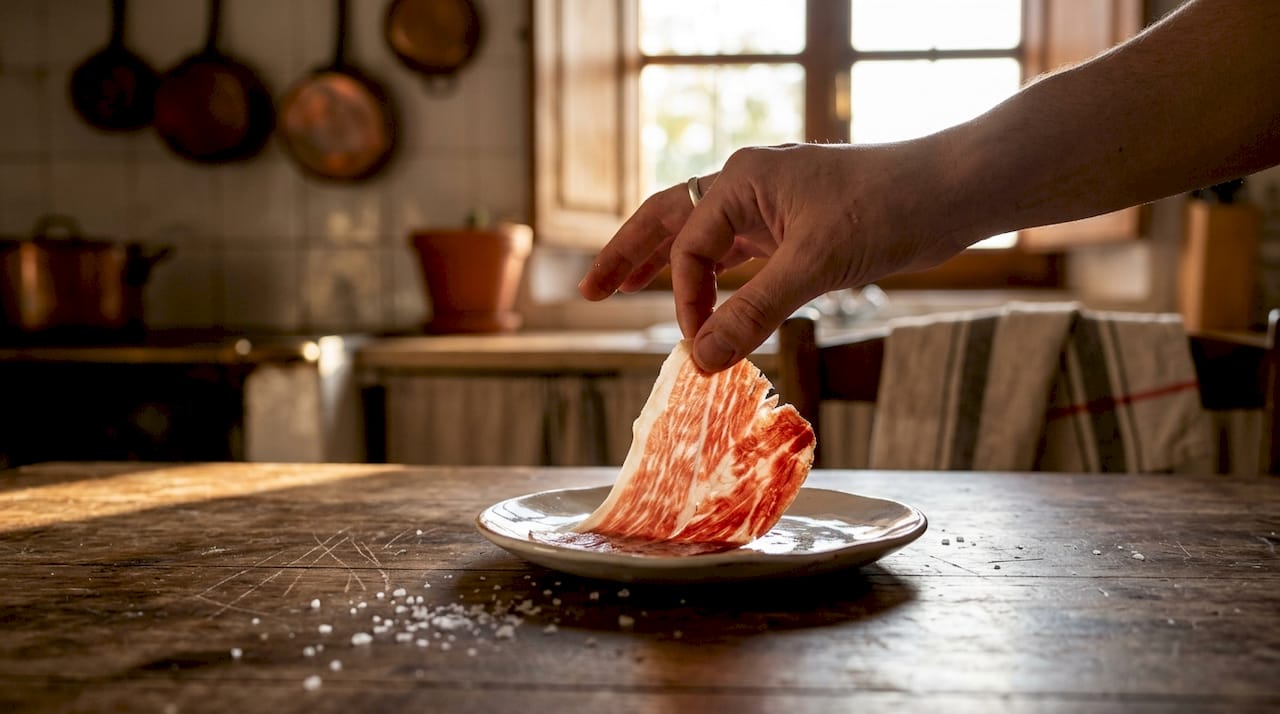
Premium Iberico ham has a very specific visual signature. The flesh is a deep mahogany or ruby red, never pale pink. Pale colour is a reliable indicator of a younger cure, a lower-grade breed, or a grain-fed diet. The fat should appear pearly and slightly glossy, with a creamy white to ivory tone. Press it gently at room temperature and it should yield softly, almost melting under slight pressure.
Marbling is the critical internal quality signal. In a premium slice, you will see fine threads of fat distributed evenly throughout the muscle. This intramuscular fat is the product of genetics and acorn feeding working together over years. It is not the thick, waxy fat you find at the edges of a cheaper product. It is woven into the meat itself.
| Quality indicator | Premium bellota grade | Lesser grade |
|---|---|---|
| Flesh colour | Deep mahogany or ruby | Pale pink or grey |
| Fat appearance | Pearly, glossy, soft | Waxy, white, firm |
| Marbling | Fine, even, intramuscular | Absent or patchy |
| Texture | Supple, silky | Dry, grainy, or rubbery |
Texture is equally telling. A correctly cured bellota ham feels supple and slightly yielding when sliced thinly. It should never feel dry, grainy, or stiff. Inferior products often show a fibrous, almost stringy texture that betrays either a short cure or a poor-quality base product.
For selecting for authentic flavour, the visual inspection is your quickest pre-taste filter. If the colour, fat, and marbling do not meet the criteria above, no label claim will compensate.
Production and provenance: The story behind each slice
Visual cues only tell part of the story; the ham’s production method is equally vital. Understanding how the animal was raised connects the product on your plate to the landscape and tradition that created it.
The dehesa is a managed oak woodland ecosystem found primarily in Extremadura and Andalusia. During montanera, which runs from October through March, free-range Iberico pigs roam this landscape, feeding in dehesa oak forests on fallen acorns. A single pig can consume up to 10 kg of acorns per day during this period. The acorn diet is extraordinarily high in oleic acid, the same monounsaturated fat found in olive oil. This is what gives bellota fat its characteristic softness and its heart-healthy reputation.
The numbered steps below outline what a verified production trail should include:
- Breed documentation: Genetic certification confirming 100% Iberian lineage.
- Farm registration: A traceable farm number linked to a specific dehesa region.
- Montanera records: Dates and weight gain documented during the acorn-feeding season.
- Slaughterhouse certification: Official veterinary approval at a registered facility.
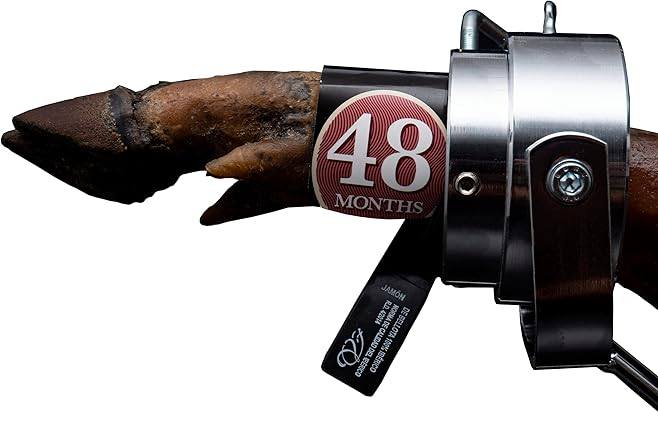
- Curing duration: Minimum 36 months for bellota grade, with many premium producers curing for 48 to 64 months or longer.
Pro Tip: Ask your supplier for the ham’s unique identification tag number. Every certified Iberico ham carries one. If a seller cannot provide it, treat that as a serious warning sign. Detailed insider buying tips consistently emphasise traceability as a non-negotiable standard, and sourcing for authenticity begins with demanding this documentation.
The curing cellar also matters. Traditional producers use natural dryers, allowing mountain air to circulate around the hams through seasonal temperature changes. This slow, natural process develops complexity that temperature-controlled industrial curing simply cannot replicate.
Sensory profile: Aroma, taste, and mouthfeel
With the background of breed, appearance, and process established, the final proof lies in an expert tasting. The sensory profile of a genuine bellota ham is unmistakable once you know what to seek.
Begin with aroma. Lift a freshly cut slice and breathe in slowly. Premium bellota ham carries a nutty, acorn-like fragrance layered with hints of dried fruit, aged meat, and wild herbs. There is a subtle earthiness that speaks of the dehesa itself. What you should never detect is anything sour, sharp, or chemical. Off-notes of that kind indicate either poor curing conditions, contamination, or a base product that was never bellota grade to begin with.
On the palate, the experience unfolds in stages:
- Initial sweetness: The first impression is gently sweet, almost floral, from the acorn-derived fats.
- Mid-palate complexity: Savoury, nutty notes develop alongside a subtle mineral quality.
- Finish: A deep, persistent umami that lingers long after the slice has gone.
- Mouthfeel: Silky and smooth, with fat that coats the tongue without feeling heavy.
“A slice of genuine bellota ham should feel like a conversation. It opens with warmth, deepens with character, and leaves you thinking about the next piece.”
Inferior hams tend to deliver a flat, one-dimensional saltiness with little development. The fat feels waxy rather than silky. The finish is short. If you are tasting Iberico ham for the first time, this contrast is immediately apparent once you have experienced a genuine bellota product. Practical tasting tips for enthusiasts recommend always tasting at room temperature, as cold suppresses the fat’s aromatic compounds and flattens the flavour profile entirely.
Why a single sign is never enough: Beyond the black hoof and price tag
Despite the abundance of guidance available, many buyers still anchor their decision on a single indicator. The most common culprits are the black hoof and a high price point. Both can mislead.
The black hoof is associated with the Iberico breed because the pigs naturally have dark trotters. However, some producers leave the hoof intact on lower-grade hams precisely because it signals prestige. The black hoof alone is insufficient without verifying the label colour, the fat quality, and the documented weight of the ham.
Price is equally unreliable as a standalone signal. The premium Iberico market attracts opportunistic pricing. A high price may reflect genuine quality, or it may reflect clever packaging and savvy marketing. Conversely, a specialist producer selling direct from Spain may offer exceptional bellota ham at prices that undercut retail intermediaries.
True connoisseurship means cross-checking every element: label colour, D.O.P. certification, visual marbling, production traceability, and sensory profile. A full quality checklist approach is the only reliable method. One strong signal alongside several weak ones is not enough. All the criteria must align before you commit.
Ready to taste the difference? Discover certified Iberico ham today
Armed with this knowledge, you are now equipped to seek out ham that genuinely meets every standard discussed above. The criteria are clear; the next step is finding a source you can trust.
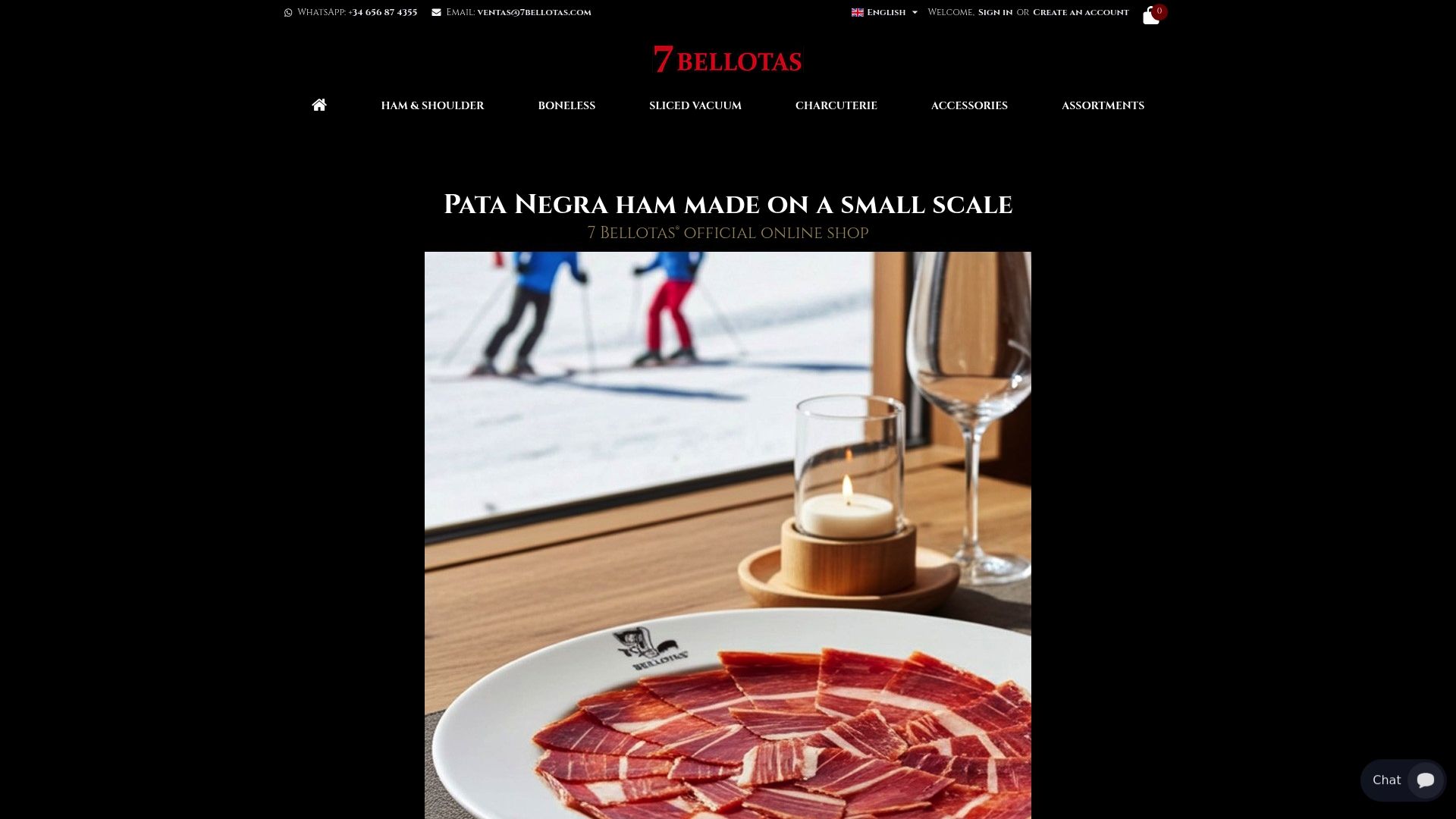
At 7 Bellotas, every ham is selected against the full set of quality signals covered in this guide. From black-label bellota Pata Negra aged for over 48 months to carefully curated sliced portions, each product carries verified certification, traceable provenance, and the sensory depth that only genuine acorn-fed, free-range rearing can produce. Small-scale artisanal production. Natural curing. Authentic Spanish heritage. This is what premium Iberico ham looks, smells, and tastes like.
Frequently asked questions
What label should I look for to guarantee premium Iberico ham?
Look for the black label certification, which confirms the ham comes from 100% pure Iberico pigs fed exclusively on acorns during the montanera season.
How can I identify genuine marbling in Iberico ham?
Authentic premium ham shows fine intramuscular marbling distributed evenly throughout the slice, with fat that softens and almost melts at room temperature.
What flavour notes confirm high-quality Iberico ham?
Premium bellota ham delivers nutty, acorn-like aromas with hints of dried fruit and wild herbs, a sweet opening on the palate, and a long, persistent umami finish with no sour or chemical notes.
Does a high price always mean authentic Iberico ham?
No. Price alone is not a reliable guarantee. Always verify the label, marbling, and traceability details alongside the price to confirm genuine quality.