TL;DR:
- Proper tools and technique are essential for authentic Iberico ham slicing and presentation.
- Iberico ham should be sliced thinly at room temperature, avoiding cooking or heating.
- Correct storage involves covering the cut surface and wrapping in a breathable cloth to maintain freshness.
Serving a whole leg of Iberico ham and simply hacking at it with the wrong knife is one of the most common mistakes made by enthusiastic home cooks. The result? Ragged, uneven slices that lose their delicate marbling, dry out within minutes, and fail to deliver the layered, nutty complexity that makes Pata Negra so prized. Authentic preparation is both a craft and a ritual, and with the right tools, the correct temperature, and a little patience, you can achieve genuinely gourmet results at home. This guide covers everything from selecting your ham and gathering specialist equipment, to hand-slicing technique, troubleshooting, and elegant presentation.
Table of Contents
- Essentials for authentic Spanish ham preparation
- Step-by-step guide to hand-slicing Spanish ham
- Common mistakes and troubleshooting tips
- Serving, storing, and enjoying Iberico ham
- Why authenticity matters: Lessons from Spanish ham artisans
- Experience gourmet Spanish ham: Order your Iberico leg from Spain
- Frequently asked questions
Key Takeaways
| Point | Details |
|---|---|
| Use specialised tools | A ham stand and long flexible knife are vital for safe and authentic hand-slicing. |
| Aim for translucent slices | Slice parallel to the bone, 1–2mm thick, for perfected marbling and flavour. |
| Never heat Iberico ham | Cooking destroys the delicate texture and depth achieved by long curing. |
| Keep white fat and serve at room temperature | White fat melts with the meat, enhancing aroma and taste when served between 20–24°C. |
| Store leftovers properly | Cover exposed ham with its fat and keep it cool and dry to retain freshness. |
Essentials for authentic Spanish ham preparation
The first decision you face is which ham to buy. The two most celebrated Spanish hams are Iberico and Serrano, and they differ significantly in flavour, texture, and preparation requirements. Iberico comes from the Black Iberian pig, a heritage breed prized for its ability to infiltrate fat deep into the muscle. Serrano is cured from white pigs and offers a leaner, firmer result. For home preparation, both reward careful slicing, but Iberico demands more respect.
| Feature | Iberico ham | Serrano ham |
|---|---|---|
| Pig breed | Black Iberian | White pig |
| Curing time | 36 to 64+ months | 12 to 24 months |
| Fat marbling | Extensive, oleic-rich | Limited |
| Flavour profile | Nutty, complex, buttery | Mild, savoury |
| Recommended skill level | Intermediate to advanced | Beginner-friendly |
Once you have chosen your ham, gather the correct tools. Proper equipment is not optional; it is what separates a gourmet result from a frustrating experience.
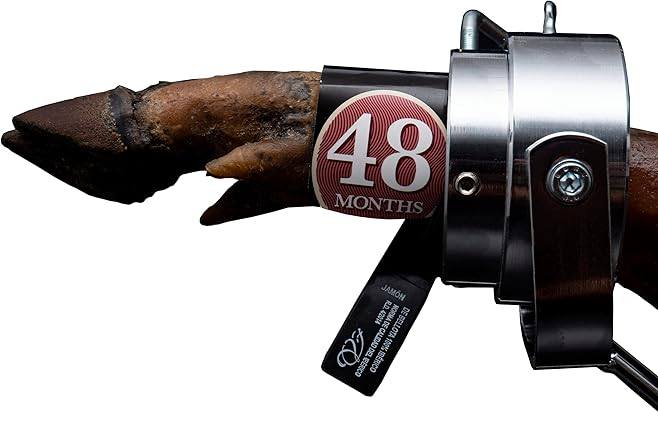
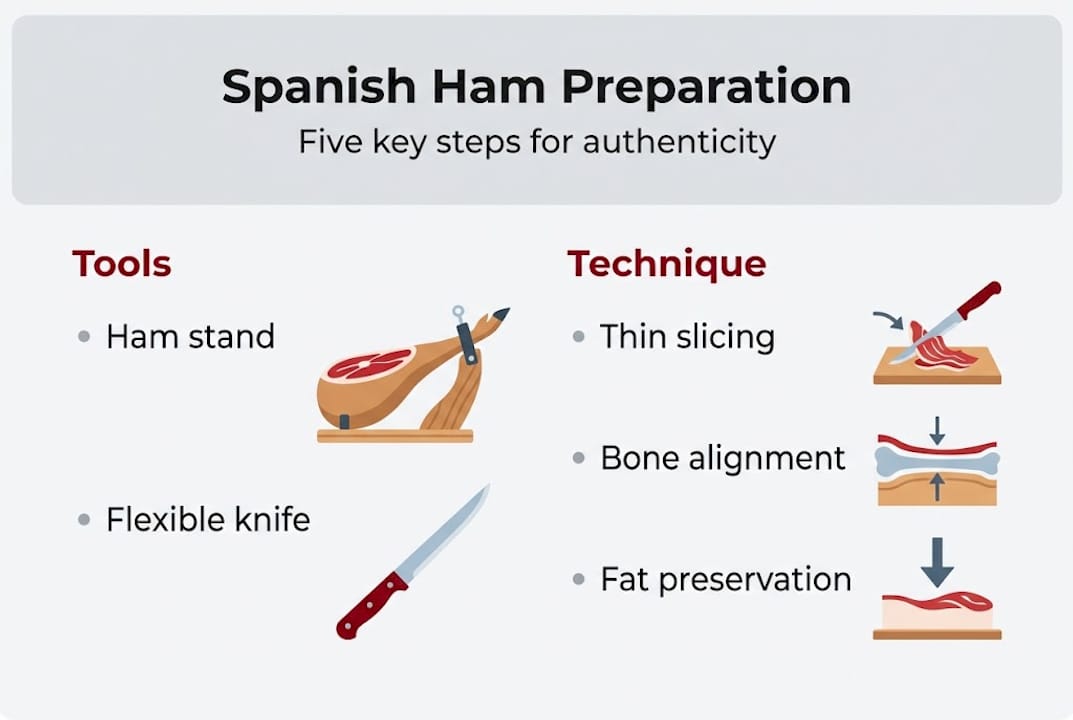
- Jamonero (ham stand): Holds the leg securely so both hands remain free and safe.
- Cuchillo jamonero: A long, flexible knife designed for smooth, parallel strokes along the bone.
- Short rigid blade: Used for trimming around the bone and in tighter areas near the shank.
- Cut-resistant glove: Worn on the hand that holds the ham, reducing the risk of injury.
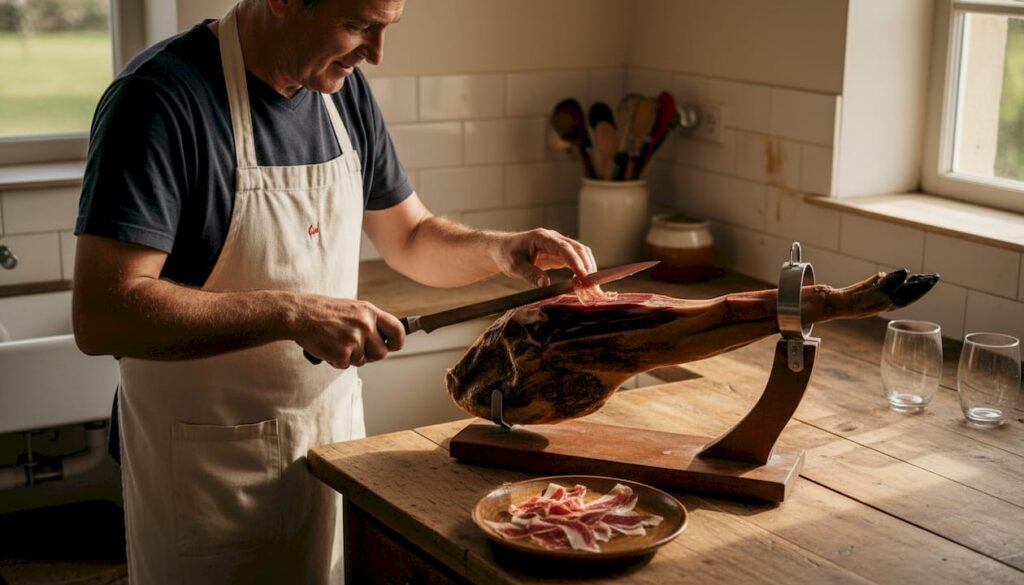
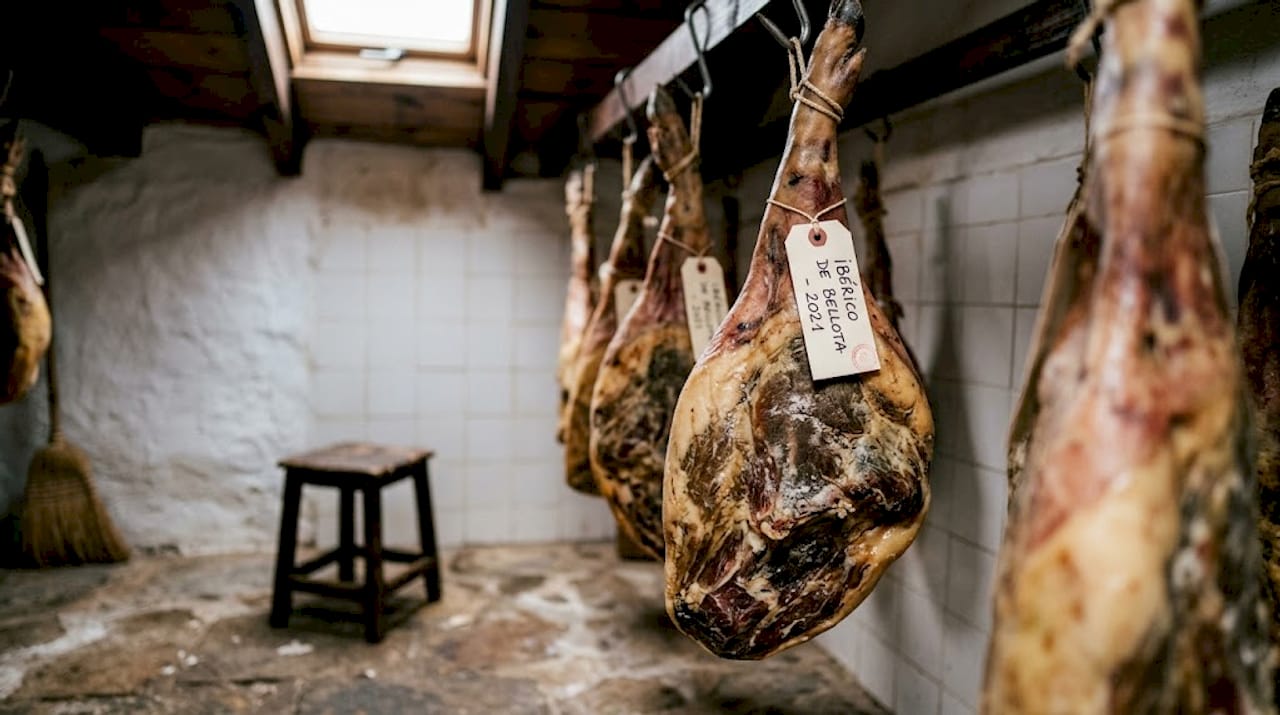
Authentic preparation of Spanish Iberico ham at home focuses on hand-slicing a whole bone-in leg into paper-thin slices using these specialised tools, served at room temperature without any cooking. Room temperature means 20 to 24°C. At this range, the fat softens naturally and releases Iberico’s unique flavour without any artificial heat. Remove the ham from its wrapping at least one hour before slicing. Understanding Spanish ham purity also helps you identify a quality leg: look for a deep ruby red colour, visible white fat streaks, and the characteristic acorn-fed aroma. If you are ordering Spanish ham online, always verify curing time and breed certification.
The quality of acorn-fed ham curing directly affects how the ham responds to slicing. A well-cured leg has firm but yielding flesh that holds a thin slice without tearing.
Pro Tip: Practice your technique on a Serrano ham or a cheaper Iberico shoulder before committing to a full Pata Negra leg. The muscle structure is similar, and building confidence first protects your investment.
Step-by-step guide to hand-slicing Spanish ham
With tools in hand and ham at room temperature, you are ready for authentic slicing.
- Secure the leg: Place the ham hoof-up in the jamonero if you plan to serve the more accessible maza (top section) first. Flip hoof-down to access the contramaza (underside) once the top is exhausted.
- Remove the outer rind: Use the short rigid blade to cut away the yellow, hardened surface rind and any grey or oxidised fat. Work in small sections, removing only what you need for each slicing session.
- Preserve the white fat: Leave a thin border of white fat along the edge of each slice. This fat melts on the tongue and carries the hand-cut excellence in flavour that defines great Iberico ham.
- Position the jamonero knife: Hold the long knife parallel to the bone and begin slicing with long, steady, fluid strokes. Avoid sawing back and forth.
- Achieve 1 to 2mm thickness: Each slice should include both meat and fat, and should be 1 to 2mm thick, nearly translucent.
- Test translucency: Hold a slice to the light. If you can see the outline of your fingers or the knife blade through the meat, thickness and texture are correct.
- Work section by section: Slice across the maza from one end to the other before moving to the next muscle group near the bone.
| Slicing area | Tool to use | Key consideration |
|---|---|---|
| Maza (top) | Long jamonero knife | Long parallel strokes |
| Contramaza (underside) | Long jamonero knife | Reposition stand first |
| Around the bone | Short rigid blade | Slow, careful trimming |
| Shank area | Short rigid blade | Small, precise cuts |
For a detailed visual reference on positioning and knife angle, the carving guide for gourmet results walks through each section of the leg. Once you are satisfied with your slices, turn your attention to mastering ham presentation for the table.
Important: Never cook or heat Iberico ham. The curing process has already rendered it safe and flavourful. Heat destroys the fat structure and collapses the nuanced complexity built over 36 to 64 months of curing.
Pro Tip: If a slice is not translucent, apply slightly less downward pressure on your knife and let the blade’s length do the work. Rushing creates uneven thickness and tears the marbling.
Common mistakes and troubleshooting tips
Perfecting slicing means learning not only what to do, but what to avoid.
The most frequent errors made by home slicers are surprisingly consistent. Knowing them in advance saves both ham and effort.
- Slicing too thick: Slices above 3mm become chewy and lose the melt-in-the-mouth quality. They also dry out faster on the plate.
- Wrong knife angle: Cutting at an angle rather than parallel to the bone tears the marbling and produces uneven, ragged edges.
- Overheating the ham: Even placing it near a warm oven or in direct sunlight before slicing damages the fat. Stick to 20 to 24°C.
- Over-trimming white fat: Many first-timers remove too much fat, believing it improves the product. Avoiding this preserves the meltiness and the natural moisture barrier.
- Neglecting the jamonero: Holding the leg by hand while slicing is dangerous and produces inferior results. The stand is not a luxury; it is a necessity.
Troubleshooting is straightforward once you identify which error is occurring. If the slice tears, check your knife angle and ensure it is truly parallel to the bone. If the texture feels dry, the ham may have been over-chilled. If the flavour seems flat, you may have removed too much white fat during trimming. For inspiration on transforming recovered slices into creative dishes, explore creative serving ideas or study expert pairings to make the most of every cut.
Thick slices also have a measurable impact on flavour: thick slices dry out flavour, and wrong angles tear the marbling that took years to develop. The hand-slicing benefits become clear when you compare a properly sliced piece against a poorly cut one side by side.
Pro Tip: If your slice is not translucent after adjusting pressure, check whether your knife blade needs sharpening. A dull blade compresses the meat rather than gliding through it, making thin slicing almost impossible.
Serving, storing, and enjoying Iberico ham
After mastering the slice, it is time to elevate your enjoyment with gourmet presentation.
Hand-slicing preserves marbling and flavour release better than pre-sliced vacuum-packed portions, and the difference is immediately apparent the moment the ham rests on a warmed plate. Presentation matters as much as technique.
Serving suggestions:
- Arrange slices loosely on a flat plate, slightly overlapping. Never fold or stack them tightly.
- Serve at room temperature. Cold ham mutes aroma and firms the fat so it no longer melts on the tongue.
- Pair with lightly toasted bread rubbed with fresh tomato, a glass of Spanish fino sherry or a structured Rioja, and a wedge of aged Manchego cheese.
- Add thin slices of Picos de Europa bread or crackers to balance the richness.
For inspired plating ideas, the ham serving guide covers arrangement techniques used by Spanish chefs, and creative gourmet experiences explores more adventurous ways to feature Iberico at the table.
Storing the leg between sessions:
- Cover the exposed cut surface with the trimmed white fat strips you set aside. This acts as a natural moisture barrier.
- Wrap loosely in a clean cotton cloth, not cling film, to allow the ham to breathe.
- Store in a cool, dry place between 15 and 20°C. Avoid the refrigerator for a whole leg as cold air dries the surface and dulls the flavour.
- If sourcing gourmet ham for the first time, ask your supplier whether the ham has been vacuum-sealed during transit and how long to allow it to recover before slicing.
The acorn-fed preparation of the leg means the fat is unusually high in oleic acid, the same beneficial fatty acid found in olive oil. This is not just a nutritional note; it explains why the fat appears almost translucent and melts so readily at room temperature.
Pro Tip: Before guests arrive, plate a small quantity of slices on a warmed ceramic or slate board and leave at room temperature for ten minutes. The aroma that develops is part of the gourmet experience.
Why authenticity matters: Lessons from Spanish ham artisans
There is a tempting shortcut widely taken by those new to Iberico ham: buying pre-sliced, vacuum-packed portions. Convenient, certainly. But something significant is lost. Pre-sliced ham oxidises in the pack and loses the volatile aromatic compounds that make hand-cut Iberico so memorable. The ritual of the jamonero, the patient removal of rind, the fluid knife stroke are not theatrical flourishes. They are functional acts that protect and release the flavour.
During the montanera season, pigs consume 6 to 10kg of acorns daily to achieve the oleic acid infiltration that defines Pata Negra. The ham is then cured for 36 to 60 months or more to develop its nutty complexity. Shortcutting the serving stage after all of that investment is, frankly, a waste. To understand just how much curing time affects taste, the comparison between cure and flavour differences across ageing periods is illuminating.
Authenticity is not nostalgia. It is the most direct route to the best flavour.
Experience gourmet Spanish ham: Order your Iberico leg from Spain
The guidance in this article is only as good as the ham you start with. Technique refines quality; it cannot create it.
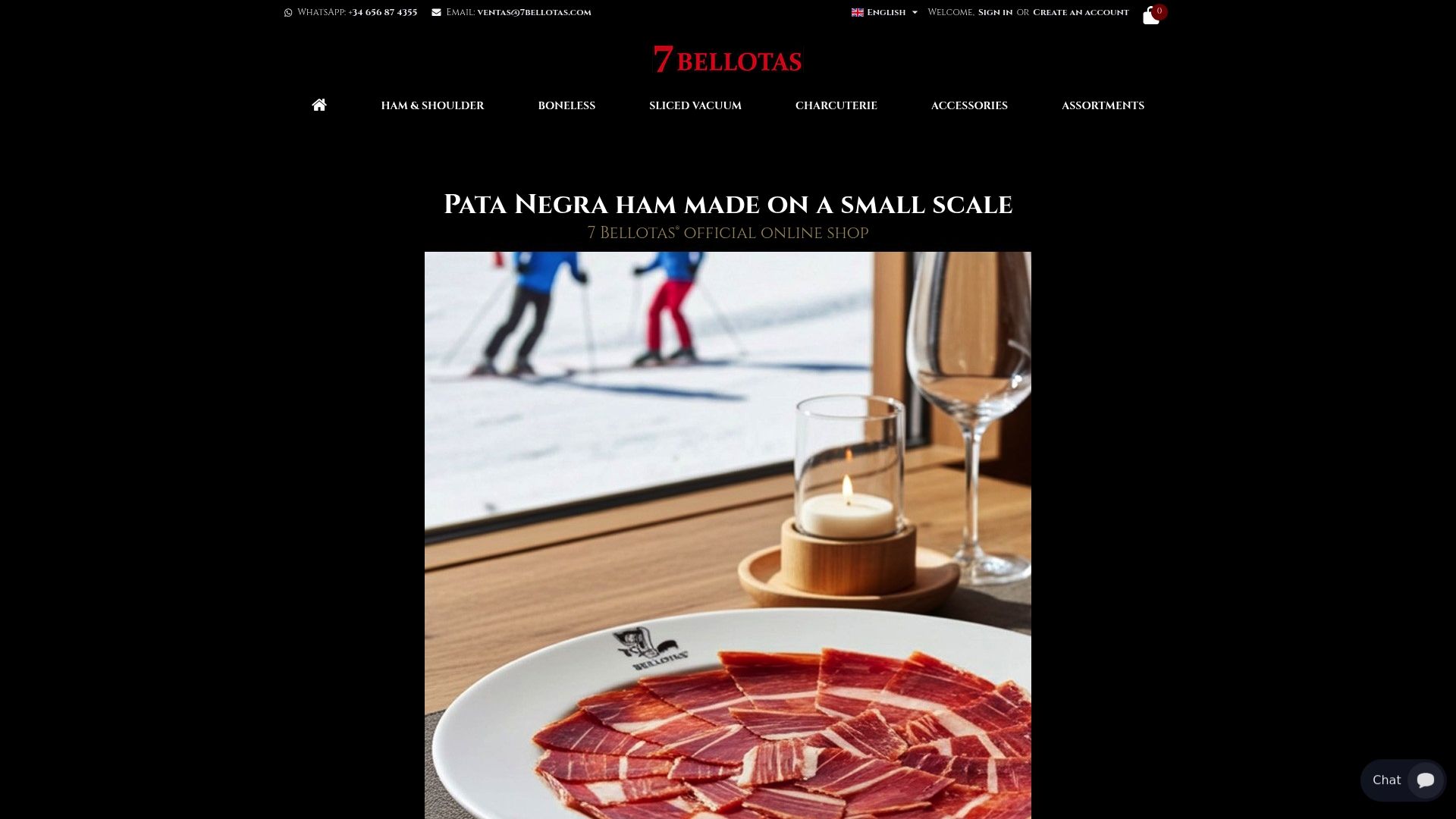
At 7 Bellotas, every whole Iberico leg is sourced from small-scale Spanish producers, acorn-fed during the montanera, and dry-cured using traditional methods. Hams are aged from 36 to over 64 months, each stage adding depth and complexity that rewards careful hand-slicing at home. Whether you are ordering your first Iberico leg or selecting a longer-cured Pata Negra for a special occasion, the range at 7 Bellotas offers authentic quality sourced directly from Spain. Start with the right ham, and every technique in this guide will deliver its full reward.
Frequently asked questions
What tools are needed to slice Iberico ham authentically?
You need a ham stand, a flexible jamonero knife, a small rigid blade, and a cut-resistant glove. Authentic preparation of a bone-in leg requires all four for safe and precise slicing.
Why should Iberico ham not be cooked?
Heating Iberico ham destroys its delicate fat structure and ruins the nuanced flavour built during curing. Avoid cooking entirely; thick slices and heat are the two fastest ways to waste a premium leg.
How thin should you slice Iberico ham?
Slices should be 1 to 2mm thick, nearly translucent, cut parallel to the bone with long smooth strokes, including both meat and white fat in each piece.
How should leftover ham be stored for freshness?
Cover the exposed cut surface with trimmed fat strips and wrap in a cotton cloth. Serving at room temperature and covering exposed meat correctly keeps flavour and texture intact between slicing sessions.