TL;DR:
- Chorizo iberico is made from native Iberian pigs fed on acorns, with traditional curing methods.
- Its rich flavor and tender texture result from high-quality ingredients, long curing, and natural terroir.
- Proper serving involves thin slices at room temperature paired with Spanish bread, cheese, and wines.
Not all Spanish chorizo is created equal. Walk into any Spanish market and you will find a dozen varieties lining the shelves, each claiming authenticity. But chorizo iberico occupies a category entirely its own. Born from centuries of tradition, crafted from the prized Iberian pig, and cured with the kind of patience that modern food production rarely allows, this is a product that rewards the curious and satisfies the discerning. This article explores the heritage, ingredients, sensory character, and best ways to enjoy chorizo iberico, so you can appreciate every slice for what it truly represents.
Table of Contents
- The heritage of chorizo iberico: what sets it apart
- Traditional ingredients and the art of curing chorizo iberico
- Flavour and texture: what to expect from every slice
- Serving chorizo iberico: enjoying Spanish excellence at home
- Why chorizo iberico is more than a delicacy: our take
- Indulge in authentic chorizo iberico from Spain
- Frequently asked questions
Key Takeaways
| Point | Details |
|---|---|
| True Iberian heritage | Chorizo iberico is made from the unique Iberian pig and reflects centuries of Spanish culinary tradition. |
| Signature rich flavour | Its deep, savoury taste comes from select ingredients and meticulous curing, setting it apart from standard chorizos. |
| Best served simply | Enjoy chorizo iberico sliced thin, at room temperature, paired with classic Spanish accompaniments for a gourmet treat. |
| Cultural significance | This delicacy represents much more than food—it is a symbol of Spanish culture and conviviality. |
The heritage of chorizo iberico: what sets it apart
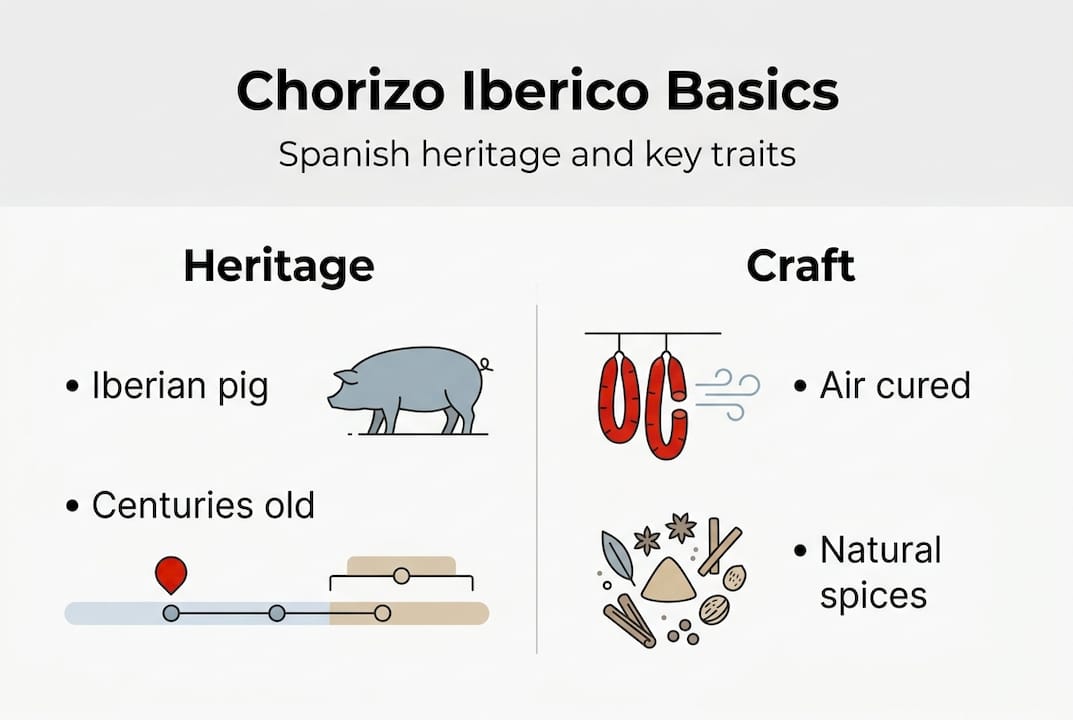
The word iberico is not simply a marketing term. It refers specifically to products derived from the native Iberian pig, a breed with roots stretching back thousands of years on the Iberian Peninsula. As Iberian pig breeds have shaped Spanish culinary identity for centuries, chorizo iberico stands as one of the most celebrated expressions of that heritage.
Chorizo iberico comes from the indigenous Iberian pig, a breed prized for centuries for its unique genetic capacity to store fat within the muscle tissue itself. This intramuscular fat, developed through a diet rich in acorns during the montanera season, is what gives iberico products their incomparable depth of flavour. No other breed produces quite the same result.
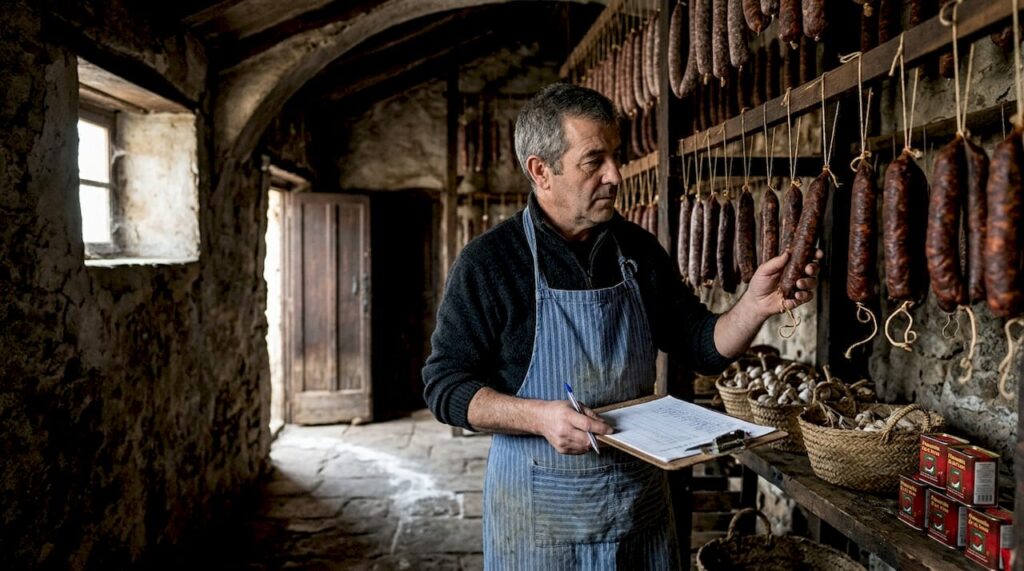
The cultural significance of chorizo iberico in Spain cannot be overstated. Families in Extremadura, Andalucía, and Castilla y León have been producing it using the same artisanal methods for generations. Traditional producers still follow the old rhythms: slaughtering in winter, hand-seasoning the meat, and hanging the sausages in natural dryers where mountain air does the slow, patient work of curing.
What separates chorizo iberico from its counterparts is a combination of factors that no shortcut can replicate:
- Breed: Pure or cross-bred Iberian pigs with documented lineage
- Diet: Acorn-fed during the montanera, producing rich, oleic-acid-laden fat
- Artisanal process: Small-scale production, hand-seasoned, naturally cured
- Terroir: The specific microclimate of the curing cellar shapes the final flavour
- Time: Patience is non-negotiable; rushing the cure destroys the result
As one producer noted in an Ibérico chorizo guide, the Iberian pig is not simply an ingredient but a living archive of Spanish gastronomic history. You can trace a similar devotion to tradition in products like salchichón ibérico, where the same breed and curing philosophy yield a different but equally refined result.
“The Iberian pig is the cornerstone of Spain’s finest cured meat tradition. Without it, you simply have chorizo. With it, you have something that carries centuries of culture in every slice.”
This heritage is not nostalgia. It is a living, practised craft that continues to define what premium Spanish cured meat can be.
Traditional ingredients and the art of curing chorizo iberico
The ingredient list for chorizo iberico is short. Deliberately so. Ibérico pork, smoked paprika (pimentón), garlic, salt, and natural casings. That is it. The restraint is intentional, because when the raw material is this exceptional, complexity comes from the curing process, not from a long list of additives.
The distinct taste comes from lean ibérico pork, paprika, garlic, and natural casings, air-cured for optimal texture. The paprika used is typically from the La Vera region of Extremadura, where peppers are slowly smoked over oak wood before being ground. This gives chorizo iberico its characteristic deep red colour and smoky sweetness that no artificial colouring can replicate.
The fat from acorn-fed Iberian pigs is genuinely different at a molecular level. It contains a high proportion of oleic acid, the same healthy fat found in olive oil. This fat melts at a lower temperature than standard pork fat, which is why chorizo iberico has that yielding, almost silky texture when it reaches room temperature. You can read more about unique Spanish pork quality and why this breed produces results that standard commercial pork simply cannot match.
The classic ingredients at a glance:
- Ibérico pork: Shoulder and belly cuts, hand-minced for ideal texture
- Pimentón de la Vera: Smoked paprika, sweet or bittersweet depending on the recipe
- Garlic: Fresh, not powdered, for a clean aromatic note
- Sea salt: For preservation and seasoning
- Natural casings: Pork intestine, which breathes during curing
After mixing, the sausages are filled into natural casings and hung in cool, ventilated cellars. The curing period ranges from a few weeks for fresh-style chorizo to several months for the fully dry-cured variety. Temperature and humidity are managed carefully, often relying on the natural conditions of the cellar rather than artificial climate control. You can explore more about chorizo ingredients and methods to understand how this compares globally.
Pro Tip: When buying chorizo iberico, look for products that specify natural casings and a minimum curing period. These two details alone tell you a great deal about whether you are getting the genuine article or a commercial imitation.
Flavour and texture: what to expect from every slice
Cut into a properly cured chorizo iberico and the first thing you notice is the colour. Deep crimson, flecked with ivory-white fat that runs through the meat in fine, irregular veins. This is not the uniform pink of mass-produced chorizo. This is something alive with character.
Chorizo iberico is celebrated for its deep, nutty flavour and melt-in-the-mouth texture, a result of the acorn diet and extended curing. The flavour profile is rich and savoury, with sweet smoked undertones from the pimentón and a gentle warmth that builds slowly rather than hitting you sharply. It is complex without being aggressive.
Texture is where chorizo iberico truly distinguishes itself. Standard chorizo has a firm, slightly chewy bite. Chorizo iberico, by contrast, yields almost immediately. The fat softens on the tongue, releasing layers of flavour that linger long after you have swallowed. It is the kind of eating experience that makes you slow down.
| Product | Fat marbling | Texture | Flavour profile | Curing time |
|---|---|---|---|---|
| Chorizo iberico | High, oleic-rich | Tender, melting | Nutty, smoky, complex | 3 to 6+ months |
| Standard chorizo | Low to medium | Firm, chewy | Paprika-forward, simpler | 4 to 8 weeks |
| Salchichón iberico | High, oleic-rich | Silky, fine | Peppery, subtle, refined | 3 to 5 months |
| Serrano cured sausage | Low | Dense, dry | Mild, slightly salty | 6 to 12 weeks |
Fewer than 5% of Spanish chorizo producers maintain the full traditional iberico process from breed to cure, making this a genuinely rare product. For context on how iberico products compare more broadly, the differences between Iberico vs Serrano ham follow a similar logic: breed and diet define the ceiling of quality.
Perfect occasions to serve chorizo iberico:
- Gourmet tapas boards alongside olives, manchego, and pan con tomate
- Charcuterie platters for dinner parties or special gatherings
- Fine dining starters, sliced paper-thin and served simply
- Paired with a glass of Ribera del Duero or Rioja
For broader inspiration on examples of Spanish hams and how they complement chorizo on a Spanish-style spread, the combinations are genuinely exciting.
Serving chorizo iberico: enjoying Spanish excellence at home
Serving chorizo iberico well is not complicated, but a few deliberate choices make a significant difference. The goal is to let the product speak for itself.
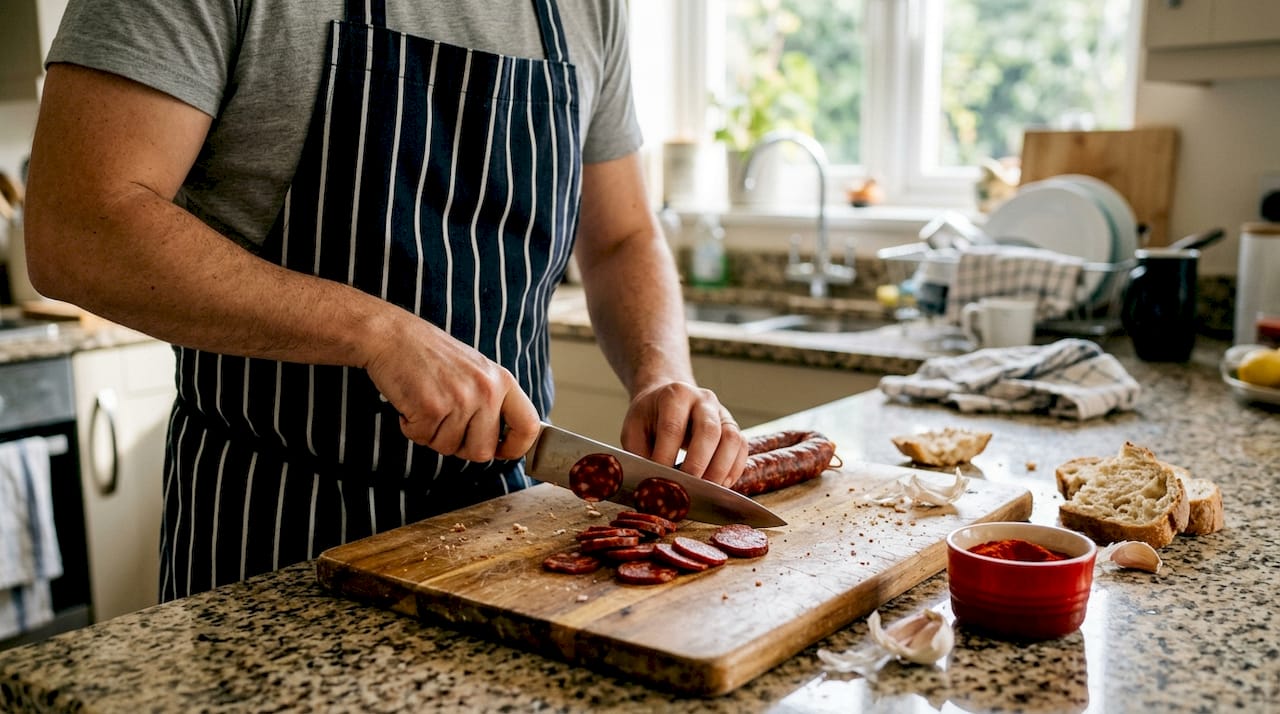
Chorizo iberico is at its best when sliced thin and served at room temperature alongside fine bread, cheese, and Spanish wine. Follow these steps for the ideal presentation:
- Remove from the fridge 30 minutes before serving. Cold temperatures suppress aroma and firm up the fat, dulling the experience.
- Slice thinly using a sharp knife. Aim for slices of around 2 to 3 millimetres. Thicker cuts lose the delicate texture.
- Arrange loosely on a slate or wooden board. Avoid overlapping slices, which traps moisture and prevents the fat from blooming.
- Serve with simple accompaniments. Crusty sourdough, aged manchego, and a drizzle of good olive oil are all you need.
- Pour a complementary wine. Tempranillo-based reds from Ribera del Duero or a dry fino sherry work beautifully.
For more inspiration on serving iberico ham and building a complete Spanish spread, the possibilities extend well beyond the basics.
| Serving detail | Recommendation |
|---|---|
| Ideal temperature | 18 to 22°C (room temperature) |
| Slice thickness | 2 to 3 mm |
| Portion per person (tapas) | 40 to 60 g |
| Portion per person (starter) | 60 to 80 g |
| Wine pairing | Ribera del Duero, Rioja, or fino sherry |
| Cheese pairing | Aged manchego, torta del casar |
| Bread pairing | Sourdough, pan de cristal |
For detailed guidance on Iberico ham pairings and how to build a full gourmet board, the principles that apply to ham translate directly to chorizo. And for those who want to refine their plating further, serving presentation tips offer practical advice on visual arrangement and portion control.
Pro Tip: Allow the sliced chorizo to rest uncovered for five minutes before serving. This brief exposure to air releases volatile aromatic compounds, intensifying the smoky, paprika-rich fragrance that makes the first bite so memorable.
Why chorizo iberico is more than a delicacy: our take
At 7 Bellotas, we believe chorizo iberico is one of the most misunderstood products in the world of gourmet food. People treat it as a flavouring, a pizza topping, or a cooking ingredient. That is a genuine shame. Eaten properly, it is a cultural statement.
Spain’s gastronomic soul lives in its cured meats. The rituals around the matanza, the seasonal slaughter, the patient months in the cellar: these are not just production steps. They are the rhythm of rural Spanish life, encoded in flavour. Understanding how Spanish ham is classified reveals just how seriously Spain takes this hierarchy of quality.
Regional variation adds another layer of fascination. Chorizo from Extremadura tastes different from chorizo made in Salamanca, even when the breed and recipe are nearly identical. Terroir matters here just as it does in wine. The microclimate of the curing cellar, the local herbs, the quality of the mountain air: all of it leaves a mark.
For connoisseurs tired of generic supermarket offerings, seeking out genuine chorizo iberico is an act of culinary conviction. Sharing it at a gathering, sliced properly and paired with care, is one of the simplest and most rewarding pleasures Spanish food has to offer.
Indulge in authentic chorizo iberico from Spain
Knowledge of chorizo iberico is only the beginning. The real pleasure comes from tasting it. At 7 Bellotas, we source only the finest artisan iberico products directly from small-scale Spanish producers who still honour the traditional methods described in this article.
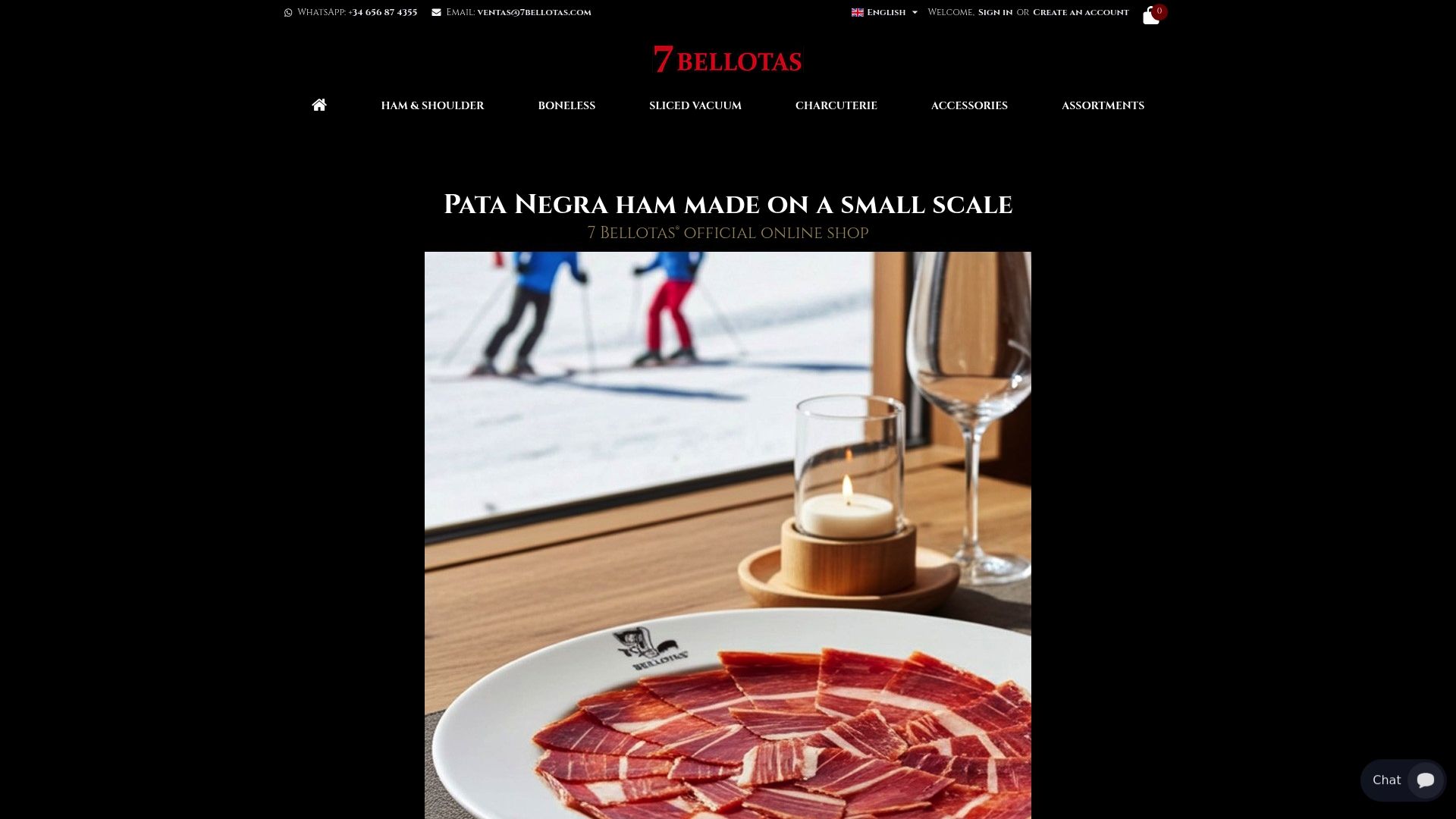
Browse our curated selection at 7bellotas.com and discover premium chorizo iberico alongside our celebrated range of Pata Negra hams, salchichón, and other dry-cured Spanish specialities. Whether you are building a gourmet charcuterie board or seeking a truly memorable gift, our collection brings authentic Spanish heritage directly to your table. Every product is vacuum-packed for freshness and shipped from Spain with care.
Frequently asked questions
What makes chorizo iberico different from regular chorizo?
Chorizo iberico is made from the acorn-fed Iberian pig and is dry-cured for deeper flavour and finer texture, unlike standard chorizo that uses regular pork with a much shorter curing period.
How should I serve chorizo iberico at home?
Slice thinly, allow it to reach room temperature, and serve with crusty bread, aged cheese, and Spanish wine for the best taste experience, as slicing thin at room temperature releases the full aromatic and flavour potential.
Is chorizo iberico always spicy?
Not always; its spice level ranges from mild to moderately spicy depending on the paprika used, but the distinct taste from paprika and garlic always delivers a rich, complex flavour regardless of heat level.
How is chorizo iberico cured?
It is cured naturally in ventilated cellars for several months, with air-curing in natural casings allowing the flavours to deepen gradually and the texture to become tender and yielding.